
Filter
72
Text search:
cutaneous
leishmaniasis
(CL)
Featured
8
7
Language
Document type
19
17
8
8
7
4
3
2
2
2
Countries / Regions
26
9
9
3
3
3
3
3
2
2
2
2
2
1
1
1
1
1
1
1
1
1
1
1
1
1
1
1
1
1
1
1
1
1
1
Authors & Publishers
Publication Years
Category
18
11
8
2
1
1
Toolboxes
49
2
1
1
1
1
1
Leishmaniasis is a vector-borne tropical/subtropical disease caused by an intracellular parasite transmitted to humans by sand fly bite. It is endemic in Asia, Africa, the Americas, and the Mediterranean region. Worldwide reports include 1.5–2 mil
...

Leishmaniasis is a parasitic disease caused by the Leishmania parasite. This parasite typically lives in infected sand flies. You can contract leishmaniasis from a bite of an infected sand fly.
T
...
Leishmaniasis is a vector-borne disease with a broad global distribution and an increasing number of recorded cases worldwide. However, it is still one of the world's most neglected diseases. Over the last decades, the disease has been found to expa
...
Frequently Asked Questions on Visceral Leishmaniasis
In the Indian state of Bihar, visceral leishmaniasis (VL) is a major public health issue that has been aggravated by the rising incidence of new Human immunodeficiency virus (HIV) infections. In endemic areas, the risk of VL infections in patients l
...

We developed an integrated vector surveillance (IVS) proposal for cutaneous leishmaniasis (CL) and visceral
...

Leishmaniasis is a vector-borne disease with a wide variety of parasite species, reservoirs, and vectors involved in transmission. It is caused by different species of the protozoa Leishmania and is transmitted to animals and humans through a bite o
...

High prevalence of target diseases in rural and developing nations, increased prevalence of malnutrition across the globe, lack of hygiene and poor sanitation facilities, Migratory patterns of population, introduction of new chemical entity in the field of therapeutics, favorable government regulati
...
No vaccines or drugs to prevent infection are available. The best way for travelers to prevent infection is to protect themselves from sand fly bites. To decrease the risk of being bitten, follow these preventive measures:
Avoid outdoor activities, especially from dusk to dawn, when sand flies ge
...

Website last accessed on 14.04.2023
Health workers Luke (Kenya), Juliana (Colombia), and Shishu (India) share the same hope for their patients with leishmaniasis: simple, oral treatments. For the first time ever, it seems
...
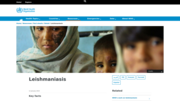
There are 3 main forms of leishmaniases: visceral (the most serious form because it is almost always fatal without treatment), cutaneous (the most common, usually causing skin ulcers), and mucocutaneous (affecting mouth, nose and throat).
...
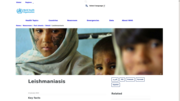
Website last accessed on 04.06.2023
Bites of infected female sand flies causes the disease. The visceral form attacks internal organs; the cutaneous form causes facial ulcers, disfiguring scars and disability. #BeatNTDs
Website last accessed on 08.05.2023
Identificar las formas de transmisión de la leishmaniasis - Youtube Video
Websites last accessed on 24.03.2023
Education and information about Leishmaniasis prevention and control.
Website last accessed on 04.06.2023
Treatment options for Visceral Leishmaniasis in HIV-coinfected people include oral miltefosine; find additional information on diagnosis and ART treatment.

Website last accessed on 04.06.2023

Website last accessed on 04.06.2023

Website last accessed on 04.06.2023

Website last accessed on 04.06.2023

Website last accessed on 04.06.2023
Youtube Video - Explainity
