
Filter
2436
Text search:
clinical
guideline
Featured
351
668
Language
Document type
1311
608
246
129
52
36
30
10
5
4
2
1
1
1
Countries
144
81
74
73
69
57
50
45
38
37
34
32
32
29
28
27
26
26
25
25
22
21
18
17
17
15
15
14
12
12
12
10
10
10
9
9
8
8
8
7
7
7
7
7
7
7
6
6
6
5
5
5
5
5
5
4
4
4
4
4
4
4
3
3
3
3
3
2
2
2
2
2
2
2
2
2
1
1
1
1
1
1
1
1
1
1
1
1
1
1
1
1
1
1
1
1
1
1
1
1
1
1
Authors & Publishers
Publication Years
Category
910
361
192
155
66
37
29
1
1
Toolboxes
241
221
210
164
109
109
95
72
58
47
37
27
21
20
19
17
12
10
10
9
7
4
3
Updated July 3, 2020
A clinical case definition of post COVID-19 condition by a Delphi consensus, 6 October 2021 (Arabic Version)
recommended
WHO has developed a clinical case definition of post COVID-19 condition by Delphi methodology that includes 12 domains, available for use in all settings. This first version was developed by patients, researchers and others, representing all WHO reg
...
Supplement Article
www.jaids.com J Acquir Immune Defic Syndr Volume 78, Supplement 1, August 15, 2018
Male circumcision reduces a man’s risk of heterosexual acquisition of HIV by about 60%. This guideline provides an evidence-based recommendation on the use of adult male circumcision devices for HIV prevention in public health programmes in high H
...
In recent years, high prices of pharmaceutical products have posed challenges in high- and low-income countries alike. In many instances, high prices of pharmaceutical products have led to significant financial hardship for individuals and negatively impacted on healthcare systems’ ability to prov
...
The publication is designed to provide Ipas staff, trainers, partners and other health-care providers with access to up-to-date, evidence-based recommendations. In general, the recommendations are the same as those in the World Health Organization’s 2012 Safe Abortion: Technical and Policy Guidanc
...
The purpose of this pocketbook is to provide clear guidance on current best management practices for VHF across health-care facilities

This clinical management manual for Ebola Viral Disease in Liberia was developed after several ETUs were established in the country following the outbreak early this year. As the outbreak evolved, it became evident that different SOPs were being use
...
Clinical Infectious Diseases 2010; 50:291–322
Interim Guidance.
A number of medical problems have been reported in survivors, including mental health issues. Ebola virus may persist in some body fluids, including semen. Ebola survivors need comprehensive support for the medical and psychosocial challenges they face and also to minimize the ...
A number of medical problems have been reported in survivors, including mental health issues. Ebola virus may persist in some body fluids, including semen. Ebola survivors need comprehensive support for the medical and psychosocial challenges they face and also to minimize the ...

2nd edition
An integrated approach to health and human rights lies at the heart of ensuring the dignity and well-being of women living with HIV.

This document is written for medical doctors, clinical officers, medical assistants, nurses, midwives, health surveillance assistants (HSAs), and medical records clerks who are working in public and private sector health facilities in Malawi. It is
...
Clinical Practice Guidelines and Clinical Pathway for Therapy and Management of Heart Disease and Blood Vessels in Indonesia
Guideline ‒ Alternative mass drug administration regimens to eliminate lymphatic filariasis
recommended
Lymphatic filariasis is a vector-borne neglected tropical disease that causes damage of the lymphatic system and can lead to lymphoedema (elephantiasis) and hydrocele in infected individuals. The global baseline estimate of persons affected by lymphatic filariasis is 25 million men with hydrocele an
...

The objective of this guideline is to present the complete set of all WHO recommendations and best practice statements relating to abortion. While legal, regulatory, policy and service-delivery contexts may vary from country to country, the recommen
...
The key aim of this guideline is to present recommendations based on a critical evaluation of the evidence on emerging digital health interventions that are contributing to health system improvements, based on an assessment of the benefits, harms,
...
This guideline examines the evidence and makes recommendations and remarks on the implementation of some of the details of breastfeeding counselling, such as frequency, timing, mode and provider of breastfeeding counselling, to improve breastfeeding
...
Accessed: 29.09.2019
PLOS ONE | DOI:10.1371/journal.pone.0144057 December 14, 2015
Version 3.0
Accessed: 24.11.2019
Rutstein SE et al. Journal of the International AIDS Society 2017, 20:21579 http://www.jiasociety.org/index.php/jias/article/view/21579 | http://dx.doi.org/10.7448/IAS.20.1.21579
The waves of yellow fever transmission in the Region of the Americas in 2016–2018 involved the largest number of human and epizootic cases to be reported in several decades. Yellow fever is a serious viral hemorrhagic disease that poses a challenge for health professionals. It requires early recog
...

Humanitarian crises exacerbate nutritional risks and often lead to an increase in acute malnutrition. Emergencies include both manmade (conflict) and natural disasters (floods, drought, cyclones, typhoons, earthquakes, volcanic eruptions, etc.). Complex emergencies are combinations of both manmade a
...
WHO Living guideline: Drugs to prevent COVID-19
recommended
Interim guidance 2 march 2021
Current use of drugs to prevent COVID-19 is variable, reflecting large-scale uncertainty. Numerous randomized trials of many different drugs are underway to inform practice. This first version of the Drugs to prevent COVID-19: A WHO living
...
WHO guideline for screening and treatment of cervical pre-cancer lesions for cervical cancer prevention
recommended
2nd edition, July 2021. This WHO and HRP guideline is designed to help countries make faster progress, more equitably, on the screening and treatment of cervical cancer. It includes some important shifts in WHO’s recommended approaches to cervical
...
WHO Guideline on use of ferritin concentrations to assess iron status in individuals and populations
This guideline provides global, evidence-informed recommendations on the use of indicators for assessing a population’s
iron status and application of the use of ferritin concentrations for monitoring and evaluating iron interventions.
This clinical pocket book - Respiratory Assessment and Oxygen Administration - is the forth edition from Clinical Pocket Reference for Nurses

The Guideline for Disinfection and Sterilization in Healthcare Facilities, 2008, presents evidence-
based recommendations on the preferred methods for cleaning, disinfection and sterilization of patient-
care medical devices and for cleaning and d
...
The National Guideline for Neonatal Care and Establishment of Neonatal Care Unit aims to provide health workers with all basics and necessary knowledge and skills to provide appropriate care at the most vulnerable period in a newborn’s life. This
...


Self-care interventions are among the most promising and exciting new approaches to improve health and well-being, both from a health systems perspective and for people who use these interventions.
The World Health Organization (WHO) uses the following working definition of self-care: Self-care i
...

WHO Guideline on self-care interventions for health and well-being, 2022 revision: executive summary
recommended
A global shortage of an estimated 18 million health workers is anticipated by 2030, a record 130 million people are in need of humanitarian assistance, and there is the global threat of pandemics such as COVID-19. At least 400 million people worldwide lack access to the most essential health service
...
2nd edition. These guidelines include several notable changes from the first edition. For cutaneous leishmaniasis, ketoconazole has been removed from the list of treatment options; the number of Leishmania species for which there is strong evidence for the efficacy of miltefosine has increased from
...
Today, the World Health Organization (WHO) is advancing the global fight against acute malnutrition in children under 5 with the launch of its new guideline on the prevention and management of wasting and nutritional oedema (acute malnutrition). Thi
...
The 2023 meeting of the WHO Clinical Consortium on Healthy Ageing (CCHA) was the group’s ninth gathering and took place in Geneva 5–7 December 2023. The meeting was structured around seven panels, with a series of technical presentations, plenar
...
This article summarises the process involved in developing the updated guideline and includes an infographic to highlight key IPC recommendations from the guideline, following the patient care pathw
...

Trustworthy, evidence-based health guidelines form the basis of national policies affecting both patients and health-care workers. Emphasizing the link between robust evidence and people’s trust in their health systems, Dr Hans Henri P. Kluge, WHO Regional Director for Europe said at the launch ev
...

Jin et al. Military Medical Research (2020) 7:4 https://doi.org/10.1186/s40779-020-0233-6
Position Article und Guideline
This twelfth version of the WHO living guideline now contains 19 recommendations. This latest update provides updated recommendations for remdesivir, addresses the use of combination therapy with corticosteroids, interleukin-6 (IL-6) receptor blocke
...
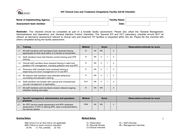
Undernutrition increases the risk of tuberculosis (TB) and in turn TB can lead to malnutrition. Undernutrition is therefore highly prevalent among people with TB. It has been demonstrated that undernutrition is a risk factor for progression from TB infection to active TB disease and that undernutrit
...
3rd edition!Large File 17 MB!
3rd edition!
Recommendations of the Healthcare Infection Control Practices Advisory Committee and the HICPAC/SHEA/APIC/IDSA Hand Hygiene Task Force
Hand hygiene in health care in the context of Filovirus disease outbreak response. Rapid advice guideline
recommended
This document provides a summary of the recommendations for hand hygiene best practices to be performed by health workers providing care and/or support to patients with filovirus infection (Ebola and Marburg viruses).
The use of Delamanid and Bedaquiline for Children with Drug-Resistant Tuberculosis.
A Guide For Multicentre Trials in High-Burden Countries

The purpose of this publication is to facilitate the implementation of existing WHO guidelines on nutrition-specific and nutrition-sensitive actions required for improving health and well-being of adolescents. Implementing these actions should explicitly take into account the heterogeneity of adoles
...
Vitamin D deficiency is thought to be common among pregnant women, particularly during the winter months, and has been found to be associated with an increased risk of pre-eclampsia, gestational diabetes mellitus, preterm birth, and other tissue-specific conditions.
This
...
The prevalence of chronic non-communicable diseases such as diabetes, cardiovascular diseases and cancers has been on the increase in Kenya in the recent past. This has been occasioned by changes in social and demographic situation in the country. The life expectancy
...

Antimicrobial resistance (AMR) is a major public health challenge, which is recognized as high priority area by the Government of India. The increasing consumption of antibiotics is one of the key drivers of antimicrobial resistance seen in bugs of public health importance. Irrational prescription o
...
WHO mhGAP Guideline update
recommended
Update of the Mental Health Gap Action Programme
(mhGAP) Guideline for Mental, Neurological and Substance use Disorders May 2015
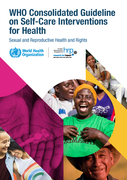
Self-care interventions are among the most promising and exciting new approaches to improve health and well-being, both from a health systems perspective and for people who use these interventions. The World Health Organization (WHO) uses the following working definition of self-care: Self-care is t
...
2nd edition, June 2021
The recommendations cover the level of blood pressure to start medication, what type of medicine or combination of medicines to use, the target blood pressure level, and how often to have follow-up checks on blood pressure. In addition, the guideline
...
A clinical case definition of post COVID-19 condition by a Delphi consensus, 6 October 2021
recommended
WHO has developed a clinical case definition of post COVID-19 condition by Delphi methodology that includes 12 domains, available for use in all settings. This first version was developed by patients, researchers and others, representing all WHO reg
...
The larval stage of the parasite Taenia solium can encyst in the central nervous system causing neurocysticercosis, which is the main cause of acquired epilepsy in the countries in which the parasite is endemic. Endemic areas are those with the presence (or likely presence) of the full life cycle of
...
This handbook is intended primarily for front-line health care providers who are likely to see children (among other clients) in their day-to-day practice. These may include general practitioners, nurses, midwives, gynaecologists,
paediatricians, mental health professionals, first responders and st
...
17th March 2020
These guidelines aim to guide all health care providers in Myanmar, accommodating the situation of different settings in the context of progressive decentralization of HIV services. Notable changes from the previous edition include:
• diagnosis of HIV
• update on the initiation of ART
...
• diagnosis of HIV
• update on the initiation of ART
...
Evidence-based guidelines are one of the most useful tools for improving public health and clinical practice. Their purpose is to formulate interventions based on strong evidence of efficacy, avoid unnecessary risks, use resources efficiently, reduc
...
A review of available evidence (2016).
28-29 June 2016; Geneva, Switzerland
The END TB strategy.
This document contains: The systematic reviews and GRADE assessments used at the Index-TB Guideline Panel in July 2015; The Evidence to Decision tables that record the Panel’s assessment and recommendations from
this meeting
BMJ 2009; 338 doi: https://doi.org/10.1136/bmj.b158 (Published 05 February 2009)
Cite this as: BMJ 2009;338:b158
Correspondence to: A Burns alistair.burns@manchester.ac.uk
