Filter
246
Text search:
birth
asphyxia
Featured
20
85
Language
Document type
178
21
17
16
5
4
3
1
1
Countries
23
13
11
11
10
8
8
8
6
6
6
5
5
5
4
4
3
3
3
3
3
3
2
2
2
2
2
1
1
1
1
1
1
1
1
1
1
1
1
1
1
1
1
1
1
1
Authors & Publishers
Publication Years
Category
154
45
22
6
4
3
Toolboxes
17
12
8
8
3
2
2
2
2
1
1
1

To complement the Global Strategy progress reporting, this report provides a detailed look at country leadership and action toward the Every Newborn National Milestones by 2020. Countries have taken the initiative to show the way forward and have demonstrated significant progress. As part of monitor
...
March - June 2018
Myanmar introduced Child Death Surveillance and Response (CDSR) in 2015 as an initiative to reduce child (under-5) mortality, an initiative that will contribute to the country’s efforts to meet the Sustainable Development Goals (SDG). Technical Guidelines for CDSR were devel ...
Myanmar introduced Child Death Surveillance and Response (CDSR) in 2015 as an initiative to reduce child (under-5) mortality, an initiative that will contribute to the country’s efforts to meet the Sustainable Development Goals (SDG). Technical Guidelines for CDSR were devel ...

No publication year indicated
The specific objectives of the plan are to:
- Scale up evidence-based, cost effective interventions through effective strategies within a HSS approach and provide equitable coverage with quality.
- Reduce neonatal mortality by improved home-based newborn ...
The specific objectives of the plan are to:
- Scale up evidence-based, cost effective interventions through effective strategies within a HSS approach and provide equitable coverage with quality.
- Reduce neonatal mortality by improved home-based newborn ...

A National Service Programme for All Children with Special Needs and their Families
In Myanmar, we estimate that at least 40% of children require ECI services for short to longer periods of time. At present, 35.1% of Myanmar children are moderately to severely stunted; all of these children are l ...
In Myanmar, we estimate that at least 40% of children require ECI services for short to longer periods of time. At present, 35.1% of Myanmar children are moderately to severely stunted; all of these children are l ...
This publication seeks to describe the best treatments and practices based on the scientific evidence available at the time of writing as evaluated by the authors and may change as a result of new research. Readers need to apply this knowledge to patients in accordance with the guidelines and laws o
...
Universal health coverage and the Sustainable Development Goals in the WHO African Region
These Blended Learning Modules cover the full range of health promotion, disease prevention, basic management and essential treatment protocols to improve and protect the health of rural communities in Ethiopia. A strong focus is on enabling Ethiopia to meet the Millennium Development Goals to reduc
...
The purpose of the review was to assign a cause of death, to ascertain the fac-tors that contributed to the death and to identify any systemic issues that could be addressed to prevent future similar deaths. The perinatal mortality audit process in 2019 provided important insights and evidence-based
...
PLoS Med 15(7): e1002615. https://doi.org/10.1371/journal. pmed.1002615
A Learning Programme for Professionals
Evidence for technical update of pocket book recommendations. Newborn conditions, dysentery, pneumonia, oxygen use and delivery, common causes of fever, severe acute malnutrition and supportive care
Operational Guidelines. Revised Edition

A Focus on the Journey to Self-Reliance for Preventing Child and Maternal Deaths . June 2018
The 2018 Acting on the Call report focuses on 25 countries’ journeys to self-reliance for preventing child and maternal deaths. Self-reliance is a country’s ability to finance and implement solution ...
The 2018 Acting on the Call report focuses on 25 countries’ journeys to self-reliance for preventing child and maternal deaths. Self-reliance is a country’s ability to finance and implement solution ...
Nepal is on target to meet the Millennium Development Goals for maternal and child health despite high levels of poverty, poor infrastructure, difficult terrain and recent conflict. Each year, nearly 35000 Nepali children die before their fifth birthday, with almost two-thirds of these deaths occurr
...

Community-based strategies play a significant role in many health systems in low- and middle-income countries, especially in light of critical shortages in the health workforce. The term community health worker has been used to refer to volunteers and salaried, professional or lay health workers wit
...
This first edition of our national neonatal care clinical guidelines is an initiative that aims to ensure that all the neonates in the Kingdom of Eswatini are offered standard, best quality of care and the best possible start in life. The guidelines have been formulated from various global sources a
...
Sexual and Reproductive Health
This manual provides guidance for policymakers on the issue of prehospital trauma care systems. The main areas covered include the organisation of the prehospital trauma care system, capacity development, data collection, transportation and communication, as well as ethical and legal considerations
...
To provide quality maternal and newborn health services at health facilities in India.
The objective of the 2022 Compendium is to compile and highlight emerging innovative health technologies for low-resource settings. It presents a snapshot of technologies that are solutions to an unmet medical/health technology need or are likely to improve health outcomes and the quality of life. H
...
Standard treatment guidelines
recommended
This new publication presents the continuing and emerging challenges to children’s environmental health.
Disease Control Priorities –3rdEdition, Volume 2.
This book focuses on maternal conditions, childhood illness, and malnutrition. Specifically, the chapters address acute illness and undernutrition in children, principally under age 5. It also covers maternal mortality, morbidity, stillbirth, and
...
The standards of care cover the routine care and management of complications occurring for women and their babies during labour, childbirth and the early postnatal period, including those of small babies during the first week of life. They define priorities for improving the quality of maternal and
...
Health Systems in Transition. Vol. 5 No.3 2015
Notable progress has also been made on other key health indicators such as reducing maternal, infant and child deaths and malnutrition, increasing immunization coverage, eliminating infectious diseases such as polio and reducing the incidence of malaria, tuberculosis and diarrhoeal diseases.
But
...
Public Health Situation Analysis and Interventions 10 October 2017
DHS Comparative Reports No. 41
Prevention, early identification, assessment and intervention in low- and middle-income countries | A Review | CHILD AND ADOLESCENT HEALTH AND DEVELOPMENT
Global Campaign Against Epilepsy
THE RESEARCH FOUNDATION OF CEREBRAL PALSY ALLIANCE newsletter – NOVEMBER 2012
Bulletin of the World Health Organization, 2001, 79 (4)

Final report 2016

2018 monitoring report: current status and strategic priorities
The report sets out the status of women’s, children’s and adolescents’ health, and on health systems and social and environmental determinants. Regional dashboards on 16 key indicators highlight where progress is being made o ...
The report sets out the status of women’s, children’s and adolescents’ health, and on health systems and social and environmental determinants. Regional dashboards on 16 key indicators highlight where progress is being made o ...
This document, Ghana’s National Newborn Health Strategy and Action Plan 2014–2018 outlines a targeted strategy for accelerating the reduction of newborn deaths in Ghana. Furthermore it provides a costed action plan with clearly marked timelines for implementation to facilitate resource mobilisat
...

In 2014, the Ministry of Health (MOH) in Malawi conducted a nationwide assessment of emergency obstetric and newborn care (EmONC) services. This cross-sectional facility-based survey used 10 data collection modules. Data collection began on 23rd September 2014 and concluded on 17th October 2014, in
...

At the threshold of Sustainable Development Goals (SDG) era, this document captures the remarkable achievements by Member States towards achieving MDGs 4 and 5. It acknowledges new opportunities in the post-2015 phase shaped by the SDGs and the Global Strategy for women’s, children’s and adoles
...
Version 2, January 2016
The primary purpose of this document is to provide 3MDG stakeholders with some essential information on the MNCH core-indicators for 3MDG, which were derived from the 3MDG Logical Framework, Data Dictionary for Health Service Indicators (2014 June, DoPH, MoH), A ... (MEASURE Evaluation, September 2005) and Monitoring Emergency Obstetric Care (WHO/UNICEF/UNFPA/AMDD). Partners are strongly encouraged to integrate the MNCH indicators into their ongoing monitoring and evaluation (M&E) activities.
These indicators are designed to help Partners assess the current state of their activities, their progress towards achieving their targets, and contribution towards the national response. This guideline is designed to improve the quality and consistency of data collected at the township level, which will enhance the accuracy of conclusions drawn when the data are aggregated.
The primary purpose of this document is to provide 3MDG stakeholders with some essential information on the MNCH core-indicators for 3MDG, which were derived from the 3MDG Logical Framework, Data Dictionary for Health Service Indicators (2014 June, DoPH, MoH), A ... (MEASURE Evaluation, September 2005) and Monitoring Emergency Obstetric Care (WHO/UNICEF/UNFPA/AMDD). Partners are strongly encouraged to integrate the MNCH indicators into their ongoing monitoring and evaluation (M&E) activities.
These indicators are designed to help Partners assess the current state of their activities, their progress towards achieving their targets, and contribution towards the national response. This guideline is designed to improve the quality and consistency of data collected at the township level, which will enhance the accuracy of conclusions drawn when the data are aggregated.

Situational Analysis: 13-23 October 2014
Report prepared using the WHO/SEARO workbook tool for undertaking a situational analysis of medicines in health care delivery in low and middle income countries
Report prepared using the WHO/SEARO workbook tool for undertaking a situational analysis of medicines in health care delivery in low and middle income countries

State of Health in the WHO African Region
recommended
This report is not a country scorecard. Rather, its purpose is to act as a compass to guide progress towards health in the SDGs.
There has been a significant improvement in the state of health in the region with healthy life expectancy - time spent in full health - in the region increasing from 50
...
The Lancet Global Health, Vol. 6, No. 10 Published: August 29, 2018

People younger than 20 years comprise 35% of the global population and 40% of the global population of least-developed nations. The number of children - neonates, infants, children, and adolescents up to 19 years of age - who need pediatric palliative care (PPC) each year may be as high as 21 millio
...
These guidelines have been developed specifically to address ethical issues of conducting research in children.
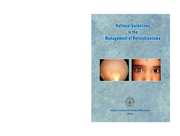
These Guidelines are intended to provide knowledge to the treating ophthalmologists, pediatricians, ocular oncologists, pediatric oncologists, and general physicians to arrive at an early diagnosis of retinoblastoma in the settings of district hospital, in private clinics and hospitals. The guidelin
...
Discussion Paper "Mental health, poverty and development", July 2009
Neurological, Psychiatric, and Developmental Disorders: Meeting the Challenge in the Developing World
Institute of Medicine (US) Committee on Nervous System Disorders in Developing Countries.
Washington (DC): National Academies Press (US); 2001.
Accessed Febr. 6, 2020
Antibiotic resistance is no longer a concern for the distant future but is a pressing issue, both globally and in Nepal. As part of global effort to preserve the effectiveness of antibiotics, the Global Antibiotic Resistance Partnership (GARP)-Nepal was established to doc
...
January 2019
Non Communicable Disease Control Programme Directorate General of Health Services Health Services Division, Ministry of Health & Family Welfare
Measuring progress towards universal health coverage.
This sixth edition of Health at a Glance Asia/Pacific presents a set of key indicators of health status, the determinants of health, health care resources and utilisation, health care expenditure and financing and quality of care across 27 Asia-
...

In resource restriced countries
Published OnlineJuly 14, 2021https://doi.org/10.1016/S2214-109X(21)00164-9. New Lancet research offers the first comprehensive analysis of the growing footprint of noncommunicable and injury-related neurological disorders to India’s overall disease burden.
Takeaways from 1990 to 2019 In terms
...
This standard Operating procedure (SOP) for JDWNRH is intended to describe and
address various important areas like admission procedure, on call process of the
doctors, interdepartmental consultation, patient discharge process and verity of
other areas which was so far solely based on verbal i
...
Integrated management of childhood illness. The last update was in the IMCI chart booklet in 2014, but since then there have been significant updates on the management of sick young infant (SYI) aged up to 2 months. This 2019 update of the sick young infant section Management of the sick young infan
...
This report summarizes the latest scientific knowledge on the links between exposure to air pollution and adverse health effects in children. It is intended to inform and motivate individual and collective action by health care professionals to prevent damage to children’s health from exposure to
...
In 2015, 5.9 million children under age five died (1). The major causes of child deaths globally are pneumonia, prematurity, intrapartum-related complications, neonatal sepsis, congenital anomalies, diarrhoea, injuries and malaria (2). Most of these diseases and conditions are at least partially cau
...
During the year 2022, COVID-19 continued to be a significant challenge in Eritrea as in many other countries across the world. As COVID-19 devastated communities around the world, WHO worked with the MoH to strengthen the National and Sub-National health systems in order to meet community needs and
...
World Health Organization. (2021). Minimum technical standards and recommendations for reproductive, maternal, newborn and child health care for emergency medical teams. World Health Organization.
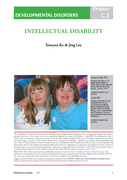
Developmental disabilities are common. Yet, children with developmental disabilities have been neglected in health systems planning and policy provisions for health and continue to experience stigmatization, institutionalization, barriers to access health care and inequalities in health and educatio
...
The Global Status Report on Noncommunicable Diseases (NCDs) 2014 by the World Health Organization outlines the global impact of NCDs, including cardiovascular diseases, cancer, diabetes, and chronic respiratory diseases, which are responsible for a significant portion of global mortality, particular
...
The Country Cooperation Strategy is the World Health Organization (WHO)’s reference for country work guiding planning and resource allocation through alignment with national health priorities and harmonization with other development partners. It clarifies roles and functions of WHO in supporting t
...
14 January 2021
This practical guide can be used to help countries monitor and analyse the impact of COVID-19 on essential health services to inform planning and decision-making. It provides practical recommendations on how to use key performance indicators to analyse changes in access to and deliv
...
Abridged version. In this abridged version of the Evidence-based Clinical Practice Guidelines for the Follow-Up of at-risk neonates, we provide recommendations for the care of newborns up to 2 years of age, corresponding to the first phase of their follow-up. The recommendations are intended for all
...