
Filter
1415
Text search:
besoins
Featured
112
336
Language
Document type
735
227
209
77
60
38
35
11
10
8
3
2
Countries
143
135
95
78
61
45
38
36
33
33
32
25
23
22
20
15
15
11
8
8
6
5
4
4
4
3
3
3
3
3
3
3
3
2
2
2
2
2
2
2
2
2
2
2
1
1
1
1
1
1
1
1
1
1
1
1
1
1
1
1
1
1
1
Authors & Publishers
Publication Years
Category
592
137
95
88
49
30
16
Toolboxes
146
87
73
65
61
56
38
31
30
26
25
23
18
14
14
9
9
6
5
5
2
1
1
1


Assessment forms, data and entry tools, guidance notes and guide manual
You can download checklists, questionnaire and Cluster monitoring cycle
Monitoring coordination performance at the national and sub-national level in both sudden onset and protracted crises is necessary to ensure that clusters are efficient and effective coordination mechanisms, fulfilling the cor
...
The report offers an overview of the progress the humanitarian sector has made and the obstacles it has faced over the past 10 years. Accountability is no longer just a fashionable term, there is now a shared understanding of what it takes to be accountable. From changes at policy level, to concrete
...
this toolkit presents a structured, rating-based methodology designed to provide a rapid, comprehensive assessment of the capacity of the human resource support system for a country’s supply chain. Data are gathered from a document review, focus group discussions, and in-country stakeholder interv
...
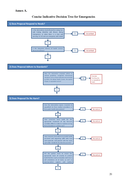
The document contains 2 decision trees, the first short one is to act fast and the second is to design better interventions
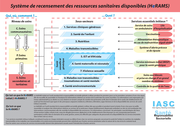
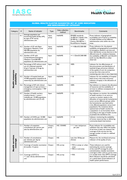
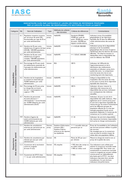
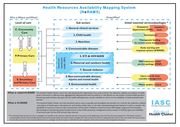
Through HeRAMS, the Global Health Cluster aims at promoting and supporting good practice in mapping health resources and services availability in emergencies so as to strengthen informed based decision making by the Health Cluster.
A short presentaion of HeRAMS
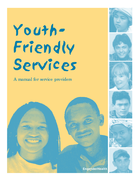
All young people, including those with special needs and from the most vulnerable groups, have the right to quality health care services. Unfortunately, this right is not a reality, particularly in the case of sexual and reproductive health services. Many youth in need of sexual and reproductive hea
...
This package, developed jointly by The ACQUIRE Project and Promundo, a Brazilian nongovernmental organization, can be used by individuals, organizations, and donors to carry out needs assessments to identify gaps in male engagement programming related to HIV and AIDS prevention, care, treatment, and
...
This package, developed jointly by The ACQUIRE Project and Promundo, a Brazilian nongovernmental organization, can be used by individuals, organizations, and donors to carry out needs assessments to identify gaps in male engagement programming related to HIV and AIDS prevention, care, treatment, and
...
This assessment tool for HIV and internally displaced persons (IDPs) is an outcome of multisectoral, multi-agency assessment missions in Côte d’Ivoire, the Democratic
Republic of Congo, Nepal and the United Nations High Commissioner for Refugees (UNHCR) first global consultation on HIV and inter
...
This handbook reflects and updates the work that ECLAC has done in recent decades to establish a methodology for estimating the economic consequences of a disaster, and thus determine the financing required to rebuild and return the affected area to normal. The handbook's third edition strengthens p
...
Arabic Edition
This is only the cover of the book. Download the whole Toolkit at: www.cdc.gov/reproductivehealth/Refugee/
Understanding the reproductive health needs of conflict-affected women will enable organizations to implement and enhance programs and services to improve the health of women and their fam
...
This guidance is intended for people designing /or implementing feedback mechanisms in a humanitarian programme. It also available in Arabic, Spanish and French
The number of new Ebola infections in Sierra Leone is declining, despite the outbreak continuing to claim lives. New cases have dropped to around 9-12 per week, according to recent WHO figures. There were over 500 cases per week at the height of the crisis around late November 2014.
The impact on t
...
The NACS User’s Guide is a series of modules that provide program managers and implementers with a package of essential information and resources. These modules are living documents and will be updated as appropriate when new evidence, guidelines, or field experience emerges. Additional modules ar
...
This manual has been developed to guide rapid risk assessment of acute public health risks from any type of hazard in response to requests from Member States of the World Health Organization (WHO). The manual is aimed primarily at national departments with health-protection responsibilities, Nationa
...
ECDC Technical Document
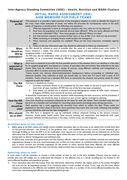
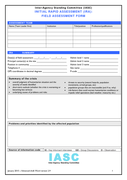
The Multi-Cluster/Sector Initial Rapid Assessment (MIRA) is a joint needs assessment tool that can be used in sudden onset emergencies, including IASC System-Wide Level 3 Emergency Responses (L3 Responses).
The English terminology, and its translations into Arabic, Chinese, French, Russian, and Spanish, are available on the UNISDR website at: www.unisdr.org/publications and on PreventionWeb at: www.preventionweb.net
The Health Equity Assessment Toolkit (HEAT) is a software application for use on desktop or laptop computers and mobile devices (minimum screen size of 7.9 inches recommended). It was developed to facilitate the assessment of within-country health inequalities. The Built-in Database Edition, Version
...
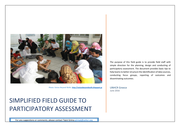
The purpose of this field guide is to provide field staff with simple direction for the planning, design and conducting of participatory assessment. The document provides basic tips to help teams to better structure the identification of data sources, conducting focus groups, reporting of outcomes a
...

Rapid Assessment Guide for Psychosocial Support and Violence Prevention in Emergencies and Recovery
recommended
This guide provides standards and directions on how to carry out rapid needs assessment for Psychosocial Support (PSS) and Violence Prevention (VP) initiatives including child protection and sexual and gender-based violence. In particular, this rapid assessment tool is designed to help gather data i
...
Version 2 (unedited). The Basic Needs Analysis (BNA) is a multi-sector needs analysis approach that can be applied in both sudden onset and protracted emergencies. The methodology comprises the Guidance (this document) presenting the conceptual BNA framework and related processes, and a Toolbox, whi
...
The Facilitator’s Guide for the basic-needs based Response Options Analysis and Planning (ROAP) is a step-by-step guide comprising tools and templates to carry out a multi-sectoral response analysis and planning of response options, in a sudden-onset or chronic crisis.
Being that so, the Guide i
...
An introduction to Coordinated Needs Assessment in 6 parts:
Part 1: Key concepts
Part 2: Link to Decision-making
Part 3: The Framework
Part 4: The Good Enough Principle
Part 5: The assessment cycle
Part 6: Basic Principles
Emergency response framework, 2nd ed.
recommended
The purpose of this Emergency Response Framework (ERF) is to clarify WHO’s roles and responsibilities in this regard and to provide a common approach for its work in emergencies. Ultimately, the ERF requires WHO to act with urgency and predictability to best serve and be accountable to populations
...
Much remains unknown about displaced communities in out-of-camp areas as identification constraints hinder knowledge on the overall situation and preeminent needs of an area. When compared to regularly monitored in-camp populations, less is known about the health, sanitation, livelihoods, food secur
...
The Feedback Starter-Kit responds to key questions ( ) and provides the most important tips ( ) for setting up and running a simple feedback mechanism. At the end of this document there is an overview of the templates needed to plan the mechanism and collect, answer, analyse and share community feed
...
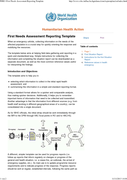
The Guidance Notes seek to help operationalize, simplify and standardize the collection and reporting of data through the application of common language and methods. They provide information on the key issues to take into account in the collection of health data and the types of data that should be
...
The Strategic Tool for Assessing Risks (STAR) offers a comprehensive, easy-to-use toolkit and approach to enable national and subnational governments to rapidly conduct a strategic and evidence-based assessment of public health risks for planning and prioritization of health emergency preparedness a
...
Combined questionnaire Core
Interesting article by promising star.
Problem-solving in the clinic, Online course
midwaidwa
midwaidwa
An advanced-midwife's guide to labour and delivery. An online learning course
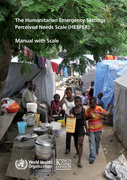
Manual with Scale

The cluster approach is a mechanism that helps to address identified gaps in response and enhance the quality of humanitarian action
A Guide for UNICEF Staff

The purpose of this booklet is to assist WHO and other
Public Health workers in the field when an emergency
occurs. The booklet provides technical hints on how to
carry out a rapid health assessment, how to facilitate
coordination, how departments in WHO can assist, etc.
Standard formats for re
...
Humanitarian Response in Violent Conflict
recommended
A Toolbox of Conflict Sensitive Indicators.
This toolbox adapts a sample of 15 indicators from the SPHERE Project's Humanitarian Charter and Minimum Standards in Humanitarian Response to be even more conflict sensitive while remaining practical and user-friendly
Disaster Preparedness Training Programme
This field action guide focuses on the first psychosocial assessment to be conducted just after a calamity strikes or just after a major event in an ongoing armed conflict. While it is necessary to update that initial assessment as the emergency situation evolves through the different phases of reco
...
Participatory Assessment with Children and Adolescents. An UNHCR Tool for Operations
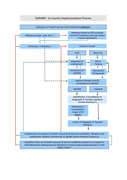
Needs assessment is essential for programme planning, monitoring and evaluation, and accountability, however needs assessment is still a critical weakness of humanitarian response. Organisations need to improve how they do assessments. The Assessment Capacities Project (ACAPS) and the Emergency Capa
...
Sphere unpacked
The magnitude of urban disasters, high population densities, and a complex social, political and institutional environment has challenged the manner in which humanitarian agencies are used to working. Humanitarian agencies are now grappling with how to change their approaches to this reality. This d
...
The Facilitator's Guide has been piloted in Borno (Nigeria) and in Fafan zone (Somali region, Ethiopia) and improved iteratively after each test.
What does the ROAP have that you won't find in other methodologies?
It is based on holistic, people-centred approaches that span across sectors an
...
This toolkit is designed to help you plan and implement a Patient Navigation program with the best chance of reducing health disparities and improving health outcomes for your patients. It contains evidence-based and experience-based examples, case studies, practical tools, and resources to help you
...
Key questions
What is already known?
Critical illness is common throughout the world and COVID-19 has caused a global surge of critically ill patients.
There are large gaps in the quality of care for critically ill patients, especially in low-staffed and low-resourced settings, and mortal
...
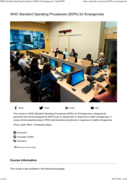
The objective of this course is to provide high-level information and contextual understanding of WHO Standard Operating Procedures (SOPs) for Emergencies.
We will explore a range of topics, ranging from the Emergency Response Framework (ERF), to planning, grants and finance, procurement, risk mana
...
La surveillance basée sur les événements est définie comme la collecte, le suivi, l'évaluation et l'interprétation organisés d'informations ponctuelles non structurées concernant des événements ou des risques de santé, qui peuvent représenter un risque aigu pour la santé. Les composant
...
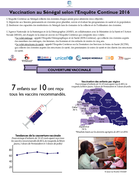
Vaccination au Sénégal selon l’Enquête Continue 2016
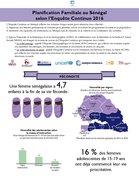
Planification Familiale au Sénégal feselon l’Enquête Continue 2016
Selon un nouveau rapport du Programme des Nations Unies pour l'environnement (PNUE), alors que les conséquences du réchauffement climatiques s'intensifient dans le monde entier, les nations doivent accroître considérablement le financement et la mise en œuvre des actions destinées à aider les
...
Le Guide d'apprentissage 2 est destiné à tous les agents de santé qui auraient à prendre en charge des complications pour la lèpre. Il contient des conseils pratiques pour la reconnaissance des réactions lépreuses et leur traitment correct. Il comprend aussi des conseils pour la référence e
...

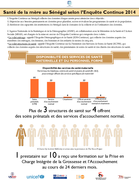
Santé de la mère au Sénégal selon l’Enquête Continue 2014
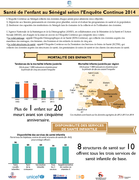
Santé de l’enfant au Sénégal selon l’Enquête Continue 2014


coïncide avec le premier cycle de cinq ans de la mise en oeuvre du programme relatif aux objectifs de
développement durable (ODD), qui vise à garantir l’accès universel aux services de santé de qualité
d’ici 2030. Les principaux responsables du ministère de la Santé du Bénin et des ex
...
La communication efficace sur les risques liés au virus Ebola nécessite à la fois du respect et
de la transparence et demeure plus vitale que jamais.
L’élimination du paludisme nécessite l’engagement de tous. Afin de maintenir les communautés alertes et engagées, nous allons nous appuyer sur des exemples réussis d’engagement communautaire pour élaborer un programme de sensibilisation sur le paludisme en milieu communautaire et ce par
...
La troisième génération de la Stratégie de Coopération (SCP3) de l’OMS avec le Bénin, qui couvre la période 2016-2019, intègre les priorités des réformes engagées et les objectifs de développement durable (ODD ). Non seulement la Stratégie de Coopération avec le Bénin 2016-2019
...
L'exercice de table COVID-19 (TTX) est un package de simulation qui utilise un scénario progressif ainsi qu'une série d'injects spécifiques pour permettre aux participants de considérer l'impact potentiel d'une épidémie sur les plans, procédures et capacités existants. Le TTX a pour objectif
...
In addition to the ongoing humanitarian emergencies in the country, the COVID-19 pandemic poses a potential monumental social and economic threat to Nigeria, with a devastating knock on effect for the most vulnerable population in the BAY states who have endured a decade of conflict. The UN system i
...
Recognizing the extent to which the COVID-19 outbreaks affects women and men differently is hugely important. Some preliminary data suggested that more men than women are dying, potentially due to sex-based immunological differences, higher rates of cardiovascular disease for men and lifestyle choic
...
L’année 2020 a été une année particulièrement difficile pour la population de la République démocratique du Congo (RDC). Les conflits armés, les épidémies, les catastrophes naturelles ainsi que l’impact socio-économique de la COVID-19 ont considérablement exacerbé les vulnérabilitÃ
...
