Filter
426
Text search:
aedes
Featured
40
212
Language
Document type
275
50
48
15
13
7
7
4
3
2
1
1
Countries
32
30
19
9
6
6
6
6
5
5
4
4
4
3
3
3
3
3
3
2
2
2
2
2
2
2
2
1
1
1
1
1
1
1
1
1
1
1
1
1
1
1
1
Authors & Publishers
Publication Years
Category
82
53
40
14
4
3
1
Toolboxes
160
89
53
30
7
5
5
4
3
3
2
2
2
2
1
1
Inerim Guidance. These guidelines have been developed in recognition that infection with Zika virus may present a risk to blood safety, and in consideration of the declaration on 1 February 2016 by the WHO Director-General of a Public Health Emergency of International Concern with regard to clusters
...
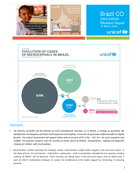



This document provides interim recommendations for the surveillance of Zika virus infection, microcephaly and Guillain-Barré syndrome, in four different contexts and describes reporting requirements to WHO. Transmission refers to vector-borne transmission, unless specified differently. Autochthonou
...


This flipbook is for community health workers to use to educate their communities about Zika, how it is spread, the effects of the virus, what to do if infected, and how to prevent Zika.
Zika Virus Infection - Step-by-Step Guide to Risk Communication and Community Engagement
recommended
This document provides Technical content on ZIKV, its manifestations, complications, modes of transmission, and prevention measures to be used in answering frequently asked questions and conveying messages in information and communication materials, community talks, press conferences, etc.
Déclaration de Principe, octobre 2020
The arrival and rapid spread of the mosquito-borne viral disease Chikungunya across the Americas is one of the most significant public health developments of recent years, preceding and mirroring the subsequent spread of Zika. Globalization in trade and travel can lead to the importation of these vi
...
Editorial| Volume 2, ISSUE 9, e415, September 01, 2021
Canadian Journal of Microbiology 25 June 2021 https://doi.org/10.1139/cjm-2020-0572
Revised and expanded version of the Guidelines
The Pharmaceutical Forum of the Americas (PFA) has previously published guidelines and organised campaigns for community pharmacists on the prevention, detection and control of arbovirus infections in 2018 with a grant from the FIP Foundation for Pharmacy Education and Research. Building on that exp
...
excreta disposal in emergencies
Over the past 50 years, dengue has spread from nine to over a hundred countries, making it the most rapidly spreading vector-borne disease. Yet, dengue continues to have a low profile among policy-makers and donors and does not receive the media attention it deserves. While there is no vaccine or cu
...
Hoy en día, más del 40 por ciento de la población mundial está en riesgo de contraer el dengue y el dengue grave


Este documento muestra las acciones que son requeridas para la prevención, control, vigilancia y coordinación multisectorial para una adecuada y efectiva acción frente al riesgo sanitario que implica la introducción del CHIKV en nuestro país

Armed Forces Pest Management Board Technical Guide No. 47
This document offers suggested risk communication actions in relation to Zika virus infection and other health issues linked to this disease. It is directed toward ministers of health and other health sector actors who, with their national (multidisciplinary) teams for communication and social mobil
...
For the control of vectors and pests of public health importance. Sixth edition

Source: World Health Organisation
A printable copy of the article published in Morbidity and Mortality Weekly Report (MMWR) can be found on the CDC Homepage. Follow the Download Link for redirection to CDC.
Article from the CDC Health Alert Network
WHO Zika Virus - Questions & Answers for pregnant women (Portuguese)
WHO Zika Virus - Questions & Answers for pregnant women (French version)
El propósito de este documento es brindar a los profesionales de salud que asisten a mujeres gestantes, información actualizada en base a las mejores evidencias disponibles para prevenir la infección, diagnosticarla oportunamente, sugerir tratamiento, dar seguimiento a las embarazadas, así c
...

The strategy focuses on mobilizing and coordinating partners, experts and resources to help countries enhance surveillance of the Zika virus and disorders that could be linked to it, improve vector control, effectively communicate risks, guidance and protection measures, provide medical care to thos
...
This document provides interim guidance for effective risk communication around Zika virus transmission and potential complications. A causal relationship between Zika virus infection and these potential complications has not yet been proven. In this uncertainty, effective communication strategies s
...
Este documento apresenta orientações provisórias para uma comunicação eficaz dos riscos relacionados com atransmissão do vírus Zikae das suas potenciais complicações. Ainda não foi, contudo, estabelecida uma relação causal entre ainfecçãopelo vírus Zika e essas potenciais complicaçõ
...
Situation Report Bolivia
This document aims to present an algorithm for deciding whom to test and provide guidance on the laboratory tests for Zika virus infection diagnosis in order to support clinical diagnostic and case reporting through surveillance among EU Member States. The algorithm is not intended for clinical man
...
Clinician Outreach and Communication Activity (COCA) Call
April 12, 2016
Methodological field approaches for scientists with a basic background in entomology to prepare and implement a yellow fever entomological assessment during outbreaks
Bulletin of the World Health Organization; http://dx.doi.org/10.2471/BLT.16.176677
Neurology, Published online before print 15 Jul 2016. Open Access
The ECDC Communicable Disease Threats Report (CDTR) is a weekly bulletin for epidemiolgists and health professionals on active public health threats. This issue covers the period 7-13 August 2016 and includes updates on Zika virus, yellow fever in Angola, polio, MERS CoV and West Nile virus.
BMC Medicine201614:112 DOI: 10.1186/s12916-016-0660-0
Interim Guidance
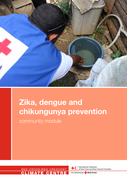
The school and a community teaching modules are aimed at preventing vector-borne diseases through community participation. Meanwhile, the interactive toolkit is meant to be help raise awareness on health, sanitation and vector control. These materials will help volunteers and practitioners foster di
...