
Filter
1537
Text search:
Water,
Sanitation
and
Hygiene
(WASH)
Featured
194
517
Language
Document type
734
232
199
122
90
52
45
29
11
9
9
4
1
Countries
62
56
56
49
41
37
37
36
36
35
34
32
29
28
28
27
26
25
20
19
18
18
17
17
17
16
16
15
15
15
15
15
12
10
9
9
9
9
8
8
8
7
7
7
6
6
6
6
6
6
6
6
6
5
5
5
5
4
4
4
4
4
4
4
3
3
3
3
3
3
3
3
2
2
2
2
2
2
2
2
2
1
1
1
1
1
1
1
1
1
1
1
1
1
1
1
1
1
1
1
1
1
1
1
1
1
1
1
Authors & Publishers
Publication Years
Category
635
260
66
63
57
56
7
2
1
Toolboxes
201
93
91
89
80
76
71
66
60
51
34
29
27
17
13
13
6
4
4
3
3
3
2
1

Climate-induced water insecurity poses one of the biggest threats to humanity and will lead to more hunger, disease and displacement
Oxfam
...
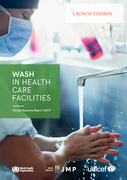
The WHO/UNICEF JMP report, WASH in Health Care Facilities, is the first comprehensive global assessment of water, sanitation
...

Quick Tips on COVID-19 and Migrant, Refugee and Internally Displaced Children (Children on the Move)
This document will be continuously updated. Version as of April 27th, 2020
Migrant and displaced children are at heightened risk to the immediate and secondary impacts of COVID-19. They often li
...
Infection prevention and control (IPC) in a CTC/ CTU IPC are all practical measures taken in the healthcare facility to prevent harm caused by infections to patients, health workers and communities.
...

Those who clean are the first line of defense against health care-associated infections (HAIs), and support efforts to reduce antimicrobial resistance (AMR).
Strengthening the training of this important group can contribute to resolving many of t
...
Updated 8 June 2021. The document has two sections:
A. The first section covers fundamental principles which are crucial to a successful, holistic intervention.
B. The second covers relevant standards and guidance in the handbook’s
...
Goal and objectives of the guideline
The goal of this guideline is to provide evidence-based recommendations to countries in their efforts to accomplish schistosomiasis morbidity control and elimin
...
PLOS Glob Public Health 2(8): e0000272. https://doi.org/10.1371/journal.pgph.0000272
Sepsis is a major global health problem, especially in sub-Saharan Africa. Improving patient care requires that healthcare providers understand patients’ priorities and
...
The Look Back Study (LBS) focuses on the water and sanitation and
...
WASH in schools during a cholera response is important due to the strong correlation between WASH and IPC. Not only can it impact the health
...
The response to a cholera outbreak must focus on limiting mortality and reducing the spread of the disease. It should be comprehensive and multisectoral, including epidemiology, case management,
...
Antimicrobial resistance (AMR) has emerged as a leading cause of death in the African region, surpassing fatalities from malaria, HIV, and TB. In response to this critical threat, the region has adopted the AMR Global Action Plan
...
Healthcare-associated infections (HAI) are a significant burden globally, with millions of patients affected each year. These infections affect both high- and limited-resource healthcare settings, but in limited-resource settings, rates are approxim
...
Presentation on WASH in Malawi

USAID/KENYA Evaluation Services and Program Support (ESPS)
The United States Agency for International Development (USAID) has a solid track record of supporting health and development initiativ ...
The United States Agency for International Development (USAID) has a solid track record of supporting health and development initiativ ...
In order to better understand the contributing factors of undernutrition in LIFT program areas and the links between child nutritional status and independent variables of programmatic importance to
...
On September 10, 2022, the Ministry of Health (MOH) announced a cholera outbreak in Aleppo governorate with 15 laboratory confirmed cases reported between August 25 and September 9, 2022. Activities under this plan seek to address the immediate need
...
Children with disabilities are particularly vulnerable in humanitarian settings, yet they are often not able to access the services and protection they need. While multiple factors create these barriers, a major cause is how data about children with
...
This dataset contains data from WHO's data portal covering the following categories:
Air pollution, Antimicrobial resistance (AMR), Assistive technology, Child mortality, Dementia diagnosis, treatment and care, Dementia policy
...

Cholera is a transmissible diarrhoeal infection caused by Vibrio cholerae. Endemic and/or epidemic in over 40 countries (mainly in Africa and Asia), cholera continues to be a major global public hea
...
Hygiene Awareness Manual (Arabic) - GIZ
recommended
The "Hygiene Awareness Manual" focuses on promoting improved hygiene practices within communities, emphasizing personal and household
...
This paper provides a very good understanding of the CHAST approach with its development and tools.

This content is from the Advance Chapters of the NEW Where There Is No Doctor
The report identifies major global gaps in WASH services: one third of health care facilities do not have what is needed to clean hands where care is provided; one in four facilities have no water s
...
Mainstreaming Gender in Water and Sanitation

Pdf files are available by chapter or for the complete version; in English and French https://wedc-knowledge.lboro.ac.uk/details.html?id=16357
Based on three years of international research and c
...
In: Beyond construction : use by all : a collection of case studies from sanitation and hygiene promotion practitioners in South Asia. Chapter 2
Today more people are exposed to hazards. While humanitarian action to mitigate the impact of disasters will always be vitally important, the community is facing critical challenge- how to better anticipate, manage and reduce - disaster risks by int
...
These guidelines deal specifically with water, sanitation and hygiene,
...
USAID/Afghanistan’s $443 million investment in the Afghan Sustainable Water Supply and Sanitation (SWSS) activity is one of the Agency’s larges
...
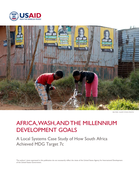
Democratic dispensation in 1994 created a political and social platform that reshaped life in South Africa. There was a surge in common belief that the inequity and wrong of Apartheid should
...
Guidance Note. The recommended actions are presented under the different components (water supply, hygiene and hand washing, disinfection, solid wa
...
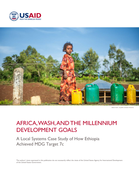
Ethiopia met the MDG target for drinking water access with a unique and high degree of success. The magnitude of the country’s success in providing improved drinking
...
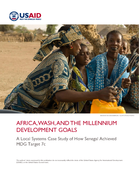
Nationally, Senegal met the MDG target for water supply access. It did this by engaging the public and private sectors to effectively invest and re
...
In many humanitarian emergencies, there is a serious lack of access to even the most basic materials needed for managing the blood in addition to a lack of appropriate sanitation facilities (including wat
...
Three billion people – 40 per cent of the world’s population – do not have a place in their homes to wash their hands with water and soap. Th
...
A field guide for accelerating and sustaining open defecation free communities through a Community-Led Total Sanitation approach
Follow-up MANDONA (FUM) is an action-oriented approach for accelerat
...
The document "Proteksyon Maladi" focuses on preventing waterborne and hygiene-related diseases through practical measures. It emphasizes the importance of personal
...
A resource for improving menstraul hygiene around the world.
Comprehensive guidance with examples of good practice, information for colleagues and pupils in class
...
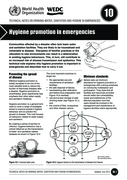
Hygiene Promotion In Emergencies
recommended
Communities affected by a disaster often lack basic water
and sanitation facilities. They are likely to be traumatized
...

Cholera is an acute gastrointestinal infection caused by the bacterium Vibrio Cholerae serogroup O1 or O139, and is often linked to unsafe drinking water, lack of proper
...
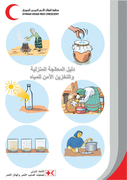
The document focuses on household water treatment methods to ensure access to safe drinking water, particularly in areas with limited access to clean wate
...
This report is the first of its kind. It brings together various data sets to present the current status of hand hygiene, highlight lagging progress, and call governments
...

The major areas of focus for the plan will be:
- Social mobilization and community empowerment (health promotion & education for disease prevention);
- Promotion of access to safe water, g ...
- Social mobilization and community empowerment (health promotion & education for disease prevention);
- Promotion of access to safe water, g ...
The Standard consists of nine key inclusion standards, and seven sets of sector-specific inclusion standards for protection – water, sanitation
...

Advances have been made through expanded interventions delivered through five public health approaches: innovative and intensified disease management; preventive chemotherapy; vector ecology and man
...
These posters can be used to help educate people about good hygiene practices, methods for disinfecting water, and caring for family members who ma
...
Maldives has made significant strides in the area of infectious disease prevention and control. This is exemplified by elimination of malaria from Maldives in 2015 and successes in TB control. In ad
...
By December of 2019, an estimated 5.3 million Venezuelans would have left the country, migrating in search of opportunities, health services and an overall search to improve the socio-economic conditions of themselves
...
Introduction to Low Cost Sanitation
recommended
Planning, Promotion, Contruction & Design. Manual
The compendium is designed for use by staff working directly with communities - e.g. health workers and community volunteers working with disabled and older people
...
In many conflicts around the world, more children die from diseases linked to unsafe water than from direct violence. UNICEF is releasing Water Under Fire volume 3, a report that highlights the issu
...
The document "J-esyon ak bon manipilasyon manje yo" focuses on proper food handling and hygiene practices to prevent contamination and foodborne il
...
This document highlights the key aspects of safe health-care waste management in order to guide policy-makers, practitioners and facility managers to improve such services in health-care facilities. It is based on the comprehensive WHO handbook Safe
...
The document "Prevansyon kont Diare" provides guidance on preventing and managing diarrhea. It explains that diarrhea, caused by pathogens like viruses, bacteria, and parasites, can lead to severe d
...
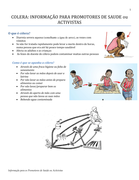
The PDF "COLERA: Informação para Promotores de Saúde" provides essential guidance for health promoters and activists on cholera. It explains that cholera is characterized by severe watery diarrhea, often resembling rice
...
Integrating neglected tropical diseases into global health and development: fourth WHO report on neglected tropical diseases evaluates the changing global public health landscape; assesses progress towards the 2020 targets;
...
(August 28 – October 10, 2017)
A nutrition and mortality assessment using SMART methodology was applied and the survey covered 15 statistical (14 districts plus 1) domains countrywide. The ma ...
A nutrition and mortality assessment using SMART methodology was applied and the survey covered 15 statistical (14 districts plus 1) domains countrywide. The ma ...
The WHO webpage on cholera provides an overview of the disease, its causes, and prevention strategies. Cholera is an acute diarrheal infection caused by the bacterium Vibrio cholerae, typically spread through contaminated food or
...
Trends in under-five mortality rate in Malawi: Child health; Child protection ; Child survival ;Early childhood ;Education ;HIV/AIDS
Maternal and newborn health ;Nutrition ;Sanitation ;Drinking
...
In 2015, 5.9 million children under age five died (1). The major causes of child deaths globally are pneumonia, prematurity, intrapartum-related complications, neonatal sepsis, congenital anomalies, diarrhoea, injuries and malaria (2). Most of these
...
This fact sheet developed by CAWST describes the history of soap, how it’s made, and the two processes for making soap. This fact sheet is available in English, Spanish, and French.
Safe sanitation is essential for health, from preventing infections to improving and maintaining mental and social
well-being. Lack of adequate
...
Control of pollution from antibiotic manufacturing is a key part of safeguarding the longevity of antibiotics for all. Pollution contributes to antibiotic resistance and potentially undermines the effectiveness of medicines. High levels of antibioti
...
This guidance booklet on Menstrual Hygiene Management (MHM) is intended for adolescent girls and young women. Issues associated with menstruation are never discussed openly
...
There has been a global outbreak of mpox since 2022; this outbreak has been caused by the strain of mpox virus called Clade 2 and has affected around 116 countries worldwide. The current surge in cases is being driven by the rapid spread of a differ
...
This Collection links to the websites of providers of free training. We monitor these links regularly, however if the training providers change their websites, some of these links may not work. All other resources on the Humanitarian Library can be downloaded directly from the Library.
This collect
...
In order to maintain daily operations and patient care services, health care facilities need to develop an Emergency Water Supply Plan (EWSP) to prepare for, respond to,
...
Report on assessment of WASH and healthcare waste management in District Sadar Hospital, Cox's Bazar
How safe is our hospital sanitation? An example from a public hospital
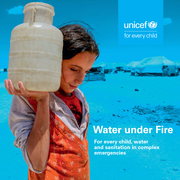
UNICEF trucks water to the camps where people displaced by the conflict have temporarily settled. UNICEF also installed latrines, showers and water
...

This selected material from Hesperian's Community Guide to Environmental Health offers 48 pages of information on basic sanitation and hygiene, inc
...
A MANUAL FOR WASH IMPLEMENTERS, BOTSWANA
Sightsavers | Department for International Development | The International Trachoma Initiative | Children Without Worms | WaterAid | WASH Advocates | Center
...
At its 48th session of Codex Committee on Food Hygiene (CCFH), the Committee noted the importance of water quality and safety in food production
...
All health-care workers require clear and comprehensive training and education on the importance of hand hygiene, the "My 5 Moments for Hand
...
Hand Hygiene and COVID-19
recommended
MEDBOX Issue Brief No.2.
The main route of transmission of the Sars-CoV-2 virus are small respiratory droplets. Therefore, thoroughly cleaning of hands with either alcohol-based hand rub or soap and water
...
During fresh fruit and vegetables (FFV) production, water is used for a variety of purposes. Even the water was conventionally treated
...
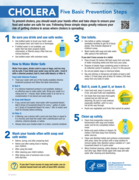
The CDC document outlines five essential steps for preventing cholera. It emphasizes the importance of using treated water for drinking and food preparation, washing hands thoroughly with soap
...
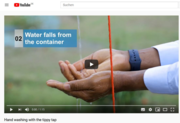
Hand washing with the tippy tap
recommended
Hand washing is one of the best ways to prevent the spread of COVID-19. But not everyone has access to running water at all times. The tippy tap is one simple and safe way to
...
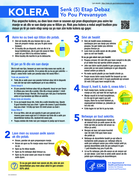
The CDC document titled "KOLERA: Senk (5) Etap Debaz Yo Pou Prevansyon" outlines five essential steps for preventing cholera. It emphasizes the importance of using treated water for drinking and foo
...
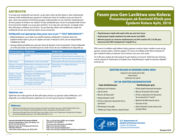
Fason pou Gen Laviktwa sou Kolera
recommended
The document titled "Fason pou Gen Laviktwa sou Kolera" (How to Achieve Victory over Cholera) provides comprehensive guidelines on the clinical presentation and management of cholera, particularly in the context of the 2010 Haiti outbreak. It emphas
...
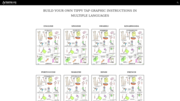
The brochure "How to Build Your Own Tippy Tap", published by SPRING in 2015, provides step-by-step instructions for creating a simple handwashing device called a tippy tap. It highlights the importance of hand hygiene
...
The UNICEF Syria webpage titled "Cholera Resource Material" offers a collection of educational resources aimed at preventing cholera and safeguarding families. These materials, available in Arabic, include posters
...
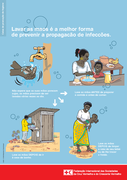
The poster highlights the critical role of handwashing in preventing the spread of infections. It emphasizes the importance of washing hands multiple times a day, even if they do not appear dirty, as handwashing is the most effective way to reduce the risk of illness. Specific recommendations includ
...
Welcome to the Infection Prevention and Control (IPC) training package. IPC is a major challenge for health care systems around the world and there is a significant opportunity to reduce avoidable m
...
The package is designed to help address the WASH in Schools monitoring deficit at the national level.
The package consists of three modules:
The EMIS module: a set of basic monitoring questions on ...
The package consists of three modules:
The EMIS module: a set of basic monitoring questions on ...
Personne ne va dans un établissement de soins de santé pour tomber malade. On s’y rend pour se faire soigner, pour accoucher
ou pour se faire vacciner. Cependant, des centaines de millions de personnes s’exposent à un risque accru d’infection en cherchant à obtenir des soins dans des éta
...
The primary aim of the GWC COVID Resource page is to centralise WASH specific resources for the COVID response. The GWC is primarily collecting key country resources from Nationa WASH Humanitarian C
...
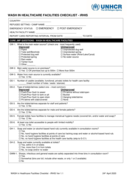
WASH in healthcare facilities checklist
recommended
The UNHCR WASH Monitoring System includes monitoring of refugee health facilities following the Joint Monitoring Program (JMP) guidelines, model questions and standard indicators. All refugee health
...
