
Filter
163
Text search:
United
Nations
Children’s
Fund
(UNICEF),
World
Health
Organization
(WHO)
Featured
Recommendations
13
New Publications
55
Language
Document type
No document type
98
Studies & Reports
38
Guidelines
14
Manuals
5
Situation Updates
3
Strategic & Response Plan
2
Training Material
1
Infographics
1
Fact sheets
1
Countries / Regions
Global
14
Kenya
5
Ethiopia
4
Tanzania
4
Indonesia
4
Bangladesh
4
Nepal
3
South Sudan
3
Lebanon
3
Myanmar / Burma
3
Yemen
3
Western and Central Europe
3
Nigeria
2
Senegal
2
Uganda
2
Philippines
2
Somalia
2
Zambia
2
Syria
2
Cambodia
2
Mozambique
2
Namibia
2
Lesotho
2
South–East Asia Region
2
Guinea
1
Sierra Leone
1
Congo, Democratic Republic of
1
Mali
1
Guinea-Bissau
1
Niger
1
Haiti
1
India
1
Pakistan
1
Iraq
1
Jordan
1
Afghanistan
1
Turkey
1
Egypt
1
Chad
1
Rwanda
1
Malaysia
1
South Africa
1
Central African Republic
1
Colombia
1
Greece
1
Libya
1
Mexico
1
Sri Lanka
1
Latin America and the Carribbean
1
Africa
1
Venezuela
1
Eastern Europe
1
Laos
1
Authors & Publishers
Publication Years
Category
Countries
53
Women & Child Health
40
Key Resources
9
Clinical Guidelines
4
Public Health
3
Capacity Building
2
Pharmacy & Technologies
1
Toolboxes
Disability
24
Mental Health
13
Planetary Health
13
COVID-19
11
Conflict
8
HIV
8
Pharmacy
5
Refugee
3
Global Health Education
3
Caregiver
3
Polio
2
Specific Hazards
2
Natural Hazards
1
Rapid Response
1
TB
1
AMR
1

Unite for Children
First Edition
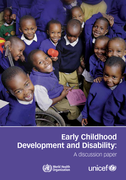
Developmental disabilities are common. Yet, children with developmental disabilities have been neglected in health systems planning and policy provisions for health and continue to experience stigma
...
Fully functioning water, sanitation, hygiene (WASH) and health care waste management services are a critical aspect of infection prevention and control (IPC) practices, and ensuring patient safety and quality of care. Such services are also essentia
...

This evaluation is the first systematic effort by UNICEF to generate evidence on how well its global as well as country level Community Management of Acute Malnutrition (CMAM) strategies have worked, including their acceptance and ownership in vario
...
According to the latest available estimates, more than 1 in 7 adolescents aged 10–19 is estimated to live with a diagnosed mental disorder globally. Almost 46,000 adolescents die from suicide each year, among the top five causes of death for their age group. Meanwhile, wide gaps persist between me
...
This Key Indicators report presents selected findings of the 2019 EMDHS. A comprehensive analysis of the data will be publishedin a final report in 2019.T he primary objective of the 2019 EMDHS project is to provide up-to-date estimates of key demographic and
...
Outstanding child and adolescent TB priorities include the need to: find the missing children with active TB and link them to TB care; prevent TB in children who are in contact with infectious TB cases (through implementation of active contact inves
...
Every five minutes a child dies as the result of violence, according to a ground-breaking report from Unicef UK. The report reveals that the vast majority of children are killed outside warzones and that physical, sexual and emotional abuse is wides
...
Technical brief by the H4+ (UNAIDS, UNFPA, UNICEF, UN Women, WHO and the World Bank)

In where under-five mortality is high and vitamin A deficiency is a public health problem, two high-dose supplements of vitamin A per year, spaced four to six months apart, can strengthen childrenâ
...
The Water and Sanitation for Health Facility Improvement Tool (WASH FIT) presents a framework and acts as a guide to support multisectoral action to improve water, sanitation and hygiene (WASH) in health
...
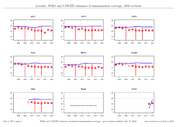
Data received as of July 3, 2017 | WHO and UNICEF estimates of national immunization coverage - next revision available July 15, 2018
EVALUATION REPORT. This report is a synthesis of the evaluation of UNICEF's response to the 2004 Indian Ocean tsunami in Indonesia that was undertaken in August 2008 to July 2009. The evaluation assessed U
...

The UNICEF-GAIN Partnership Project
The report notes that iodine deficiency is a leading cause of preventable brain damage worldwide. Insufficient iodine during pregnancy and infancy results in neurological and psychological deficits, reducing ...
The report notes that iodine deficiency is a leading cause of preventable brain damage worldwide. Insufficient iodine during pregnancy and infancy results in neurological and psychological deficits, reducing ...
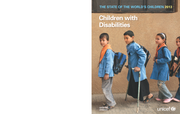
The State of the World’s Children 2013: Children with Disabilities examines the barriers – from inaccessible buildings to dismissive attitudes, from invisibility in official statistics to vicious discrimination – that deprive children with dis
...
