Filter
1468
Text search:
UNDP
Featured
75
507
Language
Document type
1019
221
77
54
42
20
17
11
4
2
1
Countries
81
64
59
57
54
43
38
34
30
28
27
26
22
20
18
18
18
17
17
17
17
16
16
16
15
15
14
14
14
14
13
12
12
11
10
9
9
7
7
7
7
7
7
6
6
6
6
6
6
5
5
5
5
4
4
4
4
4
4
4
4
4
3
3
3
3
3
3
3
3
3
2
2
2
2
2
2
2
1
1
1
1
1
1
1
1
1
1
1
1
1
1
1
1
1
1
1
1
1
1
1
1
Authors & Publishers
Publication Years
Category
725
69
61
33
33
13
7
4
Toolboxes
167
91
80
66
65
54
53
41
36
32
26
26
24
24
11
8
8
7
6
5
4
2
2
1
Accessing disaster information can be a time consuming and laborious task. Not only is data scattered but frequently identification of the disaster can be confusing in countries with many disaster events. To address both of these issues, Asian Disaster Reduction Center (ADRC) proposed a globally com
...
No publication year indicated
In the context of the floods in August 2015 in Myanmar, the Disaster Risk Reduction Working Group (DRR WG) was requested to provide clear recommendations to the DMH (Department of Hydrology and Meteorology)to strengthen preparedness activities, in particular for t ...
In the context of the floods in August 2015 in Myanmar, the Disaster Risk Reduction Working Group (DRR WG) was requested to provide clear recommendations to the DMH (Department of Hydrology and Meteorology)to strengthen preparedness activities, in particular for t ...

Timor-Leste’s vulnerability to natural hazards means if particular care is not taken in the development of the country’s infrastructure, it will remain at risk to disruption.
Timor-Leste developed the 2008 National Disaster Risk Management Policy, which lays out the government’s vison of ...
Timor-Leste developed the 2008 National Disaster Risk Management Policy, which lays out the government’s vison of ...
Ghana's attempt to regulate health care waste management started in 2002 with the development of guidelines on health care waste manage-ment by the Environmental Protection Agency (EPA). In 2006, the Ministry of Health developed the health care waste policy and guidelines. This guidance document im
...
Background
Cardiovascular diseases (CVDs) are one of the global leading causes of concern due to the rising prevalence and consequence of mortality and disability with a heavy economic burden. The objective of the current study was to analyze the trend in CVD incidence, mortality, and mortality-to-
...
Updated version – September 2020
The COVID-19 pandemic is affecting everyone. Globally, millions of people have been infected with the virus, while hundreds of thousands have lost their lives. In Moldova, the pandemic is placing an ever-increasing pressure on the health care and social protectio
...
The Disaster Recovery Framework (DRF) Guide for the Health Sector provides guidance on how to implement a comprehensive, integrated, and structured approach to disaster recovery. Its overarching goal is to minimize the impact of the disaster on communities and help countries to recover quickly and e
...
The building damage assessment, conducted between March 2010 and February 2011 by the Government of Haiti and the United Nations system, showed that more than 400,000 buildings were damaged or destroyed, of which approximately 218,000 could be occupied without repairs (green category), 105,000 were
...
This guide is a revised edition to the previous version published in 2017.
This updated publication provides programme managers with a user-friendly tool that can: (i) analyse and draw conclusions from historic dengue datasets; (ii) identify appropriate alarm indicators that can predict forthcoming
...
The aim of this “model contingency plan” is to assist programme managers and planners in devel-oping a national, context-specific, dengue outbreak response plan in order to: (a) detect a dengue outbreak at an early stage through clearly defined and validated alarm signals; (b) precisely define w
...
Guidelines for Medicine Donations
recommended
This 3rd edition of Guidelines for medicine donations has been developed by the World Health Organization (WHO) in cooperation with major international agencies active in humanitarian relief and development assistance. The guidelines are intended to improve the quality of medicine donations in inter
...
IDS Rapid Response Briefing 8
The report will describe how the Ebola Response MPTF, which has attracted contributions from 38 Member States, one business and many individuals, has offered a transparent and strategic tool to support the Ebola response. As of 31 January 2015, the Fund had total pledges amounting to US$142 million,
...
Strengthening HIV prevention among most-at-risk populations (MARPs) in the Syrian Arab Republic:
This Joint Emergency Management Plan of the International Organizations (Joint Plan) describes the
interagency framework of preparedness for and response to an actual, potential or perceived nuclear or
radiological emergency independent of whether it arises from an acci
...

This publication provides guidance to governments, civil society organizations (nongovernmental organizations and community-based organizations) and other partners implementing HIV prevention, care and treatment programs with key populations. This guide is designed to assist these programs in the de
...
The survey is representative of the Union Territory, its states and regions and urban and rural areas. It was conducted in all the districts and in 296 of the 330 townships of Myanmar. A total of 13,730 households were interviewed. It collects data on the occupations of people, how much income they
...

Accessed: 24.09.2019
MSF provides treatment for HIV and tuberculosis (TB) in more than 20 countries around the world. The report Burden sharing or burden shifting? How the HIV/TB response is being derailed examines the situation in nine countries where MSF runs programmes: Central African Republic, Democratic Republic
...
This report sets out the compelling case for repurposing harmful agricultural producer support to reverse this situation, by optimizing the use of scarce public resources, strengthening economic recovery from the COVID-19 pandemic, and ultimately driving a food systems transformation that can suppor
...
The Arid and Semi-Arid lands (ASAL) constitute about 80% (467,200 sq. km) of Kenya’s total land mass and is grouped into geographical zones including the Savannah covering most of the North- eastern and South-eastern parts, the Coastal region, the North Rift Valley, the Highlands and the Lake Vict
...
This Guidance was developed in response to the increase in HIV-related human rights crises and the shrinking civic space for rights-related responses to HIV in recent years across the world. This document builds upon existing guidance documents, offering updated guidance for country-based United Nat
...
In response to a call by the United Nations Secretary-General and the Governments of Guinea, Liberia and Sierra Leone, an international team conducted an Ebola Recovery Assessment.The aim was to contribute towards laying the foundation for short-, medium- and long-term recovery while the medical eme
...
The only way to prevent future Ebola epidemics of this magnitude is to address the fundamental social and political vulnerabilities that have allowed the virus to flourish, such as weak health systems and local services, poor governance, chronic poverty, and a legacy of conflict and social divisions
...
Full Report.
In response to a call by the United Nations Secretary-General and the Governments of Guinea, Liberia and Sierra Leone, an international team conducted an Ebola Recovery Assessment. The aim was to contribute towards laying the foundation for short-, medium- and long-term recovery while
...

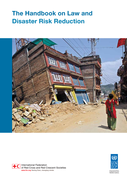
The Handbook on Law and Disaster Risk Reduction (the Handbook) has been developed to provide guidance on how to use the Checklist and conduct related legislative reviews and reform processes. While the methodology for using the Checklist needs to be tailored to each country’s context and respectiv
...

The report offers an analysis of the broader challenges to securing humanitarian action and recommends areas for improvement. This study will contribute to improving the way humanitarians ‘do business’ in complex security environments.
A Technical Paper. Final Report

A Booklet on Women and HIV/AIDS for Auxiliary Nurse Midwives (ANMs) Accredited Social Health Activists (ASHAs) Anganwadi Workers (AWWs) and Members of Self-help Groups (SHGs)
Version 2
Version 2
Accessed November 2, 2017
Public Health Situation Analysis and Interventions 10 October 2017
Towards gender - transformative HIV and TB responses
Towards gender - transformative HIV and TB responses
На пути к гендерно-преобразовательным мерам против ВИЧ и ТБ
The purpose of the WHO Manual for the Public Health Management of Chemical Incidents is to provide a comprehensive overview of the principles and roles of public health in the management of chemical incidents and emergencies. While this information is provided for each phase of the emergency cycle,
...
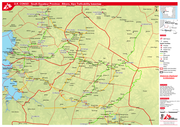
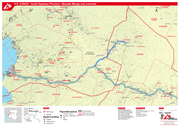

The Report describes the evaluation of WHO's contribution to the Maternal Health Program in South-East Asia Region. This was an independent evaluation conducted in 2015 by Amaltas, a Delhi based organization. The evaluation highlights the progress in five countries, namely Bangladesh, Indonesia, Mya
...
Guidelines for the registration of microbial, botanical and semiochemical pest control agents for plant protection and public health uses.
These guidelines are intended to guide pesticide regulatory authorities in the registration of microbial, botanical, and semiochemical pest control agents for p
...
This document presents the findings of the National Census of Persons with Disabilities in Rwanda. The preliminary result of this census has been used to produce a summary analysis of tables and figures. It shall be possible to derive basic socio-demographic indicators as well as to obtain the estim
...
Final Evaluation
The project objectives were to promote the conservation, sustainable use and cultivation of endangered medicinal plants in Zimbabwe, by demonstrating effective models at the local level, and developing a legal framework for the conservation, sustainable use, and equitable shari ...
The project objectives were to promote the conservation, sustainable use and cultivation of endangered medicinal plants in Zimbabwe, by demonstrating effective models at the local level, and developing a legal framework for the conservation, sustainable use, and equitable shari ...
This Manual is primarily intended for Local Government, Community Based Organizations and Civil Society Organizations (CSO) supporting or implementing Community Based Disaster Risk Management (CBDRM) program.
This handbook has been compiled as a source of ideas and experiences that can be used for CLTS orientation workshops, advocacy to stakeholders, training facilitators and natural leaders and implementing CLTS activities. It is a resource book especially for field staff, facilitators and trainers for
...
This study looks at commitments made at the World Humanitarian Summit (WHS) under the Grand Bargain and provides an overview of good practices on localisation approaches, provides a number of case studies from the regional response and makes recommendations on how to further strengthen leadership an
...
Yemen has already lost 2 decades of Human Development
The study warns of exponentially growing impacts of conflict on human development. It projects that if the war ends in 2022, development gains will have been set back by 26 years — almost a generation. If it continues through 2030, that setbac
...
At least half of the world’s population does not have full coverage of essential health services. Health expenses push more than 100 million people into extreme poverty each and every year, forcing them into terrible choices that no one should ever have to make: Buy medicine or food? Education or
...
Midnight, Executive Director
midnightp@apcom.org
Accessed: 27.08.2019