
Filter
1703
Text search:
UNAIDS
data
Featured
89
471
Language
Document type
1224
231
119
38
33
23
17
8
8
2
Countries
54
53
46
46
44
44
44
44
39
36
33
30
28
28
28
28
28
27
27
26
24
24
18
18
17
16
15
15
14
13
12
11
11
11
10
10
10
9
8
8
7
6
6
6
6
6
6
5
5
5
5
4
3
3
3
3
3
3
3
3
2
2
2
2
2
2
2
2
2
1
1
1
1
1
1
1
1
1
1
1
1
1
1
1
1
1
1
1
1
1
1
1
1
1
1
1
1
1
1
1
Authors & Publishers
Publication Years
Category
694
70
65
47
18
17
4
1
Toolboxes
669
99
37
34
32
23
16
15
14
12
11
9
9
9
6
5
4
4
3
3
2
1
25 February 2021
This technical guidance is a living document that builds on guidelines and reports of the UNAIDS Joint Programme. The definitions contained herein are working definitions that are subject to change. Updates will also be added furth
...
Why bold action against inequalities is needed to en AIDS, stop COVID-19 and prepare for future pandemics
This publication provides managers with guidance on how to create basic HIV prevention cascades as a starting point to enhance their ability to monitor and improve their programming and to facilitate comparisons of programme effectiveness across sites.
El mundo no está en vías de acabar con la pandemia de sida. Las nuevas infecciones aumentan y las muertes por sida continúan en demasiadas comunidades. Este informe revela por qué: las desigualdades nos están frenando. En términos francos, el informe llama la atención del mundo sobre la dolor
...

Country Progress Report
Reporting Period
January – December, 2014
Accessed: 26.09.2019
1 July 2021; Report shows big COVID-19-related HIV prevention programme service disruptions, but highlights that HIV service innovations and adaptations are possible.
A synthesis report on programme disruptions and adaptations during the COVID-19 pandemic in 2020
Joint actions by the Global Fund and UNAIDS are guided by a strong alignment of strategies, goals and targets. UNAIDS has worked with all stakeholders to set a common agenda and targets within the G
...
Joint United Nations Programme on HIV/AIDS
UNAIDS 2016 / Meeting Report
Accessed: 26.09.2019
A rapid situation analysis in three districts
Accessed: 04.10.2019

Accessed August 2018
Accessed August 2018
Policy Brief, Updated in March 2017
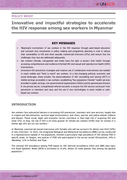
Key messages
• Meaningful involvement of sex workers in the HIV response through peer-based education and outreach and consultation in policy making and programme planning is vital to reduce their vulnerability to HIV and other sexually transmitted inf ...
Key messages
• Meaningful involvement of sex workers in the HIV response through peer-based education and outreach and consultation in policy making and programme planning is vital to reduce their vulnerability to HIV and other sexually transmitted inf ...
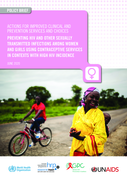
This programmatic brief explores how to expand HIV and STI prevention and contraceptive method options in contraceptive services and, thus, to reduce HIV and STI incidence among adolescent girls and women. It focuses on settings with extremely high HIV prevalence and incidence. This brief complement
...
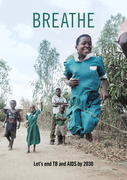
“It has never been more urgent for us to come together to end HIV and tuberculosis. We achieve the most when we work together, using all of our strengths, harnessing all of our collective potential to end HIV and tuberculosis for a healthier world as part of the Sustainable Development Goals.” â
...
UNAIDS/WHO Working Group on Global HIV/AIDS and STI Surveillance
Accessed: 29.09.2019
Accessed: 27.09.2019
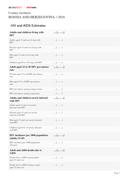
Accessed: 26.09.2019
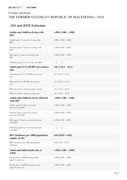
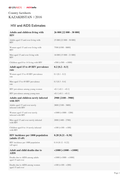
Accessed: 26.09.2019
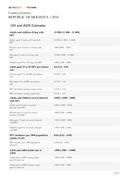
Accessed: 24.09.2019
Accessed: 04.10.2019
World Aids Day, 1. December 2018
Commemorating 30 Years
Accessed: 05.10.2019
Overcoming HIV-related stigma and discrimination in health- care settings and beyond
UNAIDS 2017 | REFERENCE
From passive beneficiaries to active agents of change
A practical guide to meaningfully engage adolescents in the AIDS response
UNAIDS 2016 reference
Global HIV Strategic Information Working Group
For Populations At Risk For HIV
Accessed: 07.11.2019
World AIDS Day 2019
The Gap Report 2014
Accessed: 17.11.2019
UNAIDS / 2016
Regional indicators to measure progress towards zero discrimination
UNAIDS 2018 | Guidance
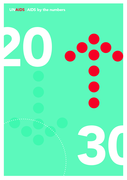
In 2018: 54% of new HIV infections were among key populations and their sexual partners, 40% decrease in new HIV infections since the peak in 1997, 37.9 million people living with HIV in the world, 1 700 000 children living with HIV (under 15 years)
UNAIDS Joint United Nations Programme on HIV/AIDS
UNAIDS/WHO Working group
HIV/AIDS and STI surveillance 2015 / Reference
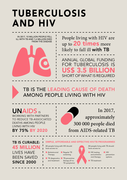
Tuberculosis (TB) is the leading cause of illness and death among people living with HIV. TB can be cured.

Accessed: 11.03.2020
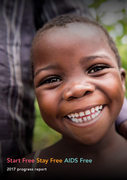
Start Free Stay Free AIDS Free - 2020 report
recommended
This progress report reviews recent gains, new developments and remaining challenges as countries approach the 2020 targets of the Start Free Stay Free AIDS Free framework.
This fourth progress report November 2020 of the Global HIV Prevention Coalition reviews the progress in the 28 focus countries and complements the three previous progress reports. This report describes key developments in 2019–2020, identifies challenges and opportunities (including those associa
...
The checklist and reference list has two parts: high-level cross-cutting content (Part A) and specific programme content (Part B). Part A applies to all countries and contains situation and response analysis, the NSP development process, the goal, targets and priority-setting of the NSP and the prin
...
Five years after a global commitment to Fast-Track the HIV response and end AIDS by 2030, the world is off track. A promise to build on the momentum created in the first decade of the twenty-first century by front-loading investment and accelerating HIV service provision has been fulfilled by too fe
...
The new Global AIDS Strategy 2021--2026, End Inequalities, End AIDS, is a bold approach that uses an inequalities lens to close the gaps preventing progress to end AIDS
Steady progress in the scaleup of VMMC as an HIV prevention intervention in 15 eastern and southern African countries before the SARS-CoV2 pandemic
3 June 2021. After 40 years of AIDS, charting a course to end the pandemic.
The report shows that countries with progressive laws and policies and strong and inclusive health systems have had the best outcomes against HIV. In those countries, people living with and affected by HIV are more likely t
...
2021 UNAIDS Global AIDS Update. UNAIDS report shows that people living with HIV face a double jeopardy, HIV and COVID-19, while key populations and children continue to be left behind in access to H
...
This report makes the case for a major new initiative—to rapidly recruit, train and deploy 2 million community health workers in Africa. Drawing on a vast body of evidence and substantial regional experience, the report shows how community health workers save lives and improve quality of life and
...
Almost half (46%) of the world’s 1.7 million children living with HIV were not on treatment in 2020 and 150 000 children were newly infected with HIV, four times more than the 2020 target of 40 000
23 February 2022
A summary of the commitments and targets within the United Nations General Assembly’s 2021 Political Declaration on HIV and AIDS.The United Nations General Assembly’s 2021 Political Declaration on AIDS features bold global commitments and targets for 2025 that are ambitious but
...
Getting on track to end AIDS as a public health threat by 2030. This new Road Map charts a way forward for country-level actions to achieve an ambitious set of HIV prevention targets by 2025. Those targets emerged from the 2021 Political Declaration on HIV and AIDS, which the United Nations General
...
This report analyses the intersection of HIV, COVID-19 and public debt in developing countries. The collision between COVID-19 and a crippling debt crisis have reversed decades of progress - putting present and future investments in health and HIV at risk. Pragmatic options to address the pandemic t
...
UNAIDS leads and inspires the world to achieve its shared vision of zero new HIV infections, zero discrimination and zero AIDS-related deaths. It unites the efforts of 11 UN Cosponsor organizations- UNHCR, UNICEF, WFP, UNDP,UNFPA, UNODC, UN Women, I
...
Donor government disbursements to combat HIV in low- and middle-income countries totaled US$8 billion in 2018, little changed from the US$8.1 billion total in 2017 and from the levels of a decade ago, finds a new report from the Kaiser Family Foundation (KFF) and the Joint United Nations Programme o
...
This status report shows how far we have come—and how much further we must go—if we hope to meet the global commitments to end AIDS in children. It offers a snapshot of global progress and permits an early assessment of the impact of the Global Alliance’s work.
The UNAIDS 2020 global report is a call to action. It highlights the scale of the HIV epidemic and how it runs along the fault lines of inequalities.
These include taking proactive measures to ensure that people, particularly people in vulnerable groups, can access HIV treatment and prevention services, designating and supporting essential workers, including community-led organizations, and implementing measures to prevent and address gender-base
...
The COVID-19 pandemic has exposed the inadequacy of investments in public health, the persistence of profound economic and social inequalities and the fragility of many key global systems and approaches.
Global AIDS Update 2018
Closing Gaps
Breaking Barriers
Righting injustices
Five years after a global commitment to Fast-Track the HIV response and end AIDS by 2030, the world is off track. A promise to build on the momentum created in the first decade of the twenty-first century by front-loading investment and accelerating HIV service provision has been fulfilled by too fe
...
Five years after a global commitment to Fast-Track the HIV response and end AIDS by 2030, the world is off track. A promise to build on the momentum created in the first decade of the twenty-first century by front-loading investment and accelerating HIV service provision has been fulfilled by too fe
...

Towards gender - transformative HIV and TB responses
Le présent document s’adresse essentiellement au personnel des programmes de surveillance du VIH dont la tâche est de surveiller l’évolution de l’épidémie de VIH. Il décrit la manière dont les données recueillies systématiquement dans le cadre des programmes de prévention de la trans
...
This report brings attention to achieving gender equality in the context of women, girls, and the HIV response. This six-month consultation in 2016 with adolescent women and young girls found that #WhatWomenWant is: collaboration and joint action by all to invest in women's HIV and Sexual and Reprod
...
Health, Rights and Drugs
recommended
Harm Reducation, Decriminalization and Zero Discrimination for People who use Drugs
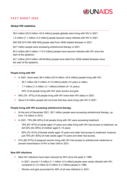
July 2022
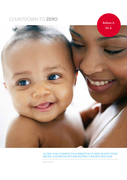
Countdown to zero
2011- 2015
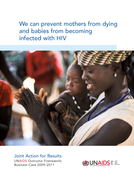
Joint Action for Results
UNAIDS Outcome Framework: Business Case 2009–2011
UNAIDS 2016, Reference
HIV care and support taking into account the 2016 WHO consolidated guidelines

Republic of Armenia
Reporting period: January-December 2015
Accessed: 29.09.2019
Country report
UNAIDS Series: Engaging uniformed services in the fight against AIDS
Case Study 2
2018 Global HIV Statistics
Accessed: 05.10.2019
States have a moral and legal obligation—under the Universal Declaration of Human Rights, human rights treaties, the 2030 Agenda for Sustainable Development and other international obligations—to remove discriminatory laws and to enact laws that protect people from discrimination
Zero Discrimination Day
#ZERO DISCRIMINATION
1 March 2019
Accessed: 19.10.2019
UNAIDS 2018 / Reference
1-13 December 2018 | Geneva, Switzerland UNAIDS Programme Coordinating Board Issue date: 23 November 2018
UNAIDS/PCB (43)/18.32
