
Filter
2281
Text search:
Surveillance
and
Epidemiology
Featured
220
557
Language
Document type
1226
402
343
110
102
34
31
18
6
4
Countries
106
71
61
55
55
55
46
45
42
42
41
37
32
31
31
30
27
27
24
23
23
22
21
21
21
20
18
17
17
15
14
14
14
14
14
13
13
12
12
11
11
10
9
9
9
9
9
8
8
8
7
7
7
7
7
6
6
6
6
6
5
5
5
5
5
5
5
5
4
4
4
3
3
3
3
3
3
3
3
2
2
2
2
2
2
2
2
2
2
2
2
2
2
2
2
2
2
2
2
2
1
1
1
1
1
1
1
1
1
1
1
1
1
1
1
1
1
1
1
1
1
1
1
1
1
1
Authors & Publishers
Publication Years
Category
729
234
141
69
59
32
23
1
Toolboxes
235
229
198
186
135
122
104
80
77
47
44
35
30
28
26
23
23
23
20
14
10
5
1
1
This report describes the geographical and temporal distribution of multidrug-resistant (MDR) tuberculosis (TB) using molecular typing data reported by European Union (EU)/European Economic Area (EEA) Member States for 2015
...
Taenia saginata is a zoonotic tapeworm that is of economic importance in countries where cattle are kept. The parasite is transmitted from human tapeworm carriers (taeniosis) to bovines (cysticercosis) by excretion of eggs or proglottids containing eggs into the environment via the stool. Bovines ca
...

Emerging Infectious Diseases; Vol. 21, No. 11, November 2015

Participant Manual
October 2009
The strategy recommends that AU Member States should enhance, where feasible, existing COVID-19 surveillance to include:
Community-based surveillance to detect symptomatic cases early for tre
...
Transactions of the Royal Society of Tropical Medicine and Hygiene vik,113 no.11. Dengue is the world's most common arboviral infection, with almost 4 billion people estimated to be living at risk of dengue infection. A recently introduced vaccine
...
The Event-based Surveillance Framework is intended to be used by authorities and agencies responsible for
surveillance
...
PLOS Medicine | https://doi.org/10.1371/journal.pmed.1002514 March 1, 2018
2016 data
The report was coordinated by Anastasia Pharris and Annemarie Stengaard.
Report review and production support were provided by Andrew J. Amato-Gauci, Mike Catchpole, Denis Coulombier
...
Antimicrobials are medicines, including antibiotics, antivirals, antifungals, and antiparasitics, that are used to prevent and treat infections in humans, animals,
...
Whole-genome sequencing (WGS) provides a vast amount of information and the highest possible resolution for pathogen subtyping. The application of WGS for global surveillance can provide information
...
Using Epidemiology to Support Primary Health Care. Updated version of the WHO handbook published in the early 1990's entitled: Manual of Epidemiology for District Health Management or those with an
...
The goal of this course is to provide participants with the foundational skills needed to begin the development, implementation and ongoing improvement of a congenital anomalies surveillance progra
...
2nd edition
PHA 2018; 8(S1): S24–S28
© 2018 The Union
Event-based surveillance (EBS) is defined as the organized collection, monitoring, assessment and interpretation of mainly unstructured ad hoc information regarding health events or risks, which may
...
Given the circulation of the variant of clade I of mpox virus (MPXV) in the African Region, which is associated in the African Region with sustained transmission and the occurrence of cases in a wider range of age groups, including children, the Pan
...
The goals of Ebola virus disease (EVD) surveillance during Phase 3 of the Ebola response are to promptly detect new, suspected EVD cases and deaths so as to trigger appropriate response, including r
...
The epidemiology of the disease is mediated by the interaction of the parasite (trypanosome) with the vectors (tsetse flies), as well as with the human and animal hosts within a particular environme
...
Euro Surveillance 2014;19(47):pii=20970, p.31-37
Antimicrobial resistance (AMR) surveillance plays an important role in the early detection of resistant strains of public health importance and prompt response to outbreaks in hospitals
...
Eurosurveillance
Impact Factor 5.7
June 2015
www.eurosurveillance.org
Featuring a series of articles on HIV and STI epidemiology, prevention and
...
FIELD GUIDE for staff at the central, intermediate and peripheral level
The objectives of pertussis surveillance are to:hmonitor disease burden and the impact of the pertussis vaccination programme, with a special focus on understanding the morbidity
...
WHO working group on HIV incidence assays meeting report
10–11 December 2015
Glion, Switzerland
UNAIDS/WHO working group on global HIV/AIDS and STI surveillance
WHO/HIV/2017.03
A Provisional Document. The purpose of this manual is to provide guidance to public health professionals tasked with managing a response to viral hepatitis. As every country’s needs are different with respect to its epidemiology
...
Contact tracing and quarantine in the context of COVID-19: interim guidance, 6 July 2022
recommended
Contact tracing for COVID-19 is the process of identifying, assessing, and managing people who have been exposed to someone who has been infected with the SARS-CoV-2 virus, while quarantine is the separation of contacts from other people after expos
...
This publication outlines public health aspects of alcohol use and harm in WHO South East Asia Region Countries. It summarizes Global Regional and country specific data
...
This report documents the findings from the Behavioral Surveillance Survey conducted among youuth aged 15-24 in Rwanda in 2009. The 2009 Youth BSS documented HIV knowledge, attitudes, and behaviors
...

The major areas of focus for the plan will be:
- Social mobilization and community empowerment (health promotion & education for disease prevention);
- Promotion of access to safe water, good sanitation ...
- Social mobilization and community empowerment (health promotion & education for disease prevention);
- Promotion of access to safe water, good sanitation ...
22 December 2020
The COVID-19 vaccine safety guidance manual has been developed upon recommendation and guidance of GACVS members, as well as by experts incorporating current and available informa
...
PLoS Neglected Tropical Diseases https://doi.org/10.1371/journal.pntd.0004762
This study shows the importance of an integrated entomological and medical surveillance for the evaluation of arbovira
...
Diphtheria is caused by Corynebacterium species, mostly by toxin-producing Corynebacterium diphtheriae and rarely by toxin-producing strains of C. ulcerans and C. pseudotuberculosis. The most common
...
The Ministry of Health conducted STEPS surveys on adult risk factors surveillance in Myanmar in 2003, 2009 and 2014. Amongst these three surveys, the 2014 one is the most comprehensive, providing an
...
This Manual covers all important aspects of echinococcosis, including parasite biology and life-cycles, geographic distribution and prevalence, epidemiolo
...
This document aims to describe a minimum set of surveillance activities recommended at the national level to detect and monitor the relative prevalence of SARS-CoV-2 variants
...
The purpose of these guidelines is to help health workers to participate in the process of continuous surveillance of safety and efficacy of the pharmaceutical products which are used in clinical pr
...
Following the publication of Guidelines on certification of elimination of human onchocerciasis in 2001 by the World Health Organization (WHO), these are the first evidence-based guidelines developed by NTD Department according to the international standards. They provide a set of recommendations th
...
This document aims to describe a minimum set of surveillance activities recommended at the national level to detect and monitor the relative prevalence of SARS-CoV-2 variants
...
The purpose of this guidance is to assist WHO Member States, and other stakeholders, in the establishment and development of programmes of integrated surv
...

Stenotrophomonas maltophiliais a nonfermenting Gram-negative rod that is ubiquitous in nature (predominantly occurring in aquatic environments and on plants). Biochemically, it iscatalase positive and
...
Pathogens . 2021 Nov 16;10(11):1493.doi: 10.3390/pathogens10111493
.Chronic manifestations of Chagas disease present as disabling and life-threatening condi-tions affecting mainly the cardiovascular and
...
The purpose of this field guide is to provide comprehensive information on planning and implementing high-quality3 SIAs for injectable vaccines and highlight the opportunities to strengthen RI
...

In Paraguay, 1.8% of the population are indigenous people. The Maká community
29 mainly live in urbanized areas in the Central Region. This study focuses on the epidemiology
30 of tuberculosis (TB) among indigenous Maká
...

In the light of the transmissibility of coronaviruses, and the global experience with MERS-CoV (ongoing) and SARS in 2003 which were also caused by coronaviruses, South African authorities have comp
...
Application of a One Health approach .
The present guidance was developed with the support of the WHO Advisory Group on Integrated Surveillance of Antimicrobial Resistance (AGISAR) to assist countries and
...
Latent Tuberculosis Infection : Updated and consolidated guidelines for programmatic management
recommended
The consolidated guidelines are expected to provide the basis and rationale for the development of national guidelines for LTBI management, adapted to the national and local
...
Yaws, a neglected tropical disease (NTD) of the skin caused by the bacterium Treponema pallidum subspecies pertenue, is targeted in the latest WHO NTD Roadmap for eradication by 2030. In January, 2022, WHO published a manual that outlines the key activities that Ministries of Health in endemic count
...
J Infect Dis. (2012) 206 (suppl. 1): S61-S67
Influenza data gaps in sub-Saharan Africa include incidence, case fatality, seasonal patterns, and associations with prevalent disorders. The authors found that the burden of influenza was small during 2
...
Surveys are needed to guide trachoma control efforts in Mozambique, with WHO guidelines for intervention based on the prevalence of trachomatous inflammation–follicular (TF) in children aged 1–9 years and the prevalence of trichiasis in adults a
...
Effective response to an outbreak of COVID-19 requires detection in the very earliest stages of the outbreak when the number of cases is small, and the geographical extent of spread is limited. In order to achieve this, a sensitive
...
n light of the potential risk posed by SARS-CoV-2 variants, in January 2021 WHO organized an ad hoc consultation to discuss the development of an R&D agenda in response to existing and emerging SARS-CoV-2 variants.
The key objectives were to iden
...

The Infection prevention and control in the context of coronavirus disease 2019 (COVID-19): a living guideline consolidates technical guidance developed and published during the COVID-19 pandemic in
...
The second ECDC/EFSA/EMA joint report on the integrated analysis of antimicrobial consumption (AMC) and antimicrobial resistance (AMR) in bacteria from humans and food-producing animals addressed da
...
Event-based surveillance (EBS) is defined as the organized collection, monitoring, assessment and interpretation of mainly unstructured ad hoc information regarding health events or risks, which may
...
This report has been developed, based on data provided by the TB & ORD surveillance system from across Rwanda. It provides a comprehensive picture of the occurrence and management of TB & ORD
...
Discrete typing units of Trypanosoma cruzi: Geographical and biological distribution in the Americas
Chagas disease caused by Trypanosoma cruzi is a public health issue in Latin America. This highly diverse parasite is divided into at least seven discrete typing units (DTUs) TcI-TcVI and Tcbat. Some DTUs have been associated with geographical distr
...
This document aims to provide global guidance on poliomyelitis (polio) surveillance in the context of the COVID-19 pandemic. It comes as a technical complement to Polio eradication programme continuity, Immunization in the context of COVID-19 pandem
...
Improvements in water sanitation and hygiene (WASH) and wastewater management in all sectors are critical elements of preventing infections and red
...

Technical report
This manual aims to provide information about the methods for investigating outbreaks of hepatitis E, and measures for their prevention and control. In addition, the manual giv ...
This manual aims to provide information about the methods for investigating outbreaks of hepatitis E, and measures for their prevention and control. In addition, the manual giv ...
The report focuses on antibacterial resistance (ABR) in common bacterial pathogens. There is a major gap in knowledge about the magnitude of this problem. Antimicrobial resistance (AMR) threatens the effective revention and treatment of an ever-incr
...
Objective: To identify gaps in national stroke guidelines that could be bridged to enhance the quality of stroke care services in low- and
middle-income countries.
Methods: We systematically searched medical databases
...
The article outlines the prioritized research agenda for the prevention and control of chronic respiratory diseases (CRDs) as part of the World Health Organization's (WHO) action plan on noncommunicable diseases (NCDs) from 2008 to 2013. It highligh
...
Antimicrobial resistance (AMR) has emerged as a major public health problem all over the world. Infections caused by resistant microbes fail to respond to treatment, resulting in prolonged illness and greater risk of death. This document focuses on
...
Hepatitis B (HBV) infection is a major public health problem and cause of chronic liver disease.
The 2024 HBV guidelines provide updated evidence-informed recommendations on key priority topics. These include expanded
...
To guide One Health capacity building efforts in the Republic of Guinea in the wake of the 2014–2016 Ebola virus disease (EVD) outbreak, we sought to identify and assess the existing systems and s
...
The report offers 20 top recommendations for getting ahead of future outbreaks in Yemen and similarly complex humanitarian settings.
In 2015, Yemen was declared a Level 3 emergency by the UN, kicking into gear the highest level of humanitarian supp
...
The authors conduct an integrated survey of Antimicrobial Resistant Organisms (AMR) in drinking water, wastewater and surface water in three settings in Bangladesh: rural households, rural poultry farms, a
...
Estimating the size of key affected populations (KAP) provides important data for planning and implementing an effective response to the HIV epidemic. In the Philippines, these KAP include males who have sex with males (MSM), female sex workers (FSW
...
RBC/IHDPC/ EID Division | November2011 - The aim of the standard operating procedures is to guide health care providers and public health
experts from various levels of the health system in the implementation of enhanced
...

Effective monitoring, epidemiological assessment and evaluation are necessary to achieve the aim of interrupting LF transmission. This manual is designed to ensure that national elimination programmes have available the best information on methodolo
...
Report
Almaty, 2016
Authors: Ganina L.Yu., head of epidemiology department, Republican AIDS Center (RAC), Yelizaryeva A. V., epidemiologist, RAC, Kaspirova А. А., head of epidemiology depar
...
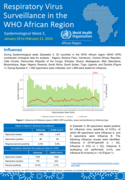
During Epidemiological week (Epiweek) 5, 20 countries in the WHO African region (WHO AFR) contributed virological data for analysis - Algeria, Burkina Faso, Cameroon, Central African Republic, Côte d’Ivoire, Democratic Republic of the Congo, Ethiopia, Ghana, Madagascar, Mali, Mauritania, Mozambiq
...

This document updates the 2009 ECDC guidance on chlamydia control in Europe. It was developed by a technical expert group which conducted a critical review of the scientific evidence on the epidemiology of chlamydia
...
The issue of Antimicrobial resistance has become one of the most substantial health issues, prompting the World Health Assembly (WHA) to urge Member States to finalise tailor made national action plans by May 2017, aligning them with objectives of the Global Action Plan (GAP). These cover awareness,
...
As the number of transboundary pest and animal and foodborne disease outbreaks rises, so does the number of people who are chronically hungry due to these
...
This technical guidance aims to provide guidelines to laboratories and relevant stakeholders in the European Union (EU), European Economic Area (EEA) and other countries in the WHO European region i
...
Peripheral artery disease (PAD) is the most underdiagnosed, underestimated and undertreated of the atherosclerotic vascular diseases despite its poor prognosis. There may be racial or contextual differences in the Asia-Pacific region as to
...
Antimicrobial resistance (AMR) is occurring everywhere in the world, compromising the ability to treat infectious diseases, as well as undermining many other advances in health and medicine. Underlying factors that drive AMR include; weak or absent
...
This National Action Plan addresses actions needed to be taken in order to combat antimicrobial resistance (AMR) in the country. It is obligatory to raise awareness of antimicrobial resistance and promote behavioral change through public communicati
...
Epidemiology, Control, and Financing
UNAIDS/WHO Working Group on Global HIV/AIDS and STI Surveillance
orientaciones provisionales, 8 de noviembre de 2020
This interim guidance is most useful for countries interested in monitoring relative circulations of influenza and SARS-CoV-2 viruses. The document provides practical information to maintain
...
Gambiense human African trypanosomiasis is a deadly infectious disease affecting West and Central Africa, South Sudan and Uganda, and transmitted b
...
The strategy focuses on mobilizing and coordinating partners, experts and resources to help countries enhance surveillance of the Zika virus
...
This document serves to provide interim guidance/ recommendations to carry out mpox surveillance activities mainly case investigation, contact tracing and isolation. For the development of this docu
...
This document summarizes current WHO guidance for public health surveillance of coronavirus disease 2019 (COVID-19) in humans caused by infection with severe acute respiratory syndrome coronavirus 2 (SARS-CoV-2).
New elements include:
upda
...
The response to a cholera outbreak must focus on limiting mortality and reducing the spread of the disease. It should be comprehensive and multisectoral, including
...

This document compiles the recommendations made by the World Health Organization (WHO) and the Pan American Health Organization (PAHO) to help professionals in charge of vector control programs in Latin America
...
Several Public Health Services and general practitioners in the Netherlands observed an increase in scabies in the Netherlands. Since individual cases of scabies are not notifiable in the Netherlands, the epidemiological situation is mostly unknown.
...

9 September 2020
In a snapshot, fair allocation of vaccines will occur in the following way:
An initial proportional allocation of doses to countries until all countries reach enough quantities to cover 20% of their population
This document is also available in Arabic | Chinese | French | R
...
Laboratory manual for yellow fever
recommended
This WHO laboratory manual provides the most up to date methods and procedures for the laboratory identification of yellow fever virus infection in humans. It provides guidance on the establishment and
...
Rabies has an enormous impact on both agriculture and conservation biology, but its greatest burden is undeniably on public health. As such, routine methods for rapid risk assessment after human exposures to rabies as well as applications for labora
...

Non-communicable diseases (NCDs) are the second common cause of death in sub-Saharan Africa (SSA) accounting for about 35% of all deaths, after a composite of communicable, maternal, neonatal, and nutritional diseases. Despite prior perception of lo
...
