
Filter
100
Text search:
Soil-transmitted
helminthiasis
Featured
5
18
Language
Document type
33
30
12
11
4
3
2
1
1
1
1
1
Countries / Regions
22
3
3
3
3
2
2
2
2
2
2
2
1
1
1
1
1
1
1
1
1
1
1
1
1
1
1
1
1
1
Authors & Publishers
Publication Years
Category
27
11
6
4
3
2
1
Toolboxes
49
4
1
1
1
1
1
1
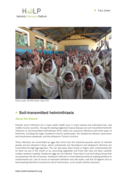
Accessed on 22.04.2023
To target helminth elimination, a new consortium of research institutes, universities, not-for-profit organizations, and pharmaceutical companies have joined forces and expertise to establish a research and development pipeline for the development of anthelminthics targeti
...
Tis first edition describes the standard operating procedures for health products for NTDs amenable to preventive chemotherapy and the medicines donated to treat them. These include albendazole for lymphatic filariasis and soil-
...
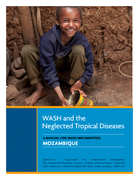
This manual is intended to enable WASH practitioners
who work in Mozambique to contribute to the
reduction of WASH-preventable NTDs.
23 March 2021
The meeting addressed the last key area, that is, determining the best method or combination of diagnostic methods for a control programme for S. stercoralis infections in humans.
Dr Montresor’s presentation highlighted that while there is currently no “gold standard” for the
...
This manual summarizes key issues related to the safety of NTD medicines and their administration, with a focus on essential medicines used in mass drug administration (MDA), also called preventive chemotherapy. It can be used as a standalone reference manual, but is intended to be used in conjuncti
...

Water, sanitation and hygiene (WASH) are critical in the prevention and care for all of the 17 neglected tropical diseases (NTDs) scheduled for intensified control or elimination by 2020.
Provision of safe water, sanitation and hygiene is one of the five key interventions within the global NTD ...
Provision of safe water, sanitation and hygiene is one of the five key interventions within the global NTD ...
DEPARTMENT OF CONTROL OF NEGLECTED TROPICAL DISEASES
The larval stage of the parasite Taenia solium can encyst in the central nervous system causing neurocysticercosis, which is the main cause of acquired epilepsy in the countries in which the parasite is endemic. Endemic areas are those with the presence (or likely presence) of the full life cycle of
...
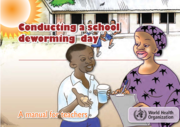
A step-by-step guide for teachers on how to conduct a school deworming day!
Website last accessed on 09.04.2023
L’échinococcose humaine est une maladie parasitaire causée par des ténias du genre Echinococcus. Plus d’un million de personnes sont touchées par l’échinococcose.
Website last accessed on 09.04.2023
Эхинококкоз человека - это паразитарное заболевание, вызываемое ленточными червями рода Echinococcus. Эхинококкозом болеют более миллиона человек
...
Website last accessed on 09.04.2023
Human echinococcosis is a parasitic disease caused by tapeworms of the genus Echinococcus. More than one million people are affected by echinococcosis.
Las geohelmintiasis son una de las parasitosis más comunes en el mundo, y se estima que 1500 millones de personas, el 24 % de la población mundial, están infestadas. Estas infestaciones afectan a las comunidades más pobres y desfavorecidas de zonas tropicales y subtropicales con un acceso defici
...
Les géohelminthiases comptent parmi les infections les plus courantes dans le monde, plus de 1,5 milliard de personnes, soit près de 24 % de la population mondiale, étant infestées à l’échelle mondiale. Ces infections touchent les communautés les plus pauvres et les plus défavorisées ayan
...
Передающиеся через почву гельминтозы (ППГ) относятся к наиболее распространенным инвазиям во всем мире и, согласно расчетам, поражают 1,5 млрд человек, или 24% мировоÐ
...
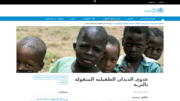
عد عدوى الديدان الطفيلية المنقولة بالتربة من بين أكثر أنواع العدوى شيوعاً في العالم، مع وجود ما يقدّر بـ1,5 مليار شخص مصاب بها في جميع أنحاء العالم، أو ما يعادل 24٪ من Ø
...
Website last accessed on 18.03.2023
Education and information about ascariasis, including fact sheets and information on prevention and control, epidemiology, diagnosis and treatment.
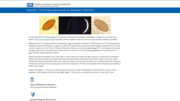
Website last accessed on 24.03.2023
A parasite is an organism that lives on or in a host and gets its food from or at the expense of its host. Parasites can cause disease in humans.
Website last accessed on 09.04.2023
Human echinococcosis is a parasitic disease caused by tapeworms of the genus Echinococcus. More than one million people are affected by echinococcosis.
Website last accessed on 01.07.2023
The National Deworming Day is an initiative of Ministry of Health and Family Welfare, Government of India to make every child in the country worm free. This is one of the largest public health programs reaching large number of children during a short period.
