Filter
1418
Text search:
Rwanda
Featured
95
314
Language
Document type
893
263
95
47
36
27
23
19
6
4
4
1
Countries
301
114
64
64
56
44
43
41
35
30
25
23
22
21
21
20
19
17
17
15
14
12
12
12
10
9
9
9
8
8
7
7
6
6
6
6
6
5
4
4
4
4
4
4
4
4
4
4
4
3
3
3
3
3
2
2
2
2
2
2
2
2
2
2
2
1
1
1
1
1
1
1
1
1
1
1
1
1
1
1
1
1
1
1
1
1
1
1
1
Authors & Publishers
Publication Years
Category
577
86
84
80
49
23
11
1
1
Toolboxes
157
98
88
84
64
55
49
41
33
30
30
29
19
18
17
15
13
13
5
4
3
2
2
1
1

For the Fiscal Year 2014-2015, the Health Sector continued to implement interventions and strategies meant to improve the availability, accessibility and utilization of quality healthcare services across public and private health facilities; and to ensure the reduction of the burden of communicable
...

This report highlights key achievements registered by the Ministry of Health, affiliated institutions, implementing agencies both at central and decentralized levels in 2013-2014. Generally, the Health Sector accomplishments and programs routine data for 2013-2014 confirm that
...
The guidelines presented in this document are designed to provide a useful resource for healthcare professionals involved in clinical case management. They were developed taking into consideration services provided at different levels within the health system and resources available. These guideline
...
The clinical guidelines and protocols for the practice of emergency medicine presented in this document are designed to be a useful resource not only for those wishing to become emergency medicine specialists, but also for general practitioners and other healthcare providers tasked with caring for p
...
These guidelines have been developed to provide guidance to the Ministry of Health in managing applications for registration of human pharmaceutical products in Rwanda. It was compiled by the Technical Working Group (TWG) on Medicines Evaluation and
...
PQM conducted an assessment of the medicine quality assurance and quality control systems in Rwanda during November 9-13, 2009. Medicine quality assurance remains to be developed in Rwanda: the coun
...

Rwanda: FEES FOR REGISTRATION OF PHARMACEUTICAL PRODUCTS, MEDICAL DEVICES AND OTHER RELATED SERVICES
MINISTERIAL ORDER Nº 002/17/10/TC OF 27/10/2017 DETERMINING THE FEES FOR REGISTRATION OF PHARMACEUTICAL PRODUCTS, MEDICAL DEVICES AND OTHER RELATED SERVICES | Official Gazette nº 46 of 13/11/2017
Rwanda Guidelines for variation to registered pharmaceutical products.
The purpose of these guidelines is to help health workers to participate in the process of continuous surveillance of safety and efficacy of the pharmaceutical products which are used in clinical practice, thus help to achieve the ultimate goal to make safer and more effective treatment available to
...
These guidelines for the National Pharmacovigilance and Medicine Information System in Rwanda have been developed to ensure that safe, efficacious and quality medicines are made available to all Rwandans.
The Vision 2020 is a reflection of our aspiration and determination as Rwandans, to construct a united, democratic and inclusive Rwandan identity, after so many years of authoritarian and exclusivist dispensation. We aim, through this Vision, to transform our country into middle - income nation in w
...
This policy document is to guide the Traditional, Complimentary and Alternative Medicine practices in Rwanda. The various elements examined under the policy include, legislation and regulatory control, registration, manufacture, procurement and supp
...

The Second Economic Development and Poverty Reduction Strategy (EDPRS 2) is a launch into the home straight of our Vision 2020. We are faced with new challenges of ensuring greater self-reliance and developing global competitiveness. Conscious of these challenges, we forge ahead knowing that by work
...
The Second Economic Development and Poverty Reduction Strategy (EDPRS 2) is a launch into the home strait of our Vision 2020. We are faced with new challenges of ensuring greater self reliance and developing global competitiveness. Conscious of these challenges, we forge ahead knowing that working t
...
This booklet provides policymakers, planners, and other interested parties with insight into the current state of the Rwandan health sector. These statistics provide a basis for policies, strategies, and planned interventions to ensure they are responsive to the needs of the health sector and, cruci
...

N°46/2012 of 14/01/2013 - Official Gazette n° Special of 17/01/2013 - LAW No 45/2012 OF 14/01/2013 ON ORGANISATION, FUNCTIONING AND COMPETENCE OF THE COUNCIL OF PHARMACISTS

Official Gazette No 43 of 28/10/2013 | LAW No 74/2013 OF 11/09/2013 ESTABLISHING RWANDA FOOD AND MEDICINES AUTHORITY AND DETERMINING ITS MISSION, ORGANISATION AND FUNCTIONING
This CPD Policy relates to all health professionals in the four Health Professional Councils in Rwanda namely; RMDC, NCNM, RAHPC, and RPC. The policy requires all health professionals to participate in the CPD Programs. The purpose of this CPD Polic
...
PowerPoint slides outlining the National Pharmacy Council (NPC) of Rwanda

Official Gazette No 48 of 30/11/2015 | MINISTERIAL ORDER No 20/37 OF 30/10/2015 DETERMINING THE CODE OF ETHICS FOR PHARMACY PROFESSION
Grading of Pharmacy professionals emanated from the fact that there was no proper grading system for Health Professionals in place. Designating the Grading Criteria based on internationally acceptable standards, the National Pharmacy Council through its Education, Research and CPD committee initiate
...

Rwanda’s fourth health sector strategic plan (HSSP4) is meant to provide the health sector with a Strategic Plan that will highlight its commitments and priorities for the coming 6 years. It will be fully integrated in the overall economic develop
...

This report outlines the Ministry of Health’s National Health Research Agenda in which it identifies research priorities in health. It will be implemented in the same time frame as the Health Sector Strategic Plain 2012-2018. The Ministry of Health being the implementing agency of this document, i
...

The Third Rwandan Health Sector Strategic Plan (HSSP III) provides strategic guidance to the health sector for six years, between July 2012 and June 2018. HSSP III has been inspired and guided by the VISION 2020, which will make Rwanda a lower-middl
...


In recent years, Rwanda has been on the fast track to achieve major health improvements for its entire population. With the support of government agencies and various non-governmental partners, the Ministry of Health (MoH) has endeavored to decentra
...
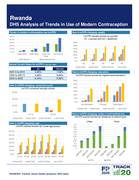
Accessed Online June 2018 | Single-page summary highlighting trends in modern contraceptive prevalence in Rwanda using data from the Demographic & Health Surveys.
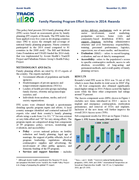
Policy briefs produced for FP2020 and other countries, presenting analysis of Family Planning Effort (FPE) scores from the current and previous rounds. Research and policy implications based on the analyses are also presented.
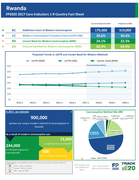
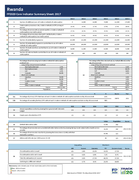
Explore 2016-17 estimates of FP2020 Core Indicators in these country Summary Sheets produced by FP2020 and Track20.
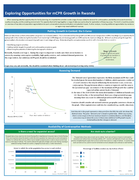
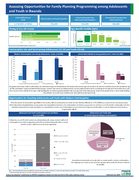
Accessed Online June 2018 | When assessing potential opportunities for family planning, it is important to consider a wide range of areas related to demand for contraception, availability and access to services, quality and equity, and the enabling environment. This opportunity brief brings together
...
Analysis developed by Track20 based on WPP2017 population estimates for 2018 and 2014-15 DHS, unless otherwise noted
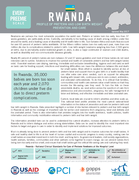
The information provided here can be used to understand the current situation, increase attention to preterm births in Rwanda and to inform dialogue and action among stakeholders. Data can be used to identify the most important risk factors to targe
...

It is the policy of the GoR to ensure that children’s rights are met through the provision of basic needs and services for all children in the country, and protect them from abuse and exploitation. Children are defined as persons below the age of 18 years and the ICRP covers children from the time
...

The Early Childhood Development Policy and its Strategic Plan seek to provide a framework to ensure such a holistic and integrated approach to the development of young children. International research has demonstrated the high economic returns on ECD investment and its positive impact on health and
...

The following document outlines the principles, objectives and strategies of a national policy for the protection of orphans and other vulnerable children in Rwanda. The propositions constitute a first step towards a comprehensive framework, which w
...

During the implementation of the National Strategic Plan 2009–2012 on HIV and AIDS, Rwanda has continued its progress towards universal access to HIV and AIDS services. The new HIV and AIDS National Strategic Plan July 2013–June 2018 (thereafter
...
The target audience for this guideline is primarily for health care providers nurses, doctors, social workers and other people involved in HIV response in Rwanda so that they are capable of offering quality care services to patients over a long time
...
PowerPoint Slides for the Geneva IAPAC meeting , 13 October 2016 by Sabin Nsanzimana, MD -Division Manager, HIV, STIs and Viral Hepatitis
Institute of HIV Disease Prevention and Control, Rwanda Biomedical Center AND Basel Clinical Epidemiology& Bio
...
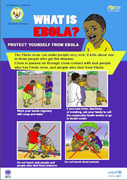
A poster to raise awareness about Ebola among children, showing ways how to protect yourself from infection. Also available in Kinyarwanda: https://www.unicef.org/rwanda/RWA_resources_iecebolaK.pdf
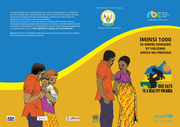
1000 days communication initiative to fight against child stunting | In an effort to accelerate the elimination of stunting among children, Ministry of Health and UNICEF created a series of posters, booklet, radio spot and videos to educate and inform families and communities. The five pillars of ke
...
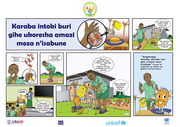
1000 days communication initiative to fight against child stunting | In an effort to accelerate the elimination of stunting among children, Ministry of Health and UNICEF created a series of posters, booklet, radio spot and videos to educate and inform families and communities. The five pillars of ke
...
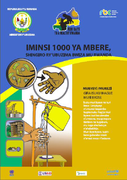
1000 days communication initiative to fight against child stunting | In an effort to accelerate the elimination of stunting among children, Ministry of Health and UNICEF created a series of posters, booklet, radio spot and videos to educate and inform families and communities. The five pillars of ke
...
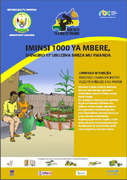
1000 days communication initiative to fight against child stunting | In an effort to accelerate the elimination of stunting among children, Ministry of Health and UNICEF created a series of posters, booklet, radio spot and videos to educate and inform families and communities. The five pillars of ke
...
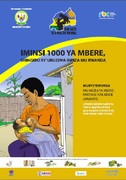
1000 days communication initiative to fight against child stunting | In an effort to accelerate the elimination of stunting among children, Ministry of Health and UNICEF created a series of posters, booklet, radio spot and videos to educate and inform families and communities. The five pillars of ke
...
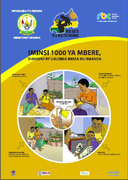
1000 days communication initiative to fight against child stunting |
In an effort to accelerate the elimination of stunting among children, Ministry of Health and UNICEF created a series of posters, booklet, radio spot and videos to educate and inform families and communities. The five pillars of
...
The purpose of this strategy is to guide the planning, management and development of human resources for health in Rwanda for the period 2011 - 2016. The overall aim of the plan is to increase the number of appropriately skilled, motivated and equit
...
This study highlights the challenges and areas in need of improvement as perceived by CHWs and beneficiaries, in regards to a nationwide scale-up of CHW interventions in a resource-challenged country. Identifying and understanding these barriers, and addressing them accordingly, particularly within
...
The Kabeho Mwana project (2006–2011) supported the Rwanda Ministry of Health (MOH) in scaling up integrated community case management (iCCM) of childhood illness in 6 of Rwanda’s 30 districts. T
...
From 2000 to 2010, Rwanda implemented comprehensive health sector reforms to strengthen the public health system, with the aim of reducing maternal and newborn deaths in line with Millennium Development Goal 5, among many other improvements in natio
...
There is no guarantee that a successful pilot program introducing a reproductive health innovation can also be expanded successfully to the national or regional level, because the scaling-up process is complex and multilayered. This article describes how a successful pilot program to integrate the S
...
This study examined the quality of facility-based maternal and newborn health care by describing the implementation of recommended practices for maternal and newborn care among health care facilities to determine whether increased training, supervision, and incentives for health workers were associa
...
Health Systems for Outcomes Publication | This report summarizes the findings of a qualitative study on health workers’ performance and career in Rwanda to identify bottlenecks, strengths and shortcomings for human resources in the health sector,
...
Health Systems for Outcomes Publication | The government of Rwanda has identified human resources for health as one of its policy priorities. This study aims to contribute to building a better understanding of health worker choice and behaviour, and
...
This article reexamines a set of study findings that directly relate to the influence of gender on workplace violence, synthesizes these findings with other research from Rwanda, and examines the subsequent impact of the study on
...
Through public-private partnerships, the government of Rwanda can make more efficient use of public resources by targeting and meeting the needs of specific populations and thus help ensure family planning services and products will be available to
...
Paying for performance (P4P) provides financial incentives for providers to increase the use and quality of care. P4P can affect health care by providing incentives for providers to put more effort into specific activities, and by increasing the amount of resources available to finance the delivery
...
The Capacity Project used the Learning for Performance (LFP) approach to develop the family planning (FP), HIV/AIDS and gender components included in the competency-based A1 nursing and midwifery pre-service curricula. LFP was also used to adapt the Rwanda
...
The shortage of human resources for health, and in particular physicians, is one of the major barriers to achieve universal access to HIV care and treatment. In September 2005, a pilot program of nurse-centered antiretroviral treatment (ART) prescription was launched in three rural primary health ce
...
This annual report outlines achievements and challenges of delivering these partnerships. NUDOR takes this opportunity to thank all organizations, individuals and decision makers who have supported NUDOR to contribute to the promotion, respect and realization of the rights of persons with disabiliti
...
NUDOR’s first strategic plan (2010-2016) focused on establishing NUDOR as a viable, well-run organisation. Significant progress has been made towards these aims and therefore the strategy and has been reviewed by NUDOR board, secretariat and member organisations. The updated strategic plan now cov
...
This document presents the findings of the National Census of Persons with Disabilities in Rwanda. The preliminary result of this census has been used to produce a summary analysis of tables and figures. It shall be possible to derive basic socio-de
...

The objective of the evaluation is to understand whether the CHW program has achieved its intended objectives, thus contributing to the overarching objectives defined in the HSSP III of improving the health status of the population by “Ensuring universal accessibility of quality health services fo
...
HIV Country Intelligence - HIV Country Profiles
Strengthening of SDB teams through refresher trainings and regular simulation exercises/drills
Continue social mobilization and community engagement through mobile cinema and community awareness sessions
Procure and preposition additional PPE kits
The Fifth Integrated Household Living Survey (EICV5) was conducted from October 2016 to October 2017, and is designed to provide accurate and up-to-date information that are useful to government, analysts and the public as they seek to monitor and evaluate efforts to reduce poverty.
This report pre
...

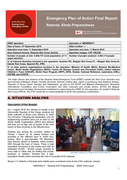
Rwanda: Ebola Preparedness Emergency Plan of Action (EPoA) Final Report - DREF Operation n° MDRRW017
Eleven (11) districts in Rwanda were initially were considered most at risk of the outbreak, namely:
• Rusizi, Nyamasheke, Karongi, Rutsiro, Rubavu (bordering DRC)
• Musanze, Burera, Gicumbi and Nyagatare (bordering Uganda)
• Kigali city (c
...
Despite the increasing population of refugees stuck in protracted situations and our awareness of the vulnerability of children and adolescents growing in up these contexts, relatively little is known about community based child protection mechanisms (CBCPMs) in refugee communities. CBCPMs, defined
...

Rwanda first confirmed cases of coronavirus disease 2019 (COVID-19) in March 2020. Although the number of cases has been low, health system resources are being redirected to respond and an increasing number of children are affected by the socio-econ
...
Offical Website COVID-19 Dashboards, Situation Updates and Guidelines Rwanda
Country profile: Rwanda
Antibiotics 2022, 11(3), 329; https://doi.org/10.3390/antibiotics11030329.
The authors found that the most-represented antibiotics on the Rwandan market were amoxicillin, co-trimoxazole and cloxacillin. No counterfeit antibiotics were found in this study. However, substandard batches with moderate
...
Service Availability and Readiness Assessment Tool
Interpeace has been working with the government and non-governmental actors in Rwanda for over 20 years, focusing on societal healing and participatory governance. Currently, Interpeace is implementing a holistic peacebuilding programme titled ‘Re
...
Almost the entire Rwandan population (98.5%) relies on polluting fuels, particularly firewood and charcoal, for cooking. Access to clean energy such as electricity is still limited. In 2022, 70% of the population lived in towns and villages that have electricity – 49% from the national grid and 21
...
This threat assessment addresses the implications of the ongoing Marburg virus disease (MVD) outbreak in
Rwanda for the European Union/European Economic Area (EU/EEA). MVD is a severe disease in humans and,
although uncommon, it has the potential
...
On 27 September 2024, the Ministry of Health of Rwanda confirmed the country’s first outbreak of Marburg virus disease (MVD), with health-care workers in Kigali particularly affected. While sporadic outbreaks have occurred in various parts of Afri
...
On 27 September 2024, the Rwanda Ministry of Health announced the confirmation of Marburg virus disease (MVD). Blood samples taken from people showing symptoms were tested by real-time reverse transcription polymerase chain reaction (RT-PCR) at the
...
Situation Report
DHS Analytical Studies No. 41
The Capacity Project worked to strengthen HRIS in several low-resource countries to assist decision-makers and human resources managers in identifying and responding to critical gaps in HRH. The findings and recommendations in this report cover the Capacity Project’s implementation of HRIS in Swaz
...
This paper examines the extent to which health workers differ in their willingness to work in rural areas and the reasons for these differences, based on the data collected in Rwanda analysed individually and in combination with data from Ethiopia.
...
The education sector forms an important part of the child protection response in refugee settings, and UNHCR’s Education Strategy (2012-16) reflects a focus on refugee education as a core component of UNHCR’s protection mandate. The right to education for all children also forms part of the Unit
...
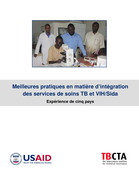
Dans la plupart des pays, les services de lutte contre la tuberculose (TB) sont décentralisés jusqu’aux dispensaires
les plus périphériques et souvent au sein même des villages et des quartiers. Par contre, les services
de lutte contre le VIH/Sida sont généralement beaucoup plus centralis
...

Official Gazette No Special of 17/01/2013 | LAW No 47/2012 OF 14/01/2013 RELATING TO THE REGULATION AND INSPECTION OF FOOD AND PHARMACEUTICAL PRODUCTS