
Filter
3118
Text search:
Regional
Office
for
Africa
Featured
291
858
Language
Document type
1767
593
331
149
129
51
46
34
8
5
2
2
1
Countries
146
126
107
99
94
90
77
66
64
63
57
55
54
42
42
39
39
39
39
38
38
38
33
33
32
31
29
28
23
22
20
20
19
19
19
19
15
15
15
14
14
14
13
13
12
12
11
11
9
9
9
9
8
8
8
8
7
7
7
7
7
7
7
6
6
6
5
5
5
4
4
4
3
3
3
3
3
3
3
3
3
2
2
2
2
2
2
2
2
2
2
2
2
2
2
2
2
2
1
1
1
1
1
1
1
1
1
1
1
1
1
1
1
1
1
1
1
1
1
1
1
Authors & Publishers
Publication Years
Category
1082
227
175
175
128
56
34
2
Toolboxes
269
245
193
155
152
145
141
140
89
88
75
74
70
70
50
44
38
36
20
16
14
8
6
3
1

The World Health Organization (WHO) and the Uganda Red Cross Society today signed an agreement to strengthen the screening of travellers at 25 points of entry in eight districts on the border between Uganda and the Democratic Republic of the Congo (DRC).
The support will also go towards training 22
...
Risk of spill-over of EVD to Uganda has been categorised as very high. On 28 September 2018, WHO elevated the risk at the regional level which includes Uganda from ‘high’ to ‘very high’. Uganda has a very long and largely porous border with
...
The risk of communicable diseases remains a humanitarian concern with major health risks including cholera, acute watery diarrhea, bloody diarrhea, malaria and other vector borne diseases and conditions such as severe acute malnutrition.
Access to the affected districts is still conditioned due t
...

The STEPS survey of noncommunicable disease (NCD) risk factors in Zambia was carried out from July to September 2017. Zambia carried out Step 1, Step 2 and Step 3. Socio demographic and behavioural information was collected in Step 1. Physical measurements such as height, weight and blood pressure w
...




Directrizes para os países
Risk Communication and Community Engagement messages

Mensagens para Comunicação dos Riscos e Envolvimento da Comunidade
Multi-sectoral Cholera Elimination Plan
The Food and Agriculture Organization of the United Nations has launched a new Compendium of forgotten foods in Africa which is a first-of-its-kind comprehensive collection of 100 African forgotten food crops.
Also referred to as neglected, under
...
The World Health Organization Regional Office for Africa (WHO AFRO), in accordance with recommen
...
Here you can download Infographics & Posters for Communication and Medica Actions
The World Health Organization’s (WHO) global report for the year 2019 indicates that sub-Saharan Africa (SSA) has a very high maternal mortality rate (MMR) with a 2017 point estimate of 542 (UI 49
...
n 2015, Member States of the United Nations adopted the 2030 Agenda for Sustainable Development and its accompanying Sustainable Development Goals (SDGs), with the third goal of the agenda focusing on health – good health and well-being. This has
...
A study conducted by the World Health Organisation Regional Office for Africa. The COVID-19 pand
...
The World Health Organization (WHO) has identified mental health as an integral component of the COVID-19 response. Its rapid assessment of service delivery for mental, neurological and substance use (MNS) disorders during the COVID-19 pandemic, on
...

Ethiopia has seen high economic growth over the last decade, but remains a poor country with a high burden of disease. It has made considerable health gains in recent years, mainly by having health policies that focus on extending primary healthcare, using health extension workers. It
...
This report is one of the first major products of the newly established Precision Public Health Metrics unit of the UCN cluster of the WHO Regional Office
...
This document was prepared by UNICEF Regional Office for West and Central Africa, under the lead
...
The cholera outbreak has affected 14 countries in the WHO African Region. The climate-induced natural disasters such as cyclone and flooding in the southern African region and drought in the Horn of Africa led to increase in cases of cholera in many
...
ajtmh.20-1538 Volume 104, 6. Mapping is a prerequisite for effective implementation of interventions against neglected tropical diseases (NTDs). Before the accelerated World Health Organization (WHO)/Regi
...
Claims for refugee status related to situations of armed conflict and violence under Article 1A(2) of the 1951 Convention and/or 1967 Protocol relating to the Status of Refugees and the regional ref
...
This third booklet of the World Drug Report 2022 has a dual focus: opioids and cannabis.
The first chapter of the booklet provides an overview of opioids as a group of substances and their patterns of non-medical use at the global level. It also reviews the latest trends in the global supply of opi
...

WHO Regional Office for Africa
The World Health Organization Regional Office for Africa (WHO AFRO), in accordance with recommen
...
The World Health Organization's Regional Office for Africa webpage on diabetes provides an overv
...
The regional Migrant Response Plan (MRP) for the Horn of Africa and Yemen includes urgent life-saving humanitarian and protection interventions to
...
The International Organization for Migration (IOM) and partners from 27 humanitarian and development organisations and governments are appealing for USD 84 million to provide life-saving assistance
...

After five consecutive below-average rains, the humanitarian crisis in the Horn of Africa is expanding and deepening.
Combined with insecurity and macroeconomic volatility, the impact of the drought on food and nutrition security has been devasta
...

While the full effects of COVID-19 remain unknown, the pandemic continues to profoundly impact regional migration and mobility dynamics, with deep health, social and economic consequences for the mo
...
Updated on 6 APRIL 2020
There are serious concerns that the situation might escalate in the next weeks modelling the epi curve of other regions. The interlinkages between human mobility and the current pandemic of COVID-19 are well established, and while international flights have been suspended i
...
An interregional meeting on leishmaniasis among neighbouring endemic
countries in the Eastern Mediterranean, African and European regions was organized by the World Health Organization (WHO) Regional Offi
...
This publication represents a key step forward in translating Control of the leishmaniases (WHO Technical Report Series, No. 949) into a more practical tool for health personnel directly involved in the case management of cutaneous leishmaniasis. Wi
...
How to respond to Covid19 pandemic in West and Central Africa

Regional Network for Equity in Health in east and southern Africa (EQUINET): Disussion Paper 113
This report synthesises the learning across ...
This report synthesises the learning across ...
The report covers: drivers of humanitarian crises in the region, particularly the intensification of violence in the DRC; manifestations of humanitarian needs, including record levels of displacement and food insecurity; and constraints to meeting humanitarian needs, including obstacles to humanitar
...
hese are two parallel guidelines, one for small hospitals and another one for large hospitals. In view of heavy burden of malaria and prevalence of drug resistant falciparum malaria in the South-Eas
...
USD$ 28 million allocated from UN Central Emergency Fund to assist people affected by Boko Haram’s insurgency.
Boko Haram, insecurity exert misery in Cameroon’s Far North Region.
Millions of people in Ebola-affected countries risk serious food shortages during the June-August lean
...
The Guide has been developed to enhance the knowledge capabilities of NDMAs and their local partners. This is accomplished by exposing them to the existing tools and services developed by the international community to facilitate effective disaster response to any scale of disaster (small, medium an
...
Please download the other parts from the Webseite
Revised and expanded version of the Guidelines

The report “Build back fairer: achieving health equity in the Eastern Mediterranean Region” provides ground breaking insights into the state of health inequities in the Region and urges countries to take action to address the social determinants of health to reverse the worsening trend of inequi
...
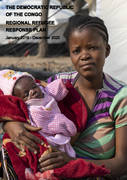
Looking forward, the 2019-2020 Regional Refugee Response Plan (RRRP) for the DRC situation aims at addressing the needs of new arrivals of Congolese refugees in the region, and those in protracted s
...
This guideline for the prevention and control of chikungunya fever
(CF) is intended for use by all peripheral health workers in the Region and
is based on the strategy outlined above. This documen
...
Addendum: 2020 mid-year COVID-19 resvision, summary of the reprioritisation & additional requirements in response to COVID-19
In June and July 2020, a mid-year revision of the 2020 South Sudan Regional Refugee Response Plan (RRRP) was undertaken
...

The State of the World's Midwifery
It is widely understood that the food insecurity crisis in the Sahel and the Horn of Africa is one of the world’s fastest growing and most neglected crises. It lacks sufficient global focus, resources and urgency. As in so many crises, women and g
...
This toolkit for integrated vector management (IVM) is designed to help national and regional programme managers coordinate across sectors to design and run large IVM programmes.
The toolkit pr ...
The toolkit pr ...
The African Region has been experiencing unprecedented health challenges due to the Coronavirus disease 2019 (COVID-19) pandemic, which have compounded the already difficult task the Region was facing in moving towards universal health coverage (UHC) attainment.

This publication aims to provide examples of better palliative care practices for older people to help those involved in planning and supporting care-oriented services most appropriately and effectively. Examples have been identifi ed from
...

The emergence of multifrug-resistant malaria in the Greater Mekong Subregion (GMS) has been identified as an emergency issue that may have catastrophic consequences on the future of malaria elimination in the GMS as well as globally. In recognition of the need
...
ndependent of the current conflict, the health sector in Ukraine faces several critical shortcomings. In particular, the country has an oversupply of hospitals and an undersupply of primary care and diagnostic facilities. Addressing these limitations will require substantial amounts of capital inves
...
This document aims to provide interim guidance for microbiology and virology experts, other laboratory professionals, laboratory managers, infectious disease programme managers, public health professionals and other stakeholders that provide primary
...
This analytical report reviews and discusses the potential role and influence of political commitment in implementing endorsements and conducting policy in the field of tuberculosis (TB) prevention and care. It promotes discussion by comparing and analysing the extent to which selected international
...
There is a broad consensus nowadays that the Earth is warming up as a result of greenhouse gas emissions caused by anthropogenic activities. It is also clear that current trends in the fields of energy, development and population growth will lead to continuous and ever more dramatic climate change.
...

Health Evidence Network synthesis report 72

based on information as at 28 February 2021
Rapid Policy Brief Series Series 14: COVID-19 and hypertension


Globally, over two million women live with obstetric fistula with the majority of the cases
being from Africa. In low-resource settings such as Zambia, obstetric fistula (OF) is a visible indicator of
gaps in maternal health care resulting in fa
...

Regional Network for Equity in Health in east and southern Africa (EQUINET): Disussion Paper 109
This report describes the evolution of mainla ...
This report describes the evolution of mainla ...
Information on Chikungunya Fever

Regional Network for Equity in Health in east and southern Africa (EQUINET): Disussion Paper 112
The Essential Health Benefit (EHB) is known a ...
The Essential Health Benefit (EHB) is known a ...
A national faecal examination of 27 729 schoolchildren from 395 schools carried out in
2008 indicated that intestinal parasitic worms affected an estimated five million (56.8%)
children in Kenya. Existing evidence shows that worm infections lead to reduced literacy
levels due to impaired growth a
...
Regional Action Plan for HIV in South-East Asia (2017-2021)

Regional Network for Equity in Health in east and southern Africa (EQUINET): Disussion Paper 111
The health services delivery system in Zambia ...
The health services delivery system in Zambia ...

Regional Network for Equity in Health in east and southern Africa (EQUINET): Disussion Paper 110
This report compiles evidence from published, ...
This report compiles evidence from published, ...
Training Modules for climate change and Health - WHO
January 2020 to December 2021
The second edition of the “A Region on the Move” report provides an overview of population movement trends in West and Central Africa in 2021. It aims to provide a comprehensive overview of mobility in the region and showcase the versatility, mu
...
The "Stories from the field" document by the WHO Regional Office for the Eastern Mediterranean shares effective strategies from the Eastern Mediter
...
The guide is designed to help disaster managers in national Governments gain basic knowledge of how to use international tools and services. It aims to support the growing disaster response and disaster response preparedness capabilities that exist at national level across Asia and the Pacific.
...
...
On the 31st December 2019, the World Health Organization (WHO) China country office reported a cluster of pneumonia cases in Wuhan City, Hubei Province of China now known to be caused by a novel virus. Severe acute respiratory syndrome coronavirus 2
...
This publication provides directions for a logical, evidence informed approach to selecting, developing, implementing and monitoring population-based interventions within the context of the double-burden of malnutrition in South-East Asia. The focus
...
Standard Operating Procedure (SOP) : Waste management of used COVID-19 vaccines vials and ancillary supply
recommended
The purpose of this Standard Operating Procedure (SOP) is to describe the detailed process on how to manage discarded COVID-19 vaccine vials and associated waste after COVID-19 vaccination activities end. The SOP provides clear instructions on how to perform the appropriate treatment and safe dispos
...
