
Filter
208
Text search:
Microcephaly
Featured
24
147
Language
Document type
175
12
7
4
4
2
2
1
1
Countries
15
5
4
3
3
2
2
2
2
2
2
2
1
1
1
1
1
1
1
1
1
1
1
1
1
Authors & Publishers
Publication Years
Category
21
11
9
2
2
1
1
Toolboxes
153
21
7
4
3
3
3
2
2
2
1
1
1
1
1
This flipbook is for community health workers to use to educate their communities about Zika, how it is spread, the effects of the virus, what to do if infected, and how to prevent Zika.
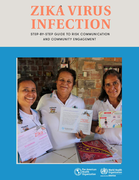
Zika Virus Infection - Step-by-Step Guide to Risk Communication and Community Engagement
recommended
This document provides Technical content on ZIKV, its manifestations, complications, modes of transmission, and prevention measures to be used in answering frequently asked questions and conveying messages in information and communication materials, community talks, press conferences, etc.
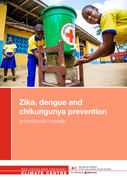
The school and a community teaching modules are aimed at preventing vector-borne diseases through community participation. Meanwhile, the interactive toolkit is meant to be help raise awareness on health, sanitation and vector control. These materials will help volunteers and practitioners foster di
...
Accessed: 11.03.2019
This publication seeks to describe the best treatments and practices based on the scientific evidence available at the time of writing as evaluated by the authors and may change as a result of new research. Readers need to apply this knowledge to patients in accordance with the guidelines and laws o
...


Developed by the HHS Panel on Treatment of Pregnant Women with HIV Infection and Prevention of Perinatal Transmission—
A Working Group of the Office of AIDS Research Advisory Council (OARAC)
Accessed: 12.02.2020

WHO Zika Virus - Questions & Answers for pregnant women (Portuguese)
El propósito de este documento es brindar a los profesionales de salud que asisten a mujeres gestantes, información actualizada en base a las mejores evidencias disponibles para prevenir la infección, diagnosticarla oportunamente, sugerir tratamiento, dar seguimiento a las embarazadas, así c
...
Actualização das orientações provisórias 7 de Junho de 2016
Actualización de las orientaciones provisionales 7 de junio de 2016
Lignes directrices provisoires actualisées 7 juin 2016
A finalidade deste documento é apresentar orientações
provisórias para intervenções destinadas a reduzir o risco
de infecção pelo vírus Zika e para tratar potenciais complicações durante a gravidez. Estas orienta ções baseiam-se nas melhores evidências disponíveis da investigação
...
Se espera que sean una referencia para la elaboración de protocolos clínicos y políticas sanitarias a nivel nacional y local relacionados con el embarazo, en el contexto de la transmisión del virus de Zika, pero no se pretende ofrecer una guía práctica completa para la prevención y el tratami
...
Il vise à guider l ’ élaboration de protocoles cliniques et de politiques sanitaires à l ’ échelle nationale et locale en ce qui concerne les soins au cours de la grossesse dans le contexte de la transmission du virus Zika. Elles n ’ ont pas pour objectif de fournir un guide pratique exhau
...
Versão 2. Última atualização 10 Março 2016
O protocolo contém orientações sobre definição de casos suspeitos, como identificação de alterações do Sistema Nervoso Central (SNC) durante a gestação, critérios para confirmação ou descarte de casos, sistema de notificação e investig
...
The threat posed by Zika virus infection highlights the need to reinforce preparedness arrangements for mosquito-borne diseases in EU/EEA countries, especially for pathogens transmitted by Aedes aegypti and Aedes albopictus.
The aim of this document is to highlight measures that can effectively red
...

The objective of this document is to guide the preparation and implementation of national preparedness plans for the safety of substances of human origin during outbreaks of Zika virus infection, both in affected and non-affected areas.
doi: 10.9745/GHSP-D-16-00226; Glob Health Sci Pract December 23, 2016 vol. 4 no. 4 p. 626-646

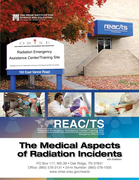
This pocket guide offers basic information needed for the medical management of victims of radiation incidents in an easy-to-understand manner.

Chapter 2 in "Latest Findings in Intellectual and Developmental Disabilities Research" Edited by Üner Tan, ISBN 978-953-307-865-6, 404 pages, Publisher: InTech, Chapters published February 15, 2012 under CC BY 3.0 license | Intellectual and Developmental Disabilities presents reports on a wide rang
...

Robust clinical research capacity in low- and middle-income countries is key to stemming the spread of epidemics, according to a new report from the International Vaccines Task Force (IVTF). The report lays out how to develop the political support, financing and coordination required to build this c
...
The guidelines presented in this document are designed to provide a useful resource for healthcare professionals involved in clinical case management. They were developed taking into consideration services provided at different levels within the health system and resources available. These guideline
...

At the threshold of Sustainable Development Goals (SDG) era, this document captures the remarkable achievements by Member States towards achieving MDGs 4 and 5. It acknowledges new opportunities in the post-2015 phase shaped by the SDGs and the Global Strategy for women’s, children’s and adoles
...

Advances have been made through expanded interventions delivered through five public health approaches: innovative and intensified disease management; preventive chemotherapy; vector ecology and management; veterinary public health services; and the provision of safe water, sanitation and hygiene. I
...

A National Service Programme for All Children with Special Needs and their Families
In Myanmar, we estimate that at least 40% of children require ECI services for short to longer periods of time. At present, 35.1% of Myanmar children are moderately to severely stunted; all of these children are l ...
In Myanmar, we estimate that at least 40% of children require ECI services for short to longer periods of time. At present, 35.1% of Myanmar children are moderately to severely stunted; all of these children are l ...

Managing epidemics
recommended
Key facts about major deadly diseases.This manual provides concise and up-to-date knowledge on 15 infectious diseases that have the potential to become international threats, and tips on how to respond to each of them.
You can download an interactive version directly at the website
http://www.who.
...
Neurological, Psychiatric, and Developmental Disorders: Meeting the Challenge in the Developing World
Institute of Medicine (US) Committee on Nervous System Disorders in Developing Countries.
Washington (DC): National Academies Press (US); 2001.
Developmental disorders
Chapter C.2
2014 Edition
Psychatry & Pediatrics
Chapter I.3

The WHO Toolkit for the care and support of people affected by complications associated with Zika virus has been developed to serve as a model guide, with the goal of enhancing country preparedness for Zika virus outbreaks. The toolkit is intended to provide a systems approach involving public heal
...
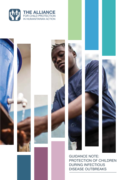
Accessed on 31.03.2020
This Guidance Note aims to provide humanitarian child protection practitioners, particularly child protection advisors and program managers, with guidance on how to engage in responses to infectious disease outbreaks to ensure children’s protection needs are taken into ac
...
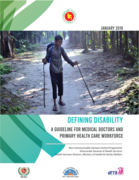
January 2019
Non Communicable Disease Control Programme Directorate General of Health Services Health Services Division, Ministry of Health & Family Welfare
This manual addresses all the issues. It focus on the cycle of microbes, antibiotics, vaccination, AMR,
infection prevention and control. It will support nurses on better action and also on communication towards
their patients and families.
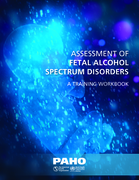
Fetal alcohol spectrum disorders (FASD) represent a range of physical, mental, and behavioral disabilities caused by alcohol use during pregnancy, or prenatal alcohol exposure (PAE). FASDs are considered to be one of the leading preventable causes of developmental disability. Despite its high preval
...
Birth defects surveillance: quick reference handbook of selected congenital anomalies and infections
This Quick Reference Handbook of Selected Congenital Anomalies and Infections is a companion tool to Birth defects surveillance: a manual for programme managers, and is intended for use by front-line health care professionals who are diagnosing and collecting data on congenital defects and infection
...
8 January 2021
Sequencing enabled the world to rapidly identify SARS-CoV-2 and develop diagnostic tests and other tools for outbreak management. Continued genome sequencing supports the monitoring of the disease’s spread and evolution of the virus. Accelerated integration of genome sequencing int
...
A practitioner’s guide to the principles of COVID-19 vaccine communications.
The factors that lead people to make choices to take vaccines are nuanced and affected by how they see the world, their perceptions of the choices people like them will make, who they trust, their perceptions of risk,
...
2nd edition, June 2021

13 July 2021
The module provides an overview of factors to consider when monitoring the safety of COVID-19 vaccines administered to pregnant and breastfeeding women. It describes how national routine AEFI surveillance should be adapted to cater for this specific group of population using both pass
...
Integrated Management of Childhood Illness (IMCI) is an integrated approach to child health that focuses on the holistic well-being of the child. IMCI aims to reduce death, illness and disability, and to promote improved growth and development among children under five years of age. IMCI includes bo
...
WHO Technical Series 971
Epidemics of infectious diseases are occurring more often, and spreading faster and further than ever, in many different regions of the world. The background factors of this threat are biological, environmental and lifestyle changes, among others. A potentially fatal combination of newly-discovered
...
Human rights-based approaches to the creation of knowledge involve application of human rights principles to both the content and process of knowledge creation. Human rights-based approaches have special significance for the sexual and reproductive health and rights (SRHR) of all people, in particul
...
Measles outbreak guide
recommended
This guide also draws on the standard operating procedures (SOPs) to apply for measles outbreak response
support from the Measles & Rubella Initiative Outbreak Response Fund (17) and includes a section on
measles outbreak recovery so that contributing factors and potential root causes are identifi
...
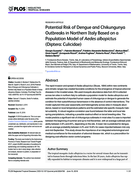
PLoS Neglected Tropical Diseases https://doi.org/10.1371/journal.pntd.0004762
This study shows the importance of an integrated entomological and medical surveillance for the evaluation of arboviral disease risk, which is a precondition for designing cost-effective vector control programs.
The purpose of this guide is to provide practical advice for health staff undertaking infectious disease preparedness and response activities to ensure that access to safe abortion care (SAC) is maintained when an infectious disease outbreak occurs. It is an operational guide which can serve to supp
...
The Pharmaceutical Forum of the Americas (PFA) has previously published guidelines and organised campaigns for community pharmacists on the prevention, detection and control of arbovirus infections in 2018 with a grant from the FIP Foundation for Pharmacy Education and Research. Building on that exp
...
This fourth WHO report on neglected tropical diseases (NTDs) reviews the progress made towards achieving the Roadmap targets for 2020, noting the remaining challenges, then looks beyond 2020 to evaluate the changing global health and development landscape, considering the implications of integrating
...
Multiple pandemics, numerous outbreaks, thousands of lives lost and billions of dollars of national income wiped out—all since the turn of this century, in barely 17 years—and yet the world’s investments in pandemic preparedness and response remain woefully inadequate. We know by now that the
...
In an ambitious new era for health development under the 2030 Agenda for Sustainable Development, WHO and
its partners have a solid foundation of success on which to build. Health plays a fundamental role in development
and is the central focus of Sustainable Development Goal 3, “Ensure healthy
...
Toolkit regarding Zika Virus
This Birth Defect Surveillance facilitator (train-the-trainer) guide 2nd edition covers foundational skills needed to begin the development, implementation and ongoing improvement of a congenital anomaly surveillance programme, whether population-based or hospital-based, in particular for countries
...
Zika Open
recommended
These papers are posted in the context of the Public Health Emergency of International Concern declared by the Director-General of the World Health Organization 1 February 2016.
The data in these papers are freely available for unrestricted use, distribution and reproduction in any medium, provid
...
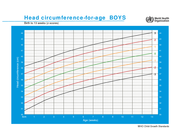
Birth to 13 weeks (z-scores)

The International Very Preterm Size at Birth Reference Charts. Head circumference (cm) Girls
WHO Factsheet (French version). Updated 01 March 2016
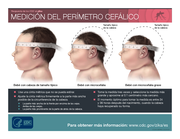
WHO Factsheet (Spanish version). Updated 02 March 2016
published online April 13, 2016, DOI: 10.1056/NEJMsr1604338. Please download directly from the webpage: http://www.nejm.org/doi/pdf/10.1056/NEJMsr1604338
Epidemiologisches Bulletin Nr.2 /2016, S.16
This article was published on March 4, 2016, at NEJM.org.
DOI: 10.1056/NEJMoa1602412
Please download from the website: http://www.nejm.org/doi/full/10.1056/NEJMoa1602412
