
Filter
367
Text search:
Maternal
Death
Notification
Featured
38
136
Language
Document type
258
45
32
15
9
3
2
1
1
1
Countries
15
14
13
13
12
12
11
9
9
9
8
8
8
8
8
6
6
6
6
5
5
5
5
5
4
4
4
4
3
3
2
2
2
2
2
2
2
2
2
2
1
1
1
1
1
1
1
1
1
1
1
1
1
1
1
1
1
1
1
1
1
1
1
1
1
1
1
1
Authors & Publishers
Publication Years
Category
197
25
23
17
10
7
3
Toolboxes
54
46
14
12
6
6
6
5
5
4
3
3
3
3
2
2
1
1
1

This is an update of a seven-year TB and Leprosy national strategic plan (TBL-NSP), which extends from 2013 to 2020. The update focuses on the plan covering from 2017-20 and is based on the 2017 external mid-term programme review key findings and recommendations; the global and national End TB strat
...
3rd edition. In 2001, Uganda adapted the Integrated Disease Surveillance and Response (IDSR) developed by World Health Organization (WHO) for member states in African region. The Ministry of Health has been implementing the IDSR strategy since then with success across the country. This strategy prov
...

This annual report highlights the work of the WHO from January to June 2021 ( December 2021). The activities featured herein are by no means exhausted but implemented with technical and financial support through WHO in Nigeria; facilitated by its presence at all levels of governance (national, state
...
The National Tuberculosis Programme (NTP) of Rwanda (known as TB & ORD Division/IHDPC/RBC) is preparing to write their next National Strategic Plan and for this reason Rwanda was selected as a country to received technical assistance (TA) to conduct an assessment of their surveillance system using t
...
It provides insight into WHO’s work that aims to improve the health of the people of the United Republic of Tanzania in collaboration with key stakeholders.
Kenya Quality Model for Health - Health Facilities
Kenya Quality Model for Health - Hospitals
In many countries neonatal tetanus is responsible for half of all neonatal deaths due to vaccine-preventable diseases and for almost 14% of al¡ infant deaths. It is estimated that in the 1970s more than 10,000 newborns died annually from neonatal tetanus in the Americas. Neonatal tetanus is prevent
...
Equity and Quality in Health: a People's Right
This special issue on Newborn Health in Global Health Action is being launched to share the experience of how to scale up a cost-effective package of newborn care that involves families, community health workers and health facilities. The results of this community randomized trial, the Uganda Newbor
...


Accessed November 2017
Transforming Health: Accelerating attainment of Health Goals | THE SECOND MEDIUM TERM PLAN FOR HEALTH
In 2016 CRS leveraged the robust infrastructure of its large, multi-sectoral orphans and vulnerable children (OVC) program in Nigeria by expanding the program's core mandate to include community childhood TB casefinding, with a focus on highly vulnerable children and their caregivers
The 2016-2017 Biennial report presents an overview of WHO Namibia's main achievements and challenges and highlights its vision for the next five years.
This document sets out the preparedness and response plan of the Nigerian Primary Health Care System for COVID-19 Acute Respiratory Disease. It outlines the planning scenarios, key areas of work and priority activities required for the Primary Health Care Sector to quickly scale up its core capacity
...
Transforming Health Systems: Achieving Universal Health Coverage by 2022. The development of the Kenya Health Sector Strategic Plan 2018–2023 is guided by the Constitution of 2010, the Kenya Vision 2030 and the Kenya Health Policy 2014–2030.
Malawi is a landlocked country with a surface area of 118,484 km2. Administratively, the country is divided into three regions, namely the Northern, Central and Southern regions. The country has 28 districts, which are further divided into traditional authorities (TA) ruled by chiefs. The TAs are su
...

The importance of robust mortality surveillance systems cannot be overstated in an era marked by increasing global health challenges where health threats loom large and population dynamics continue to evolve. Accurate and timely mortality data is essential for identifying trends and detecting emergi
...
The Global Reference List of 100 Core Health Indicators is a standard set of core indicators prioritized by the global community to provide concise information on the health situation and trends, including responses at national and global levels.
This second (2018) edition builds on the previous
...

The Health Sector Policy gives general orientations for the sector which are further developed in the various sub-sector policies guiding key health programs and departments. All health sub-sector policies will be updated in line with this new policy. The Health Sector Policy is the basis of nationa
...

This year marked the beginning of the WHO biennium 2016-2017 action plan; this annual report highlights WHO’s key achievements in 2016
It also documents the extraordinary efforts by a broad coalition of government ministries, municipalities, international agencies, community groups, women’s or
...
January - December 2017
The vision of the new Strategic Action Plan for Strengthening HIS in Myanmar 2017- 2021 is “A strong health information system for a strong health system”. The mission statement of HIS in Myanmar also developed during the strategic planning exercise is “Generating and making accessible compreh
...
The Urban Health Equity Assessment and Response Tool (Urban HEART) is a user-friendly guide for policy- and decision-makers at national and local levels to: identify and analyse inequities in health between people living in various parts of cities, or belonging to different socioeconomic groups with
...

13 July 2021
The module provides an overview of factors to consider when monitoring the safety of COVID-19 vaccines administered to pregnant and breastfeeding women. It describes how national routine AEFI surveillance should be adapted to cater for this specific group of population using both pass
...

The Country Cooperation Strategy is the World Health Organization’s corporate framework developed in response to a country’s needs and priorities. The 2022–2025 CCS is the fourth for WHO in Sierra Leone. It is a medium-term strategic document that defines a broad framework for WHO’s work, at
...
Childhood Respiratory Diseases & the Environment learning objectives
•To understand how the respiratory tract is affected by the environment
•To describe respiratory diseases linked to the environment
•To list one population-level intervention and one personal-level intervention for d
...
The 7th edition of the Orange Guide provides practical guidance to health workers on the front line of TB control. It includes sections on HIV, MDR-TB and a review of the recommended treatment regimens
2nd edition. Training module on malaria control
'Ethical Issues in Obstetrics and Gynecology' represents the results of carefully researched and considered discussion. The guidelines are intended to provide material for consideration and debate about ethical aspects of our discipline for member organisations and their constituent membership.

Interim emergency guidelines
The Impact of the Zika Outbreak on Women and Girls in Northeastern Brazil

“towards quality health and social welfare services”
National Tuberculosis and Leprosy Conrol Programme
The Zimbabwe National Pharmacovigilance Policy Handbook, 2nd Edition updates the November 2013 version to indicate the Zimbabwe National Pharmacovigilance (PV) Centre’s compliance with the WHO Pharmacovigilance Indicators Handbook 2015.
Monitoring of implementation of collaborative TB/HIV activities and evaluation of impact is critically important. This requires efficient monitoring and evaluation system so as to establish accountability mechanisms between programmes, the population they serve, and donors. The Guide to monitoring a
...
Guidelines for national programmes and other stakeholders
世界卫生组织 结核菌/艾滋病病毒双 重感染防治政策指南
——适用于国家规划 和利益攸关方
Technical Brief
Final Draft narrative December 6, 2012 - This strategic plan, developed through the joint collaboration of all stakeholders in the different sectors is aimed at harnessing and bringing together all the stakeholders who have a role in the prevention, detection and management of epidemic and infectiou
...

A survey of prevention, testing and treatment policies and practices

WHO recommendations on adolescent health: guidelines approved by the WHO Guidelines Review Committee
This document is meant to respond to the questions:
■ What health interventions should the adolescent receive and when should s/he receive it?
■ What health behaviours should the adolescent practise (or not practise)?
■ What health interventions should the adolescent receive and when should s/he receive it?
■ What health behaviours should the adolescent practise (or not practise)?

National Tuberculosis Programme
The National Strategic Plan (NSP) for Tuberculosis (TB) 2016-2020 builds on the past experiences for the National Tuberculosis Programme and its partners. This NSP provides a roadmap for delivering quality TB prevention and care service to the entire population, ...
The National Strategic Plan (NSP) for Tuberculosis (TB) 2016-2020 builds on the past experiences for the National Tuberculosis Programme and its partners. This NSP provides a roadmap for delivering quality TB prevention and care service to the entire population, ...
The Indonesian government has reformed its laws, policies, and institutions to better manage disaster risk since the significant 2004 Indian Ocean Tsunami. The Government of Indonesia now has contingency plans for every disaster-prone city which identifies its vulnerabilities, outlines the relief re
...
Vision Statement
From birth to 8 years of age, all children of the Republic of the Union of Myanmar will receive holistic, high-quality and developmentally-appropriate care from their parents, caregivers and service providers to ensure they will be happy, healthy, well nourished, socially adept ...
From birth to 8 years of age, all children of the Republic of the Union of Myanmar will receive holistic, high-quality and developmentally-appropriate care from their parents, caregivers and service providers to ensure they will be happy, healthy, well nourished, socially adept ...

These guidelines aim to guide all health care providers in Myanmar, accommodating the situation of different settings in the context of progressive decentralization of HIV services. Notable changes from the previous edition include:
• diagnosis of HIV
• update on the initiation of ART
...
• diagnosis of HIV
• update on the initiation of ART
...

The review’s objectives are to review progress in TB control with emphasis on DOTS strategy implementation, summarize the experience, lessons learnt and methods of work and to make recommendations for international donors, technical agencies and the Ministry of Health.

2nd edition. The 2018 Roadmap incorporates an additional critical population: adolescents. Despite making up 1 in 6 of the world’s people, adolescents have been largely overlooked as global momentum to address TB has grown. Spanning the ages of 10–19 years, adolescents are both at risk of TB and
...
Meeting Report
27–30 June 2017 Manila, Philippines
Guidance
Second Edition
Monitoring and Evaluation
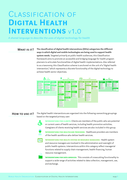
The classification of digital health interventions (DHIs) categorizes the different ways in which digital and mobile technologies are being used to support health system needs. Historically, the diverse communities working in digital health—including government stakeholders, technologists, clinic
...
Consolidated guidelines on the use of antiretroviral drugs for treating and preventing HIV infection
Accessed: 26.02.2020
Accessed: 10.03.2020
Infection Prevention and Control Programmes
January 2020
The Millennium Development Goals (MDGs) showed
that global commitment and collective action
could significantly reduce the disease burdens of
three deadly communicable diseases: HIV/AIDS,
tuberculosis (TB) and malaria. The MDGs helped
focus efforts on these three deadly diseases
and leveraged
...
According to the Report, cascading and interlinked crises are putting the 2030 Agenda for Sustainable Development in grave danger, along with humanity’s very own survival. The Report highlights the severity and magnitude of the challenges before us. The confluence of crises, dominated by COVID-19,
...
Every year, nearly 250 million people move across borders temporarily or permanently for a job opportunity, studying, to flee a crisis back home, or for other reasons. Another 750 million move for similar reasons within the borders of their countries. With the understanding that human mobility affec
...
31 Janaury 2021
SCORE for health data technical package. The first global assessment on the status and capacity of health information systems in 133 countries, covering 87% of the global population.
It identifies gaps and provides guidance for investment in areas that can have the greatest impact
...
The Compendium of data and evidence-related tools for use in TB planning and programming was developed as a companion document to the People-centred framework for tuberculosis programme planning and prioritization – user guide, published by the World Health Organization (WHO)
...
