
Filter
150
Text search:
IMAI
Featured
19
38
Language
Document type
95
25
13
10
3
2
1
1
Countries
7
5
5
5
4
4
3
3
3
3
3
2
2
2
2
2
2
2
2
2
2
2
1
1
1
1
1
1
1
1
1
1
1
1
1
1
1
1
1
1
1
Authors & Publishers
Publication Years
Category
52
25
15
12
4
3
Toolboxes
31
15
9
7
7
6
6
3
2
2
2
1
1
1
1
Accessed: 10.03.2019
mhGAP Training Manual for the mhGAP Intervention Guide for mental, neurological and substance use disorders in non-specialized health settings – version 2.0 (for field testing)
This report, written in partnership with various Royal Medical Colleges and Public Health England, sets out the essential actions to improve the physical health of adults with severe mental illness (SMI) across the NHS. The report makes practical recommendations for changes that will help adults wit
...
Информационный бюллетень, учет потребностей подростков. Подростки имеют особые потребности в области медицинских услуг, включая доступ к профилактической помощи
...
Это руководство предназначено для использования в качестве пособия дл яврачей и других медицинских работников, осуществляющих лечение и уход за больными лекарстÐ
...
Chapter · January 2009 DOI: 10.1007/978-0-387-72711-0_25
D.D. Celentano and C. Beyrer (eds.), Public Health Aspects of HIV/AIDS in Low and Middle Income Countries, DOI: 10.1007/978-0-387-72711-0 25, c Springer Science+Business Media, LLC 2008
Working Document - Updated -February 2009
Guide technique pour la prise en charge des maladies cardiovasculaires dans le cadre des soins de santé primaires
Guide technique pour la prise en charge des maladies cardiovasculaires dans le cadre des soins de santé primaires
UNAIDS/10.03E / JC1767E (English original, March 2010) ISBN 978 92 9 173849 6
Stand 2.10.2020
La evolución de los acontecimientos y el esfuerzo conjunto de la comunidad científica mundial, hangeneradogran cantidad de información que se modificarápidamente con nuevas evidencias. Este documento pretende hacer unresumen analítico de la evidencia científica dispo
...
This interim guidance is for LTCF managers and corresponding infection prevention and control (IPC) focal persons in LTCF and updates the guidance published in March 2020. The objective of this document is to provide guidance on IPC in LTCFs in the context of COVID-19 to 1) prevent COVID-19-virus fr
...
Временные рекомендации
13 марта 2020 г.
Настоящий документ является вторым изданием руководства (версия 1.2), которое первоначально представляло собой адаптированн
...
La 3ieme édition du nouveau mini-manuel.
Au cours des mois à venir COVID Reference publiera des mises à jour régulières.

Le HCSP a fondé ses recommandations sur les connaissances actuellement disponibles en particulier les publications scientifiques relatives au COVID-19 mais aussi de recommandations relatives à la prise en charge des pneumonies post grippales, et des pneumonies sévères en réanimation.
Cet avi
...
COVID Reference 2020.3 DEU
recommended
First published in 2020, this toolkit is intended for clinicians working in acute care, managing adult and paediatric patients with acute respiratory infection, including severe pneumonia, acute respiratory distress syndrome, sepsis and septic shock. The main objective is to provide key tools for us
...
Este documento traz recomendações para a implementação de planos operacionais em redes de serviços de saúde, tanto na atenção primária (incluindo assistência domiciliar) quanto em hospitais, para reorganizar a entrega dos serviços e ganhar eficiência na gestão e expansão da oferta de l
...
This brief considers the rationale for shielding individuals at high risk of severe disease or death from COVID-19 in low- and middleincome countries. It provides an overview of proposed approaches to shielding, discusses the categories of individuals who may be identified for shielding, and outline
...
In einem häufig verwendeten Modellierungskonzept, den so genannten SEIR-Modellen,1-3 wird die Bevölke-rung in verschiedene Gruppen unterteilt, und die Dy-namik der Infektionen und Erkrankungen wird über eine Modellierung der Übergänge zwischen diesen Gruppen nachgebildet. Die Buchstaben S
...
This document updates the earlier version published in April 2020. In recent weeks, information on the potential use of chloroquine or hydroxychloroquine for the treatment of people with COVID-19 has been disseminated in academic journals and public media. Although there are now ongoing clinical tri
...
Настоящее руководство «Клиническое ведение случаев COVID-19» базируется на
вышеуказанных стратегических приоритетах и адресовано клиницистам, участвующим в
оказаÐ
...
This guidance is targeted to primary health care policy-makers and only addresses issues relevant for primary health care providers. It has been prepared on the basis of a systematic review of the best available evidence and emergent country practices in response to the COVID-19 outbreak in the WHO
...
Clinical care for severe acute respiratory infection: toolkit: COVID-19 adaptation
Clinical care for severe acute respiratory infection: toolkit: COVID-19 adaptation
WHO published guidance for clinicians and health care decision-makers on the use of corticosteroids in patients with COVID-19.
We recommend systemic corticosteroids for the treatment of patients with severe and critical COVID-19. We suggest not to use corticosteroids in the treatment of patients
...
Orientação provisória. 2 de setembro de 2020
Questão clínica: Qual é o papel dos corticosteroides sistêmicos no tratamento de pacientes com COVID-19? Público-alvo: O público-alvo consiste principalmente de médicos, seguido por tomadores de decisão na área de saúde.

Временные рекомендации8 января 2021 г
For the primary health worker in a low/middle-income country (LMIC) setting, delivering quality primary care is challenging. This is often complicated by clinical guidance that is out of date, inconsistent and informed by evidence from high-income countries that ignores LMIC resource constraints and
...
11 august 2022, updated version
access free courses in more than 60 languages
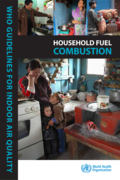
Energy use in the home is a vital and ubiquitous feature of human society. Energy
is used for a wide variety of purposes, including cooking, space heating, light-
ing, small-scale income generation, various household tasks, and entertainment.
Wearing a face mask can help reduce the spread of COVID-19 in the community by reducing the release of respiratory droplets from asymptomatic / pre-symptomatic individuals or those with mild non-specific symptoms. The use of face masks for this purpose may be adopted to reduce the societal impact as
...

Glob Heart . 2020 Oct 13;15(1):69. doi: 10.5334/gh.891.
Research and Reports in Tropical Medicine 2022:13 25–40.
Chagas disease (CD) is caused by the parasite Trypanosoma cruzi, and it is endemic in Central, South America, Mexico and the South of the United States. It is an important cause of early mortality and morbidity, and it is associated with po
...
The WHO Living guideline: Drugs to prevent COVID-19 contains the Organization’s most up-to-date recommendations for the use of drugs to prevent COVID-19. The latest version of this living guideline is available in pdf format (via the ‘Download’ button) and via an online platform.
Guidelines
...
This document is an output of a WHO cross-programme initiative aiming to improve the prevention, diagnosis and management of anaemia and thereby accelerate reduction in its prevalence. It comes at an important time, midway through the era of the Sustainable Development Goals, when progress in reduci
...
Pathogen genomic surveillance has become a priority for public health systems in recent years. Genomic sequencing is increasingly being used to characterize pathogens and monitor important public health priorities (e.g. poliovirus, influenza virus, Mycobacterium tuberculosis and Vibrio cholerae, ant
...
The article outlines the prioritized research agenda for the prevention and control of chronic respiratory diseases (CRDs) as part of the World Health Organization's (WHO) action plan on noncommunicable diseases (NCDs) from 2008 to 2013. It highlights the significant global impact of CRDs, including
...
Asthma is the most common noncommunicable disease in children, and among the most common in adults. According to the most recent estimates from the Global Asthma Network Phase I study, around one in 10 children and adults have symptoms of asthma and one in 20 school-aged children have severe asthma
...
