
Filter
2237
Text search:
Hygiene
promotion
Featured
204
723
Language
Document type
1268
319
269
121
116
48
38
28
16
5
3
2
1
1
Countries
75
70
68
68
59
54
52
51
51
49
47
44
39
37
34
34
33
32
31
30
30
30
30
29
28
27
27
23
21
21
20
20
16
16
15
15
14
14
12
11
11
11
11
11
10
10
9
9
9
8
8
8
8
7
7
7
7
7
6
5
5
5
5
5
5
5
4
4
4
4
4
4
4
4
4
3
3
3
3
3
2
2
2
2
2
2
2
2
2
2
2
2
2
2
2
2
2
1
1
1
1
1
1
1
1
1
1
1
1
1
1
1
1
1
1
1
1
1
1
1
1
1
1
1
1
1
1
1
1
Authors & Publishers
Publication Years
Category
895
234
136
131
107
49
7
4
Toolboxes
208
116
113
101
90
87
80
77
75
74
67
61
61
50
33
32
16
12
9
8
6
3
2

Water, sanitation and hygiene (WASH) are critical in the prevention and care for all of the 17 neglected tropical diseases (NTDs) scheduled for intensified control or elimination by 2020.
Provision of safe water, sanitation and ...
Provision of safe water, sanitation and ...

EU Compass for Action on Mental Health and Well-being
Water, sanitation, hygiene, and waste management for SARS-CoV-2, the virus that causes COVID-19
recommended
Updated Interim guidance 29 July 2020
The provision of safe water, sanitation and waste management and hygienic conditions is essential for preventing and for protecting human health during all infectious disease outbreaks, including of coronavirus disease 2019 (COVID-19). Ensuring evidenced-based
...
Int J Hyg Environ Health. 2019 Jun; 222(5): 765–777. doi: 10.1016/j.ijheh.2019.05.004;
To develop updated estimates in response to new exposure and exposure-response data of the
burden of diarrhoea, respiratory infections, malnutrition, schistosomiasis, malaria, soil-transmitted helminth
infec
...
Note technique. Les centres de traitement de choléra fournissent des soins hospitaliers aux patients atteints de choléra
pendant les épidémies. Une prise en charge de qualité et l’isolement des patients atteints du choléra sont
essentiels pour prévenir les décès et aider à lutter con
...
Presentation on WASH in Malawi
A new brief published by the IFRC and Climate Centre today details the adverse impacts of climate change on human health and provides more detail on the second of four pillars of action in the Red Cross Red Crescent Movement ambitions on climate.
The purpose of this Strategy is to set out the way to meet the needs of the rural populations for improved domestic water supply services, access to and use of improved sanitation with elimination of open defecation, and improved hygiene behaviour b
...

This guidance document sets out a methodology to identify and track financing to the WASH sector in a coherent and consistent manner across several countries. It is designed to help countries track financing to the WASH sector on a regular and comparable basis and analyse this information to support
...
Le Guide de formation aux actions essentielles de nutrition et aux actions essentielles d'hygiène : Travailleurs communautaires renforce la capacité des travailleurs communautaires à fournir et à promouvoir les actions essentielles en matière d
...
Module pour la formation de formateur
African Journal of Primary Health Care & Family Medicine
ISSN: (Online) 2071-2936, (Print) 2071-2928

Improvements in water sanitation and hygiene (WASH) and wastewater management in all sectors are critical elements of preventing infections and reducing the spread of antimicrobial resistance (AMR) as identified in the Global Action Plan to combat A
...
The disease burden caused by poor water, sanitation and hygiene is significant. For instance, soil transmitted helminthes (hookworm, roundworm, ringworm) infest approximately two billion people. Shistosomiasis infects and debilitates 200 million peo
...
https://doi.org/10.1371/journal.pntd.0002439
South Sudan has a high burden – among the highest in sub-Saharan Africa – of neglected tropical diseases (NTDs). This adversely affects the health and social and economic well-being of people in the country. The prevention, control and eventual elim
...

A two-week mission was conducted by WASH and quality UHC technical experts from WHO headquarters and supported by the WHO Ethiopia Country Office (WASH and health systems teams) in July 2016, to understand how change in WASH services and quality improvements have been implemented in Ethiopia at nati
...

Purpose of this document: to present eight practical steps that Member States can take at the national and sub-national level to improve WASH in health care facilities
This report, which involved input from across WaterAid, in particular from the Programme Support Unit (PSU) of WaterAid UK, includes case studies from a variety of countries, including Bangladesh, Burkina Faso, Eswatini, Ethiopia, Ghana, India and Nepal, each demonstrating what must be done now to i
...

Fully functioning water, sanitation, hygiene (WASH) and health care waste management services are a critical aspect of infection prevention and control (IPC) practices, and ensuring patient safety and quality of care. Such services are also essentia
...
Le présent guide a donc pour objet de servir d’orientation de base et de point de référence pour l’élaboration d’un projet pilote de marché-santé. Si les principes énumérés dans ce guide s’appliquent de fait à tous les marchés, certains d’entre eux devront sans doute faire preuv
...
L'eau potable et les services d'assainissement et d'hygiène (WASH) sont essentiels à la prévention des 17 maladies tropicales négligées (MTN) pour lesquelles une intensification de la lutte ou l'élimination sont prévues à l'horizon 2020.
...
...
Personne ne se rend dans un établissement de soins de santé pour tomber malade. On s’y rend pour aller mieux, pour accoucher, pour se faire vacciner. Cependant, des centaines de millions de gens sont confrontés à un risque accru d’infection quand ils se font soigner dans des établissements
...
Eau, assainissement, hygiène et gestion des déchets en rapport avec le virus responsable de la COVID-19
recommended
orientations provisoires, 23 avril 2020
The availability of water, sanitation and hygiene (WASH) services in health care facilities, especially in maternity and primary-care settings where they are often absent, supports core aspects of quality, equity and dignity for all people. This doc
...
This paper explores access to water, sanitation, and health in pastoral communities in northern Tanzania. It argues that the concept of gender, used on its own, is not enough to understand the complexities of sanitation, hygiene, water, and health.
...
Safe water, sanitation and hygiene (collectively known as WASH) are crucial for human health and well-being. Yet, millions of people globally lack adequate WASH services and consequently suffer from or are exposed to a multitude of preventable illne
...
The report summarizes the estimates of the burden of disease attributable to unsafe drinking water, sanitation, and hygiene for the year 2019 for four health outcomes - diarrhoea, acute respiratory infections, soil-transmitted helminthiases, and und
...
WASH and Health working together: a ‘how-to’ guide for neglected tropical disease programmes
recommended
2nd edition. This toolkit provides step-by-step guidance to NTD programme managers and partners on how to engage and work collaboratively with the WASH community to improve delivery of water, sanitation and hygiene services to underserved population
...
This publication provides a practical tool to support countries in strengthening surveillance of WASH in schools. The findings will inform the development of supportive regulations and improvement planning to safeguard children’s health, well-being, dignity and cognitive performance. The tool also
...
It summarizes guidance on how to manage – and when to refer – children and adolescents presenting with common complaints and conditions. It includes information to enable primary health care providers to coordinate the continued care of children and adolescents with long-term conditions and dise
...
This document provides an overview of the evidence of nutrition gains that can be achieved with improved WASH, a description of key WASH practices, and practical knowledge and guidance on how to integrate WASH into nutrition programmes, including important monitoring and evaluation (M&E) aspects. Th
...
Guide pratique pour l'amélioration de la qualité des soins grâce à de meilleurs services d'eau, d'assainissement et d'hygiène dans les établissements de santé
World Vision’s Gender Equality and Social Inclusion (GESI) approach actively strives to examine, question, and change harmful social norms and power imbalances as a means of reaching gender equality and social inclusion objectives in a programme area.
This reference guide is designed to help WASH
...
This document was prepared by UNICEF Regional Office for West and Central Africa, under the leadership of Christophe Valingot and the review of Joachim Peeters (WASH Specialist) and Arnaud Laillou (Nutrition Specialist), on behalf of the WASH Regional Group and the Nutrition Regional Group.
This
...
Manuale zur Durchführung von Workshops für Geflüchtete.
Zur Unterstützung der Durchführung der Workshops und als Hilfe für die Ausbildung wurden Manuale erstellt, die das didaktische und methodische Vorgehen erklären und als Leitfaden für die Durchführung von Workshops dienen. Die Manuale
...
Best practice for hand hygiene requires the availability of clean water, soap, and single use disposable towels or alcohol based hand sanitiser with a concentration of 70%. Availability of these resources is not always assured. When resources for ha
...
Environmental Health in Emergencies and Disasters
Annex 6
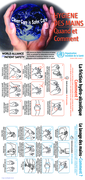
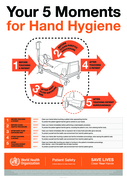
Hygiene Awareness Manual (Arabic) - GIZ
recommended
The "Hygiene Awareness Manual" focuses on promoting improved hygiene practices within communities, emphasizing personal and household hygiene, wate
...
2nd edition
WASH FIT is a risk-based, continuous improvement framework with a set of tools for undertaking water, sanitation and hygiene (WASH) improvements as part of wider quality improvements in health care facilities. It is aimed at small prima
...
Social Protection Policy Analysis, Tanzania
Findings from field research in Malawi and current literature.

It is the policy of the GoR to ensure that children’s rights are met through the provision of basic needs and services for all children in the country, and protect them from abuse and exploitation. Children are defined as persons below the age of 18 years and the ICRP covers children from the time
...
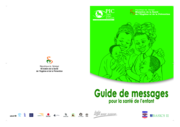
Messages destinés aux mères et autres personnes en charge de la santé des enfants de moins de 5 ans.
Atelier d’élaboration de messages et de production de matériels éducatifs intégrés pour la survie de l’enfant.
Mbour, Octobre 2002
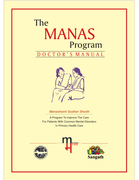
A Program To Improve The Care For Patients With Common Mental Disorders In Primary Health Care.
The essence of the MANAS model is to shift mental health care from mental health specialists to primarycare doctors and lay HCs (someone similar to other more widely available
...
Accessed on 02.02.2020
Selon la Conférence Internationale sur la Population et le Développement (CIPD, Caire, 94, paragraphe 7.2), « la santé de la reproduction ou santé génésique est un état de complet bien-être physique, mental et social et pas seulement l’absence de maladie ou d’inf
...
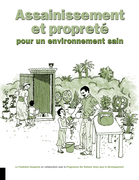
Le livret aborde les différents besoins d'assainissement et d'hygiène des femmes et des hommes. Il donne des informations permettant de réaliser des progrès significatifs en matière d'assainissement par une meilleure utilisation des compétence
...
These posters can be used to help educate people about good hygiene practices, methods for disinfecting water, and caring for family members who may be at risk of contracting cholera. They are designed for all audiences and the graphics have been ma
...
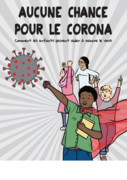
Comment les enfants peuvent aider à vaincre le virus - La bande dessinée informe les enfants et les jeunes de 10 à 14 ans sur le virus corona.
This page describes ten immediate water, sanitation and hygiene (WASH) actions that low-resource healthcare facilities can undertake with limited budget in the near-term (0-3 months) to prepare for and address COVID-19. On the second page, WHO and U
...
Caregiver: Standard precautions
recommended
Issue Brief 28: Cargiver Toolbox Part 2
A collection of important documents from the category "Standard precautions", including hand hygiene, waste management, infection and prevention control (IPC) measures.
The document is part of the briefing package for Ethiopia's Water, Sanitation, and Hygiene (WASH) Cluster, which consists of resources that provide greater clarity and guidance to the cluster partners and other humanitarian actors.
The document i
...
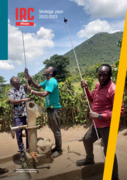
After introducing Ethiopia's WASH sector challenges and trends, the plan describes IRC Ethiopia's vision and strategy which draws from IRC and Water For People's joint framework - Destination 2030. It then details the organisational changes and business development needed to implement the strategic
...
Every day, schools engage in numerous activities that help promote the health and well-being of students, families, and communities. There is clear evidence of the benefits of the health-promoting schools (HPS) approach, not only for improving overall health outcomes (physical, mental, and social) i
...
As escolas realizam diariamente inúmeras atividades que ajudam a promover a saúde e o bem-estar dos alunos, famílias e comunidades. Existem evidências claras dos benefícios da abordagem das escolas promotoras da saúde (EPS), que visam melhorar os resultados globais de saúde da comunidade educ
...
A field guide for accelerating and sustaining open defecation free communities through a Community-Led Total Sanitation approach
Follow-up MANDONA (FUM) is an action-oriented approach for accelerating community-wide sanitation and hygiene behaviour
...
Water, sanitation and hygiene education in schools – WASH in Schools – provides safe drinking water, improves sanitation facilities and promotes lifelong health. WASH in Schools enhances the well-being of children and their families, and paves t
...
GUIDE PRATIQUE À L’INTENTION DES PROGRAMMES DE LUTTE CONTRE LES MALADIES TROPICALES NÉGLIGÉES
This toolkit provides step-by-step guidance to NTD programme managers and partners on how to engage and work collaboratively with the WASH community to improve delivery of water, sanitation and
...
The Water and Sanitation for Health Facility Improvement Tool (WASH FIT) presents a framework and acts as a guide to support multisectoral action to improve water, sanitation and hygiene (WASH) in health care. Central to the WASH FIT methodology is
...

Oral diseases are among the most common chronic diseases worldwide and constitute a major public health problem due to the huge health and economic burden on individuals, families, societies, and health care systems. The recent emphasis on the role of determinants of health, common risk factors and
...

This Technical Brief focuses on appraising and prioritising options for climate resilience with a view to informing water, sanitation and hygiene (WASH) programme and project design.
This Technical Brief:
- provides a simple scorecard/che ...
This Technical Brief:
- provides a simple scorecard/che ...
Personne ne va dans un établissement de soins de santé pour tomber malade. On s’y rend pour se faire soigner, pour accoucher
ou pour se faire vacciner. Cependant, des centaines de millions de personnes s’exposent à un risque accru d’infection en cherchant à obtenir des soins dans des éta
...
This paper has been commissioned by RedR to identify gaps in skills, technology, and knowledge in urban humanitarian response in order to inform RedR’s project Ready to Respond which is looking to address these gaps in two specific areas:
Water supply, sanitation, and
...
The Look Back Study (LBS) focuses on the water and sanitation and hygiene (WASH) component of the project but some additional information was collected along side the WASH data. This data has been compared to the baseline survey data that was report
...
Healthy Settings, a key component of Malawi’s Health Sector Strategic Plan (HSSP) 2011–2016, is the World Health Organization’s (WHO) holistic community-led approach to achieving health improvement by addressing social determinants of health, an approach which is central to the current WHO fra
...
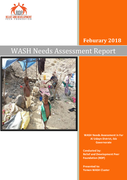
RDP conducted a water, sanitation, and hygiene (WASH) needs assessment in three areas (Bani Ahmed, Al-Aqiba, Al-Ahmol) located in Far Al Udayn district, Ibb Governorate (December 23th , 2017 to January 7th, 2018).
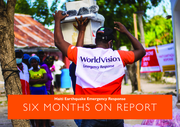
Six months after the earthquake, World Vision's efforts have made it possible to provide emergency assistance to selected beneficiaries among the most vulnerable through the distribution of food and hygiene kits and to address the psychosocial needs
...

Civil Society Organisations’ contribution towards community engagement to access and demand health services and encourage communities to practice appropriate health-seeking behaviour in Mon and Chin States
The following report is a study of 14 villages under the Collective Voices project (Nov ...
The following report is a study of 14 villages under the Collective Voices project (Nov ...
The checklist is aligned with, and builds upon, existing COVID-19-related WHO guidelines and is structured around protective measures related to: 1) hand hygiene and respiratory etiquette; 2) physical distancing; 3) use of masks in schools; 4) envir
...
En 2015, 5,9 millions d'enfants de moins de cinq ans sont décédés (1). Les principales causes de mortalité infantile dans le monde sont la pneumonie, la prématurité, les complications durant l'accouchement, la septicémie néonatale, les anomalies congénitales, la diarrhée, les tra
...
Cholera is a diarrhoeal disease that is usually contracted when drinking water contaminated with Vibrio cholerae bacteria. The fight against this disease requires a multidisciplinary approach that combines a water, hygiene and sanitation (WaSH) resp
...
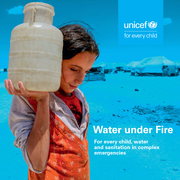
UNICEF trucks water to the camps where people displaced by the conflict have temporarily settled. UNICEF also installed latrines, showers and water storage tanks in the camps and distributed family hygiene kits to protect children against waterborne
...
The WHO/UNICEF JMP report, WASH in Health Care Facilities, is the first comprehensive global assessment of water, sanitation and hygiene (WASH) in health care facilities. It also finds that 1 in 5 health care facilities has no sanitation service*, i
...
The revised package of BFHI materials includes five sections: 1. Background and Implementation, 2. Strengthening and Sustaining the BFHI: A course for decision-makers, 3. Breastfeeding Promotion and Support in a Baby-friendly Hospital: a 20-hour cou
...

(August 28 – October 10, 2017)
A nutrition and mortality assessment using SMART methodology was applied and the survey covered 15 statistical (14 districts plus 1) domains countrywide. The main objective of the survey was to assess the current nutrition status of the population, especially ch ...
A nutrition and mortality assessment using SMART methodology was applied and the survey covered 15 statistical (14 districts plus 1) domains countrywide. The main objective of the survey was to assess the current nutrition status of the population, especially ch ...
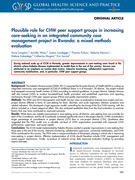
The Kabeho Mwana project (2006–2011) supported the Rwanda Ministry of Health (MOH) in scaling up integrated community case management (iCCM) of childhood illness in 6 of Rwanda’s 30 districts. The project trained and equipped community health workers (CHWs) according to national guidelines. In p
...

Project Programs:
A. Medical Care Program
B. Community Health Promotion and Prevention Program
C. Maternal and Child Health Program
Target Population: 228,000 people living within the Mon, Kayah, Kayan, Karen,Shan, ...
A. Medical Care Program
B. Community Health Promotion and Prevention Program
C. Maternal and Child Health Program
Target Population: 228,000 people living within the Mon, Kayah, Kayan, Karen,Shan, ...
