Filter
140
Filtered Results: 140
Text search:
Cambodian
Disabled
People’s
Organization
Featured
Recommendations
9
New Publications
40
Language
Document type
No document type
122
Studies & Reports
8
Manuals
5
Guidelines
4
Resource Platforms
1
Countries / Regions
Cambodia
17
Myanmar / Burma
12
Asia
5
Global
5
Indonesia
4
Philippines
3
Kenya
3
Ethiopia
2
Thailand
2
Malaysia
2
Laos
2
Vietnam
2
Burkina Faso
1
Sierra Leone
1
Liberia
1
Nigeria
1
Senegal
1
Ghana
1
Nepal
1
South Sudan
1
Afghanistan
1
Tanzania
1
China
1
Rwanda
1
Singapore
1
Malawi
1
Mozambique
1
Namibia
1
Mexico
1
Sri Lanka
1
Yemen
1
Palestine
1
Authors & Publishers
Publication Years
Category
Countries
37
Public Health
11
Key Resources
7
Women & Child Health
5
Capacity Building
1
Toolboxes
Disability
64
Mental Health
14
NTDs
7
Specific Hazards
5
Conflict
4
COVID-19
3
Planetary Health
3
Ebola
2
Global Health Education
2
Polio
1
Natural Hazards
1
HIV
1
TB
1
Caregiver
1
Pharmacy
1
Health Financing Toolbox
1
The report surveyed 9 leading bilateral and multilateral education donors in respect of their approach to disability-inclusive education.
DEVELOPMENT BULLETIN | No.74, June 2011 | Editor: Pamela Thomas | Features and case studies | Progress with implementing conventions and strategies | Progress with capacity building | Progress with disability-inclusive education | Disability-inclusive research | Innovative inclusion | Review of urba...
Program Report for Collaborative Agreement: DFD-A-00-08-00309-00 September 30, 2008 -December 31, 2015
This manual provides guidance for policymakers on the issue of prehospital trauma care systems. The main areas covered include the organisation of the prehospital trauma care system, capacity development, data collection, transportation and communic...

Every year, around 830 000 children die from unintentional or "accidental" injuries. The vast majority of these injuries occur in low-income and middle-income countries. However, dozens of prevention strategies and programmes exist. If they were integrated into other child survival programmes and im...

An estimated 1.3 billion people – or 16% of global population worldwide – experience a significant disability today. Persons with disabilities have the right to the highest attainable standard of health as those without disabilities. However, th...
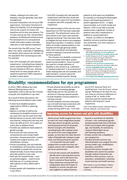
Recommendations on the inclusion of people with disabilities in eye care made by CBM's Medical Eye Care Advisory Group as a result of
a meeting in Hydrabad, India, in 2012.

Lao People’s Democratic Republic (Lao PDR), also referred to as Laos, or Lao, is exposed to natural disasters such as flooding, typhoons, cyclones, drought, and earthquakes. The country is vulnera...
The World Health Organization Disability Assessment Schedule (WHODAS 2.0) is a generic assessment instrument developed by WHO to provide a standardized method for measuring health and disability across cultures. It was developed from a comprehensive...

The UNICEF-GAIN Partnership Project
The report notes that iodine deficiency is a leading cause of preventable brain damage worldwide. Insufficient iodine during pregnancy and infancy results in neurological and psychological deficits, reducing a child’... IQ by 8 to 10 points. This translates into major losses in the cognitive capital of entire nations and thus their socio-economic development.
The report outlines urgent steps to reduce the risk of mental impairment to babies’ growing brains:
• Integrate salt iodization into national plans to support children’s nutrition and brain development in early childhood;
• Align salt iodization and salt reduction agendas; • Establish surveillance systems to identify unreached populations;
• Strengthen regulatory systems to enforce existing legislation on salt iodization;
• Recognize the growing importance of fortified foods as potential sources of iodized salt.
The report notes that iodine deficiency is a leading cause of preventable brain damage worldwide. Insufficient iodine during pregnancy and infancy results in neurological and psychological deficits, reducing a child’... IQ by 8 to 10 points. This translates into major losses in the cognitive capital of entire nations and thus their socio-economic development.
The report outlines urgent steps to reduce the risk of mental impairment to babies’ growing brains:
• Integrate salt iodization into national plans to support children’s nutrition and brain development in early childhood;
• Align salt iodization and salt reduction agendas; • Establish surveillance systems to identify unreached populations;
• Strengthen regulatory systems to enforce existing legislation on salt iodization;
• Recognize the growing importance of fortified foods as potential sources of iodized salt.
Technical Guidance

No publication year indicated
The specific objectives of the plan are to:
- Scale up evidence-based, cost effective interventions through effective strategies within a HSS approach and provide equitable coverage with quality.
- Reduce neonatal mortality by improved home-based newborn ...
The specific objectives of the plan are to:
- Scale up evidence-based, cost effective interventions through effective strategies within a HSS approach and provide equitable coverage with quality.
- Reduce neonatal mortality by improved home-based newborn ...
Embracing Diversity: Toolkit for Creating Inclusive, Learning-Friendly Environments Specialized Booklet 3
This manual summarizes the methodology used to develop WHODAS 2.0 and the findings obtained when the schedule was applied to certain areas of general health, including mental and neurological disorders.
The manual will be useful to any researcher or clinician wishing to use WHODAS 2.0 in their prac...
The Education 2030 Incheon Declaration and Framework for Action specifies that the mandate of the Global Education Monitoring Report is to be ‘the mechanism for monitoring and reporting on SDG 4 and on education in the other SDGs’ with the responsibility to ‘report on the implementation of nat...
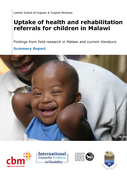
Findings from field research in Malawi and current literature.