
Filter
1873
Text search:
Bangladesh
Featured
157
551
Language
Document type
1106
376
174
84
39
32
23
14
11
6
5
2
1
Countries
293
121
112
62
60
45
42
28
23
21
18
17
17
15
15
15
14
13
13
12
11
10
10
10
10
10
10
10
9
9
9
8
8
8
8
7
6
6
6
6
6
6
6
6
5
5
5
4
4
4
4
4
4
3
3
3
3
3
3
3
3
2
2
2
2
2
2
2
2
2
2
2
2
2
1
1
1
1
1
1
1
1
1
1
1
1
1
1
1
1
1
1
1
1
1
1
1
1
1
Authors & Publishers
Publication Years
Category
559
177
147
118
108
53
15
2
Toolboxes
143
136
126
108
104
99
58
58
58
50
43
39
37
30
27
23
23
22
11
10
5
4
3
2
1
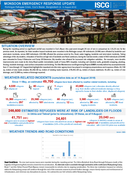
During the reporting period no significant rainfall was recorded in Cox’s Bazar: this past week brought 29 mm of rain in comparison to 115.25 mm for the previous week. As expected, far fewer weather hazard incidents were recorded in the Rohingya camps: 69 individuals (16 HH) were affected by lands
...

This study aims to explore the impact on the lives of caregivers of
children with cerebral palsy.
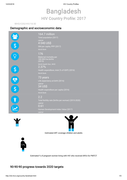
HIV Country Intelligence - HIV Country Profiles
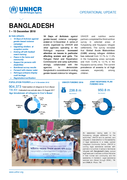
16 Days of Activism against gender-based violence campaign ended on 10 December. A series of events organized by UNHCR and other agencies operating in the Rohingya response increased attention on issues in particular affecting women and girls: The Refugee Relief an
...
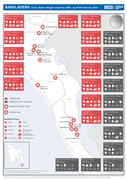
Data Source: ISCG as of 05 February 2019
*Food Security Sector only reports activitiy where the distribution points are positioned, the actual operational coverage is wider.
*Activities shown include only those which have been completed or are ongoing. Product prepared with 4W input by sectors as
...

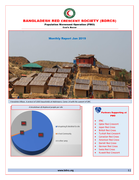
JOINT RESPONSE PLAN (JRP)
The Strategic Executive Group has developed a Joint Response Plan (JRP) for 2019 regarding the displaced people from Myanmar and who are affected specially by this influx The JRP has included different issues in terms of measuring people who are in need, of support interve
...
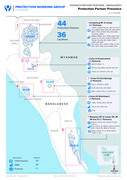

In concordance with the global and WHO activities on ARC, the Ministry of Health and Family Welfare (MoHFW) in Bangladesh has come forward and initiative was taken to conduct program for containment of antimicrobial resistance in
...

Global actions to reduce antimicrobial resistance (AMR) include optimising the use of antimicrobial medicines in human and animal health. In countries with weak healthcare regulation, this requires a greater understanding of the drivers of antibiotic use from the perspective of providers and consume
...

Camp profile focused for the effective and efficient coordination
at camp level; continuity of service monitoring as per the
minimum or sectors’ standard; care and maintenance of the
service provisions; and immediate future planning for bridging
the gaps.

গাইডলাইন ও নীতিমালাসমূহ
Accessed: 17.04.2020
Here you can download different guidelines and policies in Bangla
December 2015
National guidelines for of Clubfoot

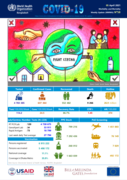
(15 April 2020, BST 17:00 hours)
Actions Taken from Bangladesh Red Crescent Society (BDRCS):
9292 Number of staff and RCY/ CPP/ Camp/ Community volunteers being mobilized throughout the country.
10116 Set of PPE provided to individuals working
...
ACT Alliance appeal: Global Response to the COVID-19 Pandemic – ACT201 - Sub-Appeal - ACT 201-BGD -
Highlights: COVID-19

Bangladesh has been going through incremental trend of GDP growth rates for a long time. The GDP is the key aspect to measure the economic growth of a country. But the current world wide pandemic due to the COVID-19 hardly affects the w
...
Annals of Global Health, 87(1), p.43. DOI: http://doi.org/10.5334/aogh.3269;
The aim of this study was to examine the prevalence of mental health symptoms (anxiety, depression, and stress) in Bangladesh and the factors associated with these sympto
...
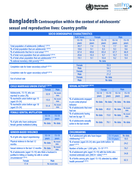
Country profile: Bangladesh

The authors conduct an integrated survey of Antimicrobial Resistant Organisms (AMR) in drinking water, wastewater and surface water in three settings in Bangladesh: rural households, rural poultry farms, and urban food markets. Results show that unt
...
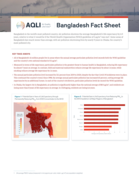
Bangladesh is the world’s most polluted country. Air pollution shortens the average Bangladeshi’s life expectancy by 6.9 years, relative to what it would be if the World Health Organization (WHO) guideline of 5 μg/m³ was met. Some areas of
...
The survey highlights changes that have taken place in Bangladesh’s demographic and health situation since the previous BDHS surveys. The survey provides important information for policymakers and program personnel in addressing the monitoring and
...

Background: Despite several cycles of Mass Drug Administration (MDA), however, the prevalence of Soil-transmitted helminthiasis (STH) remains high in Bangladesh. A clear understanding of local knowledge, attitudes, and practices (KAP) related to the
...
Website last accessed on 14.05.2023
Leishmaniasis A group of diseases, caused by the Leishmania parasites and transmitted by the sandfly
DHS Comparative Reports No. 41



Guidebook on ICD10
recommended
3rd edition



March - December 2018
The Government of Bangladesh has kept its borders open to Rohingya refugees and leads the humanitarian response. The people of Bangladesh continue to show tremendous generosit
...

National strategy on the management of disaster and climate induced internal displacement (NSMDCIID)
This strategy has been developed with a view to managing climate-induced internal displacement (CIID) in a comprehensive and rights-based manner. It is part of the action plan for the Government of Bangladesh (GoB) to implement the Sendai Framework.
...
CDI 2 WASH Program
The “Field Level Arsenic Testing Guideline” provides guidance for testing arsenic in groundwater in simple and cost-effective way. The guideline covers different aspects like costing involved in a testing program, justification of selecting field kits, sample collection p ...
The “Field Level Arsenic Testing Guideline” provides guidance for testing arsenic in groundwater in simple and cost-effective way. The guideline covers different aspects like costing involved in a testing program, justification of selecting field kits, sample collection p ...
The “Case Study: CDI2WASH Program” depicts the benefits and lessons learnt by the beneficiaries and change agents in CDI2WASH program during the last 4 years. The document has contained the success of the project and accumulated learning have been documented in the publication. It upholds the ac
...
The Look Back Study (LBS) focuses on the water and sanitation and hygiene (WASH) component of the project but some additional information was collected along side the WASH data. This data has been compared to the baseline survey data that was reported at start of the project (see tables in annex D t
...
National Tuberculosis Control Program; Mycobacterial Disease Control National AIDS/STD Program
Specific measures are being taken within the National Tuberculosis Control Programme (NTP) to address the MDR TB problem through appropriate management of patients and strategies to prevent the propagation and dissemination of MDR TB.
The term "Programmatic Management of Drug Resistant TB" (PMD ...
The term "Programmatic Management of Drug Resistant TB" (PMD ...
The coastal regions of Bangladesh are hit by cyclones regularly. The country has evolved, in the face of repetitious calamities, a disaster preparedness programme. The major response to cyclones has been the building of cyclone shelters, which also
...

The Ministry of Health and Family Welfare is committed to ensuring the effective implementation of this strategy, which will contribute to the overall wellbeing and health of all adolescent boys and girls of Bangladesh

Ziehl-Neelsen & Fluorescence Methods.
2nd edition
large File: 20 MB
Enhancing disaster preparedness for effective response.
One of the most disaster-prone countries in the world, Bangladesh each year experiences a high degree of seasonal variety, including southwest monsoon and two cyclone seasons. With its long c
...
July 2019
National Malaria Elimination & Aedes Transmitted Disease Control Program
Disease Control Division
Derectorate General of Health Services
4th Edition 2018
National Malaria Elimination & Aedes Transmitted Disease Control Program
Disease Control Unit Directorate General of Health Services

January 2019
Non Communicable Disease Control Programme Directorate General of Health Services Health Services Division, Ministry of Health & Family Welfare
National Malaria Elimination & Aedes Transmitted Diseases Control Program
6th Version 2019
Disease Control Division,
Standard Management Guideline
Directorate General of Health Services, Ministry of Health & Family Welfare
First Published: 15th May 2017

This short guide is designed to assist development and humanitarian agencies to think through how risk communication and community engagement activity related to Covid-19 can be carried out without face-to-face interaction with communities. By using remote methods, agencies will be able to safeguard
...
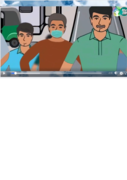
This video was shared on Facebook. It discourages listening to myths and rumors such as those that claim that antibiotics or eating garlic can cure coronavirus. It is important not to listen to rumors, but to get correct information from reliable sources

Over a period of two decades, under-5 mortality rate in Bangladesh has declined by 66% from 133 per 1000 live births in 1993-94 to 45 per 1000 live births in 2017-18. The country reached the MDG-4 goal in the reduction of child mortality on time. Ho
...

Community Engagement During Public Health Emergencies Like COVID-19: An Action Framework and Toolkit
This handbook offers a simple framework of action for actors in local government, and in particular, health leaders such as Civil Surgeons (CSs) and Upazila Health and Family Planning Officers (UHFPQOs), to take ownership and leadership to combat COVID-19 at each district and upazila respectively, w
...
ICAAP12 Secretariat
Partners in population and development, Dhaka, Bangladesh June 2016
This Book addresses most common mental disorders reported in Bangladesh. It uses simple terms, language and examples for better understanding of the problems related to mental health.
The first step of the prevention starts from a family and family
...
Mental disorders are important public health concern in Bangladesh with a substantial treatment gap due to shortage of resources and trained relevant professionals, such as psychiatrists, psychologists, social psychologists, psychiatric nurses and o
...
3rd edition.
National immunization programme in Bangladesh has marched a long way to reach more than 7 million infants and pregnant mothers in each year. The goal of the immunization programme is to protect the individuals and public from vaccine p
...
Training Manual for Doctors.
Cardiac deaths are highest cause of death in Bangladesh. Trauma, burn, poisoning and snake bite are commonly encountered in the emergency room of a hospital. Road traffic injuries, fire, collapse of a building etc. are
...
During September-October 2016 we have collected 1,360 testimonies from Rohingya refugees in Cox's Bazar ( Bangladesh ) - This is what we found. Please read online: http://xchange.org/reports/TheRohingyaSurvey2017.html
UNICEF Child Alert | February 2018
Back in Myanmar, an estimated half million Rohingya remain largely sealed off in their communities and displacement camps, fearful that the violence and horror that had driven so many of their relatives and neighbours to fl ee would engulf them too. Today, t ...
Back in Myanmar, an estimated half million Rohingya remain largely sealed off in their communities and displacement camps, fearful that the violence and horror that had driven so many of their relatives and neighbours to fl ee would engulf them too. Today, t ...
Wild elephants and snakes, violent men lurking in the forest and human traffickers on the prowl during the night. These are among the most pressing fears identified by Rohingya children who fled fighting in Myanmar to Bangladesh, according to a new
...
Online learning for clinical management staff of respiratory diphtheria in Cox's Bazar, Bangladesh.
In December 2017, the WHO Health Emergencies Programme launched an online learning for clinical staff on respiratory diphtheria through the OpenWHO.
...
Commissioned by Plan International the report draws on data from research conducted in Bangladesh in April 2018. It explores how adolescent girls within two age brackets (10-14 and 15-19) understand the unique impact the crisis has upon them, and ho
...

The Monitoring Report, which covers the first two months of the response from 25 August to 31 October, highlights the work of the Government of Bangladesh, in cooperation with humanitarian partners who are working to provide relief services for the
...

The Report describes the evaluation of WHO's contribution to the Maternal Health Program in South-East Asia Region. This was an independent evaluation conducted in 2015 by Amaltas, a Delhi based organization. The evaluation highlights the progress in five countries, namely
...
