
Filter
154
Text search:
Aedes
albopictus
Featured
11
74
Language
Document type
100
21
17
4
4
3
3
1
1
Countries
9
9
9
6
4
3
3
3
3
2
2
2
1
1
1
1
1
1
1
1
1
Authors & Publishers
Publication Years
Category
26
23
12
1
Toolboxes
53
46
23
11
2
1
1
1
1
1

Parasites & Vectors volume 15, Article number: 389 (2022)
Dengue is one of the common arboviral infections and is a public health problem in South East Asia. The aim of this systematic review and meta-analysis was to evaluate the prevalence and distribution of dengue in SAARC (South Asian Associ
...

Methodological field approaches for scientists with a basic background in entomology to prepare and implement a yellow fever entomological assessment during outbreaks

This toolkit for integrated vector management (IVM) is designed to help national and regional programme managers coordinate across sectors to design and run large IVM programmes.
The toolkit provides the technical detail required to plan, implement, monitor and evaluate an IVM approach. IVM can ...
The toolkit provides the technical detail required to plan, implement, monitor and evaluate an IVM approach. IVM can ...
This toolkit for integrated vector management (IVM) is designed to help national and regional programme managers coordinate across sectors to design and run large IVM programmes.
The toolkit provides the technical detail required to plan, implement, monitor and evaluate an IVM approach. IVM can be
...
New edition
With this World Health Day, WHO is drawing attention to a group of diseases that are spread by insects and other vectors, the heavy health and economic burdens they impose, and what needs to be done to reduce these burdens. Many of these diseases have been historically confined to distinct geographi
...
Baseado no livro Preparación y respuesta ante la eventual introducción del virus chikungunya en las américas
A practioner's guide
Epidemiologisches Bulletin Nr.2 /2016, S.16
3 March 2016
Working document from an informal consultation of experts. A Protocol for risk assessment at the field level. The purpose of document is to provide guidance on the methodology to be used for assessing, at field level, the yellow fever virus circulation in areas at risk, and is primarily intended fo
...
The objective of this document is to guide the preparation and implementation of national preparedness plans for the safety of substances of human origin during outbreaks of Zika virus infection, both in affected and non-affected areas.

The ECDC Communicable Disease Threats Report (CDTR) is a weekly bulletin for epidemiologists and health professionals on active public health threats. This issue covers the period 5-11 November 2017 and includes updates on measles, rubella, chikungunya, West Nile virus, Plague, monkeypox, legionnair
...

The Global vector control response 2017–2030 (GVCR) provides a new strategy to strengthen vector control worldwide through increased capacity, improved surveillance, better coordination and integrated action across sectors and diseases.
In May 2017, the World Health Assembly adopted resolutio ...
In May 2017, the World Health Assembly adopted resolutio ...
The primary audience for this guidance is persons
working directly in vector-borne disease prevention
and control, including programme managers,
researchers and field workers. A brief technical
background is provided for the benefit of persons
without expertise in vector-borne diseases; readers
...
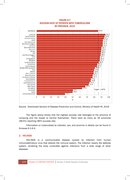
In the Region of the Americas, between epidemiological week (EW) 1 and EW 52 of 2018, a total of 560,586 cases of dengue were reported (incidence rate of 57.3 cases per 100,000 population), including 336 deaths. Of the total cases, 209,192 (37.3%) were laboratoryconfirmed and 3,535 (0.63%) were clas
...
Climate Change Toolkit for Health Professionals
recommended
This toolkit consists of eight modules which have been prepared as stand-alone documents that can be read by themselves, but they have also been prepared to complement one another. It has been designed as a tool for health professionals and students in the health care and public health sectors who
...
During the past five decades, the incidence of dengue has increased 30-fold. Some 50–100 million new infections are estimated to occur annually in more than 100 endemic countries, with a documented further spread to previously unaffected areas; every year hundreds of thousands of severe cases ari
...
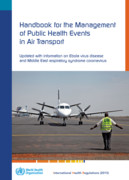
Updated with information on Ebola virus disease and Middle East respiratory syndrome coronavirus
A wide variety of health events ranging in severity may occur related to air transport, requiring different responses or, perhaps, no response at all. The target audience for this guidance document incl
...
This manual addresses all the issues. It focus on the cycle of microbes, antibiotics, vaccination, AMR,
infection prevention and control. It will support nurses on better action and also on communication towards
their patients and families.

The Lancet Volume 397, ISSUE 10269, P129-170, January 09, 2021
There is a broad consensus nowadays that the Earth is warming up as a result of greenhouse gas emissions caused by anthropogenic activities. It is also clear that current trends in the fields of energy, development and population growth will lead to continuous and ever more dramatic climate change.
...
Mosquito-borne diseases are expanding their range, and re-emerging in areas where they had subsided for decades. The extent to which climate change influences the transmission suitability and population at risk of mosquito-borne diseases across different altitudes and population densities has not be
...
PLOS One November 20, 2020 https://doi.org/10.1371/journal.pone.0241799 . The first autochthonous case of chikungunya virus (CHIKV) infection in Brazil was in September 2014 in the State of Amapá, and from there it rapidly spread across the country. The present study was conducted in 2016 in the st
...
Surveillance Report
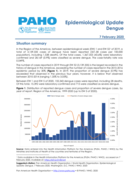
Epidemiological Update
Dengue
7 February 2020
Situation summary
In the Region of the Americas, between epidemiological week (EW) 1 and EW 521 of 2019, a total of 3,139,335 cases of dengue have been reported (321.58 cases per 100,000 population), including 1,538 deaths. Of the total cases, 1,367,
...
Vector-borne diseases are responsible for 17% of the global burden of communicable diseases and more than 500 000 deaths annually. The ambitious global targets for the control of vector-borne diseases come in the context of the (re-)emergence of diseases, increasing resistances to insecticides and u
...
Climate-induced water insecurity poses one of the biggest threats to humanity and will lead to more hunger, disease and displacement
Oxfam water engineers are having to drill deeper, more expensive and harder-to-maintain water boreholes used by some of the poorest communities around the world, mo
...
Laboratory manual for yellow fever
recommended
This WHO laboratory manual provides the most up to date methods and procedures for the laboratory identification of yellow fever virus infection in humans. It provides guidance on the establishment and maintenance of an effective laboratory providing routine surveillance testing for yellow fever, wh
...
Training Modules for climate change and Health - WHO
Infectious Diseases in Ukraine
recommended
Data on Infectious Diseases in Ukraine Now Available as a Free eBook to Help Medics and Relief Efforts During the War.
• Data on the 215+ infectious diseases endemic to Ukraine
• All published data on infections imported into Ukraine
To download the book, please click the button below and use
...


Advances have been made through expanded interventions delivered through five public health approaches: innovative and intensified disease management; preventive chemotherapy; vector ecology and management; veterinary public health services; and the provision of safe water, sanitation and hygiene. I
...
Ce rapport montre que d’importants progrès ont été accomplis en 2015 pour atteindre les cibles de la feuille de route. Ces résultats procèdent de la mise en œuvre de cinq interventions recommandées par l’OMS pour vaincre les MTN : chimiothérapie préventive ; prise en charge innovante et
...
In Climate Change 2014: Impacts, Adaptation, and Vulnerability. Part A: Global and Sectoral Aspects. Contribution of Working Group II to the Fifth Assessment Report of the Intergovernmental Panel on Climate Change
The Lancet Countdown is an international collaboration that independently monitors the health consequences of a changing climate. Publishing updated, new, and improved indicators each year, the Lancet Countdown represents the
consensus of leading researchers from 43 academic institutions and UN ag
...
Le présent document rassemble une série de recommandations émises par l’Organisation mondiale de la Santé (OMS) et l’Organisation panaméricaine de la Santé (OPS) pour aider les professionnels chargés des programmes de lutte antivectorielle en Amérique latine et dans les Caraïbes aux niv
...
Este documento reúne um conjunto de recomendações formuladas pela OMS e pela OPAS para ajudar os profissionais responsáveis pelos programas de controle de vetores nas Américas em nível nacional, subnacional e local a se atualizarem e tomarem decisões baseadas em evidências sobre as medidas d
...

This fourth WHO report on neglected tropical diseases (NTDs) reviews the progress made towards achieving the Roadmap targets for 2020, noting the remaining challenges, then looks beyond 2020 to evaluate the changing global health and development landscape, considering the implications of integrating
...
