Filter
2522
Text search:
efficient
state
Featured
225
756
Language
2480
53
39
30
24
16
13
5
5
4
4
3
3
3
3
3
3
3
2
2
2
2
2
2
2
2
1
1
1
1
1
1
1
Document type
1507
414
237
147
140
31
18
15
5
2
2
1
Countries
122
98
90
84
64
62
61
60
58
57
52
42
40
40
37
33
33
33
29
29
29
27
26
26
23
20
19
19
19
18
15
15
15
13
13
13
13
13
12
11
10
10
9
9
8
8
8
8
8
7
7
7
7
7
6
6
6
6
6
5
5
5
5
5
5
5
4
4
4
4
4
4
4
4
3
3
3
3
3
3
3
3
3
3
3
2
2
2
2
2
2
2
2
1
1
1
1
1
1
1
1
1
1
1
1
1
1
1
1
1
1
1
1
1
1
1
1
1
1
Authors & Publishers
289
116
94
80
76
42
38
34
32
26
18
16
16
15
14
14
13
12
12
12
12
11
11
11
11
10
10
10
9
9
9
9
9
9
8
8
8
8
8
7
7
7
7
7
7
7
7
6
6
6
6
6
6
6
6
6
6
6
6
6
6
6
5
5
5
5
5
5
5
5
5
5
5
5
5
4
4
4
4
4
4
4
4
4
4
4
4
4
4
4
4
4
4
4
4
4
4
4
4
4
4
4
4
3
3
3
3
3
3
3
3
3
3
3
3
3
3
3
3
3
3
3
3
3
3
3
3
3
3
3
3
3
3
3
3
3
3
3
3
3
3
3
3
3
3
3
3
3
3
3
3
3
3
3
3
2
2
2
2
2
2
2
2
2
2
2
2
2
2
2
2
2
2
2
2
2
2
2
2
2
2
2
2
2
2
2
2
2
2
2
2
2
2
2
2
2
2
2
2
2
2
2
2
2
2
2
2
2
2
2
2
2
2
2
2
2
2
2
2
2
2
2
2
2
2
2
2
2
2
2
2
2
2
2
2
2
2
2
2
2
2
2
2
2
2
2
2
2
2
2
2
2
2
2
2
2
2
2
2
2
2
2
2
2
2
2
2
2
2
2
2
2
2
2
2
2
2
2
2
2
2
2
2
2
2
2
2
2
2
2
2
2
2
2
2
2
2
2
2
2
2
2
2
2
1
1
1
1
1
1
1
1
1
1
1
1
1
1
1
1
1
1
1
1
1
1
1
1
1
1
1
1
1
1
1
1
1
1
1
1
1
1
1
1
1
1
1
1
1
1
1
1
1
1
1
1
1
1
1
1
1
1
1
1
1
1
1
1
1
1
1
1
1
1
1
1
1
1
1
1
1
1
1
1
1
1
1
1
1
1
1
1
1
1
1
1
1
1
1
1
1
1
1
1
1
1
1
1
1
1
1
1
1
1
1
1
1
1
1
1
1
1
1
1
1
1
1
1
1
1
1
1
1
1
1
1
1
1
1
1
1
1
1
1
1
1
1
1
1
1
1
1
1
1
1
1
1
1
1
1
1
1
1
1
1
1
1
1
1
1
1
1
1
1
1
1
1
1
1
1
1
1
1
1
1
1
1
1
1
1
1
1
1
1
1
1
1
1
1
1
1
1
1
1
1
1
1
1
1
1
1
1
1
1
1
1
1
1
1
1
1
1
1
1
1
1
1
1
1
1
1
1
1
1
1
1
1
1
1
1
1
1
1
1
1
1
1
1
1
1
1
1
1
1
1
1
1
1
1
1
1
1
1
1
1
1
1
1
1
1
1
1
1
1
1
1
1
1
1
1
1
1
1
1
1
1
1
1
1
1
1
1
1
1
1
1
1
1
1
1
1
1
1
1
1
1
1
1
1
1
1
1
1
1
1
1
1
1
1
1
1
1
1
1
1
1
1
1
1
1
1
1
1
1
1
1
1
1
1
1
1
1
1
1
1
1
1
1
1
1
1
1
1
1
1
1
1
1
1
1
1
1
1
1
1
1
1
1
1
1
1
1
1
1
1
1
1
1
1
1
1
1
1
1
1
1
1
1
1
1
1
1
1
1
1
1
1
1
1
1
1
1
1
1
1
1
1
1
1
1
1
1
1
1
1
1
1
1
1
1
1
1
1
1
1
1
1
1
1
1
1
1
1
1
1
1
1
1
1
1
1
1
1
1
1
1
1
1
1
1
1
1
1
1
1
1
1
1
1
1
1
1
1
1
1
1
1
1
1
1
1
1
1
1
1
1
1
1
1
1
1
1
1
1
1
1
1
1
1
1
1
1
1
1
1
1
1
1
1
1
1
1
1
1
1
1
1
1
1
1
1
1
1
1
1
1
1
1
1
1
1
1
1
1
1
1
1
1
1
1
1
1
1
1
1
1
1
1
1
1
1
1
1
1
1
1
1
1
1
1
1
1
1
1
1
1
1
1
1
1
1
1
1
1
1
1
1
1
1
1
1
1
1
1
1
1
1
1
1
1
1
1
1
1
1
1
1
1
1
1
1
1
1
1
1
1
1
1
1
1
1
1
1
1
1
1
1
1
1
1
1
1
1
1
1
1
1
1
1
1
1
1
1
1
1
1
1
1
1
1
1
1
1
1
1
1
1
1
1
1
1
1
1
1
1
1
1
1
1
1
1
1
1
1
1
1
1
1
1
1
1
1
1
1
1
1
1
1
1
1
1
1
1
1
1
1
1
1
1
1
1
1
1
1
1
1
1
1
1
1
1
1
1
1
1
1
1
1
1
1
1
1
1
1
1
1
1
1
1
1
1
1
1
1
1
1
1
1
1
1
1
1
1
1
1
1
1
1
1
1
1
1
1
1
1
1
1
1
1
1
1
1
1
1
1
1
1
1
1
1
1
1
1
1
1
1
1
1
1
1
1
1
1
1
1
1
1
1
1
1
1
1
1
1
1
1
1
1
1
1
1
1
1
1
1
1
1
1
1
1
1
1
1
1
1
1
1
1
1
1
1
1
1
1
1
1
1
1
1
1
1
1
1
1
1
1
1
1
1
1
1
1
1
1
1
1
1
1
1
1
1
1
1
1
1
1
1
1
1
1
1
1
1
1
1
1
1
1
1
1
1
1
1
1
1
1
1
1
1
1
1
1
1
1
1
1
1
1
1
1
1
1
1
1
1
1
1
1
1
1
1
1
1
1
1
1
1
1
1
1
1
1
1
1
1
1
1
1
1
1
1
1
1
1
1
1
1
1
1
1
1
1
1
1
1
1
1
1
1
1
1
1
1
1
1
1
1
1
1
1
1
1
1
1
1
1
1
1
1
1
1
1
1
1
1
1
1
1
1
1
1
1
1
1
1
1
1
1
1
1
1
1
1
1
1
1
1
1
1
1
1
1
1
1
1
1
1
1
1
1
1
1
1
1
1
1
1
1
1
1
1
1
1
1
1
1
1
1
1
1
1
1
1
1
1
1
1
1
1
1
1
1
1
1
1
1
1
1
1
1
1
1
1
1
1
1
1
1
1
1
1
1
1
1
1
1
1
1
1
1
1
1
1
1
1
1
1
1
1
1
1
1
1
1
1
1
1
1
1
1
1
1
1
1
1
1
1
1
1
1
1
1
1
1
1
1
1
1
1
1
1
1
1
1
1
1
1
1
1
1
1
1
1
1
1
1
1
1
1
1
1
1
1
1
1
1
1
1
1
1
1
1
1
1
1
1
1
1
1
1
1
1
1
1
1
1
1
1
1
1
1
1
1
1
1
1
1
1
1
1
1
1
1
1
1
1
1
1
1
1
1
1
1
1
1
1
1
1
1
1
1
1
1
1
1
1
1
1
1
1
1
1
1
1
1
1
1
1
1
1
1
1
1
1
1
1
1
1
1
1
1
1
1
1
1
1
1
1
1
1
1
1
1
1
1
1
1
1
1
1
1
1
1
1
1
1
1
1
1
1
1
1
1
1
1
1
1
1
1
1
1
1
1
1
1
1
1
1
1
1
1
1
1
1
1
1
1
1
1
1
1
1
1
1
1
1
1
1
1
1
1
1
1
1
1
1
1
1
1
1
1
1
1
1
1
1
1
1
1
1
1
1
1
1
1
1
1
1
1
1
1
1
1
1
1
1
1
1
1
1
1
1
1
1
1
1
1
1
1
1
1
1
1
1
1
1
1
1
1
1
1
1
1
1
1
1
1
1
1
1
1
1
1
1
1
1
1
1
1
1
1
1
1
1
1
1
1
1
1
1
1
1
1
1
1
1
1
1
1
1
1
1
1
1
1
1
1
1
1
1
1
1
1
1
1
1
1
1
1
1
1
1
1
1
1
1
1
1
1
1
1
1
1
1
1
1
1
1
1
1
1
1
1
1
1
1
1
1
1
1
1
1
1
1
1
1
1
1
1
1
1
1
1
1
1
1
1
1
1
1
1
1
1
1
1
1
1
1
1
1
1
1
1
1
1
1
1
1
1
1
1
1
1
1
1
1
1
1
1
1
1
1
1
1
1
1
1
1
1
1
1
1
1
1
1
1
1
1
1
1
1
1
1
1
1
1
1
1
1
1
1
1
1
1
1
1
1
1
1
1
1
1
1
1
1
1
1
1
1
1
1
1
1
1
1
1
1
1
1
1
1
1
1
1
1
1
1
1
1
1
1
1
1
1
1
1
1
1
1
1
1
1
1
1
1
1
1
1
1
1
1
1
1
1
1
1
1
1
1
1
1
1
1
1
1
1
1
1
1
1
1
1
1
1
1
1
1
1
1
1
1
1
1
1
1
1
1
1
1
1
1
1
1
1
1
1
1
1
1
1
1
1
1
1
1
1
1
1
1
1
1
1
1
1
1
1
1
1
1
1
1
1
1
1
1
1
1
1
1
1
1
1
1
1
1
1
1
1
1
1
1
1
1
1
1
1
1
1
1
1
1
1
1
1
1
1
1
1
1
1
1
1
1
1
1
1
1
1
1
1
1
1
1
1
1
1
1
1
1
1
1
1
1
1
1
1
1
1
1
1
1
1
1
1
1
1
1
1
1
1
1
1
1
1
1
1
1
1
1
1
1
1
1
1
1
1
1
1
1
1
1
1
1
1
1
1
1
1
1
1
1
1
1
1
1
1
1
1
1
1
1
1
1
1
1
1
1
1
1
1
1
1
1
1
1
1
1
1
1
1
1
1
1
1
1
1
1
1
1
1
1
1
1
1
1
1
1
1
1
1
1
1
1
1
1
1
1
1
1
1
1
1
1
1
1
1
1
1
1
1
1
1
1
1
1
1
1
1
1
1
1
1
1
1
1
1
1
1
1
1
1
1
1
1
1
1
1
1
1
1
1
1
1
1
1
1
1
1
1
1
1
1
1
1
1
1
1
1
1
1
1
1
1
1
1
1
1
1
1
1
1
1
1
1
1
1
1
1
1
1
1
1
1
1
1
1
1
1
1
1
1
1
1
1
1
1
1
1
1
1
1
1
1
1
1
1
1
1
1
1
1
1
1
1
1
1
1
1
1
1
1
1
1
1
1
1
1
1
1
1
1
1
1
1
1
1
1
1
1
1
1
Publication Years
629
1604
271
16
1
1
Category
1020
162
146
117
106
45
27
5
Toolboxes
162
148
137
127
114
103
93
87
66
62
56
56
54
47
44
44
30
30
21
14
11
11
11
2
1
This report presents key findings from a study carried out on ‘Assessing the effectiveness of targeting mechanisms under PMJAY’. It provides a detailed analysis of potential inclusion and exclusion errors in two select states in India (Haryana and Uttarakhand) to inform National Health Authority
...
’s (NHA) policy
and approach around beneficiary targeting.
more
Uganda hosts approximately 1.1 million refugees making it Africa’s largest refugee hosting country and one of the five largest refugee hosting countries in the world. Most recently, throughout 2016- 2018, Uganda was impacted by three parallel emergencies from South Sudan, the Democratic Republic o
...
f the Congo (DRC), and Burundi. In view of the on-going conflicts and famine
vulnerabilities in the Great Lakes Region, more refugee influxes and protracted refugee situations are anticipated in the foreseeable future. The unprecedented mass influx of refugees into Uganda in 2016-2018 has put enormous pressure on
the country’s basic service provision, in particular health and education services. Refugees share all social services with the local host communities. The refugee hosting districts are among the least developed districts in the country, and thus the additional refugee population is putting a high strain on already limited resources.
more
Human African trypanosomiasis (HAT) has been an alarming global public health issue. The disease affects mainly poor and marginalized people in low-resource settings and is caused by two subspecies of haemoflagellate parasite, Trypanosoma brucei and transmitted by tsetse flies. Progress made in HAT
...
control during the past decade has prompted increasing global dialogue on its elimination and eradication. The disease is targeted by the World Health Organization (WHO) for elimination as a public health problem by 2020 and to terminate its transmission globally by 2030, along-side other Neglected Tropical Diseases (NTD). Several methods have been used to control tsetse flies and the disease transmitted by them. Old and new tools to control the disease are available with constraints.
Currently, there are no vaccines available. Efforts towards intervention to control the disease over the past decade have seen considerable progress and remarkable success with incidence dropping progressively, reversing the upward trend of reported cases. This gives credence in a real progress in its elimination. This study reviews various control measures, progress and a highlight of control issues, vector and parasite barriers that may have been hindering progress towards its elimination.
more
2018 has been one of the most successful years ever for Mission Rabies. We are on
the cusp of having almost vaccinated one million dogs in global rabies hotspots,
we’ve educated over two million children and we’re seeing a dramatic reduction in
both human and canine rabies in all our flagship
...
project sites!! The app is now
developing in conjunction with CDC in the US, our work is being published at an
unprecedented rate and we’re still only four years old!
more
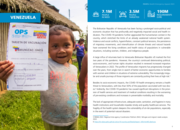
The Bolivarian Republic of Venezuela has been facing a prolonged socio-political and economic situation that has profoundly and negatively impacted social and health indicators. The COVID-19 pandemic further aggravated the humanitarian context in the
country, which stretched the limits of an alread
...
y weakened national health system. Violence and social conflicts, hyperinflation, constant political tensions, the persistence of migratory movements, and intensification of climate threats and natural hazards
have worsened the living conditions and health status of populations in vulnerable situations, including women, children, and indigenous people. A large influx of returnees back to Venezuela (Bolivarian Republic of) marked the first
two years of the pandemic. However, the country’s continued deteriorating political, socio-economic, and human rights situation resulted in renewed increased migration of Venezuelans in 2022. The profile of Venezuelan migrants has progressively changed
over the years, from single men in search of better economic opportunities to families with women and children in situations of extreme vulnerability. The increasingly irregular and unsafe journeys of those migrants are constantly putting their lives at high risk
more
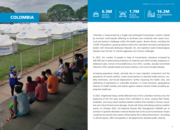
Colombia is characterized by a fragile and prolonged humanitarian context marked by recurrent multi-hazards affecting its territories and combined with severe structural and systemic challenges within the health system. Recent shocks, including the
COVID-19 pandemic, growing violence within the Col
...
ombian territories and along the border with Venezuela (Bolivarian Republic of), and repetitive hydro-meteorological disasters over the last 12 months aggravate such chronic challenges.
In 2022, the number of people in need of humanitarian assistance increased by 300 000 due to deteriorating indicators of maternal and child mortality, pregnancy in adolescent girls, human immunodeficiency virus (HIV), suicides, sexually transmitted
infections (STIs), gender-based and sexual violence, and communicable diseases. increasing population trends, primarily due to mass migration movements and the persistence of armed conflicts, create access barriers to essential health services, mobility restrictions, and forced displacement, further impacting the health, lives, and well-being of populations in vulnerable situations. In many territories, geographical distance to health facilities and attacks against medical missions hinder providing appropriate healthcare.
more
FACTI Panel Interim Report
The High-Level Panel on International Financial Accountability, Transparency and Integrity for Achieving the 2030 Agenda (FACTI Panel)
The High-Level Panel on International Financial Accountability, Transparency and Integrity for Achieving the 2030 Agenda (FACTI Panel)
(2020)
CC
The High-Level Panel on International Financial Accountability, Transparency and Integrity for Achieving the 2030 Agenda (FACTI Panel) was convened by the 74th President of United Nations General Assembly and the 75th President of the Economic and Social Council on 2 March 2020. The objective of the
...
FACTI Panel is to contribute to the overall efforts undertaken by Member States to implement the ambitious and transformational vision of the 2030 Agenda for Sustainable Development. It is mandated to review current challenges and trends related to financial accountability, transparency and integrity, and to make evidence-based recommendations to close remaining gaps in the international system.
more

As a deliverable of the G20 Health and Finance Ministers' Meeting on June 28, 2019, ministers confirmed their commitment to this "G20 Shared Understanding."
L'importance de systèmes de surveillance de la mortalité robustes ne peut être surestimée à une époque marquée par des défis sanitaires mondiaux croissants, où les menaces sanitaires pèsent lourd et la dynamique des populations continue d'évoluer. Des données précises et opportunes sur
...
la mortalité sont essentielles pour identifier les tendances et détecter les menaces émergentes pour la santé, évaluer l'impact des interventions et orienter les décisions politiques fondées sur des données probantes.
Ce cadre décrit une approche holistique pour renforcer les systèmes de surveillance de routine de la mortalité, en tenant compte des facteurs contextuels uniques et des défis auxquels sont confrontés les pays africains. Il souligne l'importance d'établir des mécanismes de collecte de données efficaces, d'améliorer la qualité et l'exhaustivité des données et de promouvoir le partage des données et la collaboration entre les parties prenantes.
De plus, le cadre reconnaît le rôle central de la technologie dans l'intégration des données provenant de sources de données fragmentées sur la mortalité. Il met en évidence le potentiel des méthodes innovantes de capture de données, des analyses avancées et des systèmes de notification en temps réel pour améliorer la précision, l'efficacité et l'actualité des données sur la mortalité.
Le cadre continental de surveillance de la mortalité s'aligne sur la mission et l'objectif stratégique d'Africa CDC en servant d'élément fondamental dans le renforcement des systèmes de santé publique, l'amélioration des capacités et des capacités de surveillance des maladies, l'élaboration de politiques et d'interventions fondées sur des données probantes et la promotion de la collaboration et de la coordination entre les pays africains pour relever les défis sanitaires et améliorer les résultats sanitaires sur le continent.
La mise en œuvre réussie de ce cadre nécessite un engagement collectif et des efforts concertés de la part des gouvernements, des établissements de santé et de la communauté internationale. Nous espérons que ce document servira de catalyseur pour un changement transformateur, permettant aux pays de mettre en place des systèmes de surveillance de la mortalité résilients qui protègent la santé publique, sauvent des vies et contribuent à la prise de décision fondée sur des données probantes.
more

The development of this draft Proposed programme budget 2022–2023 comes at a unique moment for WHO. The world is in the grip of the coronavirus disease (COVID-19) pandemic and faces health, social and economic consequences on an unprecedented scale. Although it is not known when the COVID-19 pande
...
mic will end, recent encouraging vaccine results, in addition to the examples of countries that have achieved good results through public health measures, hold out the prospect of better days ahead. The full impact of the pandemic cannot yet be determined. But whatever its implications, the Secretariat will rise to the challenge and is ready to adapt so that it is fully equipped to support Member States for any eventuality in the future – to make sure that the world will never again have to face this kind of crisis.
more

This country cooperation strategy (CCS) outlines how the World Health Organization (WHO) will work with the Lao People’s Democratic Republic over the next five years (2024–2028), supporting the implementation of the five-year health sector development plans and the Health Sector Reform Strategy
...
2021–2030 to attain the Sustainable Development Goals (SDGs) by 2030.
The Lao People’s Democratic Republic experienced substantial economic growth in the 30 years prior to the coronavirus disease (COVID-19) pandemic, contributing to reduced poverty and significant progress toward the SDGs. However, the COVID-19 pandemic brought this development to a halt. It was anticipated that the COVID-19 recovery and the tremendous population growth in recent years would provide opportunities for a shift toward more sustainable and inclusive development in the years ahead. In 2023, however, the contrary was the case. Rural residents, including many ethnic minorities, continued to face marginalization because of limited access to education, health care and economic opportunities.
Despite the challenges of COVID-19 and other disease outbreaks, the country has made significant improvements in health. Nonetheless, progress has been uneven and not everyone has benefited from these achievements. In the mountainous region, many people lack access to quality health care because of the unequal distribution of well-trained health-care workers. Preventable deaths due to poor-quality health care for children and newborns, infants and mothers remain a concern, as do communicable diseases such as sexually transmitted infections and tuberculosis. The increasing burden of noncommunicable diseases and the health impact of worsening climate change further heighten the need for strengthened and resilient health systems, which are at risk due to an underfunded health sector and weak economy.
This CCS aims to address remaining and future challenges as well as health needs while creating an impact that is sustainable. It identifies three strategic priorities and nine deliverables (Table 1) to support the attainment of the national vision of Health for all by all, as articulated in the 9th Health Sector Development Plan 2021–2025. It contributes to the country’s goals to achieve universal health coverage, graduate from least developed country status by 2026 and attain SDGs by 2030.
more
The World Heart Federation (WHF) Roadmap series covers a large range of cardiovascular conditions. These Roadmaps identify potential roadblocks and their solutions to improve the prevention, detection and management of cardiovascular diseases and provide a generic global framework available for loca
...
l adaptation. A first Roadmap on raised blood pressure was published in 2015. Since then, advances in hypertension have included the publication of new clinical guidelines (AHA/ACC; ESC; ESH/ISH); the launch of the WHO Global HEARTS Initiative in 2016 and the associated Resolve to Save Lives (RTSL) initiative in 2017; the inclusion of single-pill combinations on the WHO Essential
Medicines’ list as well as various advances in technology, in particular telemedicine and mobile health. Given the substantial benefit accrued from effective interventions in the management of hypertension and their potential for scalability in low and middle-income countries (LMICs), the WHF has now revisited and updated the ‘Roadmap for raised BP’ as ‘Roadmap for hypertension’
by incorporating new developments in science and policy. Even though cost-effective lifestyle and medical interventions to prevent and manage hypertension exist, uptake is still low, particularly in resource-poor areas. This Roadmap examined the roadblocks pertaining to both the demand side (demographic and socio-economic factors, knowledge and beliefs, social relations, norms, and
traditions) and the supply side (health systems resources and processes) along the patient pathway to propose a range of possible solutions to overcoming them. Those include the development of population-wide prevention and control programmes; the implementation of opportunistic screening and of out-of-office blood pressure measurements; the strengthening of primary care and a greater focus on task sharing and team-based care; the delivery of people-centred care and stronger patient and carer education; and the facilitation of adherence to treatment. All of the above are dependent upon the availability and effective distribution of good quality, evidencebased, inexpensive BP-lowering agents.
more
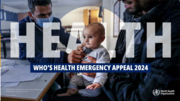
In 2024, we need US$1.5 billion to provide live-saving health care to millions of people in emergencies. An alarming combination of conflict, climate-related threats and increasing economic hardship mean an estimated 166 million people require health assistance.
The document is a policy brief by the NCD Alliance for the 2023 United Nations High-Level Meeting on Universal Health Coverage (UHC). It highlights the importance of integrating non-communicable diseases (NCDs) into UHC efforts, with the goal of ensuring equitable health access worldwide.
The Camp Managment Toolkit
recommended
Applicable to both IDP and refugee scenarios, the Toolkit incorporates a wide range of relevant information on managing displaced populations living in communal settings (collective centres, spontaneous sites, established camps, etc.). Large scale displacements caused by recent conflict and natural
...
disaster events have created a high demand for the Toolkit, which has proven an invaluable resource for field practitioners, government actors and displaced populations since its original release in 2004.
Available in other languages
more
Emergency Field Handbook
UNICEF
(2005)
A Guide for UNICEF Staff