
Filter
906
Text search:
World
Health
Organization,
Regional
Office
South-East
Asia
Featured
105
248
Language
Document type
454
182
140
49
39
12
8
7
6
5
2
2
Countries
66
58
44
36
30
27
20
13
11
11
11
11
9
9
6
5
5
4
4
4
4
4
4
4
3
3
3
3
3
3
3
3
3
2
2
2
2
2
2
2
2
2
2
2
2
1
1
1
1
1
1
1
1
1
1
1
1
1
1
1
1
1
1
1
1
1
1
1
1
1
1
1
1
1
1
1
1
1
1
1
1
Authors & Publishers
Publication Years
Category
195
133
78
74
29
21
16
2
Toolboxes
89
87
61
57
47
44
43
38
32
31
20
20
16
12
11
10
7
6
6
6
5
4
1
1
1
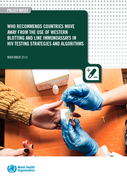
WHO recommends replacing western blotting and line immunoassays with simpler tests in HIV testing services. These simpler tests include rapid diagnostic tests (RDTs) that can be used at the point-of-care, and enzyme immunoassays (EIAs).
These tests get results to the client faster, produce accura
...
This guideline provides global, evidence-informed recommendations on a number of specific issues related to the management of severe acute malnutrition in infants and children, including in the context of HIV.
New edition
The report focuses on antibacterial resistance (ABR) in common bacterial pathogens. There is a major gap in knowledge about the magnitude of this problem. Antimicrobial resistance (AMR) threatens the effective revention and treatment of an ever-increasing range of infections caused by bacteria, para
...

The WHO/IWA document A practical guide to auditing water safety plans provides guidance on developing and implementing a WSP auditing scheme, covering such topics as the aim and role of auditing, auditor training and certification, audit criteria, audit timing and frequency and audit reportin
...
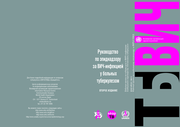
Основная цель этого Руководства состоит в том, чтобы очертить рамки методов, используемых для оценки распространенности ВИЧ-инфекции среди больных туберкулезом и
...
A survey was conducted in countries in all six WHO regions and focused on the building blocks that are considered prerequisites to combat antimicrobial resistance: a comprehensive national plan, laboratory capacity to undertake surveillance for resistant microorganisms, access to safe, effective ant
...
Recommendations for a public health approach
HIV/AIDS Programme
PQDx 0198-071-00
WHO PQDx PR
April/2016, version 2.0

The global emergence of antimicrobial resistance (AMR) is posing a threat to human health. Putting resources into the containment of AMR – including surveillance – is one of the highest-yield investments a country can make to mitigate its impact
...
These guidelines provide evidence-based guidance on the use of peripartum antiviral prophylaxis in HBsAg-positive pregnant women for the prevention of mother-to-child transmission of HBV.
The primary audience for these recommendations includes health professionals who are responsible for developing national and local health-care guidelines and protocols and
...
The primary audience for these recommendations includes health professionals who are responsible for developing national and local health-care guidelines and protocols and
...
The primary audience for these recommendations includes health professionals who are responsible for developing national and local health-care guidelines and protocols and
...
The "Assessing National Capacity for the Prevention and Control of Noncommunicable Diseases: Report of the 2021 Global Survey" by WHO examines the global state of readiness and infrastructure for managing noncommunicable diseases (NCDs) across countries. Based on the 2021 survey, it analyzes nationa
...
21 January 2022
The overall threat posed by Omicron largely depends on four key questions: (i) how transmissible the variant is; (ii) how well vaccines and prior infection protect against infection, transmission, clinical disease and death; (iii) how virulent the variant is compared to other varian
...
