
Filter
3874
Text search:
food
supply
Featured
374
1211
Language
3771
85
70
55
48
34
27
12
8
7
6
5
5
5
4
4
4
3
3
3
3
3
3
3
2
2
2
2
2
2
2
2
2
2
2
2
2
2
1
1
1
1
1
1
1
1
1
1
1
1
1
1
1
1
1
1
1
1
Document type
2110
720
452
204
188
62
60
54
8
6
5
3
1
1
Countries
193
148
134
118
103
94
89
87
85
74
74
73
64
63
61
60
59
56
53
51
49
47
46
41
38
37
34
34
32
28
28
27
25
24
23
23
21
20
19
16
16
15
15
15
15
15
14
14
14
14
14
13
13
12
11
11
10
9
8
8
7
6
6
6
6
6
6
6
6
5
5
5
5
4
4
4
4
4
4
4
4
4
4
4
3
3
3
3
3
3
3
3
3
3
3
2
2
2
2
2
2
2
2
2
2
2
2
2
2
2
2
2
2
1
1
1
1
1
1
1
1
1
1
1
1
1
1
1
1
1
1
1
1
1
1
1
1
1
1
Authors & Publishers
398
170
130
100
95
86
73
68
56
43
28
22
22
21
20
20
20
20
19
18
18
18
17
17
17
16
15
15
15
15
14
14
14
14
13
13
13
13
12
12
12
11
11
10
10
10
10
10
9
9
9
8
8
8
8
8
8
8
8
8
8
8
8
8
8
8
8
7
7
7
7
7
7
7
7
7
7
7
7
7
7
7
7
7
7
7
6
6
6
6
6
6
6
6
6
6
6
6
6
6
6
6
6
6
6
6
6
6
5
5
5
5
5
5
5
5
5
5
5
5
5
5
5
5
5
5
5
5
4
4
4
4
4
4
4
4
4
4
4
4
4
4
4
4
4
4
4
4
4
4
4
4
4
4
4
4
4
4
4
4
4
4
4
4
4
4
4
4
4
4
4
4
4
3
3
3
3
3
3
3
3
3
3
3
3
3
3
3
3
3
3
3
3
3
3
3
3
3
3
3
3
3
3
3
3
3
3
3
3
3
3
3
3
3
3
3
3
3
3
3
3
3
3
3
3
3
3
3
3
3
3
3
3
3
3
3
3
3
3
3
3
3
3
3
3
3
3
3
3
3
2
2
2
2
2
2
2
2
2
2
2
2
2
2
2
2
2
2
2
2
2
2
2
2
2
2
2
2
2
2
2
2
2
2
2
2
2
2
2
2
2
2
2
2
2
2
2
2
2
2
2
2
2
2
2
2
2
2
2
2
2
2
2
2
2
2
2
2
2
2
2
2
2
2
2
2
2
2
2
2
2
2
2
2
2
2
2
2
2
2
2
2
2
2
2
2
2
2
2
2
2
2
2
2
2
2
2
2
2
2
2
2
2
2
2
2
2
2
2
2
2
2
2
2
2
2
2
2
2
2
2
2
2
2
2
2
2
2
2
2
2
2
2
2
2
2
2
2
2
2
2
2
2
2
2
2
2
2
2
2
2
2
2
2
2
2
2
2
2
2
2
2
2
2
2
2
2
2
2
2
2
2
2
2
2
2
2
2
2
2
2
2
2
2
2
2
2
1
1
1
1
1
1
1
1
1
1
1
1
1
1
1
1
1
1
1
1
1
1
1
1
1
1
1
1
1
1
1
1
1
1
1
1
1
1
1
1
1
1
1
1
1
1
1
1
1
1
1
1
1
1
1
1
1
1
1
1
1
1
1
1
1
1
1
1
1
1
1
1
1
1
1
1
1
1
1
1
1
1
1
1
1
1
1
1
1
1
1
1
1
1
1
1
1
1
1
1
1
1
1
1
1
1
1
1
1
1
1
1
1
1
1
1
1
1
1
1
1
1
1
1
1
1
1
1
1
1
1
1
1
1
1
1
1
1
1
1
1
1
1
1
1
1
1
1
1
1
1
1
1
1
1
1
1
1
1
1
1
1
1
1
1
1
1
1
1
1
1
1
1
1
1
1
1
1
1
1
1
1
1
1
1
1
1
1
1
1
1
1
1
1
1
1
1
1
1
1
1
1
1
1
1
1
1
1
1
1
1
1
1
1
1
1
1
1
1
1
1
1
1
1
1
1
1
1
1
1
1
1
1
1
1
1
1
1
1
1
1
1
1
1
1
1
1
1
1
1
1
1
1
1
1
1
1
1
1
1
1
1
1
1
1
1
1
1
1
1
1
1
1
1
1
1
1
1
1
1
1
1
1
1
1
1
1
1
1
1
1
1
1
1
1
1
1
1
1
1
1
1
1
1
1
1
1
1
1
1
1
1
1
1
1
1
1
1
1
1
1
1
1
1
1
1
1
1
1
1
1
1
1
1
1
1
1
1
1
1
1
1
1
1
1
1
1
1
1
1
1
1
1
1
1
1
1
1
1
1
1
1
1
1
1
1
1
1
1
1
1
1
1
1
1
1
1
1
1
1
1
1
1
1
1
1
1
1
1
1
1
1
1
1
1
1
1
1
1
1
1
1
1
1
1
1
1
1
1
1
1
1
1
1
1
1
1
1
1
1
1
1
1
1
1
1
1
1
1
1
1
1
1
1
1
1
1
1
1
1
1
1
1
1
1
1
1
1
1
1
1
1
1
1
1
1
1
1
1
1
1
1
1
1
1
1
1
1
1
1
1
1
1
1
1
1
1
1
1
1
1
1
1
1
1
1
1
1
1
1
1
1
1
1
1
1
1
1
1
1
1
1
1
1
1
1
1
1
1
1
1
1
1
1
1
1
1
1
1
1
1
1
1
1
1
1
1
1
1
1
1
1
1
1
1
1
1
1
1
1
1
1
1
1
1
1
1
1
1
1
1
1
1
1
1
1
1
1
1
1
1
1
1
1
1
1
1
1
1
1
1
1
1
1
1
1
1
1
1
1
1
1
1
1
1
1
1
1
1
1
1
1
1
1
1
1
1
1
1
1
1
1
1
1
1
1
1
1
1
1
1
1
1
1
1
1
1
1
1
1
1
1
1
1
1
1
1
1
1
1
1
1
1
1
1
1
1
1
1
1
1
1
1
1
1
1
1
1
1
1
1
1
1
1
1
1
1
1
1
1
1
1
1
1
1
1
1
1
1
1
1
1
1
1
1
1
1
1
1
1
1
1
1
1
1
1
1
1
1
1
1
1
1
1
1
1
1
1
1
1
1
1
1
1
1
1
1
1
1
1
1
1
1
1
1
1
1
1
1
1
1
1
1
1
1
1
1
1
1
1
1
1
1
1
1
1
1
1
1
1
1
1
1
1
1
1
1
1
1
1
1
1
1
1
1
1
1
1
1
1
1
1
1
1
1
1
1
1
1
1
1
1
1
1
1
1
1
1
1
1
1
1
1
1
1
1
1
1
1
1
1
1
1
1
1
1
1
1
1
1
1
1
1
1
1
1
1
1
1
1
1
1
1
1
1
1
1
1
1
1
1
1
1
1
1
1
1
1
1
1
1
1
1
1
1
1
1
1
1
1
1
1
1
1
1
1
1
1
1
1
1
1
1
1
1
1
1
1
1
1
1
1
1
1
1
1
1
1
1
1
1
1
1
1
1
1
1
1
1
1
1
1
1
1
1
1
1
1
1
1
1
1
1
1
1
1
1
1
1
1
1
1
1
1
1
1
1
1
1
1
1
1
1
1
1
1
1
1
1
1
1
1
1
1
1
1
1
1
1
1
1
1
1
1
1
1
1
1
1
1
1
1
1
1
1
1
1
1
1
1
1
1
1
1
1
1
1
1
1
1
1
1
1
1
1
1
1
1
1
1
1
1
1
1
1
1
1
1
1
1
1
1
1
1
1
1
1
1
1
1
1
1
1
1
1
1
1
1
1
1
1
1
1
1
1
1
1
1
1
1
1
1
1
1
1
1
1
1
1
1
1
1
1
1
1
1
1
1
1
1
1
1
1
1
1
1
1
1
1
1
1
1
1
1
1
1
1
1
1
1
1
1
1
1
1
1
1
1
1
1
1
1
1
1
1
1
1
1
1
1
1
1
1
1
1
1
1
1
1
1
1
1
1
1
1
1
1
1
1
1
1
1
1
1
1
1
1
1
1
1
1
1
1
1
1
1
1
1
1
1
1
1
1
1
1
1
1
1
1
1
1
1
1
1
1
1
1
1
1
1
1
1
1
1
1
1
1
1
1
1
1
1
1
1
1
1
1
1
1
1
1
1
1
1
1
1
1
1
1
1
1
1
1
1
1
1
1
1
1
1
1
1
1
1
1
1
1
1
1
1
1
1
1
1
1
1
1
1
1
1
1
1
1
1
1
1
1
1
1
1
1
1
1
1
1
1
1
1
1
1
1
1
1
1
1
1
1
1
1
1
1
1
1
1
1
1
1
1
1
1
1
1
1
1
1
1
1
1
1
1
1
1
1
1
1
1
1
1
1
1
1
1
1
1
1
1
1
1
1
1
1
1
1
1
1
1
1
1
1
1
1
1
1
1
1
1
1
1
1
1
1
1
1
1
1
1
1
1
1
1
1
1
1
1
1
1
1
1
1
1
1
1
1
1
1
1
1
1
1
1
1
1
1
1
1
1
1
1
1
1
1
1
1
1
1
1
1
1
1
1
1
1
1
1
1
1
1
1
1
1
1
1
1
1
1
1
1
1
1
1
1
1
1
1
1
1
1
1
1
1
1
1
1
1
1
1
1
1
1
1
1
1
1
1
1
1
1
1
1
1
1
1
1
1
1
1
1
1
1
1
1
1
1
1
1
1
1
1
1
1
1
1
1
1
1
1
1
1
1
1
1
1
1
1
1
1
1
1
1
1
1
1
1
1
1
1
1
1
1
1
1
1
1
1
1
1
1
1
1
1
1
1
1
1
1
1
1
1
1
1
1
1
1
1
1
1
1
1
1
1
1
1
1
1
1
1
1
1
1
1
1
1
1
1
1
1
1
1
1
1
1
1
1
1
1
1
1
1
1
1
1
1
1
1
1
1
1
1
1
1
1
1
1
1
1
1
1
1
1
1
1
1
1
1
1
1
1
1
1
1
1
1
1
1
1
1
1
1
1
1
1
1
1
1
1
1
1
1
1
1
1
1
1
1
1
1
1
1
1
1
1
1
1
1
1
1
1
1
1
1
1
1
1
1
1
1
1
1
1
1
1
1
1
1
1
1
1
1
1
1
1
1
1
1
1
1
1
1
1
1
1
1
1
1
1
1
1
1
1
1
1
1
1
1
1
1
1
1
1
1
1
1
1
1
1
1
1
1
1
1
1
1
1
1
1
1
1
1
1
1
1
1
1
1
1
1
1
1
1
1
1
1
1
1
1
1
1
1
1
1
1
1
1
1
1
1
1
1
1
1
1
1
1
1
1
1
1
1
1
1
1
1
1
1
1
1
1
1
1
1
1
1
1
1
1
1
1
1
1
1
1
1
1
1
1
1
1
1
1
1
1
1
1
1
1
1
1
1
1
1
1
1
1
1
1
1
1
1
1
1
1
1
1
1
1
1
1
1
1
1
1
1
1
1
1
1
1
1
1
1
1
1
1
1
1
1
1
1
1
1
1
1
1
1
1
1
1
1
1
1
1
1
1
1
1
1
1
1
1
1
1
1
1
1
1
1
1
1
1
1
1
1
1
1
1
1
1
1
1
1
1
1
1
1
1
1
1
1
1
1
1
1
1
1
1
1
1
1
1
1
1
1
1
1
1
1
1
1
1
1
1
1
1
1
1
1
1
1
1
1
1
1
1
1
1
1
1
1
1
1
1
1
1
1
1
1
1
1
1
1
1
1
1
1
1
1
1
1
1
1
1
1
1
1
1
1
1
1
1
1
1
1
1
1
1
1
1
1
1
1
1
1
1
1
1
1
1
1
1
1
1
1
1
1
1
1
1
1
1
1
1
1
1
1
1
1
1
1
1
1
1
1
1
1
1
1
1
1
1
1
1
1
1
1
1
1
1
1
1
1
1
1
1
1
1
1
1
1
1
1
1
1
1
1
1
1
1
1
1
1
1
1
1
1
1
1
1
1
1
1
1
1
1
1
1
1
1
1
1
1
1
1
1
1
1
1
1
1
1
1
1
1
1
1
1
1
1
1
1
1
1
1
1
1
1
1
1
1
1
1
1
1
1
1
1
1
1
1
1
1
1
1
1
1
1
1
1
1
1
1
1
1
1
1
1
1
1
1
1
1
1
1
1
1
1
1
1
1
1
1
1
1
1
1
1
1
1
1
1
1
1
1
1
1
1
1
1
1
1
1
1
1
1
1
1
1
1
1
1
1
1
1
1
1
1
1
1
1
1
1
1
1
1
1
1
1
1
1
1
1
1
1
1
1
1
1
1
1
1
1
1
1
1
1
1
1
1
1
1
1
1
1
1
1
1
1
1
1
1
1
1
1
1
1
1
1
1
1
1
1
1
1
1
1
1
1
1
1
1
1
1
1
1
1
1
1
1
1
1
1
1
1
1
1
1
1
1
1
1
1
1
1
1
1
1
1
1
1
1
1
1
1
1
1
1
1
1
1
1
1
1
1
1
1
1
1
1
1
1
1
1
1
1
1
1
1
1
1
1
1
1
1
1
1
1
1
1
1
1
1
1
1
1
1
1
1
1
1
1
1
1
1
1
1
1
1
1
1
1
1
1
1
1
1
1
1
1
1
1
1
1
1
1
1
1
1
1
1
1
1
1
1
1
1
1
1
1
1
1
1
1
1
1
1
1
1
1
1
1
1
1
1
1
1
1
1
1
1
1
1
1
1
1
1
1
1
1
1
1
1
1
1
1
1
1
1
1
1
1
1
1
1
1
1
1
1
1
1
1
1
1
1
1
1
1
1
1
1
1
1
1
1
1
1
1
1
1
1
1
1
1
1
1
1
1
1
1
1
1
1
1
1
1
1
1
1
1
1
1
1
1
1
1
1
1
1
1
1
1
1
1
1
1
1
1
1
1
1
1
1
1
1
1
1
1
1
1
1
1
1
1
1
1
1
1
1
1
1
1
1
1
1
1
1
1
1
1
1
1
1
1
1
1
1
1
1
1
1
1
1
1
1
1
1
1
1
1
1
1
1
1
1
1
1
1
1
1
1
1
1
1
1
1
1
1
1
1
1
1
1
1
1
1
1
1
1
1
1
1
1
1
1
1
1
1
1
1
1
1
1
1
1
1
1
1
1
1
1
1
1
1
1
1
1
1
1
1
1
1
1
1
1
1
1
1
1
1
1
1
1
1
1
1
1
1
1
1
1
1
1
1
1
1
1
1
1
1
1
1
1
1
1
1
1
1
1
1
1
1
1
1
1
1
1
1
1
1
1
1
1
1
1
1
Publication Years
1125
2299
420
27
2
1
Category
1737
255
223
175
174
80
42
6
1
Toolboxes
380
267
204
149
144
129
122
121
114
108
91
88
79
66
63
54
47
45
36
35
12
12
11
10
2
1
This document sets out, therefore, to explain the socioeconomic value of investing in the fight against NTDs and highlights priorities for global investment attention. Our work was guided by the need not only for
additional funding and funders but also for the need to understand the current funding
...
climate, in which value for money and the efficient use of resources to fill the most critical of gaps are more relevant than ever.
more
This policy brief aims to provide a review of the current progress on implementing the Malawi national action plan on AMR, identifies critical gaps, and highlights findings to accelerate further progress in the human health sector. The target audience includes all those concerned with implementing a
...
ctions to combat antimicrobial resistance in Malawi.
more
On September 10, 2022, the Ministry of Health (MOH) announced a cholera outbreak in Aleppo governorate with 15 laboratory confirmed cases reported between August 25 and September 9, 2022. Activities under this plan seek to address the immediate needs stemming from this outbreak and highlight respons
...
e priorities across all areas of the response and key sectors involved. This plan initially focuses on the Health, Water Sanitation and Hygiene (WASH), and Risk Communication and Community Engagement (RCCE) responses for an initial period of 90 days. The activities detailed in this plan are also within the programmatic scope of the 2022-2023 Humanitarian Response Plan (HRP).
more
These guidelines provide updated evidence-based recommendations on the priority HCV-related topics from the 2018 WHO Guidelines for the care and treatment of persons diagnosed with chronic hepatitis C infection and the 2017 WHO Guidelines on hepatitis B and C testing. These priority areas are:
...
direct-acting antiviral (DAA) treatment of adolescents and children ages ≥3 years of age
simplified HCV service delivery (decentralization, integration and task sharing)
HCV diagnostics – use of point-of-care (POC) HCV ribonucleic acid (RNA) assays and reflex HCV RNA testing.
These guidelines also update existing chapters without new recommendations, such as the inclusion of new manufacturers’ protocols on the use of dried blood spot (DBS) for HCV RNA testing and new data to inform the limit of detection for HCV RNA assays as a test of cure, in addition to their use for diagnosis.
more
This Guideline, the first for the country, draws from national health sector reforms and integration agenda as outlined in the key national strategic documents. The Guide applies lessons learnt from the SRH/HIV Linkages project and its scale-up; other national experiences and from regional and globa
...
l evidence and guidance on high-impact interventions that promote sustainable, equitable and effective delivery of health services to achieve Universal Health coverage.
more
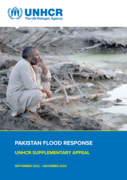
Pakistan, one of the countries that is most vulnerable to climate change, received more than three times its usual rainfall in August 2022. Torrential rains and flash-flooding began in early July 2022, severely damaging living areas, schools and other communal buildings in refugee villages and host
...
communities. Unprecedented and unrelenting rainfall and flooding in late August 2022 worsened the already fragile humanitarian situation. Nearly 1,700 people are reported to have died, and over 12,800 were injured, including at least 4,000 children
more

The Global Task Force on Cholera Control (GTFCC) launched Ending Cholera: A Global
Roadmap to 2030 (Global Roadmap) (1), a strategy that aims to reduce global cholera
deaths by 90% and eliminate the disease in at least 20 countries by 2030. It is
organized according to three main axes:
• E
...
nsuring early detection and response to contain outbreaks; (2)
• Adopting a multisectoral approach to prevent and control cholera in hotspots; and
• Establishing an effective coordination mechanism for technical support, resource
mobilization and partnership at local and global levels.
more
Le Groupe spécial mondial de lutte contre le choléra (GTFCC) a lancé Mettre fin au choléra :
Une feuille de route mondiale pour 2030 (la Feuille de route mondiale) (1). Cette stratégie vise
à réduire de 90 % le nombre de décès dus au choléra dans le monde et à mettre fin à la
malad
...
ie dans au moins 20 pays d’ici 2030. Elle est organisée selon trois axes principaux :
• assurer une détection et une réponse précoces pour contenir les épidémies(2) ;
• adopter une approche multisectorielle pour prévenir et contrôler le choléra dans les
points chauds ; et
• mettre en place un mécanisme de coordination efficace de l’appui technique, la
mobilisation des ressources et des partenariats aux niveaux local et mondial.
more
Global tuberculosis report 2022
recommended
The WHO Global Tuberculosis Report 2022 provides a comprehensive and up-to-date assessment of the TB epidemic, and of progress in prevention, diagnosis and treatment of the disease, at global, regional and country levels. This is done in the context of global TB commitments, strategies and targets.
...
The 2022 edition of the report is as usual, based primarily on data gathered by WHO from national ministries of health in annual rounds of data collection. In 2022, 202 countries and territories with more than 99% of the world’s population and TB cases reported data
more
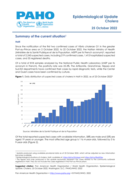
Since the notification of the first two confirmed cases of Vibrio cholerae O1 in the greater Port-au-Prince area on 2 October 2022, to 22 October 2022, the Haitian Ministry of Health (Ministère de la Santé Publique et de la Population, MSPP per its French acronym), reported a total of 2,243 suspec
...
ted cases, including 219 confirmed cases, 1,415 hospitalized suspected cases, and 55 registered deaths.
On 20 October 2022, the Dominican Republic Ministry of Public Health confirmed the first imported case of cholera in the country.
more
Responding to Outbreaks of Antimicrobial-resistant Pathogens in Health-care Facilities: Guidance for the Western Pacific Region is developed following requests from Member States in the Western Pacific Region for additional information and support in managing AMR outbreaks. It aims to provide: a ste
...
p-by-step guide for health-care facilities to respond to AMR outbreaks; a practical resource for health-care workers to support AMR outbreak response in low- and middle-income countries; and practical guidance to implement effective AMR outbreak response policies and procedures in clinical settings.
more
On 15–16 December 2020, WHO and the Medicines for Malaria Venture co-convened a technical consultation to consider the preferred product characteristics (PPCs) for drugs used in malaria chemoprevention. The main goal of the technical consultation was to agree on the most important PPCs for drugs t
...
o protect populations from malaria (chemoprevention), while considering relevant measures of efficacy and the safety data needed to support WHO policy recommendations.
more
Patient safety standards are critical for the establishment and assessment of patient safety programmes within hospitals. This third edition of the Patient safety assessment manual provides an updated set of standards and assessment criteria that reflect current best practice and WHO guidance. The m
...
anual will support the implementation of patient safety assessments and improvement programmes within hospitals as part of the Patient Safety Friendly Hospital Framework to ensure that patient safety is prioritized and facilities and staff implement best practices. The manual is a key tool for use by professional associations regulatory accrediting or oversight bodies and ministries of health to improve patient safety.
more
The recommendations in this guideline are intended to inform development of national and subnational health policies, clinical protocols and programmatic guides. The target audience includes national and subnational public health policy-makers, implementers and managers of maternal, newborn and chil
...
d health programmes, health-care facility managers, supervisors/instructors for in-service training, health workers (including midwives, auxiliary nurse-midwives, nurses, paediatricians, neonatologists, general medical practitioners and community health workers), nongovernmental organizations, professional societies involved in the planning and management of maternal, newborn and child health services, academic staff involved in research and in the pre-service education and training of health workers, and those involved in the education of parents.
more
Recommendations on the initiation and continuing use of nine common types of contraceptive methods are covered by the tool. In addition to looking at individual medical conditions or characteristics, users may also easily combine multiple conditions or characteristics and view the guidance on each c
...
ondition separately or in combination.
more
The pharmaceutical sector of any nation is responsible for providing society with quality medicines and other pharmaceutical services. According to the World Health Organization (WHO), Pharmaceuticals may constitute as much as 40% of the national health budget in developing countries, yet portions o
...
f the population may lack access to the most essential medicines; while the limited funds available for health are spent on unnecessary, ineffective and even dangerous medications.
more

Uganda hosts approximately 1.1 million refugees making it Africa’s largest refugee hosting country and one of the five largest refugee hosting countries in the world. Most recently, throughout 2016- 2018, Uganda was impacted by three parallel emergencies from South Sudan, the Democratic Republic o
...
f the Congo (DRC), and Burundi. In view of the on-going conflicts and famine
vulnerabilities in the Great Lakes Region, more refugee influxes and protracted refugee situations are anticipated in the foreseeable future. The unprecedented mass influx of refugees into Uganda in 2016-2018 has put enormous pressure on
the country’s basic service provision, in particular health and education services. Refugees share all social services with the local host communities. The refugee hosting districts are among the least developed districts in the country, and thus the additional refugee population is putting a high strain on already limited resources.
more

The WHO Global Antimicrobial Resistance and Use Surveillance System (GLASS) was launched in 2015 to foster AMR surveillance and inform strategies to contain AMR. The system started with surveillance of AMR in bacteria causing common human infections and has expanded its scope to include surveillance
...
of antimicrobial consumption (AMC), invasive fungal infections, and a One Health surveillance model relevant to human health. To meet future challenges, it is in continuous evolution to enhance the quality and representativeness of data to inform the AMR burden accurately. As of the end of 2022, 127 countries, territories and areas participate in GLASS.
The fifth GLASS report, produced in collaboration with Member States, summarizes 2020 data on AMR rates in common bacteria from countries, territories, and areas. The report brings new features, including analyses of population testing coverage or AMR trends. For the first time, the report presents 2020 data on AMC at the national level. A new interactive dashboard allow users to explore AMR and AMC global data, country profiles and download the data.
This report marks the end of the early implementation phase of GLASS. In addition to presenting data collected through the latest data call, this report provides a summary of five years of national AMR surveillance data contributed to GLASS from its initiation, presents AMR findings in the context of progress of country participation in GLASS and in global AMR surveillance coverage and laboratory quality assurance systems at (sub)national level.
Patterns of antimicrobial consumption are presented by country with a particular focus on antibacterials. The report also presents the antimicrobial consumption according to the WHO AWaRe antibiotic classification, for penicillins and cephalosporines. From a One Health perspective, the report presents antimicrobial consumption data in the human sector expressed in tons to allow a comparison with antimicrobial consumption from other sectors (not included in this report).
more

The development of this Operational Roadmap has been driven by a growing consensus in Ukraine on the need to prioritize activities that are urgently required to address the mental health and psychosocial needs of the country’s population and also the importance of basing the response on existing s
...
tructures, resources and innovations introduced in reforms in past years.
According to this consensus, new resources mobilized by and for Ukraine should complement existing ones, in line with the national vision and with best international standards, and should be planned in a way that further strengthens the country’s mental health system.
The Government of Ukraine is committed to urgently addressing the mental health and psychosocial needs of the population, under the auspices of the First Lady of Ukraine and the leadership of the recently established Intersectoral Coordination Council for Mental Health and Psychological Assistance to Victims of the Armed Aggression of the Russian Federation against Ukraine (referred to in this document as the Intersectoral Coordination Council).
This Roadmap has been developed following a series of consultations with Ukrainian authorities and national and international agencies working in the area of mental health and psychosocial support (MHPSS) and engaged in emergency response in Ukraine. The consultation process was organized by the Ministry of Health of Ukraine (MOH) and supported by WHO Ukraine, under the auspices of the First Lady of Ukraine and in collaboration with the MHPSS Technical Working Group of Ukraine (MHPSS TWG Ukraine) and the IASC MHPSS Reference Group (IASC MHPSS RG), and building on substantial advances in the mental health sector under existing programmes in the country.
The Roadmap is informed by international technical guidance and national policies and plans, including the IASC Guidelines on MHPSS in Emergency Settings, the Minimum Services Package for MHPSS in Emergencies (MHPSS MSP), the IASC Common Monitoring and Evaluation Framework, the World Health Organization (WHO)’s Comprehensive Mental Health Action Plan 2013– 2030, the WHO European Framework for Action on Mental Health, the Concept for Development of Mental Health Care in Ukraine until 2030, the National Mental Health Action Plan for 2021–2023 and the National Recovery and Development Plan.
Informed by the overall goal of MHPSS assistance in Ukraine – to reduce suffering and improve the mental health and psychosocial well-being of the affected population – the Roadmap aims to provide a consolidated overview of envisioned MHPSS priorities, informed by the local context and the vision of the Government of Ukraine together with national and international partners, and with the best available evidence and resources, to all MHPSS stakeholders already engaged in or joining emergency response and recovery efforts in Ukraine.
As well as information on the context in Ukraine, the Roadmap includes:
• a list of evidence-based MHPSS interventions and services contextualized and introduced in Ukraine in recent years (described in Table 1) and
• a set of multisectoral actions to scale up MHPSS services in both the short and longer terms, informed by available evidence, international technical guidance and expert consensus (described in Table 2).
more
