
Filter
3708
Filtered Results: 3708
Text search:
communicable
diseases
Featured
Recommendations
288
New Publications
856
Language
Document type
No document type
1705
Studies & Reports
841
Guidelines
429
Strategic & Response Plan
195
Manuals
139
Fact sheets
122
Infographics
64
Training Material
57
Resource Platforms
46
Situation Updates
30
Videos
29
Brochures
22
Dashboards/Maps
16
Online Courses
12
App
1
Countries / Regions
Global
496
India
144
South Africa
126
Africa
123
Kenya
116
Ethiopia
84
Western and Central Europe
79
Latin America and the Carribbean
66
Sierra Leone
61
Liberia
61
Nepal
61
Uganda
56
Nigeria
53
Bangladesh
52
Myanmar / Burma
49
Malawi
48
Indonesia
45
Zambia
41
Rwanda
41
Ghana
39
Syria
39
Namibia
35
Ukraine
35
South–East Asia Region
33
Philippines
32
Tanzania
32
Asia
32
Mozambique
28
Congo, Democratic Republic of
26
Eastern Europe
26
Lesotho
22
East and Southern Africa
21
West and Central Africa
21
North America
19
South Sudan
17
Zimbabwe
16
Cambodia
16
Brazil
15
Eastern Europe and Central Asia
14
Guinea
13
Germany
13
Western Pacific Region
13
Pakistan
12
Haiti
11
Botswana
11
Yemen
11
Middle East and North Africa
11
Moldova
11
Burkina Faso
10
Senegal
10
Sudan
10
Afghanistan
9
Russia
9
Jordan
8
Thailand
8
Venezuela
8
Somalia
7
Iraq
7
Colombia
7
USA
6
Cameroon
6
Mali
5
Lebanon
5
China
5
Central African Republic
5
Eswatini/ Swaziland
5
Palestine
5
Iran
5
Saudi Arabia
4
Argentina
4
Peru
4
Bolivia
4
Angola
4
Madagascar
4
Chile
4
Paraguay
4
Poland
4
Georgia
4
Turkey
3
Papua New Guinea
3
Benin
3
North Macedonia
3
Hungary
3
El Salvador
3
Mexico
3
Sri Lanka
3
Southern Africa
3
Laos
3
Timor Leste/ East Timor
3
Tajikistan
3
Vietnam
3
Turkmenistan
3
Mauritius
3
United Kingdom
3
Guinea-Bissau
2
Côte d’Ivoire / Ivory Coast
2
Egypt
2
Ecuador
2
Fiji
2
Bhutan
2
Albania
2
Bulgaria
2
Romania
2
Kyrgyzstan
2
Japan
2
Portugal
2
Spain
2
Azerbaijan
2
Morocco
1
Niger
1
Togo
1
Chad
1
Gambia
1
Ireland
1
Singapore
1
Serbia
1
Croatia
1
Burundi
1
Greece
1
Libya
1
Other region
1
Djibouti
1
Armenia
1
Mongolia
1
Qatar
1
Estonia
1
Slovakia
1
Kazakhstan
1
Gabon
1
Uruguay
1
Jamaica
1
Maldives
1
Tunisia
1
Belarus
1
Israel
1
Bosnia and Herzegovina
1
Barbados
1
United Arab Emirates
1
Authors & Publishers
Publication Years
Category
Countries
1380
Public Health
794
Clinical Guidelines
275
Key Resources
124
Women & Child Health
93
Capacity Building
82
Pharmacy & Technologies
31
Annual Report MEDBOX
2
General Guidelines
1
Toolboxes
NCDs
748
COVID-19
232
TB
180
HIV
158
Mental Health
153
Rapid Response
149
Planetary Health
136
Conflict
98
Global Health Education
92
AMR
86
Caregiver
79
NTDs
79
Ebola
64
Disability
61
Natural Hazards
56
Refugee
52
Health Financing Toolbox
38
Zika
33
Pharmacy
27
Cholera
17
Polio
17
Specific Hazards
11
Social Ethics
6
Typhoon
2
South Sudan
1
Health Financing
1

This guide is part of a five-part Caregiver skills training for families of children with developmental delays or disabilities (CST) package providing guidance on caregiver skills training for families of children aged 2–9 years with developmental delays or disabilities.
This guide for facilita...

This adaptation and implementation guide is part of a five-part Caregiver skills training for families of children with developmental delays or disabilities (CST) package providing guidance on caregiver skills training for families of children aged 2–9 years with developmental delays or disabiliti...
During the first year of the Covid-19 pandemic, the world’s economy slowed. Yet, the global annual average particulate pollution (PM2.5) was largely unchanged from 2019 levels. At the same time, growing evidence shows air pollution—even when experienced at very low levels—hurts human health. T...
The survey highlights changes that have taken place in Bangladesh’s demographic and health situation since the previous BDHS surveys. The survey provides important information for policymakers and program personnel in addressing the monitoring and evaluation needs of the 4th Health, Population and...
Rabies remains an under-reported neglected zoonosis with a case-fatality rate of almost 100% in humans and animals. Dog-mediated human rabies causes tens of thousands of human deaths annually despite being 100% preventable. More than 95% of human cases are caused by the bite of a rabies-infected dog...
There has been important progress for the rights of adolescent girls and women in recent decades, yet millions still struggle to
access the nutritious diets, essential nutrition services and nutrition and care practices they need to prevent malnutrition.
Undernutrition, micronutrient deficiencies ...
This publication articulates the WHO Botswana Country Office’s focus and investment needs for the biennium 2022–2023, building on achievements, networks, and partnerships fostered in 2020-2021.
As the leading health authority within the United Nations system in Botswana, the WHO Country Offi...
Since 2002 the distribution of external funding to reproductive, maternal, newborn, and child health (RMNCH) has become more equitable and better targeted at the poorest countries and those experiencing the highest mortality. The aid envelope is not large enough or well enough concentrated to close ...
Around the world, more than 2 billion people lack access to safely managed water, sanitation and hygiene services, with conflicts and climate change exacerbating the issue.
Unsafe and insufficient WASH facilities, especially in rural and remote areas, can lead to increased health complications fo...
This policy brief explores the impact of air pollution on health and address the air quality issue in the response to noncommunicable diseases (NCDs). It also provides key actions that policy makers, NGOs and health professionals can take to ensure ...
Background
Asthma remains highly prevalent, with more severe symptoms in low-income to middle-income countries (LMICs) compared with high-income countries. Identifying risk factors for severe asthma symptoms can assist with improving outcomes. We aimed to determine the prevalence, severity and ris...
This report provides an overview of the operations and activities of the WHO Country Office in Ukraine in 2023. Despite the acute health impacts of the war in Ukraine, the Country Office continued its work according to its core mandate. WHO supported the Government of Ukraine in managing the health ...
Primary Health-Care Services
recommended
In health emergencies as in periods of stability, restoring access to primary health-care services is a priority in so far as many health problems can be dealt with by means of preventive care and
conventional therapy. Depending on the context, the ICRC must often take action in this area, taking i...
As part of a wider organisational undertaking to better capture and communicate the effectiveness of its work, Oxfam developed an evaluative method to assess the quality of targeted humanitarian responses. This method uses a global humanitarian indicator tool which is intended to enable Oxfam GB to ...
Supporting the continuity of health and nutrition services in the context of COVID-19 in refugee settings
recommended
The 2014–2015 Ebola outbreak was catastrophic in West Africa but the indirect impact of increasing the mortality rates of other conditions was also substantial. The increased number of deaths caused by malaria, HIV/AIDS, and tuberculosis attributable to health system failures exceeded deaths from ...
HTS Teologiese Studies/Theological StudiesISSN: (Online) 2072-8050, (Print) 0259-9422P
3ieme edition. Vol.1:
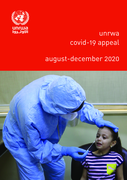
COVID-19 has resulted in an unprecedented global crisis. As the pandemic spreads and countries around the world continue to struggle to contain its health and socio-economic consequences, UNRWA is issuing a new humanitarian appeal from August through December 2020 to address the worst impacts of the...
