
Filter
2990
Text search:
public
private
partnership
Featured
205
949
Language
2925
61
43
34
33
18
15
14
3
3
3
3
3
2
2
2
2
2
2
2
2
2
1
1
1
1
1
1
1
1
1
1
1
1
1
1
1
1
1
1
1
1
1
1
1
1
1
Document type
1873
500
225
178
115
40
27
17
7
3
2
1
1
Countries
140
122
113
92
80
78
74
72
68
67
65
65
57
56
54
52
52
50
45
42
33
31
31
31
30
29
27
26
25
24
23
23
23
19
19
19
15
15
14
14
14
12
12
12
11
10
10
10
10
9
8
8
8
7
7
7
7
6
6
6
5
5
5
5
5
4
4
4
4
4
4
4
4
4
4
4
3
3
3
3
3
3
3
3
3
2
2
2
2
2
2
2
2
2
2
2
2
2
2
2
2
1
1
1
1
1
1
1
1
1
1
1
1
1
1
1
1
1
1
1
1
1
1
1
1
1
1
1
1
1
1
Authors & Publishers
266
125
109
81
72
70
67
67
66
32
26
26
21
21
20
20
17
16
16
16
15
15
14
13
13
13
13
12
12
12
12
11
11
11
11
10
10
10
10
10
10
10
10
9
9
9
9
9
8
8
8
8
8
8
8
8
8
7
7
7
7
7
7
7
6
6
6
6
6
6
6
6
6
6
6
6
5
5
5
5
5
5
5
5
5
5
5
5
5
5
5
5
5
5
5
5
5
5
5
5
5
5
5
5
5
5
5
4
4
4
4
4
4
4
4
4
4
4
4
4
4
4
4
4
4
4
4
4
4
4
4
4
4
4
4
4
4
4
4
4
4
4
3
3
3
3
3
3
3
3
3
3
3
3
3
3
3
3
3
3
3
3
3
3
3
3
3
3
3
3
3
3
3
3
3
3
3
3
3
3
3
3
3
3
3
3
3
3
3
3
3
3
3
3
3
3
3
3
3
2
2
2
2
2
2
2
2
2
2
2
2
2
2
2
2
2
2
2
2
2
2
2
2
2
2
2
2
2
2
2
2
2
2
2
2
2
2
2
2
2
2
2
2
2
2
2
2
2
2
2
2
2
2
2
2
2
2
2
2
2
2
2
2
2
2
2
2
2
2
2
2
2
2
2
2
2
2
2
2
2
2
2
2
2
2
2
2
2
2
2
2
2
2
2
2
2
2
2
2
2
2
2
2
2
2
2
2
2
2
2
2
2
2
2
2
2
2
2
2
2
2
2
2
2
2
2
2
2
2
2
2
2
2
2
2
2
2
2
2
2
2
2
2
2
2
2
2
2
2
2
2
2
2
2
2
2
2
2
2
2
2
2
2
2
2
2
2
2
2
2
2
2
2
2
2
2
2
2
2
2
2
2
2
2
2
2
2
1
1
1
1
1
1
1
1
1
1
1
1
1
1
1
1
1
1
1
1
1
1
1
1
1
1
1
1
1
1
1
1
1
1
1
1
1
1
1
1
1
1
1
1
1
1
1
1
1
1
1
1
1
1
1
1
1
1
1
1
1
1
1
1
1
1
1
1
1
1
1
1
1
1
1
1
1
1
1
1
1
1
1
1
1
1
1
1
1
1
1
1
1
1
1
1
1
1
1
1
1
1
1
1
1
1
1
1
1
1
1
1
1
1
1
1
1
1
1
1
1
1
1
1
1
1
1
1
1
1
1
1
1
1
1
1
1
1
1
1
1
1
1
1
1
1
1
1
1
1
1
1
1
1
1
1
1
1
1
1
1
1
1
1
1
1
1
1
1
1
1
1
1
1
1
1
1
1
1
1
1
1
1
1
1
1
1
1
1
1
1
1
1
1
1
1
1
1
1
1
1
1
1
1
1
1
1
1
1
1
1
1
1
1
1
1
1
1
1
1
1
1
1
1
1
1
1
1
1
1
1
1
1
1
1
1
1
1
1
1
1
1
1
1
1
1
1
1
1
1
1
1
1
1
1
1
1
1
1
1
1
1
1
1
1
1
1
1
1
1
1
1
1
1
1
1
1
1
1
1
1
1
1
1
1
1
1
1
1
1
1
1
1
1
1
1
1
1
1
1
1
1
1
1
1
1
1
1
1
1
1
1
1
1
1
1
1
1
1
1
1
1
1
1
1
1
1
1
1
1
1
1
1
1
1
1
1
1
1
1
1
1
1
1
1
1
1
1
1
1
1
1
1
1
1
1
1
1
1
1
1
1
1
1
1
1
1
1
1
1
1
1
1
1
1
1
1
1
1
1
1
1
1
1
1
1
1
1
1
1
1
1
1
1
1
1
1
1
1
1
1
1
1
1
1
1
1
1
1
1
1
1
1
1
1
1
1
1
1
1
1
1
1
1
1
1
1
1
1
1
1
1
1
1
1
1
1
1
1
1
1
1
1
1
1
1
1
1
1
1
1
1
1
1
1
1
1
1
1
1
1
1
1
1
1
1
1
1
1
1
1
1
1
1
1
1
1
1
1
1
1
1
1
1
1
1
1
1
1
1
1
1
1
1
1
1
1
1
1
1
1
1
1
1
1
1
1
1
1
1
1
1
1
1
1
1
1
1
1
1
1
1
1
1
1
1
1
1
1
1
1
1
1
1
1
1
1
1
1
1
1
1
1
1
1
1
1
1
1
1
1
1
1
1
1
1
1
1
1
1
1
1
1
1
1
1
1
1
1
1
1
1
1
1
1
1
1
1
1
1
1
1
1
1
1
1
1
1
1
1
1
1
1
1
1
1
1
1
1
1
1
1
1
1
1
1
1
1
1
1
1
1
1
1
1
1
1
1
1
1
1
1
1
1
1
1
1
1
1
1
1
1
1
1
1
1
1
1
1
1
1
1
1
1
1
1
1
1
1
1
1
1
1
1
1
1
1
1
1
1
1
1
1
1
1
1
1
1
1
1
1
1
1
1
1
1
1
1
1
1
1
1
1
1
1
1
1
1
1
1
1
1
1
1
1
1
1
1
1
1
1
1
1
1
1
1
1
1
1
1
1
1
1
1
1
1
1
1
1
1
1
1
1
1
1
1
1
1
1
1
1
1
1
1
1
1
1
1
1
1
1
1
1
1
1
1
1
1
1
1
1
1
1
1
1
1
1
1
1
1
1
1
1
1
1
1
1
1
1
1
1
1
1
1
1
1
1
1
1
1
1
1
1
1
1
1
1
1
1
1
1
1
1
1
1
1
1
1
1
1
1
1
1
1
1
1
1
1
1
1
1
1
1
1
1
1
1
1
1
1
1
1
1
1
1
1
1
1
1
1
1
1
1
1
1
1
1
1
1
1
1
1
1
1
1
1
1
1
1
1
1
1
1
1
1
1
1
1
1
1
1
1
1
1
1
1
1
1
1
1
1
1
1
1
1
1
1
1
1
1
1
1
1
1
1
1
1
1
1
1
1
1
1
1
1
1
1
1
1
1
1
1
1
1
1
1
1
1
1
1
1
1
1
1
1
1
1
1
1
1
1
1
1
1
1
1
1
1
1
1
1
1
1
1
1
1
1
1
1
1
1
1
1
1
1
1
1
1
1
1
1
1
1
1
1
1
1
1
1
1
1
1
1
1
1
1
1
1
1
1
1
1
1
1
1
1
1
1
1
1
1
1
1
1
1
1
1
1
1
1
1
1
1
1
1
1
1
1
1
1
1
1
1
1
1
1
1
1
1
1
1
1
1
1
1
1
1
1
1
1
1
1
1
1
1
1
1
1
1
1
1
1
1
1
1
1
1
1
1
1
1
1
1
1
1
1
1
1
1
1
1
1
1
1
1
1
1
1
1
1
1
1
1
1
1
1
1
1
1
1
1
1
1
1
1
1
1
1
1
1
1
1
1
1
1
1
1
1
1
1
1
1
1
1
1
1
1
1
1
1
1
1
1
1
1
1
1
1
1
1
1
1
1
1
1
1
1
1
1
1
1
1
1
1
1
1
1
1
1
1
1
1
1
1
1
1
1
1
1
1
1
1
1
1
1
1
1
1
1
1
1
1
1
1
1
1
1
1
1
1
1
1
1
1
1
1
1
1
1
1
1
1
1
1
1
1
1
1
1
1
1
1
1
1
1
1
1
1
1
1
1
1
1
1
1
1
1
1
1
1
1
1
1
1
1
1
1
1
1
1
1
1
1
1
1
1
1
1
1
1
1
1
1
1
1
1
1
1
1
1
1
1
1
1
1
1
1
1
1
1
1
1
1
1
1
1
1
1
1
1
1
1
1
1
1
1
1
1
1
1
1
1
1
1
1
1
1
1
1
1
1
1
1
1
1
1
1
1
1
1
1
1
1
1
1
1
1
1
1
1
1
1
1
1
1
1
1
1
1
1
1
1
1
1
1
1
1
1
1
1
1
1
1
1
1
1
1
1
1
1
1
1
1
1
1
1
1
1
1
1
1
1
1
1
1
1
1
1
1
1
1
1
1
1
1
1
1
1
1
1
1
1
1
1
1
1
1
1
1
1
1
1
1
1
1
1
1
1
1
1
1
1
1
1
1
1
1
1
1
1
1
1
1
1
1
1
1
1
1
1
1
1
1
1
1
1
1
1
1
1
1
1
1
1
1
1
1
1
1
1
1
1
1
1
1
1
1
1
1
1
1
1
1
1
1
1
1
1
1
1
1
1
1
1
1
1
1
1
1
1
1
1
1
1
1
1
1
1
1
1
1
1
1
1
1
1
1
1
1
1
1
1
1
1
1
1
1
1
1
1
1
1
1
1
1
1
1
1
1
1
1
1
1
1
1
1
1
1
1
1
1
1
1
1
1
1
1
1
1
1
1
1
1
1
1
1
1
1
1
1
1
1
1
1
1
1
1
1
1
1
1
1
1
1
1
1
1
1
1
1
1
1
1
1
1
1
1
1
1
1
1
1
1
1
1
1
1
1
1
1
1
1
1
1
1
1
1
1
1
1
1
1
1
1
1
1
1
1
1
1
1
1
1
1
1
1
1
1
1
1
1
1
1
1
1
1
1
1
1
1
1
1
1
1
1
1
1
1
1
1
1
1
1
1
1
1
1
1
1
1
1
1
1
1
1
1
1
1
1
1
1
1
1
1
1
1
1
1
1
1
1
1
1
1
1
1
1
1
1
1
1
1
1
1
1
1
1
1
1
1
1
1
1
1
1
1
1
1
1
1
1
1
1
1
1
1
1
1
1
1
1
1
1
1
1
1
1
1
1
1
1
1
1
1
1
1
1
1
1
1
1
1
1
1
1
1
1
1
1
1
1
1
1
1
1
1
1
1
1
1
1
1
1
1
1
1
1
1
1
1
1
1
1
1
1
1
1
1
1
1
1
1
1
1
1
1
1
1
1
1
1
1
1
1
1
1
1
1
1
1
1
1
1
1
1
1
1
1
1
1
1
1
1
1
1
1
1
1
1
1
1
1
1
1
1
1
1
1
1
1
1
1
1
1
1
1
1
1
1
1
1
1
1
1
1
1
1
1
1
1
1
1
1
1
1
1
1
1
1
1
1
1
1
1
1
1
1
1
1
1
1
1
1
1
1
1
1
1
1
1
1
1
1
1
1
1
1
1
1
1
1
1
1
1
1
1
1
1
1
1
1
1
1
1
1
1
1
1
1
1
1
1
1
1
1
1
1
1
1
1
1
1
1
1
1
1
1
1
1
1
1
1
1
1
1
1
1
1
1
1
1
1
1
1
1
1
1
1
1
1
1
1
1
1
1
1
1
1
1
1
1
1
1
1
1
1
1
1
1
1
1
1
1
1
1
1
1
1
1
1
1
1
1
1
1
1
1
1
1
1
1
1
1
1
1
1
1
1
1
1
1
1
1
1
1
1
1
1
1
1
1
1
1
1
1
1
1
1
1
1
1
1
1
1
1
1
1
1
1
1
1
1
1
1
1
1
1
1
1
1
1
1
1
1
1
1
1
1
1
1
1
1
1
1
1
1
1
1
1
1
1
1
1
1
1
1
1
1
1
1
1
1
1
1
1
1
1
1
1
1
1
1
1
1
1
1
1
1
1
1
1
1
1
1
1
1
1
1
1
1
1
1
1
1
1
1
1
1
1
1
1
1
1
1
1
1
1
1
1
1
1
1
1
1
1
1
1
1
1
1
1
1
1
1
1
1
1
1
1
1
1
1
1
1
1
1
1
1
1
1
1
1
1
1
1
1
1
1
1
1
1
1
1
1
1
1
1
1
1
1
1
1
1
1
1
1
1
1
1
1
1
1
1
1
1
1
1
1
1
1
1
1
1
1
1
1
1
1
1
1
1
1
1
1
1
1
1
1
1
1
1
1
1
1
1
1
1
1
1
1
1
1
1
1
1
1
1
1
1
1
1
1
1
1
1
1
1
1
1
Publication Years
712
2020
248
10
Category
1367
176
137
112
109
27
15
5
1
1
Toolboxes
214
197
182
134
120
106
100
93
76
68
60
59
52
52
50
50
30
22
20
11
11
9
9
1
1
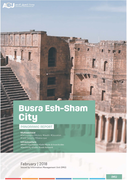
The Information Management Unit of the Assistance Coordination Unit issued a Panoramic Report on Busra Esh-Sham City located in Dar’a Governorate. The report reflects the living conditions in the city during November and December 2017. The report covers in analysis several sections: Active Civilia
...
n actors, Demography, Health, Food Security, Education, and the Infrastructure, which incorporates Water sector, Sewage System, Solid Waste, Electricity, and Public Roads Network. This report aims at drawing the attention of the decision-makers to the civil actors in the city of Busra Esh-Sham and to enable them to manage the community and provide necessary infrastructure needs and services to the community people.
more
The emergency Water, Sanitation and Hygiene Promotion (WASH) gap analysis project was funded by The Humanitarian Innovation Fund (HIF), a program managed by Enhancing Learning and Research for Humanitarian Assistance (ELRHA) in partnership with the
...
Active Learning Network for Accountability and Performance in Humanitarian Action (ALNAP), and is a component of a larger initiative to identify and support innovations in emergency WASH. This paper gives an explanation of the background, methodology, and findings of the program.
more
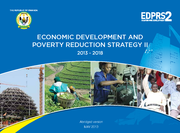
The Second Economic Development and Poverty Reduction Strategy (EDPRS 2) is a launch into the home strait of our Vision 2020. We are faced with new challenges of ensuring greater self reliance and developing global competitiveness. Conscious of these challenges, we forge ahead knowing that working t
...
ogether, we always overcome.
The EDPRS 2 period is the time when our private sector is expected to take the driving seat in economic growth and poverty reduction. Through this strategy we will focus government efforts on transforming the economy, the private sector and alleviating constraints to growth of
investment. We will develop the appropriate skills and competencies to allow our people particularly the youth to become more productive and competitive to support our ambitions. We will also strengthen the platform for communities to engage decisively and to continue to develop home grown solutions that have been the bedrock of our success. These are fundamental principles as we work to improve the lives of all Rwandans in the face of an uncertain global economic environment.
more

This report is primarily intended for the community of policymakers and researchers concerned about the rising risks of domestic, regional, and global infectious disease epidemics, and the collective failure to take the coordinated actions required to reduce such risks. These risks include the expec
...
ted health, economic, and societal costs that are borne by countries, regions, and even all nations in the case of pandemics (which are worldwide epidemics). These risks also include the consequences of increasing antimicrobial resistance (AMR) and its spread within regions and globally. A necessary first step is to monitor whether a broad range of stakeholders are acting to prevent outbreaks from becoming epidemics, whether their capacities to respond to epidemics are robust, and whether preparedness to respond to pandemics and limit the resulting economic and health damage is improving. Analyzing the adequacy of these efforts is vitally important for the decisions of policymakers to invest in the public health and disaster-risk management capacities. Early and effective control of disease outbreaks prevents substantial health and economic costs whether or not the disease can spread globally and become a pandemic.
more
Risk Communication and Community Engagement (RCCE) is an essential part of any disease outbreak response. Risk communication in the context of an Ebola outbreak refers to real time exchange of information, opinion and advice between frontline responders and people who are faced with the threat of Eb
...
ola to their survival, health, economic or social wellbeing. Community engagement refers to mutual partnership between Ebola response teams and individuals or communities in affected areas, whereby community stakeholders have ownership in controlling the spread of the outbreak.
It is intended to be used to guide RCCE work which is central to stopping the outbreak and preventing its further amplification. Unlike other areas of response, RCCE draws heavily on volunteers, frontline personnel and on people without prior training in this area. As such, the document provides basic background information, scopes the socio-economic and cultural aspects (that are known at the time of publication), and provides the latest evidence-based advice and approaches
more
Assessment of Effectiveness of IEC material PMU/M & E/7- Effectiveness of IEC material at Red Ribbon Clubs (RRCs)
Unicef; ORG Centre for Social Research
(2019)
Final Report
Submitted to: Unicef, New Delhi
ORG Centre for Social Research (A Division of AC Nielsen ORG- MARG Private Limited)
Accessed: 30.10.2019
This report reviews the latest evidence on what works to reduce HIV-related stigma and discrimination through key programmes to reduce stigma and discrimination and increase access to justice in the six settings of focus for the Global Partnership.
...
It includes guidance for national governments and key stakeholders on how stigma and discrimination harm; how the stigmatization process operates and how we can stop it; key principles of stigma- and discrimination-reduction efforts; an overview of common intervention approaches; recommendations based on the latest evidence for reducing HIV-related stigma and discrimination in the six settings; and an overview of considerations for monitoring the success of the programmatic interventions recommended for each setting.
more
COVID-19 & Community Health Workers
recommended
2-Day Orientation training Orientation Training, 1 Febr. 2021
Community Health Workers (CHWs) are an essential part of the Partnership to Accelerate COVID-19 Testing (PACT) Initiative • Africa CDC set up PACT to drive forward the Africa Union Joi
...
nt Continental Strategy for COVID-19
Available in English, French and Arabic
more
Strategic communication is used to raise awareness of issues among specific target populations. It aims to provide timely, evidence-based, authoritative information and guidance needed for public health action. Prope
...
r implementation of strategic communication leads to sustained behaviour change and is essential in overcoming barriers to access to services or generating demand for such services.
more
USAID funded/ Primary Health Care Project in Iraq (PHCPI) in cooperation with Iraqi Ministry of Health (MOH) aims to promote Primary Health Care (PHC) services provided by Primary Health Care Clinics (PHCCs) in Iraq in order to achieve the development goal in enhancing the PHC provision system throu
...
gh achieving the following results: First: Enhancing management and operations systems, which support clinical care. Second: Improving the quality of the delivered PHC according to quality standards. Third: Enhancing and expanding local community participation and partnership in PHC. Maintaining the medical & service devices in the hospitals and health clinics besides making them function according to the adapted standard specifications, lead to providing most efficient medical services for people and accomplish the purposes for which they were invented. Maintenance and repair of facilities and infrastructure, and keeping them safe and clean are also of the important approaches for the results referred to in (first) and (second) above. This can be achieved through enhancing and developing facilities, and medical & service devices management. This guideline seeks to develop work mechanism for engineers, technicians and the PHCCs’ facilities and medical & service equipment maintenance workers; clarify the concept of maintenance, its importance and classifications in health area, its planning and implementation, the tasks and duties of other directorates and departments of the Ministry in relation to all kinds of maintenance. Add to that preparing documents and forms, which are used in documenting and monitoring the steps required to be accomplished in the maintenance of PHCCs’ facilities and medical & service equipment, for the equipment to perform the best possible services for people and get their satisfaction.
more
The portable diagnostic imaging technology covered by this document will serve not only the pressing demands for tuberculosis screening and triage but also other diseases. Therefore, the requirements, accessories, hardware and software packages listed in the following specifications are described in
...
detail in order to serve also other pathologies and conditions, like trauma and pneumonia.
Through the definition of "minimum technical requirements", this document is recommended to support decision-making regarding the selection, incorporation, allocation and use of portable X-ray systems and is intended for health care providers, managers of imaging departments, procurement and regulatory agencies, policymakers and planning officers in ministries of health, as well as biomedical engineering professionals, medical physicists, the private health sector, medical device industry and intergovernmental and international agencies.
more
The Strategy provides a high-level unifying framework to leverage existing capacities, address barriers and strengthen the use of genomic surveillance in the detection, monitoring and response to public health threats. Genomic surveillance is part o
...
f the broader surveillance and laboratory system, and its implementation should reinforce end-to-end capacities including sample collection, diagnostics, data sharing and analysis. The strategy aims to facilitate the connectivity between different disease control programs and surveillance networks. This interoperability will strengthen the cross-cutting essential public health laboratory functions underpinning genomics holistically. The strategy articulates the overarching goal, objectives and strategic actions needed. These are dependent on commitments from countries, partners and WHO for their implementation.
more
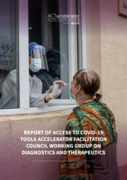
This report’s central premise is that diagnostics and therapeutics, and associated test to treat strategies, are fundamental components of the pandemic response, both for COVID-19 and for future health threats. Two years into the COVID-19 pandemic, this report reflects on the main challenges and k
...
ey solutions on the road to equitable access to diagnostics and therapeutics.
This report draws from experience gained through the Access to COVID-19 Tools (ACT) Accelerator Diagnostics and Therapeutics pillars, and includes the perspectives of collaborating stakeholders (countries, civil society representatives and the private sector). Building on these findings, this report proposes sixteen recommended actions to address what have been identified as key structural challenges and specifies a potential owner for each action.
more

The Global Task Force on Cholera Control (GTFCC) launched Ending Cholera: A Global
Roadmap to 2030 (Global Roadmap) (1), a strategy that aims to reduce global cholera
deaths by 90% and eliminate the disease in at least 20 countries by 2030. It is
organized according to three main axes:
• E
...
nsuring early detection and response to contain outbreaks; (2)
• Adopting a multisectoral approach to prevent and control cholera in hotspots; and
• Establishing an effective coordination mechanism for technical support, resource
mobilization and partnership at local and global levels.
more
The World Health Organization Regional Office for Africa (WHO AFRO), in accordance with recommendations from various WHO committees, has developed three flagship programmes to support Member States in the African region to prepare for, detect and respond to
...
public health emergencies. They are the result of extensive consultations with more than 30 African government ministers, technical actors, partners across the continent as well as regional institutions such as the Africa Centres for Disease Control and Prevention (Africa CDC), whose contributions have shaped the priority activities. This report provides the second quarterly summary of progress in implementing the flagship programmes.
more
Climate change presents the single biggest threat to human development, and its widespread impacts disproportionately burden the poorest and most vulnerable households in fragile and rural developing contexts – particularly women and children.
According to the Intergovernmental Panel on Climate C
...
hange’s (IPCC) latest report, ‘between 2010 and 2020, droughts, floods and storms killed 15 times as many people in highly vulnerable countries, particularly in Africa — which is responsible for less than 3 percent of global emissions – than in the wealthiest countries’.
Recognising environmental degradation and climate change are key accelerators of extreme child vulnerability, World Vision (WV) approved the Environmental Stewardship Management Policy (‘the Policy’) and Guidelines (‘the Guidelines’) in 2021.
To support the implementation of the Policy and Guidelines, WV has developed this Environmental Stewardship and Climate Action Handbook (‘the Handbook’) to help offices across the WV Partnership implement best practice environmental management strategies both in the field and in our operations and facilities.
Integrating environmental stewardship and climate action into all our work – whether that be in our Area Programmes, grant projects, responses to disasters or advocacy – is critical to achieving WV’s strategy.
As a Christian organisation we are compelled to follow the ways of Jesus Christ, calling us to care for the ‘least of these’ (Matthew 25:40) – the vulnerable children who are disproportionately impacted by climate change. Our response to the degradation of the environment is not motivated by political expediency or funding – but because we are called to steward God’s creation (Genesis 1:28).
more
Donor financing to low- and middle-income countries for reproductive, maternal, newborn, and child health increased substantially from 2008 to 2013. However, increased spending by donors might not improve outcomes, if funds are delivered in ways that undermine countries’
...
public financial management systems and incur high transaction costs for project implementation
more
The World Food Programme (WFP) has taken important steps to progress disability inclusion across its programming and operations. In late 2022, WFP commissioned the Nossal Institute, University of Melbourne in partnership with the Faculty of Psycholo
...
gy, Universitas Gadjah Mada, Indonesia to identify pathways for increasing disability inclusion in WFP’s emergency preparedness and response (EPR) programming.
The study explored WFP’s programming in Indonesia and the Philippines, including WFP’s advisory, technical assistance and service provision roles to government and partners and informed the development of this guide (see appendix 2). As general guidance on disability inclusion is increasingly available, the purpose of this guide is to contextualize disability inclusion in WFP’s emergency preparedness and response programming. The guide builds on core reference materials, such as the Inter-Agency Standing Committee (IASC) Guidelines on Inclusion of Persons with Disabilities in Humanitarian Action, 2019. While of wider relevance, this guide is directed at WFP’s EPR programming in Asia and the Pacific.
more
A Decision Makers Guide: Medical Planning and Response for a Nuclear Detonation
U.S. Department of Health & Human Services
(2017)
C1
Successful detonation of an improvised nuclear device (IND) would be a catastrophic event, causing an unprecedented number of injuries and lives lost, as well as economic, political, and social disruption. However, an effective medical response and an infrastructure prepared to protect itself from f
...
allout could save tens of thousands of lives. Since 2001, all levels of government, academic institutions, and professional organizations have done significant work to enhance our ability to prepare for and respond to a nuclear detonation. The following manual is intended to simplify and translate the necessary protective actions and medical response modalities in order to make them more accessible and easier to translate into practice. The approach of this manual is to provide a common baseline application for various allied response disciplines (to include senior operational responders, emergency managers, public health advisors, and municipal, State, and Federal executives and elected officials). This manual will enhance mutual understanding of the basics of nuclear response.
more
The Republic of the Union of Myanmar’s National Strategic Plan on HIV/AIDS 2016–2020 is the strategic guide for the country’s response to HIV at national, state/regional and local levels. The framework describes the current dynamics of the HIV epidemic and articulates a strategy to optimize in
...
vestments through a fast track approach with the vision of ending HIV as a public health threat by 2030. Myanmar’s third National Strategic Plan (HIV NSP III) issues a call to all partners to front-load investments to close the testing gap and reach the 90–90–90 prevention and treatment targets to protect health for all.
more
