
Filter
2410
Text search:
mental
health
professionals
Featured
231
486
Language
2314
66
64
54
37
22
22
18
9
8
7
6
6
5
5
5
5
4
4
4
4
4
4
3
3
3
3
3
3
3
2
2
2
2
2
2
2
2
2
1
1
1
1
1
1
1
1
1
1
1
1
1
1
1
1
1
1
Document type
1462
323
263
171
64
49
30
22
11
8
4
1
Countries
87
87
77
68
59
42
40
39
35
35
30
30
30
29
28
27
24
21
20
20
19
18
17
17
17
16
15
14
14
14
14
13
11
11
10
10
10
10
9
9
9
9
8
8
8
7
7
7
7
6
6
6
5
5
5
5
5
5
5
4
4
4
4
4
4
3
3
3
3
3
3
3
3
3
3
3
3
3
2
2
2
2
2
2
2
2
2
2
2
2
2
2
2
2
1
1
1
1
1
1
1
1
1
1
1
1
1
1
1
1
1
1
1
1
1
1
Authors & Publishers
304
121
111
91
71
70
52
32
23
22
20
19
18
17
17
15
14
13
12
12
11
10
10
9
9
9
8
7
7
7
7
7
7
7
7
7
6
6
6
6
6
6
6
6
6
5
5
5
5
5
5
5
5
5
5
5
5
5
5
4
4
4
4
4
4
4
4
4
4
4
4
4
4
4
4
4
4
4
4
4
4
4
4
4
3
3
3
3
3
3
3
3
3
3
3
3
3
3
3
3
3
3
3
3
3
3
3
3
3
3
3
3
3
3
3
3
3
3
3
3
3
3
3
3
3
3
3
3
3
3
3
3
3
3
3
2
2
2
2
2
2
2
2
2
2
2
2
2
2
2
2
2
2
2
2
2
2
2
2
2
2
2
2
2
2
2
2
2
2
2
2
2
2
2
2
2
2
2
2
2
2
2
2
2
2
2
2
2
2
2
2
2
2
2
2
2
2
2
2
2
2
2
2
2
2
2
2
2
2
2
2
2
2
2
2
2
2
2
2
2
2
2
2
2
2
2
2
2
2
2
2
2
2
2
2
2
2
2
2
2
2
2
2
2
2
2
2
2
2
2
2
2
2
2
2
2
2
2
2
2
2
2
2
2
2
2
2
2
2
2
2
2
2
2
2
2
2
2
2
2
2
2
2
2
2
2
2
2
2
2
2
2
2
2
2
2
2
2
2
2
1
1
1
1
1
1
1
1
1
1
1
1
1
1
1
1
1
1
1
1
1
1
1
1
1
1
1
1
1
1
1
1
1
1
1
1
1
1
1
1
1
1
1
1
1
1
1
1
1
1
1
1
1
1
1
1
1
1
1
1
1
1
1
1
1
1
1
1
1
1
1
1
1
1
1
1
1
1
1
1
1
1
1
1
1
1
1
1
1
1
1
1
1
1
1
1
1
1
1
1
1
1
1
1
1
1
1
1
1
1
1
1
1
1
1
1
1
1
1
1
1
1
1
1
1
1
1
1
1
1
1
1
1
1
1
1
1
1
1
1
1
1
1
1
1
1
1
1
1
1
1
1
1
1
1
1
1
1
1
1
1
1
1
1
1
1
1
1
1
1
1
1
1
1
1
1
1
1
1
1
1
1
1
1
1
1
1
1
1
1
1
1
1
1
1
1
1
1
1
1
1
1
1
1
1
1
1
1
1
1
1
1
1
1
1
1
1
1
1
1
1
1
1
1
1
1
1
1
1
1
1
1
1
1
1
1
1
1
1
1
1
1
1
1
1
1
1
1
1
1
1
1
1
1
1
1
1
1
1
1
1
1
1
1
1
1
1
1
1
1
1
1
1
1
1
1
1
1
1
1
1
1
1
1
1
1
1
1
1
1
1
1
1
1
1
1
1
1
1
1
1
1
1
1
1
1
1
1
1
1
1
1
1
1
1
1
1
1
1
1
1
1
1
1
1
1
1
1
1
1
1
1
1
1
1
1
1
1
1
1
1
1
1
1
1
1
1
1
1
1
1
1
1
1
1
1
1
1
1
1
1
1
1
1
1
1
1
1
1
1
1
1
1
1
1
1
1
1
1
1
1
1
1
1
1
1
1
1
1
1
1
1
1
1
1
1
1
1
1
1
1
1
1
1
1
1
1
1
1
1
1
1
1
1
1
1
1
1
1
1
1
1
1
1
1
1
1
1
1
1
1
1
1
1
1
1
1
1
1
1
1
1
1
1
1
1
1
1
1
1
1
1
1
1
1
1
1
1
1
1
1
1
1
1
1
1
1
1
1
1
1
1
1
1
1
1
1
1
1
1
1
1
1
1
1
1
1
1
1
1
1
1
1
1
1
1
1
1
1
1
1
1
1
1
1
1
1
1
1
1
1
1
1
1
1
1
1
1
1
1
1
1
1
1
1
1
1
1
1
1
1
1
1
1
1
1
1
1
1
1
1
1
1
1
1
1
1
1
1
1
1
1
1
1
1
1
1
1
1
1
1
1
1
1
1
1
1
1
1
1
1
1
1
1
1
1
1
1
1
1
1
1
1
1
1
1
1
1
1
1
1
1
1
1
1
1
1
1
1
1
1
1
1
1
1
1
1
1
1
1
1
1
1
1
1
1
1
1
1
1
1
1
1
1
1
1
1
1
1
1
1
1
1
1
1
1
1
1
1
1
1
1
1
1
1
1
1
1
1
1
1
1
1
1
1
1
1
1
1
1
1
1
1
1
1
1
1
1
1
1
1
1
1
1
1
1
1
1
1
1
1
1
1
1
1
1
1
1
1
1
1
1
1
1
1
1
1
1
1
1
1
1
1
1
1
1
1
1
1
1
1
1
1
1
1
1
1
1
1
1
1
1
1
1
1
1
1
1
1
1
1
1
1
1
1
1
1
1
1
1
1
1
1
1
1
1
1
1
1
1
1
1
1
1
1
1
1
1
1
1
1
1
1
1
1
1
1
1
1
1
1
1
1
1
1
1
1
1
1
1
1
1
1
1
1
1
1
1
1
1
1
1
1
1
1
1
1
1
1
1
1
1
1
1
1
1
1
1
1
1
1
1
1
1
1
1
1
1
1
1
1
1
1
1
1
1
1
1
1
1
1
1
1
1
1
1
1
1
1
1
1
1
1
1
1
1
1
1
1
1
1
1
1
1
1
1
1
1
1
1
1
1
1
1
1
1
1
1
1
1
1
1
1
1
1
1
1
1
1
1
1
1
1
1
1
1
1
1
1
1
1
1
1
1
1
1
1
1
1
1
1
1
1
1
1
1
1
1
1
1
1
1
1
1
1
1
1
1
1
1
1
1
1
1
1
1
1
1
1
1
1
1
1
1
1
1
1
1
1
1
1
1
1
1
1
1
1
1
1
1
1
1
1
1
1
1
1
1
1
1
1
1
1
1
1
1
1
1
1
1
1
1
1
1
1
1
1
1
1
1
1
1
1
1
1
1
1
1
1
1
1
1
1
1
1
1
1
1
1
1
1
1
1
1
1
1
1
1
1
1
1
1
1
1
1
1
1
1
1
1
1
1
1
1
1
1
1
1
1
1
1
1
1
1
1
1
1
1
1
1
1
1
1
1
1
1
1
1
1
1
1
1
1
1
1
1
1
1
1
1
1
1
1
1
1
1
1
1
1
1
1
1
1
1
1
1
1
1
1
1
1
1
1
1
1
1
1
1
1
1
1
1
1
1
1
1
1
1
1
1
1
1
1
1
1
1
1
1
1
1
1
1
1
1
1
1
1
1
1
1
1
1
1
1
1
1
1
1
1
1
1
1
1
1
1
1
1
1
1
1
1
1
1
1
1
1
1
1
1
1
1
1
1
1
1
1
1
1
1
1
1
1
1
1
1
1
1
1
1
1
1
1
1
1
1
1
1
1
1
1
1
1
1
1
1
1
1
1
1
1
1
1
1
1
1
1
1
1
1
1
1
1
1
1
1
1
1
1
1
1
1
1
1
1
1
1
1
1
1
1
1
1
1
1
1
1
1
1
1
1
1
1
1
1
1
1
1
1
1
1
1
1
1
1
1
1
1
1
1
1
1
1
1
1
1
1
1
1
1
1
1
1
1
1
1
1
1
1
1
1
1
1
1
1
1
1
1
1
1
1
1
1
1
1
1
1
1
1
1
1
1
1
1
1
1
1
1
1
1
1
1
1
1
1
1
1
1
1
1
1
1
1
1
1
1
1
1
1
1
1
1
1
1
1
1
1
1
1
1
1
1
1
1
1
1
1
1
1
1
1
1
1
1
1
1
1
1
1
1
1
1
1
1
1
1
1
1
1
1
1
1
1
1
1
1
1
1
1
1
1
1
1
1
1
1
1
1
1
1
1
1
1
1
1
1
1
1
1
1
1
1
1
1
1
1
1
1
1
1
1
1
1
1
1
1
1
1
1
1
1
1
1
1
1
1
1
1
1
1
1
1
1
1
1
1
1
1
1
1
1
1
1
1
1
1
1
1
1
1
1
1
1
1
1
1
1
1
1
1
1
1
1
1
1
1
1
1
1
1
1
1
1
1
1
1
1
1
1
1
1
1
1
1
1
1
1
1
1
1
1
1
1
1
1
1
1
1
1
1
1
1
1
1
1
1
1
1
1
1
1
1
1
1
1
1
1
1
1
1
1
1
1
1
1
1
1
1
1
1
1
1
1
1
1
1
1
1
1
1
1
1
1
1
1
1
1
1
1
1
1
1
1
1
1
1
1
1
1
1
1
1
1
1
1
1
1
1
1
1
1
1
1
1
1
1
1
1
1
1
1
1
1
1
1
1
1
1
1
1
1
1
1
1
1
1
1
1
1
1
1
1
1
1
1
1
1
1
1
1
1
1
1
1
1
1
1
1
1
1
1
1
1
1
1
1
1
1
1
1
1
1
1
1
1
1
1
1
1
1
1
1
1
1
1
1
1
1
1
1
1
1
1
1
1
1
1
1
1
1
1
1
1
1
1
1
1
1
1
1
1
1
1
1
1
1
1
1
1
1
1
1
1
1
1
1
1
1
1
1
1
1
1
1
1
1
1
1
1
1
1
1
1
1
1
1
1
1
1
1
1
1
1
1
1
1
1
1
1
1
1
1
1
1
1
1
1
1
1
1
1
1
1
1
1
1
1
1
1
1
1
1
1
1
1
1
1
1
1
1
1
1
1
1
1
1
1
1
1
1
1
1
1
1
1
1
1
1
1
1
1
1
1
1
1
1
1
1
1
1
1
1
1
1
1
1
1
1
1
1
1
1
1
1
1
1
1
1
1
1
1
1
1
1
1
1
1
1
1
1
1
1
1
1
1
1
1
1
1
1
1
1
1
1
1
1
1
1
1
1
1
1
1
1
1
1
1
1
1
1
1
1
1
1
1
1
1
1
1
1
1
1
1
1
1
1
1
1
1
1
1
1
1
1
1
1
1
1
1
1
1
1
1
1
1
1
1
1
1
1
1
1
1
1
1
1
1
1
1
1
1
1
1
1
1
1
1
1
1
1
1
1
1
1
1
1
1
1
1
1
1
1
1
1
1
1
1
1
1
1
1
1
1
1
1
1
1
1
1
1
1
1
1
1
1
1
1
1
1
1
1
1
1
1
1
1
1
1
1
1
1
1
1
1
1
1
1
1
1
1
1
1
1
1
1
1
1
1
1
1
1
1
1
Publication Years
642
1475
278
14
1
Category
736
161
145
135
56
43
7
2
1
1
Toolboxes
560
199
197
113
98
95
90
70
53
52
47
31
31
27
24
23
21
12
12
5
4
3
2
1
Self-care interventions are among the most promising and exciting new approaches to improve health and well-being, both from a health systems perspective and for people who use these interventions.
...
The World Health Organization (WHO) uses the following working definition of self-care: Self-care is the ability of individuals, families and communities to promote health, prevent disease, maintain health, and cope with illness and disability with or without the support of a health worker. The scope of self-care as described in this definition includes health promotion; disease prevention and control; self-medication; providing care to dependent persons; seeking hospital/specialist/primary care if necessary; and rehabilitation, including palliative care. It includes a range of self-care modes and approaches. While this is a broad definition that includes many activities, it is important for health policy to recognize the importance of self-care, especially where it intersects with health systems and health professionals.
more
Refugee Health
recommended
An approach to emergency situations. Relief workers face rapidly changing and complex environments, new disease patterns, enormous humanitarian needs and relatively limited resources. The authors of this book use their experience in the area to produce an operational manual of the issues involved in
...
refugee health programs. This book is aimed at professionals involved in public health assistance to refugees and displaced persons. It deals with a variety of specific refugee health issues at the decisional level, and discusses the priorities of intervention during the different phases of a refugee crisis, from emergency to repatriation.
more
Global Experience of Community Health Workers for Delivery of Health Related Millennium Development Goals
Zulfiqar A. Bhutta, Zohra S. Lassi, George Pariyo and Luis Huicho
World Health Organization WHO; Global Health Workforce Alliance
(2010)
C_WHO
A Systematic Review, Country Case Studies, and Recommendations for Integration into National Health Systems
Alliance Report
Participation of community health workers (CHWs) in the provision of pr
...
imary health care has been experienced all over the world for several decades, and there is an amount of evidence showing that they can add significantly to the efforts of improving the health of the population, particularly in those settings with the highest shortage of motivated and capable health professionals.
more
The toolkit aims to provide researchers with guidance for improving the quality of studies that use administrative data to better ascertain child maltreatment incidence, response and service delivery. However, these are complex studies to conduct, and the toolkit is not meant to be comprehensive. Re
...
searchers using the toolkit should be prepared to follow up on the recommended resources contained within and to consult with other professionals, such as statisticians, to further improve the research design and execution
more
Challenging disadvantage in Zambia: People with psychosocial and intellectual disabilities in the criminal justice system
The PAN, the Mental Health Users Network Zambia (MHUNZA), the Prisons Care and Counselling Association (PRISCCA), et al.
Open Society Initiative for Southern Africa (OSISA)
(2015)
C1

This guide is intended to assist
state, local, and tribal public health
professionals in the initiation of
response activities during the
first 24
...
hours of an emergency
or disaster. It should be used in
conjunction with existing emergency
operations plans, procedures,
guidelines, resources, assets, and
incident management systems. It
is not a substitute for public health
emergency preparedness and
planning activities. The response to
any emergency or disaster must be
a coordinated community effort.
more
The purpose of this manual is to provide a resource for training to increase understanding of Health in All Policies (HiAP) by health and other pr
...
ofessionals. It is anticipated that the material in this manual will form the basis of two- or three-day workshops, which will:
• Build capacity to promote, implement and evaluate HiAP;
• Encourage engagement and collaboration across sectors;
• Facilitate the exchange of experiences and lessons learned;
• Promote regional and global collaboration on HiAP; and
• Promote dissemination of skills to develop training courses for trainers.
more
This handbook is an adaptation from the WHO Clinical Handbook Health care for women subjected to intimate partner violence or sexual violence developed by the World Health Organization (WHO), UN Wom
...
en and United Nations Population Fund. The handbook draws on the work from professionals who are dedicated to preventing and responding to Gender Based Violence.
The Handbook guides health care service providers to provide comprehensive services to survivors of intimate partner violence and/or sexual violence. It also guides health professionals with respect to relevant stakeholders for referral purposes. The purpose is to ensure that relevant authorities are informed timeously in order act and ensure that those affected by violence receive speedy service as required.
more
Every day, schools engage in numerous activities that help promote the health and well-being of students, families, and communities. There is clear evidence of the benefits of the health-promoting s
...
chools (HPS) approach, not only for improving overall health outcomes (physical, mental, and social) in the educational community but also for achieving better learning outcomes. The closure of schools during the COVID-19 pandemic highlighted these benefits, as well as the close links between health, wellness, and education.
more
This report summarizes the latest scientific knowledge on the links between exposure to air pollution and adverse health effects in children. It is intended to inform and motivate individual and collective action by
...
health care professionals to prevent damage to children’s health from exposure to air pollution. Air pollution is a major environmental health threat. Exposure to fine particles in both the ambient environment and in the household causes about seven million premature deaths each year. Ambient air pollution (AAP) alone imposes enormous costs on the global economy, amounting to more than US$ 5 trillion in total welfare losses in 2013.
more

This Teacher’s Guide accompanies the WHO publication Management of wastes from health-care activities . It provides teaching materials and recommendations for a three day training course, designed mainly for managers of
...
health-care establishments, public health professionals and policy makers
more
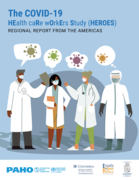
The COVID-19 HEalth caRe wOrkErs Study (HEROES): Regional Report from the Americas is a multicenter prospective cohort study to assess the impact of the COVID-19 pandemic on the mental
...
health of health care workers in 26 countries on four continents and how it is affected by several factors at different interrelated levels: individual, family, occupational, and social. This brief report presents the evidence generated from the baseline survey of 11 participating countries in the Region of the Americas. Using validated scales, the findings show high rates of depressive symptoms, suicidal ideation, and psychological distress in several countries of the Region. The spirit of the project is not only to generate quality scientific evidence on the mental health of health care workers, but also to help develop interventions (both individual and institutional) and policies to address the negative impacts of the COVID-19 pandemic on mental health.
more
This report summarizes the latest scientific knowledge on the links between exposure to air pollution and adverse health effects in children. It is intended to inform and motivate individual and collective action by
...
health care professionals to prevent damage to children’s health from exposure to air pollution.
Air pollution is a major environmental health threat. Exposure to fine particles in both the ambient environment and in the household causes about seven million premature deaths each year. Ambient air pollution alone imposes enormous costs on the global economy, amounting to more than US$ 5 trillion in total welfare losses in 2013.
This public health crisis is receiving more attention, but one critical aspect is often overlooked: how air pollution affects children in uniquely damaging ways. Recent data released by the World Health Organization (WHO) show that air pollution has a vast and terrible impact on child health and survival. Globally, 93% of all children live in environments with air pollution levels above the WHO guidelines (see the full report, Air pollution and child health: prescribing clean air. More than one in every four deaths of children under 5 years of age is directly or indirectly related to environmental risks. Both ambient air pollution and household air pollution contribute to respiratory tract infections that resulted in 543 000 deaths in children under the age of 5 years in 2016.
more

The World Health Organization (WHO) is releasing the second edition of its Global Accelerated Action for the Health of Adolescents (AA-HA!) guidance. The document aims to equip governments to respon
...
d to the health and well-being challenges, opportunities and needs of adolescents.
The guidance provides the latest available data on adolescent health and well-being. It also outlines an updated list of core indicators that data should be collected on. Globally, road injury was the top cause of death for adolescent males in 2019. Among female adolescents, the leading causes of death were diarrhoeal diseases among the younger group (10-14 years) and tuberculosis (TB) in the older group (15-19 years).
Over the last 20 years, mortality rates have declined among adolescents globally, with the largest decline in older (15–19 years) adolescent girls. For non-fatal diseases, the burden has not improved over the past two decades, with the main causes of ill health in this category being: mental health conditions (depressive and anxiety disorders, childhood behavioural disorders), iron deficiency anaemia, skin diseases and migraine.
Adolescent well-being depends on a range of factors, including healthy food, education, life skills and employability, connectedness, feeling valued by society, safe and supportive environments, resilience, and the freedom to make choices. To take an appropriately holistic approach, the guidance outlines how to take crosscutting action to support adolescent health and well-being, with mutually reinforcing interventions across sectors, such as health, education, social protection, and telecommunications. Targeted efforts are also required to engage adolescents, as they trust health systems less than adults do and are especially vulnerable to modern-day trends, like online bullying and gaming.
more
Providing quality, stigma-free services is essential to equitable health care for all and achieving global HIV goals and broader Sustainable Development Goals related to health. Every person has the
...
right to the highest attainable standard of physical and mental health. Countries have a legal obligation to develop and implement legislation and policies that guarantee universal access to quality health services and address the root causes of health disparities, including poverty, stigma and discrimination.
The health sector is uniquely placed to lead in addressing inequity, assuring safe personcentred care for everyone and improving social determinants of health by overcoming taboos and discriminatory or stigmatizing behaviours associated with HIV, viral hepatitis and sexually transmitted infections (STIs). Improving health care quality and reducing stigma work together to enhance health outcomes for people living with HIV. Together, they make health care services more accessible, trustworthy and supportive. This encourages early diagnosis, consistent treatment and improved mental well-being. Thus, people living with HIV are more likely to engage with and benefit from health care services, leading to improved overall health.
more
The purpose of the WHO Manual for the Public Health Management of Chemical Incidents is to provide a comprehensive overview of the principles and roles of public health in the management of chemical
...
incidents and emergencies. While this information is provided for each phase of the emergency cycle, including prevention, planning and preparedness, detection and alert, response and recovery, it is recognized that the management of chemical incidents and emergencies requires a multi-disciplinary and multi-sectoral approach and that the health sector may play an influencing, complementary or a leadership role at various stages of the management process. The target audience includes public health and environmental professionals, as well as any other person involved in the management of chemical incidents.
WHO and all those involved in the development of the publication hope that the publication will have wide application, especially in developing countries and countries with economies in transition, and that in the future the health sector will be better prepared to acknowledge and fulfill its roles and responsibilities in the management of chemical incidents and emergencies, thereby contributing to the prevention and mitigation of their health consequences.
The publication is also available in French: http://apps.who.int/iris/bitstream/handle/10665/246117/9789242598148-fre.pdf?sequence=1 and in Spanish: http://apps.who.int/iris/bitstream/handle/10665/246118/9789243598147-spa.pdf?sequence=1
more

Curricular Modules for Lecturers and Teachers.
The 2nd edition of the Global Public Health Curriculum has been published in the South Eastern European Journal of Public Health, end of 2016 as a spe
...
cial volume . The curriculum targets the postgraduate education and training of public health professionals including their continued professional development (CPD). However, specific competences for the curricular modules remained to be identified in a more systematic approach
more
Every year, nearly 250 million people move across borders temporarily or permanently for a job opportunity, studying, to flee a crisis back home, or for other reasons. Another 750 million move for similar reasons within the borders of their countries. With the understanding that human mobility affec
...
ts public health, and health affects human mobility and migrants, for decades, IOM has been providing critical health services to women, children and men on the move, while standing by governments for technical and operational support as needed. In 2019, in lower-income settings and in complex emergencies, along the world’s most perilous migration routes, in the aftermath of natural disasters or in response to disease outbreaks, IOM’s health teams have provided hundreds of thousands with primary health-care consultations, mental health and psychosocial support, sexual and reproductive health care, pre-migration health services, and much more.
This year, more than ever before, as the world reels from the socioeconomic impact of COVID-19, we have experienced that health is a cross-cutting component of overall human development and well-being.
more
The 10 recommendations in the COP26 Special Report on Climate Change and Health propose a set of priority actions from the global health community to governments and policy makers, calling on them t
...
o act with urgency on the current climate and health crises.
The recommendations were developed in consultation with over 150 organizations and 400 experts and health professionals. They are intended to inform governments and other stakeholders ahead of the 26th Conference of the Parties (COP26) of the United Nations Framework Convention on Climate Change (UNFCCC) and to highlight various opportunities for governments to prioritize health and equity in the international climate movement and sustainable development agenda. Each recommendation comes with a selection of resources and case studies to help inspire and guide policymakers and practitioners in implementing the suggested solutions
more
This open access book not only describes the challenges of climate disruption, but also presents solutions. The challenges described include air pollution, climate change, extreme weather, and related health impacts that range from heat stress, vect
...
or-borne diseases, food and water insecurity and chronic diseases to malnutrition and mental well-being.
more
