
Filter
1301
Text search:
drug
regulation
Featured
85
374
Language
Document type
756
233
158
60
57
11
10
9
3
3
1
Countries
65
53
44
44
36
36
34
31
28
22
21
21
21
20
20
19
18
18
17
17
15
15
14
14
14
14
14
12
11
11
8
8
8
8
7
7
6
6
4
4
4
4
4
4
4
4
4
4
3
3
3
3
3
3
3
2
2
2
2
2
2
2
2
2
2
2
2
2
1
1
1
1
1
1
1
1
1
1
1
1
1
1
1
1
1
1
1
1
1
1
1
1
1
1
1
1
1
1
1
1
1
1
Authors & Publishers
Publication Years
Category
567
80
78
37
23
23
9
Toolboxes
152
126
81
81
70
46
34
32
22
18
17
15
14
11
11
8
7
6
5
3
3
1
Цель этой главы – дать представление об эпидемиологических данных, возрасте начала, течении, подтипах, этиологии, клинических проявлениях, дифференциальной диагн
...
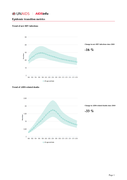
Sources: National Commitment and Policy Instrument, 2019
Chapter · January 2009 DOI: 10.1007/978-0-387-72711-0_25
D.D. Celentano and C. Beyrer (eds.), Public Health Aspects of HIV/AIDS in Low and Middle Income Countries, DOI: 10.1007/978-0-387-72711-0 25, c Springer Science+Business Media, LLC 2008
Unofficial Translation
Approved by the Federal Government on October 20, 2016
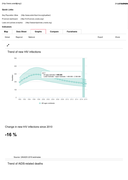
Accessed: 05.10.2019

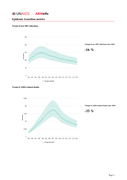
Accessed: 17.11.2019
The primary role of Benin’s Department of Pharmacy and Medicines (DPMED) is to develop and apply the national pharmaceutical policy. The main objective of this policy is to ensure the availability and accessibility of quality medicines for the population. To fulfill its mandate, DPMED aims to stre
...

Nature Reviews Microbiology Vol. 17 (2019)pp.51-62
Antimicrobial susceptibility testing (AST) technologies help to accelerate the
initiation of targeted antimicrobial therapy for patients with infections and could potentially
extend the lifespan of current narrow- spectrum antimicrobials. Althoug
...
Thirty-three years after its discovery, the Human Immunodeficiency Virus (HIV), responsible for the AIDS pandemic, remains a major public health problem despite advanced researches providing better diagnostic and therapeutic tools. The virus targets especially CD4+ T cells, leading to deficiency of
...

In concordance with the global and WHO activities on ARC, the Ministry of Health and Family Welfare (MoHFW) in Bangladesh has come forward and initiative was taken to conduct program for containment of antimicrobial resistance in Bangladesh. Director, Disease Control and Line Director, Communicable
...

The increasing global trend of Antimicrobial resistance (AMR) has gradually emerged as a major public health challenge for the entire world. AMR has spread to almost all countries and regions, including Pakistan owing to the “misuse and overuse” of Antimicrobials, contributing to the increasing
...
Antimicrobial resistance (AMR) is a serious public health concern with economic, social and political implications that are global in scope, and cross all environmental and ethnic boundaries. As a global threat, AMR risks the achievements of modern medicine, and has the po
...
The Ghanaian Cabinet approved the antimicrobial resistance (AMR)Policy and Implementation plan(hereafter referred to as the national action plan or NAP)in December 2017, whilst the country case study was in progress. This has set in motion the implementation phase for Ghana, which is a long awaited
...
The infectious disease burden in India is among the highest in the world. A large amount of antibiot-ics are consumed in fighting infections, some of them saving lives, but every use adding to antibiotic resistance in bacteria. Antibiotic use is increasing steadily (table 1), particularly
...

Antibiotics and other antimicrobial agents are invaluable life savers, particularly in resource-limited countries where infectious diseases are abundant. Both uncomplicated and severe infections are potentially curable as long as the aetiological agents are susceptible to the
...
