
Filter
2788
Text search:
Health
Care
without
Harm
Featured
312
642
Language
2711
66
57
45
45
20
19
13
7
7
6
6
6
5
5
5
5
5
5
5
5
4
4
4
4
4
3
3
3
3
3
3
3
3
3
3
3
3
2
2
2
2
2
2
2
2
2
2
1
1
1
1
1
1
1
1
1
1
1
1
1
1
1
1
Document type
1541
409
405
207
88
65
40
15
7
6
2
2
1
Countries
126
112
66
58
49
46
45
40
38
33
33
31
31
29
26
26
26
21
20
20
19
19
18
18
17
16
16
13
13
12
12
11
11
11
10
10
10
10
9
9
8
8
8
8
8
8
8
7
7
6
6
6
5
5
5
5
5
4
4
4
4
4
4
4
3
3
3
3
3
3
3
3
3
2
2
2
2
2
2
2
2
2
2
2
2
2
2
1
1
1
1
1
1
1
1
1
1
1
1
1
1
1
1
1
1
1
1
1
1
1
1
1
1
1
1
1
1
1
Authors & Publishers
400
179
120
102
96
74
65
60
39
31
28
27
23
20
19
19
19
18
17
16
16
15
15
14
13
13
12
11
10
10
10
10
10
9
9
9
9
8
8
8
8
8
8
8
8
7
7
7
7
7
7
7
7
6
6
6
6
6
6
6
6
6
6
6
6
6
6
6
5
5
5
5
5
5
5
5
5
5
5
5
5
5
5
5
5
5
4
4
4
4
4
4
4
4
4
4
4
4
4
4
4
4
4
4
4
4
4
4
4
4
4
4
3
3
3
3
3
3
3
3
3
3
3
3
3
3
3
3
3
3
3
3
3
3
3
3
3
3
3
3
3
3
3
3
3
3
3
3
3
3
3
3
3
3
3
3
3
3
3
3
3
3
3
3
3
3
3
3
3
3
2
2
2
2
2
2
2
2
2
2
2
2
2
2
2
2
2
2
2
2
2
2
2
2
2
2
2
2
2
2
2
2
2
2
2
2
2
2
2
2
2
2
2
2
2
2
2
2
2
2
2
2
2
2
2
2
2
2
2
2
2
2
2
2
2
2
2
2
2
2
2
2
2
2
2
2
2
2
2
2
2
2
2
2
2
2
2
2
2
2
2
2
2
2
2
2
2
2
2
2
2
2
2
2
2
2
2
2
2
2
2
2
2
2
2
2
2
2
2
2
2
2
2
2
2
2
2
2
2
2
2
2
2
2
2
2
2
2
2
2
2
2
2
2
2
2
2
2
2
2
2
2
2
2
2
2
2
2
2
2
2
2
2
1
1
1
1
1
1
1
1
1
1
1
1
1
1
1
1
1
1
1
1
1
1
1
1
1
1
1
1
1
1
1
1
1
1
1
1
1
1
1
1
1
1
1
1
1
1
1
1
1
1
1
1
1
1
1
1
1
1
1
1
1
1
1
1
1
1
1
1
1
1
1
1
1
1
1
1
1
1
1
1
1
1
1
1
1
1
1
1
1
1
1
1
1
1
1
1
1
1
1
1
1
1
1
1
1
1
1
1
1
1
1
1
1
1
1
1
1
1
1
1
1
1
1
1
1
1
1
1
1
1
1
1
1
1
1
1
1
1
1
1
1
1
1
1
1
1
1
1
1
1
1
1
1
1
1
1
1
1
1
1
1
1
1
1
1
1
1
1
1
1
1
1
1
1
1
1
1
1
1
1
1
1
1
1
1
1
1
1
1
1
1
1
1
1
1
1
1
1
1
1
1
1
1
1
1
1
1
1
1
1
1
1
1
1
1
1
1
1
1
1
1
1
1
1
1
1
1
1
1
1
1
1
1
1
1
1
1
1
1
1
1
1
1
1
1
1
1
1
1
1
1
1
1
1
1
1
1
1
1
1
1
1
1
1
1
1
1
1
1
1
1
1
1
1
1
1
1
1
1
1
1
1
1
1
1
1
1
1
1
1
1
1
1
1
1
1
1
1
1
1
1
1
1
1
1
1
1
1
1
1
1
1
1
1
1
1
1
1
1
1
1
1
1
1
1
1
1
1
1
1
1
1
1
1
1
1
1
1
1
1
1
1
1
1
1
1
1
1
1
1
1
1
1
1
1
1
1
1
1
1
1
1
1
1
1
1
1
1
1
1
1
1
1
1
1
1
1
1
1
1
1
1
1
1
1
1
1
1
1
1
1
1
1
1
1
1
1
1
1
1
1
1
1
1
1
1
1
1
1
1
1
1
1
1
1
1
1
1
1
1
1
1
1
1
1
1
1
1
1
1
1
1
1
1
1
1
1
1
1
1
1
1
1
1
1
1
1
1
1
1
1
1
1
1
1
1
1
1
1
1
1
1
1
1
1
1
1
1
1
1
1
1
1
1
1
1
1
1
1
1
1
1
1
1
1
1
1
1
1
1
1
1
1
1
1
1
1
1
1
1
1
1
1
1
1
1
1
1
1
1
1
1
1
1
1
1
1
1
1
1
1
1
1
1
1
1
1
1
1
1
1
1
1
1
1
1
1
1
1
1
1
1
1
1
1
1
1
1
1
1
1
1
1
1
1
1
1
1
1
1
1
1
1
1
1
1
1
1
1
1
1
1
1
1
1
1
1
1
1
1
1
1
1
1
1
1
1
1
1
1
1
1
1
1
1
1
1
1
1
1
1
1
1
1
1
1
1
1
1
1
1
1
1
1
1
1
1
1
1
1
1
1
1
1
1
1
1
1
1
1
1
1
1
1
1
1
1
1
1
1
1
1
1
1
1
1
1
1
1
1
1
1
1
1
1
1
1
1
1
1
1
1
1
1
1
1
1
1
1
1
1
1
1
1
1
1
1
1
1
1
1
1
1
1
1
1
1
1
1
1
1
1
1
1
1
1
1
1
1
1
1
1
1
1
1
1
1
1
1
1
1
1
1
1
1
1
1
1
1
1
1
1
1
1
1
1
1
1
1
1
1
1
1
1
1
1
1
1
1
1
1
1
1
1
1
1
1
1
1
1
1
1
1
1
1
1
1
1
1
1
1
1
1
1
1
1
1
1
1
1
1
1
1
1
1
1
1
1
1
1
1
1
1
1
1
1
1
1
1
1
1
1
1
1
1
1
1
1
1
1
1
1
1
1
1
1
1
1
1
1
1
1
1
1
1
1
1
1
1
1
1
1
1
1
1
1
1
1
1
1
1
1
1
1
1
1
1
1
1
1
1
1
1
1
1
1
1
1
1
1
1
1
1
1
1
1
1
1
1
1
1
1
1
1
1
1
1
1
1
1
1
1
1
1
1
1
1
1
1
1
1
1
1
1
1
1
1
1
1
1
1
1
1
1
1
1
1
1
1
1
1
1
1
1
1
1
1
1
1
1
1
1
1
1
1
1
1
1
1
1
1
1
1
1
1
1
1
1
1
1
1
1
1
1
1
1
1
1
1
1
1
1
1
1
1
1
1
1
1
1
1
1
1
1
1
1
1
1
1
1
1
1
1
1
1
1
1
1
1
1
1
1
1
1
1
1
1
1
1
1
1
1
1
1
1
1
1
1
1
1
1
1
1
1
1
1
1
1
1
1
1
1
1
1
1
1
1
1
1
1
1
1
1
1
1
1
1
1
1
1
1
1
1
1
1
1
1
1
1
1
1
1
1
1
1
1
1
1
1
1
1
1
1
1
1
1
1
1
1
1
1
1
1
1
1
1
1
1
1
1
1
1
1
1
1
1
1
1
1
1
1
1
1
1
1
1
1
1
1
1
1
1
1
1
1
1
1
1
1
1
1
1
1
1
1
1
1
1
1
1
1
1
1
1
1
1
1
1
1
1
1
1
1
1
1
1
1
1
1
1
1
1
1
1
1
1
1
1
1
1
1
1
1
1
1
1
1
1
1
1
1
1
1
1
1
1
1
1
1
1
1
1
1
1
1
1
1
1
1
1
1
1
1
1
1
1
1
1
1
1
1
1
1
1
1
1
1
1
1
1
1
1
1
1
1
1
1
1
1
1
1
1
1
1
1
1
1
1
1
1
1
1
1
1
1
1
1
1
1
1
1
1
1
1
1
1
1
1
1
1
1
1
1
1
1
1
1
1
1
1
1
1
1
1
1
1
1
1
1
1
1
1
1
1
1
1
1
1
1
1
1
1
1
1
1
1
1
1
1
1
1
1
1
1
1
1
1
1
1
1
1
1
1
1
1
1
1
1
1
1
1
1
1
1
1
1
1
1
1
1
1
1
1
1
1
1
1
1
1
1
1
1
1
1
1
1
1
1
1
1
1
1
1
1
1
1
1
1
1
1
1
1
1
1
1
1
1
1
1
1
1
1
1
1
1
1
1
1
1
1
1
1
1
1
1
1
1
1
1
1
1
1
1
1
1
1
1
1
1
1
1
1
1
1
1
1
1
1
1
1
1
1
1
1
1
1
1
1
1
1
1
1
1
1
1
1
1
1
1
1
1
1
1
1
1
1
1
1
1
1
1
1
1
1
1
1
1
1
1
1
1
1
1
1
1
1
1
1
1
1
1
1
1
1
1
1
1
1
1
1
1
1
1
1
1
1
1
1
1
1
1
1
1
1
1
1
1
1
1
1
1
1
1
1
1
1
1
1
1
1
1
1
1
1
1
1
1
1
1
1
1
1
1
1
1
1
1
1
1
1
1
1
1
1
1
1
1
1
1
1
1
1
1
1
1
1
1
1
1
1
1
1
1
1
1
1
1
1
1
1
1
1
1
1
1
1
1
1
1
1
1
1
1
1
1
1
1
1
1
1
1
1
1
1
1
1
1
1
1
1
1
1
1
1
1
1
1
1
1
1
1
1
1
1
1
1
1
1
1
1
1
1
1
1
1
1
1
1
1
1
1
1
1
1
1
1
1
1
1
1
1
1
1
1
1
1
1
1
1
1
1
1
1
1
1
1
1
1
1
1
1
1
1
1
1
1
1
1
1
1
1
1
1
1
1
1
1
1
1
1
1
1
1
1
1
1
1
1
1
1
1
1
1
1
1
1
1
1
1
1
1
1
1
1
1
1
1
1
1
1
1
1
1
1
1
1
1
1
1
1
1
1
1
1
1
1
1
1
1
1
1
1
1
1
1
1
1
1
1
1
1
1
1
1
1
1
1
1
1
1
1
1
1
1
1
1
1
1
1
1
1
1
1
1
1
1
1
1
1
1
1
1
1
1
1
1
1
1
1
1
1
1
1
1
1
1
1
1
1
1
1
1
1
1
1
1
1
1
1
1
1
1
1
1
1
1
1
1
1
1
1
1
1
1
1
1
1
1
1
1
1
1
1
1
1
1
1
1
1
1
1
1
1
1
1
1
1
1
1
1
1
1
1
1
1
1
1
1
1
1
1
1
1
1
1
1
1
1
1
1
1
1
1
1
1
1
1
1
1
1
1
1
1
1
1
1
1
1
1
1
1
1
1
1
1
1
1
1
1
1
1
1
1
1
1
1
1
1
1
1
1
1
1
1
1
1
1
1
1
1
1
1
1
1
1
1
1
1
1
1
1
1
1
1
1
1
1
1
1
1
1
1
1
1
1
1
1
1
1
1
1
1
1
1
1
1
1
1
1
1
1
1
1
1
1
1
1
1
1
1
1
1
1
1
1
1
1
1
1
1
1
1
1
1
1
1
1
1
1
1
1
1
1
1
1
1
1
1
1
1
1
1
1
1
1
1
1
1
1
1
1
1
1
1
1
1
1
1
1
1
1
1
1
1
1
1
1
1
1
1
1
1
1
1
1
1
1
1
1
1
1
1
1
1
1
1
1
1
1
1
1
1
1
1
1
1
1
1
1
1
1
1
1
1
1
1
1
1
1
1
1
1
1
1
1
1
1
1
1
1
1
1
1
1
1
1
1
1
1
1
1
1
1
1
1
1
1
1
1
1
1
1
1
1
1
1
1
1
1
1
1
1
1
1
1
1
1
1
1
1
1
1
1
1
1
1
1
1
1
1
1
1
1
1
1
1
1
1
Publication Years
755
1750
270
13
Category
691
224
221
144
140
84
23
2
Toolboxes
455
335
214
124
111
100
100
98
88
72
58
54
49
44
36
34
28
19
17
15
11
10
9
1
1
This report summarizes the latest scientific knowledge on the links between exposure to air pollution and adverse health effects in children. It is intended to inform and motivate individual and collective action by
...
health care professionals to prevent damage to children’s health from exposure to air pollution. Air pollution is a major environmental health threat. Exposure to fine particles in both the ambient environment and in the household causes about seven million premature deaths each year. Ambient air pollution (AAP) alone imposes enormous costs on the global economy, amounting to more than US$ 5 trillion in total welfare losses in 2013.
more
This training and guidance module addresses the use of coercive and violent practices in mental health and related services with a particular focus on seclusion and restraint. It aims to promote a greater understanding of why these practices are use
...
d and build practical skills to help end these practices. While the module itself focuses on ending these practices in the health care setting, much of the content can also be applied in other settings where seclusion and restraint occur, for example in the home and in the wider community.
more
This paper reviews the effects of vertical responses to COVID-19 on health systems, services, and people’s access to and use of them in LMICs, where historic and ongoing under-investments heighten vulnerability to a multiplicity of
...
health threats. We use the term ‘vertical response’ to describe decisions, measures and actions taken solely with the purpose of preventing and containing COVID-19, often without adequate consideration of how this affects the wider health system and pre-existing resource constraints.
more
The ASEAN Mental Health Systems Report
catalogues the situation of mental health in ASEAN
Member States. This report provides comprehensive
information on the progress made so far by AMS in
inte
...
grating mental health into national health systems,
increasing access to care as well as challenges faced.
It also offers recommendations on how to improve the mental health system in
respective ASEAN Member States.
more
This updated Comprehensive Mental Health Action Plan 2013-2030 builds upon its predecessor and sets out clear actions for Member States, the WHO Secretariat and international, regional and national partners to promote mental
...
health and well-being for all, to prevent mental health conditions for those at-risk and to achieve universal coverage for mental health services. While the updated action plan includes new and updated indicators and implementation options, the original four major objectives remain unchanged: more effective leadership and governance for mental health; the provision of comprehensive, integrated mental health and social care services in community-based settings; implementation of strategies for promotion and prevention; and strengthened information systems, evidence and research.
In English, French, Spanish, Arabic and Russian available
more
The Ministry of Health together with its partners realizes that efficient and effective
delivery of clinical care is highly dependent on the availability of appropriately
upgraded environment, whi
...
ch is in well facilitated space. Such facilities and utilities
should always be properly designed, built, and maintained, so as to ensure efficient
treatment in clean and safe from infection.
The main challenges in achieving this include the lack of, appropriate holistic and
futuristic management plans, human resource for facility/utility management and
maintenance, adequate budget funds for renovation/maintenance activities at all
levels which means daily and long-term of facility maintenance plans and executions.
It is hoped that the guidelines will help to standardise
design of medical facilities and utilities country wide and result in efficient and
effective establishment of these life-saving function
more
A Review of Community Health Worker (CHW) knowledge, attitudes and practices relating to the sexual health of MSM, including existing training materials and manuals in Europe & neighbouring countries
C. Folch; P. Fernández-Dávila; J. Palacio-Vieira; et al.
European Commission; Centre d'Estudis Epidemiològics sobre les Infeccions de Transmissió Sexual i Sida de Catalunya (CEEISCAT); European AIDS Treatment Group
(2020)
C2
Accessed: 07.03.2020
A Review of Community Health Worker (CHW) knowledge, attitudes and practices relating to the sexual health of MSM, including existing training materials and manuals in Europ
...
e and neighbouring countries (D5.1)
Contract 2015 71 01 A behavioural survey for HIV/AIDS and associated infections and a survey and tailored training for community based health workers to facilitate access and improve the quality of prevention, diagnosis of HIV/AIDS, STI and viral hepatitis and health care services for men who have sex with men (MSM).
Pubic Health
more
As a public good, antimicrobial medicines require rational use if their effectiveness is to be preserved. However, up to 50% of antibiotic use is inappropriate, adding considerable costs to patient care, and increasing morbidity and mortality. In ad
...
dition, there is compelling evidence that antimicrobial resistance is driven by the volume of antimicrobial agents used. High rates of antimicrobial resistance to common treatments are currently reported all over the world, both in health care settings and in the community. For over two decades, the Region of the Americas has been a pioneer in confronting antimicrobial resistance from a public health perspective. However, those efforts need to be stepped up if we are to have an impact on antimicrobial resistance and want to quantify said impact.
more
Internally displaced persons (IDPs), refugees, migrants and returnees constitute a sizeable population in the WHO Eastern Mediterranean Region. There were 12 million refugees (half are Palestinians) and 13 million IDPs in the Region as of 2018. These populations are often vul
...
nerable to poor health due to the conditions they live in and limited access to needed quality health care. In addition, those who can access care, are often faced with financial hardship. There are also 46 million professionals and low-income labour migrants in the Region (of which 22 million are from the Region), with differential access to health services and varied health coverage schemes
more
Government of Nepal has an obligation to ensure availability of affordable and high quality basic health care services to its population
This joint publication by UNAIDS and WHO emphasizes the importance of integrating HIV prevention, testing, treatment and care and mental health services for people living with HIV. It provides a com
...
pilation of tools, best practices, recommendations and guidelines that facilitate the integration of interventions and services to address the interlinked issues of mental health and HIV. This publication is intended for global, regional and national policy-makers; programme implementers including at subnational levels; organizations working in and providers of HIV and mental health services; civil society; and community-based and community-led organizations and advocates.
more
Strengthening mental health responses to COVID-19 in the Americas: A health policy analysis and recommendations
A. Tausch; Oliveira e Souza, R.; Martinez Viciana, C.; et al.
Pan American Health Organization
(2021)
CC
The COVID-19 pandemic is having a major impact on the mental health of populations in the Americas. Studies
show high rates of depression and anxiety, among other psychological symptoms, particularly among women, young
people, those with pre-exist
...
ing mental health conditions, health workers, and persons living in vulnerable condi-
tions. Mental health systems and services have also been severely disrupted. A lack of financial and human resource
investments in mental health services, limited implementation of the decentralized community-based care approach
and policies to address the mental health gap prior to the pandemic, have all contributed to the current crisis. Coun-
tries must urgently strengthen their mental health responses to COVID-19 by taking actions to scale up mental
health and psychosocial support services for all, reach marginalized and at-risk populations, and build back better
mental health systems and services for the future.
more
This thematic brief accompanies the Working for Health 2022–2030 Action Plan, serving as a rationale to the related actions of the Working for Health progression model (see Annex). The brief aims
...
to inform Member States, non-state actors and other users of the Action Plan to guide action on investments on strengthening protection and performance of the health and care workforce, including the relevant policy landscape, key challenges and future directions.
In doing so, it provides an expanded exploration of the themes beyond what is provided in the Action Plan itself and reflects the topical issues and considerations that shaped its design, including those issues identified in the World Health Assembly Resolution WHA74.14 to protect, safeguard and invest in the health and care workforce (1). The importance of these themes was again emphasized at the Seventy-fifth World Health Assembly, when Resolution WHA75.17: Human resources for health was co-sponsored by over 100 Member States, calling for the adoption and implementation of the Working for Health 2022–2030 Action Plan and utilization of the related Global Health and Care Worker Compact
more
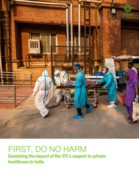
This report examines the support to private healthcare provision in India by the World Bank’s private sector arm, the International Finance Corporation (IFC). Despite supporting private healthcare in the country since 1997, no healthcare results for lending and investments have been disclosed sinc
...
e the start of these operations over twenty-five years ago. The IFC has overwhelmingly invested in high-end urban hospitals which are out of reach for the majority of Indians. Several have consistently failed to provide free healthcare to poor patients despite this being a condition under which free or subsidized public land was allotted to these hospitals. Supporting private healthcare in a context where 37% of Indians experience catastrophic health expenditures in private hospitals appears to run counter to the World Bank Group’s focus on poverty reduction. These investments do not contribute to the building of stronger healthcare infrastructure or respond to unmet healthcare needs. Only 14% of IFC-financed hospitals are located in the 10 states ranked lowest in terms of the overall performance of the health system. Furthermore, we found many instances where regulators upheld complaints pertaining to violations of patients’ rights by these hospitals including overcharging, denial of healthcare, price rigging, financial conflict of interest and medical negligence.
more
This document presents the World Health Organization Operational framework for building climate resilient and low carbon health systems*. ***The framework's goal is to increase the climate resilienc
...
e of health systems to protect and improve the health of communities in an unstable and changing climate, while optimizing the use of resources and implementing strategies to reduce GHG emissions. It aims to contribute to the design of transformative health systems that can provide safe and quality care in a changing climate.
Implementation of the framework's ten components would help health organizations, authorities, and programmes to be better able to anticipate, prevent, prepare for, and manage climate-related health risks and therefore decrease the burden of associated climate-sensitive health outcomes. Implementing low carbon health practices would contribute to climate change mitigation while also improving health outcomes. Achieving these aims is an important contribution to universal health coverage (UHC), global health security, and specific targets within the Sustainable Development Goals (SDGs). The document is a useful resource for decision-makers in health systems, including public health agencies, and other specialized institutions, and for decision-makers in health-determining sectors.
more
This integrated operational framework provides an overview of the connections between mental health, neurological and substance use (MNS) conditions, and their links to health, well-being and the br
...
oader public health and sustainable development agenda. The need for integrated approaches is increasingly recognized as critical to address the complex interactions between mental health, brain health, substance use, and physical health, particularly in light of global threats such as the COVID-19 pandemic. The framework also provides a series of actions for governments and health service planners and advisors to achieve integration across four domains: leadership and governance; care services; promotion and prevention; and health information systems, evidence generation and research.
more
At least half of the world’s population does not have full coverage of essential health services. Health expenses push more than 100 million people into extreme poverty each and every year, forcin
...
g them into terrible choices that no one should ever have to make: Buy medicine or food? Education or health care? These stark statistics make the case for universal health coverage compelling.
more
The objectives of the scheme is to promote cleanliness, hygiene and infection control practices in public health care facilities, to incentivize and recognize such public healthcare facilities that
...
show exemplary performance in adhering to standard protocols of cleanliness and infection control, to inculcate a culture of ongoing assessment and peer review of performance related to hygiene, cleanliness and sanitation, to create and share sustainable practices related to improved cleanliness in public health facilities linked to positive health outcomes.
more
Blueprint for a Public Health and Safety Approach to Drug Policy
Tracy Pugh, Julie Netherland, Ruth Finkelstein
The New York Academy of Medicine, Drug Policy Alliance
(2013)
C2
"Some of the problems with our current drug policies stem from the fact that these policies have been largely bifurcated between two different and often contradictory approaches. One treats drug use as a crime that cannot be tolerated and should be punished; the other views addiction as a chronic re
...
lapsing health or behavioral condition requiring ongoing treatment and support. Neither of these views is all encompassing—it should be recognized that there are patterns of drug use that do not result in significant harm or health problems and therefore require no intervention. The public health approach presented here takes the view that our focus should be on the harm caused by drug use and the harm caused by our policy responses to it. We have focused specifically on illicit drugs, not because they are by themselves more harmful (in fact, tobacco causes more morbidity and mortality than any illicit drug), but because it has become increasingly clear that our current policies to manage illicit drugs are failing."
more
The Asia-Pacific Community Mental Health Development (APCMHD) project has been established in 2005 to explore diverse leading models or approaches to community mental health service delivery in the
...
Asia-Pacific region. The objective is to illustrate and promote best practice in mental health care in the community through use of information exchange, current evidence and practical experience in the region.
more
