
Filter
466
Text search:
G.
Walker
Featured
Recommendations
33
New Publications
65
Language
Document type
No document type
225
Studies & Reports
126
Guidelines
64
Manuals
24
Fact sheets
11
Strategic & Response Plan
9
Training Material
3
Situation Updates
2
Infographics
2
Countries / Regions
Global
20
India
12
South Africa
10
Kenya
9
Africa
9
Russia
7
Ethiopia
6
Uganda
6
Latin America and the Carribbean
6
Western and Central Europe
6
Burkina Faso
5
Sierra Leone
5
Brazil
5
Chile
5
Middle East and North Africa
5
Nepal
4
Germany
4
Eastern Europe
4
Nigeria
3
Senegal
3
Zimbabwe
3
Cambodia
3
China
3
Rwanda
3
Bangladesh
3
Mali
2
Cameroon
2
Haiti
2
Syria
2
Indonesia
2
Malawi
2
Ukraine
2
Colombia
2
Yemen
2
East and Southern Africa
2
Paraguay
2
Asia
2
Jamaica
2
Spain
2
Liberia
1
Congo, Democratic Republic of
1
USA
1
Ghana
1
Philippines
1
Pakistan
1
Afghanistan
1
Zambia
1
Tanzania
1
Mozambique
1
Sudan
1
Benin
1
Argentina
1
Peru
1
El Salvador
1
Lesotho
1
Mexico
1
Sri Lanka
1
West and Central Africa
1
South–East Asia Region
1
Albania
1
Lithuania
1
Iran
1
North America
1
Authors & Publishers
Publication Years
Category
Countries
107
Clinical Guidelines
44
Public Health
38
Women & Child Health
32
Key Resources
8
Pharmacy & Technologies
4
Capacity Building
1
General Guidelines
1
Toolboxes
Mental Health
67
HIV
47
COVID-19
43
Planetary Health
38
Caregiver
21
TB
20
Disability
19
NTDs
14
NCDs
11
Ebola
10
Pharmacy
10
Global Health Education
9
Health Financing Toolbox
9
Natural Hazards
7
AMR
7
Conflict
4
Refugee
3
Social Ethics
3
Rapid Response
2
Cholera
1
Polio
1
Zika
1
Specific Hazards
1

Whole-genome sequencing (WGS) provides a vast amount of information and the highest possible resolution for pathogen subtyping. The application of WGS for global surveillance can provide information on the early emergence and spread of AMR and further inform timely policy development on AMR control.
...
Malaria Journal (2018) 17:460 https://doi.org/10.1186/s12936-018-2606-9
In malaria endemic countries, asymptomatic cases constitute an important reservoir of infections sustaining transmission. Estimating the burden of the asymptomatic population and identifying areas with elevated risk is import
...
Bull World Health Organ 2020;98:773–780
Universal health coverage (UHC) depends on a strong primary health-care
system. To be successful, primary health care must be expanded at community and household levels as much of the world’s population still lacks access to health facilities for basic
...
Mental health is critical to personal well-being, interpersonal relationships, and successful contributions to society. Mental health conditions consequently impose a high burden not only on individuals, families and society, but also on economies. In Jamaica, mental health conditions are highly pre
...
El propósito de este documento es presentar orientaciones para mejorar la aplicación de medidas de salud pública no farmacológicas durante la respuesta a la COVID-19, así como la adherencia a dichas medidas por parte de los grupos de población en situación de vulnerabilidad. Para ello, es nec
...

The purpose of this guide is to offer recommendations for improving the implementation of non‑pharmacological public health measures during the COVID-19 response and compliance with these measures by population groups in situations of vulnerability. This requires determining the main barriers to i
...
В настоящем документе представлен первоначальный обзор поступающей информации
(по состоянию на 2 июля 2020 г.) о взаимосвязи между COVID-19, НИЗ и факторами
риска НИЗ. Ре
...

An Evidence-Based Treatment Guide for Clinicians
Rev Méd Hondur, Vol 88, Núm 2, 202
The growing understanding of how sequence information can contribute to improved public health is driving global investments in sequencing facilities and programmes. The falling cost and complexity of generating GSD provides opportunities for expanding sequencing capacity; however, challenges to wid
...

This paper reviews the effects of vertical responses to COVID-19 on health systems, services, and people’s access to and use of them in LMICs, where historic and ongoing under-investments heighten vulnerability to a multiplicity of health threats. We use the term ‘vertical response’ to describ
...
The growing understanding of how sequence information can contribute to improved public health is driving global investments in sequencing facilities and programmes. The falling cost and complexity of generating GSD provides opportunities for expanding sequencing capacity; however, challenges to wid
...
his document, a first of its kind, clearly sets out the standards for rehabilitation and provides guidance on building or strengthening the capacity of EMTs in this area.The importance of early rehabilitation for functional outcomes is well documented. Rehabilitation needs can pe
...
Medizinisches Notfall Teams: Technische Mindestanforderungen und Empfehlungen für die Rehabilitation
Rehabilitation wird zunehmend als notwendiger Aspekt der medizinischen Hilfe und patientenorientierten Versorgung anerkannt, wie ihre Aufnahme in die Klassifikation und Mindeststandards für ausländischen medizinischen Teams bei plötzlich auftreten
...
Vaccines 2021, 9(2), 160; https://doi.org/10.3390/vaccines9020160
Au cours de la dernière décennie, les données de séquençage génétique des agents pathogènes ont gagné en importance et contribuent désormais de façon déterminante à la détection et à la maîtrise des flambées de maladies infectieuses, en facilitant la mise au point de
...
En el último decenio, los datos de las secuencias genéticas de los patógenos han adquirido un papel crucial en la detección y el manejo de los brotes de enfermedades infecciosas, contribuyendo al desarrollo de pruebas diagnósticas, medicamentos y vacunas y orientando la respuesta sanitaria.
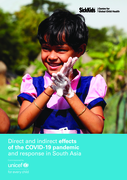
It estimates that there have been 228,000 additional deaths of children under five in these six countries [Afghanistan, Nepal, Bangladesh, India, Pakistan and Sri Lanka] due to crucial services, ranging from nutrition benefits to immunisation, being halted.
It says the number of children being tr
...
A wide range of potential enablers and barriers were identified for influencing progress for the scale-up of severe wasting services within national health systems. Findings were categorised according to the six pillars of WHO’s health system strengthening framework.
