Filter
3850
Text search:
water
&
sanitation
Featured
377
1297
Language
3636
114
89
65
49
44
23
11
10
8
8
6
6
6
6
6
6
5
5
5
5
4
3
3
3
3
3
3
3
3
3
2
2
2
2
2
2
2
2
1
1
1
1
1
1
1
1
1
Document type
2186
623
374
202
181
90
74
56
26
14
14
5
3
Countries
167
146
145
134
110
100
98
90
90
82
72
69
65
61
59
58
56
55
54
52
49
48
45
43
39
38
37
36
30
30
30
29
26
25
24
23
22
21
21
19
18
18
18
17
16
16
15
14
13
13
13
13
12
12
11
11
11
10
10
10
9
8
8
8
8
8
7
7
7
7
6
6
6
6
6
5
5
5
5
5
4
4
4
4
4
4
4
3
3
3
3
3
3
3
3
3
3
3
3
3
2
2
2
2
2
2
2
2
2
2
2
2
1
1
1
1
1
1
1
1
1
1
1
1
1
1
1
1
1
1
1
1
1
1
1
1
Authors & Publishers
424
147
139
104
101
95
87
61
49
42
32
30
25
25
24
24
23
22
22
21
21
20
20
19
18
18
17
17
15
15
14
14
13
13
12
12
12
12
11
11
11
11
10
10
10
10
10
10
10
10
10
9
9
9
9
9
9
9
8
8
8
8
8
8
8
8
8
8
8
8
8
8
7
7
7
7
7
7
7
7
7
7
7
7
7
7
7
7
7
6
6
6
6
6
6
6
6
6
6
6
6
6
6
6
6
5
5
5
5
5
5
5
5
5
5
5
5
5
5
5
5
5
5
5
5
5
5
5
5
5
4
4
4
4
4
4
4
4
4
4
4
4
4
4
4
4
4
4
4
4
4
4
4
4
4
4
4
4
4
4
4
4
4
4
4
4
4
4
4
4
4
4
4
4
4
4
4
4
3
3
3
3
3
3
3
3
3
3
3
3
3
3
3
3
3
3
3
3
3
3
3
3
3
3
3
3
3
3
3
3
3
3
3
3
3
3
3
3
3
3
3
3
3
3
3
3
3
3
3
3
3
3
3
3
3
3
3
3
3
3
3
3
3
3
3
3
3
3
3
3
3
3
3
3
3
3
3
3
3
3
2
2
2
2
2
2
2
2
2
2
2
2
2
2
2
2
2
2
2
2
2
2
2
2
2
2
2
2
2
2
2
2
2
2
2
2
2
2
2
2
2
2
2
2
2
2
2
2
2
2
2
2
2
2
2
2
2
2
2
2
2
2
2
2
2
2
2
2
2
2
2
2
2
2
2
2
2
2
2
2
2
2
2
2
2
2
2
2
2
2
2
2
2
2
2
2
2
2
2
2
2
2
2
2
2
2
2
2
2
2
2
2
2
2
2
2
2
2
2
2
2
2
2
2
2
2
2
2
2
2
2
2
2
2
2
2
2
2
2
2
2
2
2
2
2
2
2
2
2
2
2
2
2
2
2
2
2
2
2
2
2
2
2
2
2
2
2
2
2
2
2
2
2
2
2
2
2
2
2
2
2
2
2
2
2
2
2
2
2
2
2
2
2
2
2
2
2
2
2
2
2
2
2
2
2
2
2
1
1
1
1
1
1
1
1
1
1
1
1
1
1
1
1
1
1
1
1
1
1
1
1
1
1
1
1
1
1
1
1
1
1
1
1
1
1
1
1
1
1
1
1
1
1
1
1
1
1
1
1
1
1
1
1
1
1
1
1
1
1
1
1
1
1
1
1
1
1
1
1
1
1
1
1
1
1
1
1
1
1
1
1
1
1
1
1
1
1
1
1
1
1
1
1
1
1
1
1
1
1
1
1
1
1
1
1
1
1
1
1
1
1
1
1
1
1
1
1
1
1
1
1
1
1
1
1
1
1
1
1
1
1
1
1
1
1
1
1
1
1
1
1
1
1
1
1
1
1
1
1
1
1
1
1
1
1
1
1
1
1
1
1
1
1
1
1
1
1
1
1
1
1
1
1
1
1
1
1
1
1
1
1
1
1
1
1
1
1
1
1
1
1
1
1
1
1
1
1
1
1
1
1
1
1
1
1
1
1
1
1
1
1
1
1
1
1
1
1
1
1
1
1
1
1
1
1
1
1
1
1
1
1
1
1
1
1
1
1
1
1
1
1
1
1
1
1
1
1
1
1
1
1
1
1
1
1
1
1
1
1
1
1
1
1
1
1
1
1
1
1
1
1
1
1
1
1
1
1
1
1
1
1
1
1
1
1
1
1
1
1
1
1
1
1
1
1
1
1
1
1
1
1
1
1
1
1
1
1
1
1
1
1
1
1
1
1
1
1
1
1
1
1
1
1
1
1
1
1
1
1
1
1
1
1
1
1
1
1
1
1
1
1
1
1
1
1
1
1
1
1
1
1
1
1
1
1
1
1
1
1
1
1
1
1
1
1
1
1
1
1
1
1
1
1
1
1
1
1
1
1
1
1
1
1
1
1
1
1
1
1
1
1
1
1
1
1
1
1
1
1
1
1
1
1
1
1
1
1
1
1
1
1
1
1
1
1
1
1
1
1
1
1
1
1
1
1
1
1
1
1
1
1
1
1
1
1
1
1
1
1
1
1
1
1
1
1
1
1
1
1
1
1
1
1
1
1
1
1
1
1
1
1
1
1
1
1
1
1
1
1
1
1
1
1
1
1
1
1
1
1
1
1
1
1
1
1
1
1
1
1
1
1
1
1
1
1
1
1
1
1
1
1
1
1
1
1
1
1
1
1
1
1
1
1
1
1
1
1
1
1
1
1
1
1
1
1
1
1
1
1
1
1
1
1
1
1
1
1
1
1
1
1
1
1
1
1
1
1
1
1
1
1
1
1
1
1
1
1
1
1
1
1
1
1
1
1
1
1
1
1
1
1
1
1
1
1
1
1
1
1
1
1
1
1
1
1
1
1
1
1
1
1
1
1
1
1
1
1
1
1
1
1
1
1
1
1
1
1
1
1
1
1
1
1
1
1
1
1
1
1
1
1
1
1
1
1
1
1
1
1
1
1
1
1
1
1
1
1
1
1
1
1
1
1
1
1
1
1
1
1
1
1
1
1
1
1
1
1
1
1
1
1
1
1
1
1
1
1
1
1
1
1
1
1
1
1
1
1
1
1
1
1
1
1
1
1
1
1
1
1
1
1
1
1
1
1
1
1
1
1
1
1
1
1
1
1
1
1
1
1
1
1
1
1
1
1
1
1
1
1
1
1
1
1
1
1
1
1
1
1
1
1
1
1
1
1
1
1
1
1
1
1
1
1
1
1
1
1
1
1
1
1
1
1
1
1
1
1
1
1
1
1
1
1
1
1
1
1
1
1
1
1
1
1
1
1
1
1
1
1
1
1
1
1
1
1
1
1
1
1
1
1
1
1
1
1
1
1
1
1
1
1
1
1
1
1
1
1
1
1
1
1
1
1
1
1
1
1
1
1
1
1
1
1
1
1
1
1
1
1
1
1
1
1
1
1
1
1
1
1
1
1
1
1
1
1
1
1
1
1
1
1
1
1
1
1
1
1
1
1
1
1
1
1
1
1
1
1
1
1
1
1
1
1
1
1
1
1
1
1
1
1
1
1
1
1
1
1
1
1
1
1
1
1
1
1
1
1
1
1
1
1
1
1
1
1
1
1
1
1
1
1
1
1
1
1
1
1
1
1
1
1
1
1
1
1
1
1
1
1
1
1
1
1
1
1
1
1
1
1
1
1
1
1
1
1
1
1
1
1
1
1
1
1
1
1
1
1
1
1
1
1
1
1
1
1
1
1
1
1
1
1
1
1
1
1
1
1
1
1
1
1
1
1
1
1
1
1
1
1
1
1
1
1
1
1
1
1
1
1
1
1
1
1
1
1
1
1
1
1
1
1
1
1
1
1
1
1
1
1
1
1
1
1
1
1
1
1
1
1
1
1
1
1
1
1
1
1
1
1
1
1
1
1
1
1
1
1
1
1
1
1
1
1
1
1
1
1
1
1
1
1
1
1
1
1
1
1
1
1
1
1
1
1
1
1
1
1
1
1
1
1
1
1
1
1
1
1
1
1
1
1
1
1
1
1
1
1
1
1
1
1
1
1
1
1
1
1
1
1
1
1
1
1
1
1
1
1
1
1
1
1
1
1
1
1
1
1
1
1
1
1
1
1
1
1
1
1
1
1
1
1
1
1
1
1
1
1
1
1
1
1
1
1
1
1
1
1
1
1
1
1
1
1
1
1
1
1
1
1
1
1
1
1
1
1
1
1
1
1
1
1
1
1
1
1
1
1
1
1
1
1
1
1
1
1
1
1
1
1
1
1
1
1
1
1
1
1
1
1
1
1
1
1
1
1
1
1
1
1
1
1
1
1
1
1
1
1
1
1
1
1
1
1
1
1
1
1
1
1
1
1
1
1
1
1
1
1
1
1
1
1
1
1
1
1
1
1
1
1
1
1
1
1
1
1
1
1
1
1
1
1
1
1
1
1
1
1
1
1
1
1
1
1
1
1
1
1
1
1
1
1
1
1
1
1
1
1
1
1
1
1
1
1
1
1
1
1
1
1
1
1
1
1
1
1
1
1
1
1
1
1
1
1
1
1
1
1
1
1
1
1
1
1
1
1
1
1
1
1
1
1
1
1
1
1
1
1
1
1
1
1
1
1
1
1
1
1
1
1
1
1
1
1
1
1
1
1
1
1
1
1
1
1
1
1
1
1
1
1
1
1
1
1
1
1
1
1
1
1
1
1
1
1
1
1
1
1
1
1
1
1
1
1
1
1
1
1
1
1
1
1
1
1
1
1
1
1
1
1
1
1
1
1
1
1
1
1
1
1
1
1
1
1
1
1
1
1
1
1
1
1
1
1
1
1
1
1
1
1
1
1
1
1
1
1
1
1
1
1
1
1
1
1
1
1
1
1
1
1
1
1
1
1
1
1
1
1
1
1
1
1
1
1
1
1
1
1
1
1
1
1
1
1
1
1
1
1
1
1
1
1
1
1
1
1
1
1
1
1
1
1
1
1
1
1
1
1
1
1
1
1
1
1
1
1
1
1
1
1
1
1
1
1
1
1
1
1
1
1
1
1
1
1
1
1
1
1
1
1
1
1
1
1
1
1
1
1
1
1
1
1
1
1
1
1
1
1
1
1
1
1
1
1
1
1
1
1
1
1
1
1
1
1
1
1
1
1
1
1
1
1
1
1
1
1
1
1
1
1
1
1
1
1
1
1
1
1
1
1
1
1
1
1
1
1
1
1
1
1
1
1
1
1
1
1
1
1
1
1
1
1
1
1
1
1
1
1
1
1
1
1
1
1
1
1
1
1
1
1
1
1
1
1
1
1
1
1
1
1
1
1
1
1
1
1
1
1
1
1
1
1
1
1
1
1
1
1
1
1
1
1
1
1
1
1
1
1
1
1
1
1
1
1
1
1
1
1
1
1
1
1
1
1
1
1
1
1
1
1
1
1
1
1
1
1
1
1
1
1
1
1
1
1
1
1
1
1
1
1
1
1
1
1
1
1
1
1
1
1
1
1
1
1
1
1
1
1
1
1
1
1
1
1
1
1
1
1
1
1
1
1
1
1
1
1
1
1
1
1
1
1
1
1
1
1
1
1
1
1
1
1
1
1
1
1
1
1
1
1
1
1
1
1
1
1
1
1
1
1
1
1
1
1
1
1
1
1
1
1
1
1
1
1
1
1
1
1
1
1
1
1
1
1
1
1
1
1
1
1
1
1
1
1
1
1
1
1
1
1
1
1
1
1
1
1
1
1
1
1
1
1
1
1
1
1
1
1
1
1
1
1
1
1
1
1
1
1
1
1
1
1
1
1
1
1
1
1
1
1
1
1
1
1
1
1
1
1
1
1
1
1
1
1
1
1
1
1
1
1
1
1
1
1
1
1
1
1
1
1
1
1
1
1
1
1
1
1
1
1
1
1
1
1
1
1
1
1
1
1
1
1
1
1
1
1
1
1
1
1
1
1
1
1
1
1
1
1
1
1
1
1
1
1
1
1
1
1
1
1
1
1
1
1
1
1
1
1
1
1
1
1
1
1
1
1
1
1
1
1
1
1
1
1
1
1
1
1
1
1
1
1
1
1
1
1
1
1
1
1
1
1
1
1
1
1
1
1
1
1
1
1
1
1
1
1
1
1
1
1
1
1
1
1
1
1
1
1
1
1
1
1
1
1
1
1
1
1
1
1
1
1
1
1
1
1
1
1
1
1
1
1
1
1
1
1
1
1
1
1
1
1
1
1
1
1
1
1
1
1
1
1
1
1
1
1
1
1
1
1
1
1
1
1
1
1
1
1
1
1
1
1
1
1
1
1
1
1
1
1
1
1
1
1
1
1
1
1
1
1
1
1
1
1
1
1
1
1
1
1
1
1
1
1
1
1
1
1
1
1
1
1
1
1
1
1
1
1
1
1
1
1
1
1
1
1
1
1
1
1
1
1
1
1
1
1
1
1
1
1
1
1
1
1
1
1
1
1
1
1
1
1
1
1
1
1
1
1
1
1
1
1
1
1
1
1
Publication Years
1100
2402
328
18
2
Category
1726
381
171
160
137
98
13
7
1
1
Toolboxes
358
224
210
169
158
150
142
141
123
107
97
92
84
77
65
31
27
26
19
14
13
12
12
4
2
1
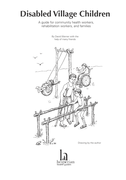
Disabled village children. 2nd edition
recommended
A guide for community health workers, rehabilitation workers, and families.
This manual covers identifying primary and secondary disabilities, developing skills for daily living, and working through behavior problems. The new 2018 edition features new topics, including mental and developmental di
...
sabilities, microcephaly and Zika, causes of birth defects and childhood disability, epilepsy and seizures, hearing loss and vision problems, HIV, leprosy, and more, and has updated information on polio, cerebral palsy, juvenile arthritis, muscular dystrophy, and medications.
Readers will find instructions on how to build six different wheelchairs using local resources; useful therapy techniques, such as making fun and educational toys; ideas for improving playground accessibility for all children; and low-cost rehabilitation aids and adaptations for home and community.
You can download chapter 4 for free. The complete book is available at Hesperian Book STore
more
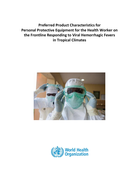
The scope of this PPC document is to serve as a guide to address the unmet public health need for a PPE system that protects the HW-F in tropical climate
s while caring for patients and providing heavy duty essential health services.
The characteristics described in this guidance are targeted fo
...
r PPE used in
health clinics, hospitals and communities in low resource settings where there is lack of advanced environmental controls and equipment. The purpose is to ensure harmonization in PPE design and its use to avoid confusion and exacerbating the risk of infections in HW-F. The principles of this PPC document can also be considered in risk reduction strategies
in other healthcare settings.
more
This document provides information to assist countries in developing exit screening plans and Standard Operating Procedures (SOP). This includes the method, tools, and sequence of screening; determining resource needs; communication messages; and the legal considerations of screening.
The framework is to be used as a reference guide, applied according to local priorities and needs, and targeted at academic institutions, educators, accreditation bodies, regulatory agencies and other users. The ultimate aim is to ensure that all health workers are equipped with the requisite compet
...
encies at pre-service education and in-service training levels to address AMR in policy and practice settings.
more
The 2007 Rwanda Service Provision Assessment (RSPA) was a national representative survey conducted in 538 health facilities throughout Rwanda. The survey covered hospitals, health centers, dispensaries and
health posts, including all public facilities such as government and government-assisted heal
...
th facilities. The 2007 RSPA used interviews with health service providers and clients and observations of provider client consultations to obtain information on the capacity of facilities to provide quality services and the existence of functioning systems to support quality services. The areas addressed were the overall facility
infrastructure, maternal and child health, reproductive health, tuberculosis, malaria services; and services for sexually transmitted infections and HIV/AIDS. The objective was to assess the strengths and
weaknesses of the infrastructure and systems supporting these services, and to assess the adherence to standards in the delivery of services.
more
The report presents the latest data on more than 50 health-related Sustainable Development Goal and "triple billion" target indicators. The 2021 edition includes preliminary estimates for global excess deaths attributable to COVID-19 for 2020 and the state of global and regional health trends from 2
...
000-2019. It also focuses on persistent health inequalities and data gaps that have been accentuated by the pandemic, with a call to urgently invest in health information systems to ensure the world is better prepared with better data.
more
This third edition of the National Gender Statistics Report provides the updated sex-disaggregated data in twelve fields: Population and Youth; Education; Health and Nutrition; Economic Activity and time use; Poverty & Social Protection; Justice & Human rights; Environment and Natural Resources; Dec
...
isionmaking and Public life; Infrastructure, ICT and Media; Trade and Business and Industry; Agriculture, Livestock and Forestry, and lastly the Income and Access to Finance. It should be noted that this report takes into account almost all quantitative indicators of the United Nations Minimum Set of Gender Indicators (UNMSGI) as developed by the United Nations Statistical Division (UNSD) and some of the approved quantitative SDGs gender related indicators.
more

2016 Update
Key population

The main objectives of these guidelines are to:
1. contribute to the quality assurance of medicinal plant materials used as the source for herbal medicines to improve the quality, safety and efficacy of finished herbal products; 2. guide the formulation of national and/or regional GACP guideli ... nes and GACP monographs for medicinal plants and related standard operating procedures; and 3. encourage and support the sustainable cultivation and collection of medicinal plants of good quality in ways that respect and support the conservation of medicinal plants and the environment in general. These guidelines concern the cultivation and collection of medicinal plants and include certain post-harvest operations. more
1. contribute to the quality assurance of medicinal plant materials used as the source for herbal medicines to improve the quality, safety and efficacy of finished herbal products; 2. guide the formulation of national and/or regional GACP guideli ... nes and GACP monographs for medicinal plants and related standard operating procedures; and 3. encourage and support the sustainable cultivation and collection of medicinal plants of good quality in ways that respect and support the conservation of medicinal plants and the environment in general. These guidelines concern the cultivation and collection of medicinal plants and include certain post-harvest operations. more

In the last 5 years, the conflict in South Sudan has displaced 4 million people and placed 7 million in need of humanitarian assistance.
This report commissioned by Plan International draws on research conducted with girls and members of their families and communities in multiple sites in South ... Sudan and Uganda.
It explores how adolescent girls within two age brackets (aged 10-14 and 15-19) understand and respond to the unique impact their country’s crisis has upon them.
It seeks to amplify their voices and their perceptions of the crisis and presents their views on how the humanitarian sector might respond. more
This report commissioned by Plan International draws on research conducted with girls and members of their families and communities in multiple sites in South ... Sudan and Uganda.
It explores how adolescent girls within two age brackets (aged 10-14 and 15-19) understand and respond to the unique impact their country’s crisis has upon them.
It seeks to amplify their voices and their perceptions of the crisis and presents their views on how the humanitarian sector might respond. more

For the Fiscal Year 2014-2015, the Health Sector continued to implement interventions and strategies meant to improve the availability, accessibility and utilization of quality healthcare services across public and private health facilities; and to ensure the reduction of the burden of communicable
...
and non-communicable diseases in Rwanda. This annual report highlights key achievements registered by the health sector during the Fiscal Year 2014-2015. Achievements are highlighted under three big components: Health Programs, Health Systems Support and Budget Execution.
more

The Ministry of Health has developed the first version of the Service Standards and Service Delivery Standards for the health sector in Uganda. The main objective is to provide a common understanding of what is expected by the public, service users and service providers in ensuring provision of cons
...
istently high quality service delivery. These standards also provide a roadmap for improving the quality, safety and reliability of healthcare in Uganda.
The application of these standards is expected to improve transparency and accountability in service delivery; fairness and equity in service provision; building a culture of quality management; regulation, management and control of public and private providers; and management of expectations of service recipients. more
The application of these standards is expected to improve transparency and accountability in service delivery; fairness and equity in service provision; building a culture of quality management; regulation, management and control of public and private providers; and management of expectations of service recipients. more
Save the Children in collaboration with the Bhubaneswar Municipal Corporation (BMC) and the state National Health Mission (NHM) undertook this study in the urban slums of Bhubaneswar city to generate learnings for designing a city-specific public health approach to improve MNH services for the urban
...
poor.
more

It is the policy of the GoR to ensure that children’s rights are met through the provision of basic needs and services for all children in the country, and protect them from abuse and exploitation. Children are defined as persons below the age of 18 years and the ICRP covers children from the time
...
before their birth until they complete the age of 18 years. The Integrated Child Rights Policy of Rwanda is based on seven key themes: Identity and Nationality; Family and Alternative Care; Survival, Health and Standards of Living; Education; Protection; Justice; and Child Participation.
more

The target audience for this guideline is primarily for health care providers nurses, doctors, social workers and other people involved in HIV response in Rwanda so that they are capable of offering quality care services to patients over a long time. The new National Guidelines for Prevention and Ma
...
nagement of HIV and STIs are articulated in accordance to treat all HIV+ patients regardless of CD4 count and a new service delivery model to support its implementation.
more
Regional Network for Equity in Health in east and southern Africa (EQUINET): Disussion Paper 110
This report compiles evidence from published, grey literature and key informants on the UNMHCP since its introduction in Uganda’s health system, and findings were further validated during a oneda ... y national stakeholder meeting.
Three main factors motivated introduction of the UNMHCP. First, Uganda, along with other lowincome countries, was unable to implement holistically the primary healthcare (PHC) concepts as set out in the Alma Ata Declaration. Second, the macro-economic restructuring carried out in the 1990s, which was an international conditionality for low-income countries to access development financing, influenced the trend towards more stringent prioritisation of health interventions as a means of rationing and targeting use of resources. Third, the government sought to achieve equity with a service package that would be universally available for all people. more
This report compiles evidence from published, grey literature and key informants on the UNMHCP since its introduction in Uganda’s health system, and findings were further validated during a oneda ... y national stakeholder meeting.
Three main factors motivated introduction of the UNMHCP. First, Uganda, along with other lowincome countries, was unable to implement holistically the primary healthcare (PHC) concepts as set out in the Alma Ata Declaration. Second, the macro-economic restructuring carried out in the 1990s, which was an international conditionality for low-income countries to access development financing, influenced the trend towards more stringent prioritisation of health interventions as a means of rationing and targeting use of resources. Third, the government sought to achieve equity with a service package that would be universally available for all people. more

This toolkit for integrated vector management (IVM) is designed to help national and regional programme managers coordinate across sectors to design and run large IVM programmes.
The toolkit provides the technical detail required to plan, implement, monitor and evaluate an IVM approach. IVM can ... be used when the aim is to control or eliminate vector-borne diseases and can also contribute to insecticide resistance management. This toolkit provides information on where vector-borne diseases are endemic and what interventions should be used, presenting case studies on IVM as well as relevant guidance documents for reference.
The diseases that are the focus of this toolkit are malaria, lymphatic filariasis, dengue, leishmaniasis, onchocerciasis, human African trypanosomiasis and schistosomiasis. It also includes information on other viral diseases (Rift Valley fever, West Nile fever, Chikungunya, yellow fever) and trachoma. If other vector-borne diseases appear in a country or area, vector control with an IVM approach should be adopted, as per national priorities. more
The toolkit provides the technical detail required to plan, implement, monitor and evaluate an IVM approach. IVM can ... be used when the aim is to control or eliminate vector-borne diseases and can also contribute to insecticide resistance management. This toolkit provides information on where vector-borne diseases are endemic and what interventions should be used, presenting case studies on IVM as well as relevant guidance documents for reference.
The diseases that are the focus of this toolkit are malaria, lymphatic filariasis, dengue, leishmaniasis, onchocerciasis, human African trypanosomiasis and schistosomiasis. It also includes information on other viral diseases (Rift Valley fever, West Nile fever, Chikungunya, yellow fever) and trachoma. If other vector-borne diseases appear in a country or area, vector control with an IVM approach should be adopted, as per national priorities. more