
Filter
3580
Text search:
economic
growth
Featured
223
1079
Language
3500
62
45
44
33
18
17
13
3
3
2
2
2
1
1
1
1
1
1
1
1
1
1
1
1
1
1
1
1
1
1
1
1
Document type
2118
800
245
153
129
59
36
23
6
6
4
Countries
182
157
133
104
83
79
79
79
76
76
74
73
63
63
62
61
57
52
48
40
37
37
34
34
34
32
30
29
29
27
25
24
23
23
23
22
21
20
19
15
15
14
13
12
11
11
11
10
10
10
10
9
9
8
8
8
8
8
8
7
7
7
7
6
6
6
5
5
5
4
4
4
4
4
4
4
4
3
3
3
3
3
3
3
3
3
2
2
2
2
2
2
2
2
2
2
2
2
2
2
1
1
1
1
1
1
1
1
1
1
1
1
1
1
1
1
1
1
1
1
1
1
1
1
1
1
1
1
1
1
1
Authors & Publishers
285
129
113
98
97
70
53
50
50
40
24
23
23
22
21
20
20
17
16
16
16
15
15
15
14
14
14
13
13
13
13
13
12
12
12
12
12
11
11
11
11
11
11
11
10
10
10
10
10
10
10
10
10
9
9
9
9
9
9
9
9
8
8
8
8
8
8
8
8
7
7
7
7
7
7
7
6
6
6
6
6
6
6
6
6
6
6
6
5
5
5
5
5
5
5
5
5
5
5
5
5
5
5
5
5
5
5
5
5
5
5
5
5
5
5
5
5
5
5
5
5
4
4
4
4
4
4
4
4
4
4
4
4
4
4
4
4
4
4
4
4
4
4
4
4
4
4
4
4
4
4
4
4
4
4
4
4
4
4
3
3
3
3
3
3
3
3
3
3
3
3
3
3
3
3
3
3
3
3
3
3
3
3
3
3
3
3
3
3
3
3
3
3
3
3
3
3
3
3
3
3
3
3
3
3
3
3
3
3
3
3
3
3
3
3
3
3
3
3
3
3
3
3
3
3
3
3
3
3
3
2
2
2
2
2
2
2
2
2
2
2
2
2
2
2
2
2
2
2
2
2
2
2
2
2
2
2
2
2
2
2
2
2
2
2
2
2
2
2
2
2
2
2
2
2
2
2
2
2
2
2
2
2
2
2
2
2
2
2
2
2
2
2
2
2
2
2
2
2
2
2
2
2
2
2
2
2
2
2
2
2
2
2
2
2
2
2
2
2
2
2
2
2
2
2
2
2
2
2
2
2
2
2
2
2
2
2
2
2
2
2
2
2
2
2
2
2
2
2
2
2
2
2
2
2
2
2
2
2
2
2
2
2
2
2
2
2
2
2
2
2
2
2
2
2
2
2
2
2
2
2
2
2
2
2
2
2
2
2
2
2
2
2
2
2
2
2
2
2
2
2
2
2
2
2
2
2
2
2
2
2
2
2
2
2
2
2
2
2
2
2
2
2
2
2
2
2
2
2
2
2
2
2
2
2
1
1
1
1
1
1
1
1
1
1
1
1
1
1
1
1
1
1
1
1
1
1
1
1
1
1
1
1
1
1
1
1
1
1
1
1
1
1
1
1
1
1
1
1
1
1
1
1
1
1
1
1
1
1
1
1
1
1
1
1
1
1
1
1
1
1
1
1
1
1
1
1
1
1
1
1
1
1
1
1
1
1
1
1
1
1
1
1
1
1
1
1
1
1
1
1
1
1
1
1
1
1
1
1
1
1
1
1
1
1
1
1
1
1
1
1
1
1
1
1
1
1
1
1
1
1
1
1
1
1
1
1
1
1
1
1
1
1
1
1
1
1
1
1
1
1
1
1
1
1
1
1
1
1
1
1
1
1
1
1
1
1
1
1
1
1
1
1
1
1
1
1
1
1
1
1
1
1
1
1
1
1
1
1
1
1
1
1
1
1
1
1
1
1
1
1
1
1
1
1
1
1
1
1
1
1
1
1
1
1
1
1
1
1
1
1
1
1
1
1
1
1
1
1
1
1
1
1
1
1
1
1
1
1
1
1
1
1
1
1
1
1
1
1
1
1
1
1
1
1
1
1
1
1
1
1
1
1
1
1
1
1
1
1
1
1
1
1
1
1
1
1
1
1
1
1
1
1
1
1
1
1
1
1
1
1
1
1
1
1
1
1
1
1
1
1
1
1
1
1
1
1
1
1
1
1
1
1
1
1
1
1
1
1
1
1
1
1
1
1
1
1
1
1
1
1
1
1
1
1
1
1
1
1
1
1
1
1
1
1
1
1
1
1
1
1
1
1
1
1
1
1
1
1
1
1
1
1
1
1
1
1
1
1
1
1
1
1
1
1
1
1
1
1
1
1
1
1
1
1
1
1
1
1
1
1
1
1
1
1
1
1
1
1
1
1
1
1
1
1
1
1
1
1
1
1
1
1
1
1
1
1
1
1
1
1
1
1
1
1
1
1
1
1
1
1
1
1
1
1
1
1
1
1
1
1
1
1
1
1
1
1
1
1
1
1
1
1
1
1
1
1
1
1
1
1
1
1
1
1
1
1
1
1
1
1
1
1
1
1
1
1
1
1
1
1
1
1
1
1
1
1
1
1
1
1
1
1
1
1
1
1
1
1
1
1
1
1
1
1
1
1
1
1
1
1
1
1
1
1
1
1
1
1
1
1
1
1
1
1
1
1
1
1
1
1
1
1
1
1
1
1
1
1
1
1
1
1
1
1
1
1
1
1
1
1
1
1
1
1
1
1
1
1
1
1
1
1
1
1
1
1
1
1
1
1
1
1
1
1
1
1
1
1
1
1
1
1
1
1
1
1
1
1
1
1
1
1
1
1
1
1
1
1
1
1
1
1
1
1
1
1
1
1
1
1
1
1
1
1
1
1
1
1
1
1
1
1
1
1
1
1
1
1
1
1
1
1
1
1
1
1
1
1
1
1
1
1
1
1
1
1
1
1
1
1
1
1
1
1
1
1
1
1
1
1
1
1
1
1
1
1
1
1
1
1
1
1
1
1
1
1
1
1
1
1
1
1
1
1
1
1
1
1
1
1
1
1
1
1
1
1
1
1
1
1
1
1
1
1
1
1
1
1
1
1
1
1
1
1
1
1
1
1
1
1
1
1
1
1
1
1
1
1
1
1
1
1
1
1
1
1
1
1
1
1
1
1
1
1
1
1
1
1
1
1
1
1
1
1
1
1
1
1
1
1
1
1
1
1
1
1
1
1
1
1
1
1
1
1
1
1
1
1
1
1
1
1
1
1
1
1
1
1
1
1
1
1
1
1
1
1
1
1
1
1
1
1
1
1
1
1
1
1
1
1
1
1
1
1
1
1
1
1
1
1
1
1
1
1
1
1
1
1
1
1
1
1
1
1
1
1
1
1
1
1
1
1
1
1
1
1
1
1
1
1
1
1
1
1
1
1
1
1
1
1
1
1
1
1
1
1
1
1
1
1
1
1
1
1
1
1
1
1
1
1
1
1
1
1
1
1
1
1
1
1
1
1
1
1
1
1
1
1
1
1
1
1
1
1
1
1
1
1
1
1
1
1
1
1
1
1
1
1
1
1
1
1
1
1
1
1
1
1
1
1
1
1
1
1
1
1
1
1
1
1
1
1
1
1
1
1
1
1
1
1
1
1
1
1
1
1
1
1
1
1
1
1
1
1
1
1
1
1
1
1
1
1
1
1
1
1
1
1
1
1
1
1
1
1
1
1
1
1
1
1
1
1
1
1
1
1
1
1
1
1
1
1
1
1
1
1
1
1
1
1
1
1
1
1
1
1
1
1
1
1
1
1
1
1
1
1
1
1
1
1
1
1
1
1
1
1
1
1
1
1
1
1
1
1
1
1
1
1
1
1
1
1
1
1
1
1
1
1
1
1
1
1
1
1
1
1
1
1
1
1
1
1
1
1
1
1
1
1
1
1
1
1
1
1
1
1
1
1
1
1
1
1
1
1
1
1
1
1
1
1
1
1
1
1
1
1
1
1
1
1
1
1
1
1
1
1
1
1
1
1
1
1
1
1
1
1
1
1
1
1
1
1
1
1
1
1
1
1
1
1
1
1
1
1
1
1
1
1
1
1
1
1
1
1
1
1
1
1
1
1
1
1
1
1
1
1
1
1
1
1
1
1
1
1
1
1
1
1
1
1
1
1
1
1
1
1
1
1
1
1
1
1
1
1
1
1
1
1
1
1
1
1
1
1
1
1
1
1
1
1
1
1
1
1
1
1
1
1
1
1
1
1
1
1
1
1
1
1
1
1
1
1
1
1
1
1
1
1
1
1
1
1
1
1
1
1
1
1
1
1
1
1
1
1
1
1
1
1
1
1
1
1
1
1
1
1
1
1
1
1
1
1
1
1
1
1
1
1
1
1
1
1
1
1
1
1
1
1
1
1
1
1
1
1
1
1
1
1
1
1
1
1
1
1
1
1
1
1
1
1
1
1
1
1
1
1
1
1
1
1
1
1
1
1
1
1
1
1
1
1
1
1
1
1
1
1
1
1
1
1
1
1
1
1
1
1
1
1
1
1
1
1
1
1
1
1
1
1
1
1
1
1
1
1
1
1
1
1
1
1
1
1
1
1
1
1
1
1
1
1
1
1
1
1
1
1
1
1
1
1
1
1
1
1
1
1
1
1
1
1
1
1
1
1
1
1
1
1
1
1
1
1
1
1
1
1
1
1
1
1
1
1
1
1
1
1
1
1
1
1
1
1
1
1
1
1
1
1
1
1
1
1
1
1
1
1
1
1
1
1
1
1
1
1
1
1
1
1
1
1
1
1
1
1
1
1
1
1
1
1
1
1
1
1
1
1
1
1
1
1
1
1
1
1
1
1
1
1
1
1
1
1
1
1
1
1
1
1
1
1
1
1
1
1
1
1
1
1
1
1
1
1
1
1
1
1
1
1
1
1
1
1
1
1
1
1
1
1
1
1
1
1
1
1
1
1
1
1
1
1
1
1
1
1
1
1
1
1
1
1
1
1
1
1
1
1
1
1
1
1
1
1
1
1
1
1
1
1
1
1
1
1
1
1
1
1
1
1
1
1
1
1
1
1
1
1
1
1
1
1
1
1
1
1
1
1
1
1
1
1
1
1
1
1
1
1
1
1
1
1
1
1
1
1
1
1
1
1
1
1
1
1
1
1
1
1
1
1
1
1
1
1
1
1
1
1
1
1
1
1
1
1
1
1
1
1
1
1
1
1
1
1
1
1
1
1
1
1
1
1
1
1
1
1
1
1
1
1
1
1
1
1
1
1
1
1
1
1
1
1
1
1
1
1
1
1
1
1
1
1
1
1
1
1
1
1
1
1
1
1
1
1
1
1
1
1
1
1
1
1
1
1
1
1
1
1
1
1
1
1
1
1
1
1
1
1
1
1
1
1
1
1
1
1
1
1
1
1
1
1
1
1
1
1
1
1
1
1
1
1
1
1
1
1
1
1
1
1
1
1
1
1
1
1
1
1
1
1
1
1
1
1
1
1
1
1
1
1
1
1
1
1
1
1
1
1
1
1
1
1
1
1
1
1
1
1
1
1
1
1
1
1
1
1
1
1
1
1
1
1
1
1
1
1
1
1
1
1
1
1
1
1
1
1
1
1
1
1
1
1
1
1
1
1
1
1
1
1
1
1
1
1
1
1
1
1
1
1
1
1
1
1
1
1
1
1
1
1
1
1
1
1
1
1
1
1
1
1
1
1
1
1
1
1
1
1
1
1
1
1
1
1
1
1
1
1
1
1
1
1
1
1
1
1
1
1
1
1
1
1
1
1
1
1
1
1
1
1
1
1
1
1
1
1
1
1
1
1
1
1
1
1
1
1
1
1
1
1
1
1
1
1
1
1
1
1
1
1
1
1
1
1
1
1
1
1
1
1
1
1
1
1
1
1
1
1
1
1
1
1
1
1
1
1
1
1
1
1
1
1
1
1
1
1
1
1
1
1
1
1
1
1
1
1
1
1
1
1
1
1
1
1
1
1
1
1
1
1
1
1
1
1
1
1
1
1
1
1
1
1
1
1
1
1
1
1
1
1
1
1
1
1
1
1
1
1
1
1
1
1
1
1
1
1
1
1
1
1
1
1
1
1
1
1
1
1
1
1
1
1
1
1
1
1
1
1
1
1
1
1
1
1
1
1
1
1
1
1
1
1
1
1
1
1
1
1
1
1
1
1
1
1
1
1
1
1
1
1
1
1
1
1
1
1
1
1
1
1
1
1
1
1
1
1
1
1
1
1
1
1
1
1
1
1
1
1
1
1
1
1
1
1
1
1
1
1
1
1
1
1
1
1
1
1
1
1
1
1
1
1
1
1
1
1
1
1
1
1
1
1
1
1
1
1
1
1
1
1
1
1
1
1
1
1
1
1
1
1
1
1
1
1
1
1
1
1
1
1
1
1
1
1
1
1
1
1
1
1
1
1
1
1
1
1
1
1
1
1
1
1
1
1
1
1
1
1
1
1
1
1
1
1
1
1
1
1
1
1
1
1
1
1
1
1
1
1
1
1
1
1
1
1
1
1
1
1
1
1
1
1
1
1
1
1
1
1
1
1
1
1
1
1
1
1
1
1
1
1
1
1
1
1
1
1
1
1
1
1
1
1
1
1
1
1
1
1
1
1
1
1
1
1
1
1
1
1
1
1
1
1
1
1
1
1
1
1
1
1
1
1
1
1
1
1
1
1
1
1
1
1
1
1
1
1
1
1
1
1
1
1
1
1
1
1
1
1
1
1
1
1
1
1
1
1
1
1
1
1
1
1
1
1
1
1
1
1
1
1
1
1
1
1
1
1
1
1
1
1
1
1
1
1
1
1
1
1
1
1
1
1
1
1
1
1
1
1
1
1
1
1
1
1
1
1
1
1
1
1
1
1
1
1
1
1
1
1
1
1
1
1
1
1
1
1
1
1
1
1
1
1
1
1
1
1
1
1
1
1
1
1
1
1
1
1
1
1
1
1
1
1
1
1
1
1
1
1
1
1
1
1
1
1
1
1
1
1
1
1
1
1
1
1
1
1
1
1
1
1
1
1
1
1
1
1
1
1
1
1
1
1
1
1
1
1
1
1
1
1
1
1
1
1
1
1
1
1
1
1
1
1
1
1
1
1
1
1
1
1
1
1
1
1
1
1
1
1
1
1
1
1
1
1
1
1
1
1
1
1
1
1
1
1
1
1
1
1
1
1
1
1
1
1
1
1
1
1
1
1
1
1
1
1
1
1
1
1
1
1
1
1
1
1
1
1
1
1
1
1
1
1
1
1
1
1
1
1
1
1
1
1
1
1
1
1
1
1
1
1
1
1
1
1
1
1
1
1
1
1
1
1
1
1
1
1
1
1
1
1
1
1
1
1
1
1
1
1
1
1
1
1
1
1
1
1
1
1
1
1
1
1
1
1
1
1
1
1
1
1
1
1
1
1
1
1
1
1
1
1
1
1
1
1
1
1
1
1
1
1
1
1
1
1
1
1
1
1
1
1
1
1
1
1
1
1
1
1
1
1
1
1
1
1
1
1
1
1
1
1
1
1
1
1
1
1
1
1
1
1
1
1
1
1
1
1
1
1
1
1
1
1
1
1
1
1
1
1
1
1
1
1
1
1
1
1
1
1
1
1
1
1
1
1
1
1
1
1
1
1
1
1
1
1
1
1
1
1
1
1
1
1
1
1
1
1
1
1
1
1
1
1
1
1
1
1
1
1
1
1
1
1
1
1
1
1
1
1
1
1
1
1
1
1
1
1
1
1
1
1
1
1
1
1
1
1
1
1
1
1
1
1
1
1
1
1
1
1
1
1
1
1
1
1
1
1
1
1
1
1
1
1
1
1
1
1
1
1
1
1
1
1
1
Publication Years
1
849
2382
335
9
2
1
1
Category
1624
206
167
142
128
44
8
6
1
Toolboxes
287
214
174
164
161
142
122
118
89
86
77
60
59
53
49
49
45
36
24
14
9
8
6
2
1
1

This handbook is intended primarily for front-line health care providers who are likely to see children (among other clients) in their day-to-day practice. These may include general practitioners, nurses, midwives, gynaecologists,
paediatricians, mental health professionals, first responders and st
...
aff in emergency care.
Other professionals who may find it useful include social workers, those working in social welfare institutions, providers of psychosocial support, and those working in child care facilities and the education system.
Further, the content will benefit the work of policy-makers and managers to enable and support provision of clinical care to children experiencing, or who have experienced, child maltreatment.
more
Tsetse Control and Gambian Sleeping Sickness; Implications for Control Strategy
Tirados, I.; Esterhuizen, J.; Kovacic, V.; Mangwiro, TNC.; Vale, GA et al.
PLOS Neglected Tropical Diseases
(2015)
CC
Sleeping sickness is controlled by case detection and treatment but this often only reaches less than 75% of the population. Vector control is capable of completely interrupting HAT transmission but is not used because of expense. We conducted a full scale field trial of a refined vector control tec
...
hnology. From preliminary trials we determined the number of insecticidal tiny targets required to control tsetse populations by more than 90%. We then carried out a full scale, 500 km2 field trial covering two HAT foci in Northern Uganda (overall target density 5.7/km2). In 12 months tsetse populations declined by more than 90%. A mathematical model suggested that a 72% reduction in tsetse population is required to stop transmission in those settings. The Ugandan census suggests population density in the HAT foci is approximately 500 per km2. The estimated cost for a single round of active case detection (excluding treatment), covering 80% of the population, is US$433,333 (WHO figures). One year of vector control organised within country, which can completely stop HAT transmission, would cost US$42,700. The case for adding this new method of vector control to case detection and treatment is strong. We outline how such a component could be organised.
more
Yaws is a disfiguring non-venereal disease caused by infection with the spirochaete. Treponema pallidum subspecies pertenue which is closely related to the causative agent of syphilis and those of the other endemic treponematoses, bejel and pinta. The disease is endemic in certain areas of the World
...
Health Organization (WHO) African, South-East Asia and Western Pacific regions. Of the neglected tropical diseases identified for elimination and eradication, yaws is one of two diseases targeted for eradication. In 1949, the Second World Health Assembly adopted resolution WHA2.36, which addresses yaws, bejel and pinta as major public health problems that need attention.
more
Mali national action plan on antimicrobial resistance: review of progress in the human health sector
This policy brief aims to provide a review of the current progress on implementing the Mali national action plan on AMR, identifies critical gaps, and highlights findings to accelerate further progress in the human health sector. The target audience includes all those concerned with implementing act
...
ions to combat antimicrobial resistance in Mali.
more
Leptospirosis, a spirochaetal zoonosis, occurs in diverse epidemiological settings and affects vulnerable populations, such as rural subsistence farmers and urban slum dwellers. Although leptospirosis is a life-threatening disease and recognized as an important cause of pulmonary haemorrhage syndrom
...
e, the lack of global estimates for morbidity and mortality has contributed to its neglected disease status
more
Several Public Health Services and general practitioners in the Netherlands observed an increase in scabies in the Netherlands. Since individual cases of scabies are not notifiable in the Netherlands, the epidemiological situation is mostly unknown. To investigate the scabies incidence in the Nether
...
lands, we described the epidemiology of scabies between 2011 and 2021.
more
The objectives of the meeting were:
1. To step up the commitment of national authorities and technical and financial partners toWHO’s elimination objective for g-HAT.
2. To share achievements, challenges and views on the elimination goal among countries and implementing partners.
3. To assess t
...
he status of critical technical aspects to be solved in research and development of drugs and diagnostic tools, epidemiology, vector control and animal reservoirs.
4. To define the mechanisms for strengthening and organizing collaboration and coordination among stakeholders.
more
The epidemiology of the disease is mediated by the interaction of the parasite (trypanosome) with the vectors (tsetse flies), as well as with the human and animal hosts within a particular environment. Related to these interactions, the disease is confined in spatially limited areas called “fociâ€
...
�, which are located
in Sub-Saharan Africa, mainly in remote rural areas. The risk of contracting HAT is, therefore, determined by the possibility of contact of a human being with an infected tsetse fly. Epidemics of HAT were described at the beginning of the 20th century; intensive activities have been set up to confront the disease, and it was under control in the 1960s, with fewer than 5,000 cases reported in the whole continent.
more
Rabies is a devastating and societally important zoonotic disease, which is transmitted principally to humans through the bite of infected dogs. This acute, progressive viral encephalitis has the highest case fatality of any infectious disease and kills tens of thousands of people annually, with chi
...
ldren and impoverished communities being affected disproportionately.
more
One Health Joint Plan of Action (2022-2026)
World Organisation for Animal Health
Food and Agriculture Organization of the United Nations; United Nations Enviroment Programme; Wolrd Health Organization; World Organisation for Animal Health
(2022)
C_WHO
The desired impact of the OH JPA is a world better able to prevent, predict, detect and
respond to health threats and improve the health of humans, animals, plants and the
environment while contributing to sustainable development. The OH JPA aims to work
towards this vision in the following way:
...
• Provide a framework for action and propose a set of activities the four organizations
can offer together to advance and sustainably scale up One Health.
• Provide upstream policy and legislative advice and technical assistance, to help
set national targets and priorities across the sectors for the development and
implementation of One Health legislation, initiatives and programmes.
• Take stock of existing cross-sectoral global and regional initiatives around One
Health, identify and advise on synergies and overlaps, and support coordination.
• Mobilize and make better use of resources across sectors, disciplines and
stakeholders.
• The OH JPA is guided by a theory of change and makes use of One Health principles
to strengthen collaboration, communication, capacity building and coordination
more

The objective of this concept note and the framework it outlines is the elimination of a group of CDs and the negative health effects they generate, which together create a tangible burden on affected individuals, their families and communities, and on health care systems throughout the Region. Thou
...
gh there is no unified consensus on the best measures to use for the public’s health and a nation’s epidemiologic situation, it is common for the disease burden to be measured by disease rates (incidence, prevalence, etc.), disease-specific death rates, comparative morbidity and mortality rates, geographic distribution, and disability-adjusted life years (DALYs). The current epidemiological situation, including data on disease rates or geographic distribution for the diseases in Table 1, is discussed below in Section 4. Hotez et al. (2008) were the first to review and compare the burden of DALYs in Latin America and the Caribbean—for NTDs, HIV/AIDS, malaria, and TB—as it existed about 10 years ago. Though the regional burden of TB, malaria, and neglected infectious diseases (NIDs) is somewhat less than it was 10 years ago, work (and schooling) continue to be lost to illness and premature death or disability, and the need for stepping up disease elimination efforts is evident in all communities living in vulnerable conditions....
more
Guide for the Medical, Veterinary and allied Professions
Bishop, G.; Durrheim, D.; Kloeck, P. et al.
Department: Agriculture, Foresty and Fisheries - Republic of South Africa
(2010)
CC
Rabies is a disease of animals but too often the outcome is gauged in terms of human suffering and
death. Despite this, in areas of the world where rabies is endemic there is often a lack of communication between veterinary and medical professionals, to the extent that the disease continues to thri
...
ve and potential victims are not treated. The problem is partly
exacerbated by a lack of awareness and experience of the disease and of what to do when confronted by suspect cases. In these technologically advanced days, although it is possible to learn “all there is to know” about almost any subject, it is sometimes difficult to distil the essence.
more
This regional action plan provides a broad framework for the regional level to assist governments in accelerating the implementation of existing international, regional and national commitments on ending FGM. Formulating the plan has provided an opportunity for the region to identify broad prioritie
...
s, initiate strategic actions and determine responsibilities among different actors. It also ensures that anti-FGM campaign activities are seen not as standalone efforts but rather as an integral part of the African Union’s discussions, in line with the African Union initiative on eliminating FGM (Saleema Initiative)
more
Background: One of the objectives of the Global Action Plan by the World Health Organization (WHO) to contain antimicrobial resistance (AMR), is to improve global awareness through effective communication and education. Comprehensive information on the level of awareness of AMR among Nigerian public
...
is deficient. This study was therefore designed to assess the current level of awareness and knowledge of the Nigerian public of AMR.
more
Rabies remains an under-reported neglected zoonosis with a case-fatality rate of almost 100% in humans and animals. Dog-mediated human rabies causes tens of thousands of human deaths annually despite being 100% preventable. More than 95% of human cases are caused by the bite of a rabies-infected dog
...
. Dog-mediated human rabies disproportionately affects rural communities, particularly children, and economically disadvantaged areas of Africa and Asia, where awareness of the disease and access to appropriate post-exposure prophylaxis (PEP) can be limited or nonexistent.
more
Chagas disease is currently endemic and also predicted to be at increased transmission risk under future climate change scenarios. Similarly, an expansion of areas in the United States at increased risk for Chagas disease transmission is also expected over the next several decades under climate chan
...
ge scenarios. Of particular interest is the predicted northern shift of triatomine species to central regions of the United States with historically unsuitable climates for T. cruzi vectors. The weight of evidence regarding the influences climate change may pose on T. cruzi vector species distributions demonstrates the sensitivity of Chagas disease transmission to future climate variability. In order to advance forecasts for the impact climate change may have on Chagas disease transmission in the Americas, it is imperative to
further develop, utilize, and perhaps combine predictive species distribution modeling approaches that integrate accurate, long term data on climate variables, vector species distributions, Chagas disease incidence, as well as other socio-ecological variables.
more

Operational guide: use of referral laboratories for the analysis of foodborne hazards in the Pacific
The Operational guide: use of referral laboratories for the analysis of foodborne hazards in the Pacific aims to strengthen the food analysis capacity of Pacific Island countries and areas by identifying national and reference laboratories capable of testing for priority foodborne hazards. The Pacif
...
ic Island countries and areas are often vulnerable to food safety incidents and emergencies due to their geographical distribution and dependence on food imports. The guide outlines key considerations for selecting referral laboratories and submitting samples to them, enabling continuous improvement of food safety systems and providing safe food for all. The target audiences are health and food safety authorities.
more
The Event-based Surveillance Framework is intended to be used by authorities and agencies responsible for
surveillance and response. This framework serves as an outline to guide stakeholders interested in implementing
event-based surveillance (EBS) using a multisectoral, One Health approach. To
...
that end, the document is arranged
in interlinked chapters and annexes that can be modified and adapted, as needed, by users.
This is a revised version of the original “Framework for Event-based Surveillance” that was published in 2018. This
framework does not replace any other available EBS materials, but rather builds on existing relevant or related
documents and serves as a practical guide for the implementation of EBS in Africa. This framework is aligned with
the third edition of the WHO Joint External Evaluation for the following indicators: strengthened early warning
surveillance systems that are able to detect events of significance for public health and health security (Indicator
D2.1); improved communication and collaboration across sectors and between National, intermediate and local
public health response levels of authority regarding surveillance of events of public health significance (Indicator
D2.2); and improved national and intermediate-level capacity to analyse data (Indicator D2.3). As countries begin
to implement and demonstrate EBS functionality they will ensure an increase in JEE scores and progress towards
meeting the requirements outlined in the IHR3F
Additionally, in African Union Member States that have adopted the Integrated Disease Surveillance and
Response (IDSR) strategy, this document is a complement to and can enhance the implementation of IDSR,
especially for the 3rd edition (2019) that includes components related to EBS.
more
There is an expanding market of no- and low-alcohol beverages (NoLos). However, their effects on global ethanol consumption and public health are still questioned. Policies and regulations about NoLos’ availability, acceptability and affordability are lacking and evidence about their benefits is l
...
imited. Concerns have been raised about the impact of NoLos in reducing alcohol consumption and its associated harm and the possible drawbacks and implications, such as misleading minors, pregnant women, abstainers or those seeking to stop drinking about their actual ethanol content. Further, there are concerns about the implications of NoLo branded products being displayed close to the brand’s main alcoholic beverages and their potential to subtly lead to new occasions of drinking. There is a need to monitor their consumption and impact on aggregated alcohol consumption to understand the public health implications of NoLos. The alcohol by volume content of NoLos must be defined, harmonised and clearly labelled. NoLo marketing needs to be regulated to protect children, pregnant women and those seeking to stop drinking. Fiscal and pricing policies to reduce the affordability of products with higher strengths of ethanol may favour a shift towards lower alcohol strength beverages.
more
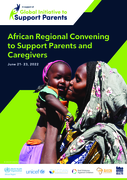
The African Regional Convening of the Global Initiative to Support Parents (GISP) stimulated the interest or engagement of almost 1500 individuals from 742 unique organizations in the fields of health, education, social welfare, women’s affairs, early childhood, water and sanitation, mental health
...
, violence prevention, innovative finance, climate, and many others. The convening united representatives across governments, civil society organizations, programme implementers, philanthropies, multilateral organizations, bilateral funders, private companies, universities, schools and day care centres, and hospitals around the common cause of supporting parents and caregivers.
more
