
Filter
5640
Text search:
covid
–
19
Featured
701
51
Language
3570
795
690
455
392
340
321
115
64
61
57
41
38
32
30
29
25
23
21
21
20
20
20
19
18
18
16
15
15
15
15
15
14
13
12
12
12
12
11
11
11
11
10
10
9
9
8
8
8
8
8
6
6
6
5
5
4
4
4
4
4
3
3
2
2
2
2
2
2
2
2
2
2
2
2
2
1
1
1
1
1
1
1
1
1
1
1
1
1
1
1
1
1
1
1
1
1
1
1
1
1
Document type
1383
1336
710
392
350
344
263
242
202
112
106
90
87
10
6
Countries
360
273
256
225
204
172
149
134
128
124
124
112
111
108
104
95
88
87
83
64
62
60
60
55
53
51
47
47
44
42
41
41
39
39
37
36
30
29
28
28
27
27
26
26
25
23
23
23
22
22
22
22
21
21
20
19
19
19
19
18
17
17
16
14
14
14
13
13
13
13
12
12
12
11
11
11
11
10
10
10
10
10
9
9
9
9
9
9
9
9
9
9
9
8
8
8
8
8
8
7
7
7
7
7
6
6
6
6
6
6
6
5
5
5
5
5
5
5
5
5
5
5
4
4
4
4
3
3
3
3
3
3
2
2
2
2
2
2
2
2
2
2
2
2
1
1
1
1
1
1
1
1
1
1
1
1
Authors & Publishers
983
218
178
160
145
141
128
105
94
85
79
70
67
67
59
56
52
50
41
35
34
34
32
31
31
31
29
29
28
27
27
26
26
26
26
25
25
25
24
22
21
21
21
21
20
19
19
19
19
18
16
16
16
16
16
16
16
16
16
16
16
16
15
15
15
15
15
14
14
14
14
14
14
14
14
14
14
14
13
13
13
13
13
13
13
12
12
12
12
12
12
12
12
11
11
11
11
11
11
10
10
10
10
10
10
10
10
10
9
9
9
9
9
9
9
9
9
9
8
8
8
8
8
8
8
8
8
8
8
8
8
8
8
8
8
8
8
8
8
7
7
7
7
7
7
7
7
7
7
7
6
6
6
6
6
6
6
6
6
6
6
6
6
6
6
6
6
6
6
6
6
6
6
6
6
6
6
6
6
6
6
5
5
5
5
5
5
5
5
5
5
5
5
5
5
5
5
5
5
5
5
5
5
5
5
5
5
5
5
5
5
5
5
5
5
5
5
5
5
4
4
4
4
4
4
4
4
4
4
4
4
4
4
4
4
4
4
4
4
4
4
4
4
4
4
4
4
4
4
4
4
4
4
4
4
4
4
4
3
3
3
3
3
3
3
3
3
3
3
3
3
3
3
3
3
3
3
3
3
3
3
3
3
3
3
3
3
3
3
3
3
3
3
3
3
3
3
3
3
3
3
3
3
3
3
3
3
3
3
3
3
3
3
3
3
3
3
3
3
3
3
3
3
3
3
3
3
3
3
3
3
3
3
3
3
3
3
3
3
3
3
3
3
3
3
3
3
3
3
3
3
3
3
2
2
2
2
2
2
2
2
2
2
2
2
2
2
2
2
2
2
2
2
2
2
2
2
2
2
2
2
2
2
2
2
2
2
2
2
2
2
2
2
2
2
2
2
2
2
2
2
2
2
2
2
2
2
2
2
2
2
2
2
2
2
2
2
2
2
2
2
2
2
2
2
2
2
2
2
2
2
2
2
2
2
2
2
2
2
2
2
2
2
2
2
2
2
2
2
2
2
2
2
2
2
2
2
2
2
2
2
2
2
2
2
2
2
2
2
2
2
2
2
2
2
2
2
2
2
2
2
2
2
2
2
2
2
2
2
2
2
2
2
2
2
2
2
2
2
2
2
2
2
2
2
2
2
2
2
2
2
2
2
2
2
2
2
2
2
2
2
2
2
2
2
2
2
2
2
2
2
2
2
2
2
2
2
2
2
2
2
2
2
2
2
2
2
2
2
2
2
2
2
2
2
2
2
2
2
2
2
2
2
2
2
2
2
2
2
2
2
2
2
2
2
2
2
2
2
2
2
2
2
2
2
2
2
2
2
2
1
1
1
1
1
1
1
1
1
1
1
1
1
1
1
1
1
1
1
1
1
1
1
1
1
1
1
1
1
1
1
1
1
1
1
1
1
1
1
1
1
1
1
1
1
1
1
1
1
1
1
1
1
1
1
1
1
1
1
1
1
1
1
1
1
1
1
1
1
1
1
1
1
1
1
1
1
1
1
1
1
1
1
1
1
1
1
1
1
1
1
1
1
1
1
1
1
1
1
1
1
1
1
1
1
1
1
1
1
1
1
1
1
1
1
1
1
1
1
1
1
1
1
1
1
1
1
1
1
1
1
1
1
1
1
1
1
1
1
1
1
1
1
1
1
1
1
1
1
1
1
1
1
1
1
1
1
1
1
1
1
1
1
1
1
1
1
1
1
1
1
1
1
1
1
1
1
1
1
1
1
1
1
1
1
1
1
1
1
1
1
1
1
1
1
1
1
1
1
1
1
1
1
1
1
1
1
1
1
1
1
1
1
1
1
1
1
1
1
1
1
1
1
1
1
1
1
1
1
1
1
1
1
1
1
1
1
1
1
1
1
1
1
1
1
1
1
1
1
1
1
1
1
1
1
1
1
1
1
1
1
1
1
1
1
1
1
1
1
1
1
1
1
1
1
1
1
1
1
1
1
1
1
1
1
1
1
1
1
1
1
1
1
1
1
1
1
1
1
1
1
1
1
1
1
1
1
1
1
1
1
1
1
1
1
1
1
1
1
1
1
1
1
1
1
1
1
1
1
1
1
1
1
1
1
1
1
1
1
1
1
1
1
1
1
1
1
1
1
1
1
1
1
1
1
1
1
1
1
1
1
1
1
1
1
1
1
1
1
1
1
1
1
1
1
1
1
1
1
1
1
1
1
1
1
1
1
1
1
1
1
1
1
1
1
1
1
1
1
1
1
1
1
1
1
1
1
1
1
1
1
1
1
1
1
1
1
1
1
1
1
1
1
1
1
1
1
1
1
1
1
1
1
1
1
1
1
1
1
1
1
1
1
1
1
1
1
1
1
1
1
1
1
1
1
1
1
1
1
1
1
1
1
1
1
1
1
1
1
1
1
1
1
1
1
1
1
1
1
1
1
1
1
1
1
1
1
1
1
1
1
1
1
1
1
1
1
1
1
1
1
1
1
1
1
1
1
1
1
1
1
1
1
1
1
1
1
1
1
1
1
1
1
1
1
1
1
1
1
1
1
1
1
1
1
1
1
1
1
1
1
1
1
1
1
1
1
1
1
1
1
1
1
1
1
1
1
1
1
1
1
1
1
1
1
1
1
1
1
1
1
1
1
1
1
1
1
1
1
1
1
1
1
1
1
1
1
1
1
1
1
1
1
1
1
1
1
1
1
1
1
1
1
1
1
1
1
1
1
1
1
1
1
1
1
1
1
1
1
1
1
1
1
1
1
1
1
1
1
1
1
1
1
1
1
1
1
1
1
1
1
1
1
1
1
1
1
1
1
1
1
1
1
1
1
1
1
1
1
1
1
1
1
1
1
1
1
1
1
1
1
1
1
1
1
1
1
1
1
1
1
1
1
1
1
1
1
1
1
1
1
1
1
1
1
1
1
1
1
1
1
1
1
1
1
1
1
1
1
1
1
1
1
1
1
1
1
1
1
1
1
1
1
1
1
1
1
1
1
1
1
1
1
1
1
1
1
1
1
1
1
1
1
1
1
1
1
1
1
1
1
1
1
1
1
1
1
1
1
1
1
1
1
1
1
1
1
1
1
1
1
1
1
1
1
1
1
1
1
1
1
1
1
1
1
1
1
1
1
1
1
1
1
1
1
1
1
1
1
1
1
1
1
1
1
1
1
1
1
1
1
1
1
1
1
1
1
1
1
1
1
1
1
1
1
1
1
1
1
1
1
1
1
1
1
1
1
1
1
1
1
1
1
1
1
1
1
1
1
1
1
1
1
1
1
1
1
1
1
1
1
1
1
1
1
1
1
1
1
1
1
1
1
1
1
1
1
1
1
1
1
1
1
1
1
1
1
1
1
1
1
1
1
1
1
1
1
1
1
1
1
1
1
1
1
1
1
1
1
1
1
1
1
1
1
1
1
1
1
1
1
1
1
1
1
1
1
1
1
1
1
1
1
1
1
1
1
1
1
1
1
1
1
1
1
1
1
1
1
1
1
1
1
1
1
1
1
1
1
1
1
1
1
1
1
1
1
1
1
1
1
1
1
1
1
1
1
1
1
1
1
1
1
1
1
1
1
1
1
1
1
1
1
1
1
1
1
1
1
1
1
1
1
1
1
1
1
1
1
1
1
1
1
1
1
1
1
1
1
1
1
1
1
1
1
1
1
1
1
1
1
1
1
1
1
1
1
1
1
1
1
1
1
1
1
1
1
1
1
1
1
1
1
1
1
1
1
1
1
1
1
1
1
1
1
1
1
1
1
1
1
1
1
1
1
1
1
1
1
1
1
1
1
1
1
1
1
1
1
1
1
1
1
1
1
1
1
1
1
1
1
1
1
1
1
1
1
1
1
1
1
1
1
1
1
1
1
1
1
1
1
1
1
1
1
1
1
1
1
1
1
1
1
1
1
1
1
1
1
1
1
1
1
1
1
1
1
1
1
1
1
1
1
1
1
1
1
1
1
1
1
1
1
1
1
1
1
1
1
1
1
1
1
1
1
1
1
1
1
1
1
1
1
1
1
1
1
1
1
1
1
1
1
1
1
1
1
1
1
1
1
1
1
1
1
1
1
1
1
1
1
1
1
1
1
1
1
1
1
1
1
1
1
1
1
1
1
1
1
1
1
1
1
1
1
1
1
1
1
1
1
1
1
1
1
1
1
1
1
1
1
1
1
1
1
1
1
1
1
1
1
1
1
1
1
1
1
1
1
1
1
1
1
1
1
1
1
1
1
1
1
1
1
1
1
1
1
1
1
1
1
1
1
1
1
1
1
1
1
1
1
1
1
1
1
1
1
1
1
1
1
1
1
1
1
1
1
1
1
1
1
1
1
1
1
1
1
1
1
1
1
1
1
1
1
1
1
1
1
1
1
1
1
1
1
1
1
1
1
1
1
1
1
1
1
1
1
1
1
1
1
1
1
1
1
1
1
1
1
1
1
1
1
1
1
1
1
1
1
1
1
1
1
1
1
1
1
1
1
1
1
1
1
1
1
1
1
1
1
1
1
1
1
1
1
1
1
1
1
1
1
1
1
1
1
1
1
1
1
1
1
1
1
1
1
1
1
1
1
1
1
1
1
1
1
1
1
1
1
1
1
1
1
1
1
1
1
1
1
1
1
1
1
1
1
1
1
1
1
1
1
1
1
1
1
1
1
1
1
1
1
1
1
1
1
1
1
1
1
1
1
1
1
1
1
1
1
1
1
1
1
1
1
1
1
1
1
1
1
1
1
1
1
1
1
1
1
1
1
1
1
1
1
1
1
1
1
1
1
1
1
1
1
1
1
1
1
1
1
1
1
1
1
1
1
1
1
1
1
1
1
1
1
1
1
1
1
1
1
1
1
1
1
1
1
1
1
1
1
1
1
1
1
1
1
1
1
1
1
1
1
1
1
1
1
1
1
1
1
1
1
1
1
1
1
1
1
1
1
1
1
1
1
1
1
1
1
1
1
1
1
1
1
1
1
1
1
1
1
1
1
1
1
1
1
1
1
1
1
1
1
1
1
1
1
1
1
1
1
1
1
1
1
1
1
1
1
1
1
1
1
1
1
1
1
1
1
1
1
1
1
1
1
1
1
1
1
1
1
1
1
1
1
1
1
1
1
1
1
1
1
1
1
1
1
1
1
1
1
1
1
1
1
1
1
1
1
1
1
1
1
1
1
1
1
1
1
1
1
1
1
1
1
1
1
1
1
1
1
1
1
1
1
1
1
1
1
1
1
1
1
1
1
1
1
1
1
1
1
1
1
1
1
1
1
1
1
1
1
1
1
1
1
1
1
1
1
1
1
1
1
1
1
1
1
1
1
1
1
1
1
1
1
1
1
1
1
1
1
1
1
1
1
1
1
1
1
1
1
1
1
1
1
1
1
1
1
1
1
1
1
1
1
1
1
1
1
1
1
1
1
1
1
1
1
1
1
1
1
1
1
1
1
1
1
1
1
1
1
1
1
1
1
1
1
1
1
1
1
1
1
1
1
1
1
1
1
1
1
1
1
1
1
1
1
1
1
1
1
1
1
1
1
1
1
1
1
1
1
1
1
1
1
1
1
1
1
1
1
1
1
1
1
1
1
1
1
1
1
1
1
1
1
1
1
1
1
1
1
1
1
1
1
1
1
1
1
1
1
1
1
1
1
1
1
1
1
1
1
1
1
1
1
1
1
1
1
1
1
1
1
1
1
1
1
1
1
1
1
1
1
1
1
1
1
1
1
1
1
1
1
1
1
1
1
1
1
Publication Years
5596
41
1
1
1
Category
2694
172
160
160
142
78
39
2
1
1
Toolboxes
3721
236
217
157
121
121
97
79
79
78
70
67
51
44
38
26
24
15
8
8
6
5
4
1
The Lancet Countdown is an international collaboration that independently monitors the health consequences of a changing climate. Publishing updated, new, and improved indicators each year, the Lancet Countdown represents the
consensus of leading researchers from 43 academic institutions and UN ag
...
encies. The 44 indicators of this report expose an unabated rise in the health impacts of
climate change and the current health consequences of the delayed and inconsistent response of countries around the globe—providing a clear imperative for accelerated action that puts the health of people and planet above all else.The 2021 report coincides with the UN Framework Convention on Climate Change 26th Conference of the Parties (COP26), at which countries are facing pressure to realise the ambition of the Paris Agreement to keep the global average temperature rise to 1·5°C and to
mobilise the financial resources required for all countries to have an effective climate response. These negotiations unfold in the context of the COVID-19 pandemic—a global health crisis that has claimed millions of lives, affected livelihoods and communities around the globe, and exposed deep fissures and inequities in the world’s capacity to cope with, and respond to, health emergencies. Yet, in its response to both crises, the world is faced with an unprecedented opportunity to ensure a healthy future for all.
more
Community health workers (CHWs) enable marginalised communities, often experiencing structural poverty, to access healthcare. Trust, important in all patient–provider relationships, is difficult to build in such
communities, particularly when stigma associated with HIV/AIDS, tuberculosis and now
...
COVID-19, is widespread.
CHWs, responsible for bringing people back into care, must repair trust. In South Africa, where a national CHW programme is being rolled out, marginalised communities have high levels of unemployment, domestic violence and injury. In this complex social environment, we explored CHW workplace trust, interpersonal trust between the patient and CHW, and the institutional trust patients place in the health system
more
There is little doubt that 2019 was a defining year on many fronts for the environment. The repercussions of the climate emergency were experienced across the globe, with floods, devastating wildfires, and unprecedented melting of polar ice sheets and glaciers. While the new decade began with the Au
...
stralian bushfires still raging after the hottest and driest year on record, the world was soon (and still is) in the grip of the COVID-19 pandemic.
more
UNCTAD has prepared a rapid assessment of the impact of war in Ukraine on trade and development, and interrelated issues in the areas of finance, technology, investment and sustainable development.
The results confirm a rapidly worsening outlook for the world economy, underpinned by rising food, fu
...
el and fertilizer prices, heightened financial volatility, sustainable development divestment, complex global supply chain reconfigurations and mounting trade costs.
This rapidly evolving situation is alarming for developing countries, and especially for African and least developed countries, some of which are particularly exposed to the war in Ukraine and its effect on trade costs, commodity prices and financial markets.
The risk of civil unrest, food shortages and inflation-induced recessions cannot be discounted, particularly given the fragile state of the global economy and the developing world as a result of the COVID-19 (coronavirus disease) pandemic.
more
Cascading risks from rising prices and supply disruptions, April 2022.
Global resource markets are still reeling from the impacts of Russia’s invasion of Ukraine; the two countries are major suppliers of energy, food and fertilizers. Supply disruption and the sudden imposition, in response to the
...
crisis, of unprecedented economic sanctions, trade restrictions and policy interventions have caused prices of commodities to skyrocket.
Before the conflict, demand for global resources already exceeded supply and drove up prices as economies rebounded after the COVID-19 pandemic. This gave rise to a global cost-of-living crisis, characterized by increasing levels of energy and food poverty. This situation is likely to become much worse as a consequence of the war in Ukraine, and poses a threat to human security, particularly among low-income and vulnerable populations.
more
More than three months since the start of the war in Ukraine, people globally are facing a cost-of-living crisis not seen in more than a generation, with escalating price shocks in the global food, energy and fertilizer markets - in a world already grappling with the
...
COVID-19 pandemic and climate change.
more
The Americas region hosts more than 18.4 million refugees, asylum-seekers, displaced and stateless people, representing some 20 per cent of persons of concern to UNHCR worldwide. During the last two years, the coronavirus disease (COVID-
...
19) pandemic has had a disproportionate impact on refugees and migrants in host communities, including loss of livelihoods opportunities, an increase in evictions, engagement in negative coping mechanisms, discrimination and xenophobia. Further compounded by limited access to regularization and documentation in some countries, these impacts have contributed to onward movements of people in search of protection and/or better opportunities elsewhere.
more
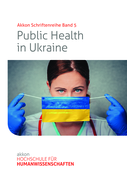
Despite its rich culture, great economic potential, high level of education and last but not least its sheer size – it is the largest state whose borders lie entirely within Europe and is 1.7 times the size of the Federal Republic of Germany – Ukraine seems far away in perception and awareness.
...
Publications on recent dramatic events, such as the Ukraine conflict or the Crimea crisis, have done little to change this. In fact, the armed conflict in the eastern Ukrainian oblasts of Donetsk and Luhansk, which has been ongoing since February 2014, is still a burdening feature of many political and economic difficulties destabilizing the country. News coverage of health issues in Ukraine has recently been dominated by highly critical reports on the handling of the Covid 19 pandemic. This pandemic exacerbated existing weaknesses in the Ukrainian health care system, but at least it did not create any new ones.
more
The main objective of the health systems is to meet the health needs of the population in general, but for this the system must have adequate financing and supply support to cover the entire population in question and check quality, efficiency, equity services, safety and sustainability. However, co
...
nsidering the segmented Peruvian health system, this makes it more deficient in comprehensive care for the population due to the duplication of functions, misuse of its resources, absence of complementary services. Due to the COVID-19 pandemic, this deficiency in the Peruvian health system became more evident owing to the high number of
deaths and its state of collapse, combining these factors this scope review aims to map the current state of the Peruvian health system, its structure, synthesize data on the performance of the health system (in terms of access, coverage and quality of health services) and identify the main public health policies available
more
Accessed on 10.09.2022
Para evaluar la situación basal de los PROA en Chile, el grupo iniciativa del Milenio para la Investigación Colaborativa en Resistencia Bacteriana (MICROB-R), realizó una encuesta que en colaboración con el Ministerio de Salud debía ser respondida por los hospitales pÃ
...
ºblicos y privados de mediana y alta complejidad, durante el año 2021. Cabe señalar que debido a la contingencia de la pandemia por COVID-19, la llegada de la información y el monitoreo adecuado de las respuesta a la encuesta
por parte de las SEREMIs y Servicios de Salud se hizo muy dificultosa, lográndose que sólo un 56% de los hospitales respondieran la encuesta.
El presente informe da cuenta de los resultados obtenidos en la encuesta realizada.
more
The war in Ukraine has had devasting impact on women and girls
worldwide, widening gender gaps and increasing rates of food insecurity, malnutrition and energy poverty. This brief reviews the available evidence of that impact, recommending urgent attention to its consequences for women and girls. I
...
ts findings underline the global impacts on gender equality and women’s rights that have been compounded by climate change, environmental degradation and the COVID-19 pandemic,
demonstrating further entrenched inequalities and human rights violations.
more
Lancet Public Health 2022 Published Online October 25, 2022 https://doi.org/10.1016/S2468-2667(22)00197-9
Executive summary
In the past few decades, major public health advances have happened in Europe, with drastic decreases in premature mortality and a life expectancy increase of almost 9 years
...
since 1980. European countries have some of the best health-care systems in the world. However,Europe is challenged with unprecedented and overlapping crises that are detrimental to human health and livelihoods and threaten adaptive capacity, including the
COVID-19 pandemic, the Russian invasion of Ukraine, the fastest-growing migrant crisis since World War 2, population displacement, environmental degradation, and deepening inequalities. Compared with pre-industrial times, the mean average European surface air temperature increase has been almost 1°C higher than the average global temperature increase, and 2022 was the hottest European summer on record.
more
Briefing Note 8.
Ecosystem-based adaptation (EbA) is a strategy for adapting to the adverse impacts of climate change by harnessing nature and the services it can provide. This strategy is crucial for cities and peri-urban areas, threatened by a multitude of climate hazards and home to more than ha
...
lf the human population as of 2018. Despite some outmigration from the largest cities during the COVID-19 pandemic, urbanization will continue, and by 2035, 62.5 percent of the world’s population is expected to reside in urban areas. However, given the need to retrofit, replace and upgrade deteriorating urban infrastructure, and to meet the challenges of climate change, including the urban heat island effect, droughts and more intense flooding, many experts and policymakers see in these demands an opportunity to reinvent cities as greener, less prone to pandemics, and more liveable.
more
This is the seventeenth annual publication of the Global Hunger Index (GHI), a report jointly published by Concern Worldwide and Welthungerhilfe.
The 2022 Global Hunger Index (GHI) brings us face to face with a grim reality. The toxic cocktail of conflict, climate change, and the
...
COVID-19 pandemic had already left millions exposed to food price shocks and vulnerable to further crises. Now the conflict in Ukraine—with its knock-on effects on global supplies of and prices for food, fertilizer, and fuel—is turning a crisis into a catastrophe. But the speed and severity of the global food crisis reflects the fact that millions of people were already living on the precarious edge of hunger—a legacy of past failures to build more just, sustainable, and resilient food systems. This year’s report therefore focuses on food systems transformation and local governance.
According to the 2022 GHI, Hunger is at alarming levels in 5 countries—Central African Republic, Chad, Democratic Republic of the Congo, Madagascar, and Yemen— and is provisionally considered *alarming *in 4 additional countries— Burundi, Somalia, South Sudan, and Syria. In a further 35 countries, hunger is considered serious, based on 2022 GHI scores and provisional designations.
more
This is the seventeenth annual publication of the Global Hunger Index (GHI), a report jointly published by Concern Worldwide and Welthungerhilfe.
The 2022 Global Hunger Index (GHI) brings us face to face with a grim reality. The toxic cocktail of conflict, climate change, and the
...
COVID-19 pandemic had already left millions exposed to food price shocks and vulnerable to further crises. Now the conflict in Ukraine—with its knock-on effects on global supplies of and prices for food, fertilizer, and fuel—is turning a crisis into a catastrophe.
But the speed and severity of the global food crisis reflects the fact that millions of people were already living on the precarious edge of hunger—a legacy of past failures to build more just, sustainable, and resilient food systems. This year’s report therefore focuses on food systems transformation and local governance.
According to the 2022 GHI, Hunger is at alarming levels in 5 countries—Central African Republic, Chad, Democratic Republic of the Congo, Madagascar, and Yemen— and is provisionally considered *alarming *in 4 additional countries— Burundi, Somalia, South Sudan, and Syria. In a further 35 countries, hunger is considered serious, based on 2022 GHI scores and provisional designations.
more
This global progress report attempts to lay the groundwork for the kind of accelerated action needed. Section 1 presents key data, trends and developments in women’s, children’s and adolescents’ health and well-being. That is followed in Section 2 by a deeper dive into the impact of the
...
COVID-19 pandemic, which has created and contributed to many threats and challenges to progress for women, children and adolescents. In Section 3, the report concludes with recommendations for accelerating progress towards the achievement of the 2030 Agenda even in such challenging times, with an emphasis on partnership
and clear-eyed recognition of the consequences of failing to do better.
more
Currently, Mauritius and Seychelles have 85 and 82 percent vaccination rates, respectively, surpassing the 70 percent target set by the WHO in 2021. Countries that have attained vaccination rates of between 50 and 70 percent include Liberia
at 67 percent, Rwanda at 66 percent, Morocco at 62 percent
...
, and Tunisia at 53 percent. Meanwhile, about 25.3 percent of the continent's population is fully vaccinated.
Africa has registered over 12 million COVID-19 cases since the beginning of the pandemic. The following countries have recorded the highest number of cases: Egypt, Ethiopia, Libya, Morocco, South Africa, and Tunisia
more
Atlas of African Health Statistics 2022: Health situation analysis of the WHO African Region
Since 2019, we have been implementing Phase 2 of the regional Transformation Agenda, which informs and aligns with the global WHO Transformation, to ensure WHO is accountable, driven by re- sults and provid
...
ing value for money in the pursuit of better health. Our global priority in this period is to contribute to delivering on the triple billion targets of expanding universal health coverage, protecting people from emergencies, and promoting health and well-being for people across the Region.
This year’s Atlas of African Health Statistics is being produced in the context of the COVID-19 pandemic that we have been expe- riencing for over two years. The ongoing coronavirus pandemic, together with other health emergencies in the WHO African Re- gion, is yet again testing the strength and resilience of our health systems. Indeed, the impact of COVID-19 is visible in the disruption of services. The report also presents the latest data for more than 50 health-related indicators of the Sustainable Development Goals and WHO’s “triple billion” targets and provides comprehensive country-level statistics using the results chain of the AFRO frame- work of actions for strengthening health systems to achieve UHC and the health-related SDGs.
more

Los coronavirus son un grupo de virus ARN altamente diversos de la familia Coronaviridae que se dividen en
4 géneros: alfa, beta, gamma y delta, y que causan enfermedades de leves a graves en humanos y animales
(1-3). Existen coronavirus humanos endémicos como los alfacoronavirus 229E y NL63 y l
...
os betacoronavirus
OC43 y HKU1 que pueden causar enfermedades de tipo influenza o neumonía en humanos. Sin embargo,
tres betacoronavirus zoonóticos que pueden causar enfermedad severa en humanos han emergido: el
coronavirus del Síndrome respiratorio agudo grave (SARS-CoV), el coronavirus del Síndrome respiratorio de
Oriente Medio (MERS-CoV) y el virus de COVID-19 (SARS-CoV-2).
more
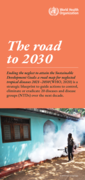
In January 2021, the World Health Organization (WHO) published a new road map to address the burden of disease and death imposed by neglected tropical diseases (NTDs). The end of the first year of the 2021-2030 NTD road map is an opportunity to take stock of where we stand and how we plan to move fo
...
rward.
Considerable progress has been made since 2012 when the first road map was adopted. As of 6 June 2022, forty-six countries have eliminated at least one NTD, while 600 million people no longer require treatment because they are no longer exposed to risks associated with the pathogens that previously harmed them. In some cases, diseases that have plagued humanity for centuries, such as sleeping sickness and Guinea worm disease, are at an all-time low. Less tangible, but also important, there has been significant progress in the way NTDs are viewed. Additionally, the disruptive impact of the COVID-19 pandemic on NTD programmes is evident.
This brochure is the first in a series of advocacy briefs for the new NTD road map presenting highlights of success and challenges towards attaining the 2030 goals.
more
