
Filter
5749
Text search:
media
Featured
475
1493
Language
4891
584
239
96
96
88
70
50
36
15
14
12
11
11
11
11
10
9
9
8
7
7
6
6
6
6
5
5
5
5
4
4
4
4
4
4
4
4
4
3
3
3
3
3
3
2
2
2
2
2
2
2
2
2
2
2
2
2
2
1
1
1
1
1
1
1
1
1
1
1
1
1
1
1
Document type
3217
876
689
303
230
119
86
78
38
37
30
20
17
5
2
Countries
262
209
154
125
121
118
111
110
109
104
103
101
92
91
88
74
73
72
72
67
66
62
60
59
58
57
56
47
46
44
42
40
39
38
38
37
37
36
35
33
31
31
31
31
30
29
28
27
25
23
22
20
20
20
19
19
17
16
16
16
16
16
15
14
14
14
13
12
12
12
11
11
10
10
10
9
9
8
8
8
8
7
7
7
7
7
7
6
6
6
6
5
5
5
5
5
5
5
5
4
4
4
4
4
4
4
4
4
3
3
3
3
3
3
3
3
3
3
2
2
2
2
2
2
2
2
2
2
2
2
2
2
1
1
1
1
1
1
1
1
1
1
1
1
1
1
1
1
1
1
1
Authors & Publishers
597
228
226
159
156
120
92
86
78
65
63
63
43
43
43
42
36
34
33
31
31
28
28
27
26
25
24
23
23
22
22
21
20
20
19
19
19
19
18
18
17
17
17
16
16
15
15
15
15
15
14
14
14
14
14
13
13
13
13
13
13
12
12
11
11
11
11
11
11
11
11
10
10
10
10
10
10
10
10
10
9
9
9
9
9
9
9
9
9
9
9
9
8
8
8
8
8
8
8
8
8
8
7
7
7
7
7
7
7
6
6
6
6
6
6
6
6
6
6
6
6
6
6
6
6
6
6
6
5
5
5
5
5
5
5
5
5
5
5
5
5
5
5
5
5
5
5
5
5
5
5
5
5
5
5
5
5
5
5
5
5
5
5
5
5
5
5
5
5
5
5
5
5
5
5
5
4
4
4
4
4
4
4
4
4
4
4
4
4
4
4
4
4
4
4
4
4
4
4
4
4
4
4
4
4
4
4
4
4
4
4
4
4
4
4
4
4
4
4
4
4
4
4
4
4
4
4
4
4
4
4
4
4
4
4
4
4
4
3
3
3
3
3
3
3
3
3
3
3
3
3
3
3
3
3
3
3
3
3
3
3
3
3
3
3
3
3
3
3
3
3
3
3
3
3
3
3
3
3
3
3
3
3
3
3
3
3
3
3
3
3
3
3
3
3
3
3
3
3
3
3
3
3
3
3
3
3
3
3
3
3
3
3
3
3
3
3
3
3
3
3
3
3
3
3
3
3
3
3
3
3
3
3
3
3
3
3
3
3
3
3
3
3
3
3
3
3
3
3
3
3
3
3
3
3
3
3
3
3
3
3
3
3
3
3
3
3
3
3
3
3
2
2
2
2
2
2
2
2
2
2
2
2
2
2
2
2
2
2
2
2
2
2
2
2
2
2
2
2
2
2
2
2
2
2
2
2
2
2
2
2
2
2
2
2
2
2
2
2
2
2
2
2
2
2
2
2
2
2
2
2
2
2
2
2
2
2
2
2
2
2
2
2
2
2
2
2
2
2
2
2
2
2
2
2
2
2
2
2
2
2
2
2
2
2
2
2
2
2
2
2
2
2
2
2
2
2
2
2
2
2
2
2
2
2
2
2
2
2
2
2
2
2
2
2
2
2
2
2
2
2
2
2
2
2
2
2
2
2
2
2
2
2
2
2
2
2
2
2
2
2
2
2
2
2
2
2
2
2
2
2
2
2
2
2
2
2
2
2
2
2
2
2
2
2
2
2
2
2
2
2
2
2
2
2
2
2
2
2
2
2
2
2
2
2
2
2
2
2
2
2
2
2
2
2
2
2
2
2
2
2
2
2
2
2
2
2
2
2
2
2
2
2
2
2
2
2
2
2
2
2
2
2
2
2
2
2
2
2
2
2
2
2
2
2
2
2
2
2
2
2
2
2
2
2
2
2
2
2
2
2
2
2
2
2
2
2
2
2
2
2
2
2
2
2
2
2
2
2
2
2
2
2
2
2
2
2
2
2
2
2
2
2
2
2
2
2
2
2
2
2
2
2
2
2
2
2
2
2
2
2
2
2
2
2
2
2
2
2
2
2
2
2
2
2
2
2
2
2
2
2
2
2
2
2
2
2
2
2
2
2
2
2
2
2
2
2
2
2
2
2
2
2
2
2
2
2
2
2
2
2
2
2
2
2
2
2
2
1
1
1
1
1
1
1
1
1
1
1
1
1
1
1
1
1
1
1
1
1
1
1
1
1
1
1
1
1
1
1
1
1
1
1
1
1
1
1
1
1
1
1
1
1
1
1
1
1
1
1
1
1
1
1
1
1
1
1
1
1
1
1
1
1
1
1
1
1
1
1
1
1
1
1
1
1
1
1
1
1
1
1
1
1
1
1
1
1
1
1
1
1
1
1
1
1
1
1
1
1
1
1
1
1
1
1
1
1
1
1
1
1
1
1
1
1
1
1
1
1
1
1
1
1
1
1
1
1
1
1
1
1
1
1
1
1
1
1
1
1
1
1
1
1
1
1
1
1
1
1
1
1
1
1
1
1
1
1
1
1
1
1
1
1
1
1
1
1
1
1
1
1
1
1
1
1
1
1
1
1
1
1
1
1
1
1
1
1
1
1
1
1
1
1
1
1
1
1
1
1
1
1
1
1
1
1
1
1
1
1
1
1
1
1
1
1
1
1
1
1
1
1
1
1
1
1
1
1
1
1
1
1
1
1
1
1
1
1
1
1
1
1
1
1
1
1
1
1
1
1
1
1
1
1
1
1
1
1
1
1
1
1
1
1
1
1
1
1
1
1
1
1
1
1
1
1
1
1
1
1
1
1
1
1
1
1
1
1
1
1
1
1
1
1
1
1
1
1
1
1
1
1
1
1
1
1
1
1
1
1
1
1
1
1
1
1
1
1
1
1
1
1
1
1
1
1
1
1
1
1
1
1
1
1
1
1
1
1
1
1
1
1
1
1
1
1
1
1
1
1
1
1
1
1
1
1
1
1
1
1
1
1
1
1
1
1
1
1
1
1
1
1
1
1
1
1
1
1
1
1
1
1
1
1
1
1
1
1
1
1
1
1
1
1
1
1
1
1
1
1
1
1
1
1
1
1
1
1
1
1
1
1
1
1
1
1
1
1
1
1
1
1
1
1
1
1
1
1
1
1
1
1
1
1
1
1
1
1
1
1
1
1
1
1
1
1
1
1
1
1
1
1
1
1
1
1
1
1
1
1
1
1
1
1
1
1
1
1
1
1
1
1
1
1
1
1
1
1
1
1
1
1
1
1
1
1
1
1
1
1
1
1
1
1
1
1
1
1
1
1
1
1
1
1
1
1
1
1
1
1
1
1
1
1
1
1
1
1
1
1
1
1
1
1
1
1
1
1
1
1
1
1
1
1
1
1
1
1
1
1
1
1
1
1
1
1
1
1
1
1
1
1
1
1
1
1
1
1
1
1
1
1
1
1
1
1
1
1
1
1
1
1
1
1
1
1
1
1
1
1
1
1
1
1
1
1
1
1
1
1
1
1
1
1
1
1
1
1
1
1
1
1
1
1
1
1
1
1
1
1
1
1
1
1
1
1
1
1
1
1
1
1
1
1
1
1
1
1
1
1
1
1
1
1
1
1
1
1
1
1
1
1
1
1
1
1
1
1
1
1
1
1
1
1
1
1
1
1
1
1
1
1
1
1
1
1
1
1
1
1
1
1
1
1
1
1
1
1
1
1
1
1
1
1
1
1
1
1
1
1
1
1
1
1
1
1
1
1
1
1
1
1
1
1
1
1
1
1
1
1
1
1
1
1
1
1
1
1
1
1
1
1
1
1
1
1
1
1
1
1
1
1
1
1
1
1
1
1
1
1
1
1
1
1
1
1
1
1
1
1
1
1
1
1
1
1
1
1
1
1
1
1
1
1
1
1
1
1
1
1
1
1
1
1
1
1
1
1
1
1
1
1
1
1
1
1
1
1
1
1
1
1
1
1
1
1
1
1
1
1
1
1
1
1
1
1
1
1
1
1
1
1
1
1
1
1
1
1
1
1
1
1
1
1
1
1
1
1
1
1
1
1
1
1
1
1
1
1
1
1
1
1
1
1
1
1
1
1
1
1
1
1
1
1
1
1
1
1
1
1
1
1
1
1
1
1
1
1
1
1
1
1
1
1
1
1
1
1
1
1
1
1
1
1
1
1
1
1
1
1
1
1
1
1
1
1
1
1
1
1
1
1
1
1
1
1
1
1
1
1
1
1
1
1
1
1
1
1
1
1
1
1
1
1
1
1
1
1
1
1
1
1
1
1
1
1
1
1
1
1
1
1
1
1
1
1
1
1
1
1
1
1
1
1
1
1
1
1
1
1
1
1
1
1
1
1
1
1
1
1
1
1
1
1
1
1
1
1
1
1
1
1
1
1
1
1
1
1
1
1
1
1
1
1
1
1
1
1
1
1
1
1
1
1
1
1
1
1
1
1
1
1
1
1
1
1
1
1
1
1
1
1
1
1
1
1
1
1
1
1
1
1
1
1
1
1
1
1
1
1
1
1
1
1
1
1
1
1
1
1
1
1
1
1
1
1
1
1
1
1
1
1
1
1
1
1
1
1
1
1
1
1
1
1
1
1
1
1
1
1
1
1
1
1
1
1
1
1
1
1
1
1
1
1
1
1
1
1
1
1
1
1
1
1
1
1
1
1
1
1
1
1
1
1
1
1
1
1
1
1
1
1
1
1
1
1
1
1
1
1
1
1
1
1
1
1
1
1
1
1
1
1
1
1
1
1
1
1
1
1
1
1
1
1
1
1
1
1
1
1
1
1
1
1
1
1
1
1
1
1
1
1
1
1
1
1
1
1
1
1
1
1
1
1
1
1
1
1
1
1
1
1
1
1
1
1
1
1
1
1
1
1
1
1
1
1
1
1
1
1
1
1
1
1
1
1
1
1
1
1
1
1
1
1
1
1
1
1
1
1
1
1
1
1
1
1
1
1
1
1
1
1
1
1
1
1
1
1
1
1
1
1
1
1
1
1
1
1
1
1
1
1
1
1
1
1
1
1
1
1
1
1
1
1
1
1
1
1
1
1
1
1
1
1
1
1
1
1
1
1
1
1
1
1
1
1
1
1
1
1
1
1
1
1
1
1
1
1
1
1
1
1
1
1
1
1
1
1
1
1
1
1
1
1
1
1
1
1
1
1
1
1
1
1
1
1
1
1
1
1
1
1
1
1
1
1
1
1
1
1
1
1
1
1
1
1
1
1
1
1
1
1
1
1
1
1
1
1
1
1
1
1
1
1
1
1
1
1
1
1
1
1
1
1
1
1
1
1
1
1
1
1
1
1
1
1
1
1
1
1
1
1
1
1
1
1
1
1
1
1
1
1
1
1
1
1
1
1
1
1
1
1
1
1
1
1
1
1
1
1
1
1
1
1
1
1
1
1
1
1
1
1
1
1
1
1
1
1
1
1
1
1
1
1
1
1
1
1
1
1
1
1
1
1
1
1
1
1
1
1
1
1
1
1
1
1
1
1
1
1
1
1
1
1
1
1
1
1
1
1
1
1
1
1
1
1
1
1
1
1
1
1
1
1
1
1
1
1
1
1
1
1
1
1
1
1
1
1
1
1
1
1
1
1
1
1
1
1
1
1
1
1
1
1
1
1
1
1
1
1
1
1
1
1
1
1
1
1
1
1
1
1
1
1
1
1
1
1
1
1
1
1
1
1
1
1
1
1
1
1
1
1
1
1
1
1
1
1
1
1
1
1
1
1
1
1
1
1
1
1
1
1
1
1
1
1
1
1
1
1
1
1
1
1
1
1
1
1
1
1
1
1
1
1
1
1
1
1
1
1
1
1
1
1
1
1
1
1
1
1
1
1
1
1
1
1
1
1
1
1
1
1
1
1
1
1
1
1
1
1
1
1
1
1
1
1
1
1
1
1
1
1
1
1
1
1
1
1
1
1
1
1
1
1
1
1
1
1
1
1
1
1
1
1
1
1
1
1
1
1
1
1
1
1
1
1
1
1
1
1
1
1
1
1
1
1
1
1
1
1
1
1
1
1
1
1
1
1
1
1
1
1
1
1
1
1
1
1
1
1
1
1
1
1
1
1
1
1
1
1
1
1
1
1
1
1
1
1
1
1
1
1
1
1
1
1
1
1
1
1
1
1
1
1
1
1
1
1
1
1
1
1
1
1
1
1
1
1
1
1
1
1
1
1
1
1
1
1
1
1
1
1
1
1
1
1
1
1
1
1
1
1
1
1
1
1
1
1
1
1
1
1
1
1
1
1
1
1
1
1
1
1
1
1
1
1
1
1
1
1
1
1
1
1
1
1
1
1
1
1
1
1
1
1
1
1
1
1
1
1
1
1
1
1
1
1
1
1
1
1
1
1
1
1
1
1
1
1
1
1
1
1
1
1
1
1
1
1
1
1
1
1
1
1
1
1
1
1
1
1
1
1
1
1
1
1
1
1
1
1
1
1
1
1
1
1
1
1
1
1
1
1
1
1
1
1
1
1
1
1
1
1
1
1
1
1
1
1
1
1
1
1
1
1
1
1
1
1
1
1
1
1
1
1
1
1
1
1
1
1
1
1
1
1
1
1
1
1
1
1
1
1
1
1
1
1
1
1
1
1
1
1
1
1
1
1
1
1
1
1
1
1
1
1
1
1
1
1
1
1
1
1
1
1
1
1
1
1
1
1
1
1
1
1
1
1
1
1
1
1
1
1
1
1
1
1
1
1
1
1
1
1
1
1
1
1
1
1
1
1
1
1
1
1
1
1
1
1
1
1
1
1
1
1
1
1
1
1
1
1
1
1
1
1
1
1
1
1
1
1
1
1
1
1
1
1
1
1
1
1
1
1
1
1
1
1
1
1
1
1
1
1
1
1
1
1
1
1
1
1
1
1
1
1
1
1
1
1
1
1
1
1
1
1
1
1
1
1
1
1
1
1
1
1
1
1
1
1
1
1
1
1
1
1
1
1
1
1
1
1
1
1
1
1
1
1
1
1
1
1
1
1
1
1
1
1
1
1
1
1
1
1
1
1
1
1
1
1
1
1
1
1
1
1
1
1
1
1
1
1
1
1
1
1
1
1
1
1
1
1
1
1
1
1
1
1
1
1
1
1
1
1
1
1
1
1
1
1
1
1
1
1
1
1
1
1
1
1
1
1
1
1
1
1
1
1
1
1
1
1
1
1
1
1
1
1
1
1
1
1
1
1
1
1
1
1
1
1
1
1
1
1
1
1
1
1
1
1
1
1
1
1
1
1
1
1
1
1
1
1
1
1
1
1
1
1
1
1
1
1
1
1
1
1
1
1
1
1
1
1
1
1
1
1
1
1
1
1
1
1
1
1
1
1
1
1
1
1
1
1
1
1
1
1
1
1
1
1
1
1
1
1
1
1
1
1
1
1
1
1
1
1
1
1
1
1
1
1
1
1
1
1
1
1
1
1
1
1
1
1
1
1
1
1
1
1
1
1
1
1
1
1
1
1
1
1
1
1
1
1
1
1
1
1
1
1
1
1
1
1
1
1
1
1
1
1
1
1
1
1
1
1
1
1
1
1
1
1
1
1
1
1
1
1
1
1
1
1
1
1
1
1
1
1
1
1
1
1
1
1
1
1
1
1
1
1
1
1
1
1
1
1
1
1
1
1
1
1
1
1
1
1
1
1
1
1
1
1
1
1
1
1
1
1
1
1
1
1
1
1
1
1
1
1
1
1
1
1
1
1
1
1
1
1
1
1
1
1
1
1
1
1
1
1
1
1
1
1
1
1
1
1
1
1
1
1
1
1
1
1
1
1
1
1
1
1
1
1
1
1
1
1
1
1
1
1
1
1
1
1
1
1
1
1
1
1
1
1
1
1
1
1
1
1
1
1
1
1
1
1
1
1
1
1
1
1
1
1
1
1
1
1
1
1
1
1
1
1
1
1
1
1
1
1
1
1
1
1
1
1
1
1
1
1
1
1
1
1
1
1
1
1
1
1
1
1
1
1
1
1
1
1
1
1
1
1
1
1
1
1
1
1
1
1
1
1
1
1
1
1
1
1
1
1
1
1
1
1
1
1
1
1
1
1
1
1
1
1
1
1
1
1
1
1
1
1
1
1
1
1
1
1
1
1
1
1
1
1
1
1
1
1
1
1
1
1
1
1
1
1
1
1
1
1
1
1
1
1
1
1
1
1
1
1
1
1
1
1
1
1
1
1
1
1
1
1
1
1
1
1
1
1
1
1
1
1
1
1
1
1
1
1
1
1
1
1
1
1
1
1
1
1
1
1
1
1
1
1
1
1
1
1
1
1
1
1
1
1
1
1
1
1
1
1
1
1
1
1
1
1
1
1
1
1
1
1
1
1
1
1
1
1
1
1
1
1
1
1
1
1
1
1
1
1
1
1
1
1
1
1
1
1
1
1
1
1
1
1
1
1
1
1
1
1
1
1
1
1
1
1
1
1
1
1
1
1
1
1
1
1
1
1
1
1
1
1
1
1
1
1
1
1
1
1
1
1
1
1
1
1
1
1
1
1
1
1
1
1
1
1
1
1
1
1
1
1
1
1
1
1
1
1
1
1
1
1
1
1
1
1
1
1
1
1
1
1
1
1
1
1
1
1
1
1
1
1
1
1
1
1
1
1
1
1
1
1
1
1
1
1
1
1
1
1
1
1
1
1
1
1
1
1
1
1
1
1
1
1
1
1
1
1
1
1
1
1
1
1
1
1
1
1
1
1
1
1
1
1
1
1
1
1
1
1
1
1
1
1
1
1
1
1
1
1
1
1
1
1
1
1
1
1
1
1
1
1
1
1
1
1
1
1
1
1
1
1
1
1
1
1
1
1
1
1
1
1
1
1
1
1
1
1
1
1
1
1
1
1
1
1
1
1
1
1
1
1
1
1
1
1
1
1
1
1
1
1
1
1
1
1
1
1
1
1
1
1
1
1
1
1
1
1
1
1
1
1
1
1
1
1
1
1
1
1
1
1
1
1
1
1
1
1
1
1
1
1
1
1
1
1
1
1
1
1
1
1
1
1
1
1
1
1
1
1
1
1
1
1
1
1
1
1
1
1
1
1
1
1
1
1
1
1
1
1
1
1
1
1
1
1
1
1
1
1
1
1
1
1
1
1
1
1
1
1
1
1
1
1
1
1
1
1
1
1
1
1
1
1
1
1
1
1
1
1
1
1
1
1
1
1
1
1
1
1
1
1
1
1
1
1
1
1
1
1
1
1
1
1
1
1
1
1
1
1
1
1
1
1
1
1
1
1
1
1
1
1
1
1
1
1
1
1
1
1
1
1
1
1
1
1
1
1
1
1
1
1
1
1
1
1
1
1
1
1
1
1
1
1
1
1
1
1
1
1
1
1
1
1
1
1
1
1
1
1
1
1
1
1
1
1
1
1
1
1
1
1
1
1
1
1
1
1
1
1
1
1
1
1
1
1
1
1
1
1
1
1
1
1
1
1
1
1
1
1
1
1
1
1
1
1
1
1
1
1
1
1
1
1
1
1
1
1
1
1
1
1
1
1
1
1
1
1
1
1
1
1
1
1
1
1
1
1
1
1
1
1
1
1
1
1
1
1
1
1
1
1
1
1
1
1
1
1
1
1
1
1
1
1
1
1
1
1
1
1
1
1
1
1
1
1
1
1
1
1
1
1
1
1
1
1
1
1
1
1
1
1
1
1
1
1
1
1
1
1
1
1
1
1
1
1
1
1
1
1
1
1
1
1
1
1
1
1
1
1
1
1
1
1
1
1
1
1
1
1
1
1
1
1
1
1
1
1
1
1
1
1
1
1
1
1
1
1
1
1
1
1
1
1
1
1
1
1
1
1
1
1
1
1
1
1
1
1
1
1
1
1
1
1
1
1
1
1
1
1
1
1
1
1
1
1
1
1
1
1
1
1
1
1
1
1
1
1
1
1
1
1
1
1
1
1
1
1
1
1
1
1
1
1
1
1
1
1
1
1
1
1
1
1
1
1
1
1
1
1
1
1
1
1
1
1
1
1
1
1
1
1
1
1
1
1
1
1
1
1
1
1
1
1
1
1
1
1
1
1
1
1
1
1
1
1
1
1
1
1
1
1
1
1
1
1
1
1
1
1
1
1
1
1
1
1
1
1
1
1
1
1
1
1
1
1
1
1
1
1
1
1
1
1
1
1
1
1
1
1
1
1
1
1
1
1
1
1
1
1
1
1
1
1
1
1
1
1
1
1
1
1
1
1
1
1
1
1
1
1
1
1
1
1
1
1
1
1
1
1
1
1
1
1
1
1
1
1
1
1
1
1
1
1
1
1
1
1
1
1
1
1
1
1
1
1
1
1
1
1
1
1
1
1
1
1
1
1
1
1
1
1
1
1
1
1
1
1
1
1
1
1
1
1
1
1
1
1
1
1
1
1
1
1
1
1
1
1
1
1
1
1
1
1
1
1
1
1
1
1
1
1
1
1
1
1
1
1
1
1
1
1
1
1
1
1
1
1
1
1
1
1
1
1
1
1
1
1
1
1
1
1
1
1
1
1
1
1
1
1
1
1
1
1
1
Publication Years
1
1745
3482
484
32
3
1
1
Category
2377
300
292
263
182
93
44
8
2
1
Toolboxes
754
450
317
222
211
187
179
172
168
168
136
106
93
90
85
79
76
67
59
51
36
31
22
7
1
Quantification des intrants de santé : supplément SRMNI - Prévision de la consommation de produits sélectionnés pour la santé reproductive, maternelle, néonatale et infantile
JSI Research & Training Institute, Inc., et Management Sciences for Health
JSI Research & Training Institute, Inc., et Management Sciences for Health
(2016)
C1
Soumis à l’Agence des États-Unis pour le développement international par le programme SIAPS (Systems for Improved Access to Pharmaceuticals and Services ou Programme des systèmes pour l’amélioration de l’accès aux produits et services pharmaceutiques). Arlington, VA : Management Sciences
...
for Health. Soumis à l’UNICEF par JSI, Arlington, VA : JSI Research & Training Institute, Inc.
Ce guide aidera les gestionnaires de programmes, les prestataires de service et les experts techniques lorsqu'ils réaliseront une quantification des besoins en intrants pour les 13 produits indispensables à la santé reproductive, maternelle, néonatale et infantile, dont la priorité a été établie par la Commission des Nations Unies pour les produits qui sauvent la vie des femmes et des enfants. Ce supplément à la quantification ne saurait être utilisé sans son guide principal – Quantification of Health Commodities: A Guide to Forecasting and Supply Planning for Procurement (Quantification des intrants de santé : un guide pour la prévision des achats et la planification des approvisionnements). * Ce supplément décrit les étapes à suivre pour la prévision de la consommation de ces intrants, en l’absence de données sur la consommation ou les services. Ensuite, afin de compléter la quantification, les utilisateurs doivent se référer au guide principal de quantification pour l’étape de planification de l’approvisionnement.
more
This guide provides national stakeholders and advocates with information and guidance to update the national essential medicines list to include a new commodity, a new indication, or a new formulation based on the available evidence and based on country need and disease burden. While the actors, tim
...
eline, and process may vary from country to country, this guide presents the broad steps involved in revising an EML for any health commodity. Additional resources and a glossary are included to provide supplemental information and to clarify key terms.
more

The five hepatitis viruses have different epidemiological profiles, and their impact, duration, and transmission route also vary. The most common transmission routes contributing to the spread of hepatitis are exposure to infected blood via blood transfusion or unsafe injection practices, consumptio
...
n of contaminated food and drinking water, and transmission from mother to child during pregnancy and delivery. Also, unsafe injection practices, including the use of unsterile needles and syringes, serve as a major pathway for the spread of hepatitis B and C, and reducing transmission of both diseases requires addressing these practices.
more

The National Strategic Plan is based on the following guiding principles:
1) Life-course approach: adolescence is a key decade in the course of life that influences the health outcomes later in life.
2) Comprehensive approach: It recognizes the cross cutting health and development needs o ... f young people such as intentional and unintentional injuries and violence, SRH, HIV/AIDS, mental health, substance use, violence, substance use and substance use disorders, infectious diseases and common conditions.
3) Equity and rights-based approach: focusing on equitable access to services to all adolescents including vulnerable groups and the recognizing the need to move from aspirations to obligations in fulflling young people rights for the highest attainable standard of health.
4) Multisectoral approach: recognizing cognizant of the fact that holistic development of young people requires multisectoral approach involving education, social welfare. more
1) Life-course approach: adolescence is a key decade in the course of life that influences the health outcomes later in life.
2) Comprehensive approach: It recognizes the cross cutting health and development needs o ... f young people such as intentional and unintentional injuries and violence, SRH, HIV/AIDS, mental health, substance use, violence, substance use and substance use disorders, infectious diseases and common conditions.
3) Equity and rights-based approach: focusing on equitable access to services to all adolescents including vulnerable groups and the recognizing the need to move from aspirations to obligations in fulflling young people rights for the highest attainable standard of health.
4) Multisectoral approach: recognizing cognizant of the fact that holistic development of young people requires multisectoral approach involving education, social welfare. more
Policy Brief, Updated in March 2017
Key messages
• The criminalisation of male-to-male sex heightens HIV and other sexually transmissible infection (STI) risks and vulnerabilities, and hinders access to HIV and STI services including HCT.
• Men who have sex with men (MSM) and tran ... sgender persons (TG) are not a homogeneous group. As such, a variety of HCT service models are needed to reach the various segments of these populations.
• Stigma and discrimination remain ongoing issues at a number of service points. Targeted training of service providers is therefore needed so that MSM and TG are not discouraged from seeking HCT and high-quality prevention, treatment and care services.
• Specific guidelines on HIV prevention, treatment and care services for MSM or TG help improve the delivery of services. more
Key messages
• The criminalisation of male-to-male sex heightens HIV and other sexually transmissible infection (STI) risks and vulnerabilities, and hinders access to HIV and STI services including HCT.
• Men who have sex with men (MSM) and tran ... sgender persons (TG) are not a homogeneous group. As such, a variety of HCT service models are needed to reach the various segments of these populations.
• Stigma and discrimination remain ongoing issues at a number of service points. Targeted training of service providers is therefore needed so that MSM and TG are not discouraged from seeking HCT and high-quality prevention, treatment and care services.
• Specific guidelines on HIV prevention, treatment and care services for MSM or TG help improve the delivery of services. more
Policy Brief, Updated in March 2017
Key messages
• Meaningful involvement of sex workers in the HIV response through peer-based education and outreach and consultation in policy making and programme planning is vital to reduce their vulnerability to HIV and other sexually transmitted inf ... ections (STIs) and ensure that the challenges they face are addressed adequately.
• Sex workers (female, transgender and male) have the right to protect their health through accessing comprehensive and evidence-informed HIV and sexual and reproductive health (SRH) interventions.
• Innovative HIV prevention strategies and creative use of combination interventions are needed to reach mobile and ”hard to reach” sex workers. more
Key messages
• Meaningful involvement of sex workers in the HIV response through peer-based education and outreach and consultation in policy making and programme planning is vital to reduce their vulnerability to HIV and other sexually transmitted inf ... ections (STIs) and ensure that the challenges they face are addressed adequately.
• Sex workers (female, transgender and male) have the right to protect their health through accessing comprehensive and evidence-informed HIV and sexual and reproductive health (SRH) interventions.
• Innovative HIV prevention strategies and creative use of combination interventions are needed to reach mobile and ”hard to reach” sex workers. more
This predominantly qualitative research on disability and development in Myanmar was conducted between August 2011 and February 2012, in three commercial centres of Yangon, Mandalay and Taunggyi. Stakeholders of service providers, persons with disabilities (PWDs) and families of disabled people were
...
interviewed in order to discover the needs and challenges that they face. Discoveries were made concerning independent living and adaptive education, vocational training and livelihoods challenges, community-based rehabilitation, organisational and human resource capacity, and information channels, networking and cooperation between organisations.
The study found that PWDS, especially those with intellectually disabilities, need training for independent living, adaptive special education, motor development programs and behaviour modification programs in special institutions. Effective services and programs are necessary in all of these areas of need. more
The study found that PWDS, especially those with intellectually disabilities, need training for independent living, adaptive special education, motor development programs and behaviour modification programs in special institutions. Effective services and programs are necessary in all of these areas of need. more
This landscape analysis aims to:
1. Identify and document supportive policies and best practices in family planning program implementation
2. Assess the quality of family planning service provision
3. Propose recommendations for scaling up best family planning practices and new interv ... entions to improve program effectiveness and increase utilization of contraception more
1. Identify and document supportive policies and best practices in family planning program implementation
2. Assess the quality of family planning service provision
3. Propose recommendations for scaling up best family planning practices and new interv ... entions to improve program effectiveness and increase utilization of contraception more
The vision of the new Strategic Action Plan for Strengthening HIS in Myanmar 2017- 2021 is “A strong health information system for a strong health system”. The mission statement of HIS in Myanmar also developed during the strategic planning exercise is “Generating and making accessible compreh
...
ensive, integrated and timely health information for decision making at different levels of health system”. The goal of the HIS in Myanmar formulated during the assessment is “ To provide complete, valid, reliable and timely health information for making right decisions at the right time to ensure an equitable, effective, efficient and responsive health system”.
more

National Tuberculosis Programme
The National Strategic Plan (NSP) for Tuberculosis (TB) 2016-2020 builds on the past experiences for the National Tuberculosis Programme and its partners. This NSP provides a roadmap for delivering quality TB prevention and care service to the entire population, ... as an integral part of the country's move toward Universal Health Coverage. Between 1990 and 2015, Myanmar reduced the prevalence of TB by 50%, meeting the targets set by the Millennium Development Goals. Going forward, the country aims to further accelerate the rate decline. more
The National Strategic Plan (NSP) for Tuberculosis (TB) 2016-2020 builds on the past experiences for the National Tuberculosis Programme and its partners. This NSP provides a roadmap for delivering quality TB prevention and care service to the entire population, ... as an integral part of the country's move toward Universal Health Coverage. Between 1990 and 2015, Myanmar reduced the prevalence of TB by 50%, meeting the targets set by the Millennium Development Goals. Going forward, the country aims to further accelerate the rate decline. more
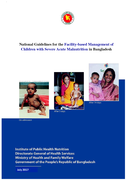
Level of stunting among Bangladeshi children <5years declined from 51% in 2004 to 36% and underweight from 41% in 2007 to 33% (BDHS 2014). But the decrease in wasting rate is not as expected, which is only from 17% to 14.3 % over last decade. Approximately 3.1 % (BDHS 2014) of under-5 children suffering from SAM only b
...
y weight-for-length or height z-score (WHZ) <-3 criterion and estimated to be a total of ~ 450,000. Because, there are no national information on prevalence of SAM using mid upper arm circumference (MUAC) and presence of bipedal oedema in under-5 children, thus the actual number of children suffering from SAM could be much higher than the current estimate.
more

Following the encouraging initial results of the pilot project, the Ministry of Health is committed to increasing access to MDR-TB diagnosis, treatment and care. An expansion plan for the programmatic management of drug-resistant TB has been developed and forms part of the Five Year National Strateg
...
ic Plan for TB Control, 2011-2015. The long-term goals of the MDR-TB expansion plan are threefold:
1. Diagnosis of MDR-TB in all groups of patients at risk for MDR-TB
2. Diagnosis of MDR-TB in all HIV-infected TB patients
3. MDR-TB treatment for all patients diagnosed with MDR-TB under WHO-endorsed treatment protocols more
1. Diagnosis of MDR-TB in all groups of patients at risk for MDR-TB
2. Diagnosis of MDR-TB in all HIV-infected TB patients
3. MDR-TB treatment for all patients diagnosed with MDR-TB under WHO-endorsed treatment protocols more
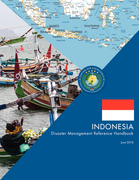
The Indonesian government has reformed its laws, policies, and institutions to better manage disaster risk since the significant 2004 Indian Ocean Tsunami. The Government of Indonesia now has contingency plans for every disaster-prone city which identifies its vulnerabilities, outlines the relief re
...
sponse, and builds overall preparedness. In 2007, the government introduced a disaster management bill that incorporated disaster management prevention into disaster management response. In 2008, Indonesia created the National Disaster Management Agency (Badan Nasional Penanggulangan Bencana, BNPB). The new shift led to the strengthening of the country’s disaster management agency, and the addition of district branches and representatives. Despite the progress made, more work is needed at the local level as well as integration of disaster risk reduction in government departments.11 Under Indonesia’s 2007 Disaster Management law, provincial and district administrations are mandated to head disaster management during a crisis.
more
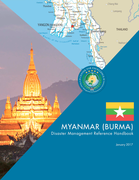
Myanmar has made significant progress in its disaster management policies, plans, and procedures since 2008, when Cyclone Nargis impacted the country leaving devastation in its aftermath. The Government of Myanmar (GoM) has modified the government structure and created new authorities and plans to i
...
mprove the effectiveness of disaster management at all levels. While this progress is encouraging and shows the determination of the government to make necessary adjustments, the resources to implement the policy changes have been slower to develop. Myanmar has made significant progress in its disaster management policies, plans, and procedures since 2008, when Cyclone Nargis impacted the country leaving devastation in its aftermath. The Government of Myanmar (GoM) has modified the government structure and created new authorities and plans to improve the effectiveness of disaster management at all levels. While this progress is encouraging and shows the determination of the government to make necessary adjustments, the resources to implement the policy changes have been slower to develop.
more
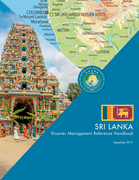
Recently, Sri Lanka has been impacted by multiple natural disasters. Sri Lanka experienced a landslide in October 2014, and flooding in December 2014.8 Sri Lanka withstood the worst drought conditions witnessed in four decades in 2016; the extreme drought conditions extended into 2017 and produced s
...
ubstantial economic and social effects. The drought was responsible for an increase in national poverty levels, due to reduced cultivation income, especially for rural farmers. ... In May 2017, Sri Lanka experienced continuous rains causing flash floods and extreme devastation. However, despite natural disasters and challenges posed by a complex political environment, Sri Lanka’s financial performance remained largely satisfactory in the first half of 2017.
more

The Philippine Government, International Non-government Organizations (INGOs) and local NGOs are all making attempts to address the impact of disasters and climate change at various levels. The Philippine Government has made significant strides in the implementation of disaster risk reduction (DRR)
...
planning and activities through the development of the National Disaster Risk Reduction and Management Council (NDRRMC) which acts as the lead agency for DRR in the Philippines. The disaster focal points are the NDRRMC and the Office of Civil Defence (OCD). The Department of Social Welfare and Development (DSWD) is responsible for leading immediate disaster relief efforts.
The Armed Forces of the Philippines (AFP) is a primary responder in disasters and have been deployed frequently to several disaster relief operations in the country in recent years. The Philippines has endured disasters that involve national and international assistance. more
The Armed Forces of the Philippines (AFP) is a primary responder in disasters and have been deployed frequently to several disaster relief operations in the country in recent years. The Philippines has endured disasters that involve national and international assistance. more
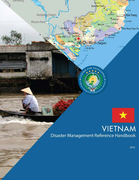
The National Strategy for Natural Disaster, Prevention, Response and Mitigation to 2020, which outlines Vietnam’s main disaster risk management objectives and the National Target Program (NTP) form the overarching policy framework for disaster risk management and climate change adaption activities
...
. The CCFSC’s main mandate is to translate this strategy into action. Other decrees and laws are also complementary. The Government of Vietnam has prioritized disaster preparedness, recognizing that the most cost-effective measures to mitigate flood related disasters are often non-structural. These measures include flood mapping, river flood warning systems, television-based disaster information and warning systems, training at all government and grassroots levels on disaster preparedness, and reforestation of certain areas. Land use and development have also been addressed through government regulations.
more

Cambodia drafted and adopted the National Action Plan for Disaster Risk Reduction 2014-2018 in 2014. This plan finalized the required policies and legal processes to strengthen DRM in Cambodia. It also focused on capacity building at national and sub-national levels and provided dedicated resources
...
for strengthening the NCDM and the Sub-National Committees for Disaster Management. Cambodia’s legislature then passed the Law on Disaster Management in June 2015. This legal framework for disaster management assigns legally binding roles and responsibilities, establishes institutions, and assists with the allocation of resources and coordination. NCDM is Cambodia’s lead government agency for emergency preparedness and relief. The NCDM provides the overall leadership of the Plan of Action for Disaster Risk Reduction (DRR) coordination in Cambodia. Cambodia has adopted the Cambodia Red Cross (CRC) as the primary partner for relief operations.
more
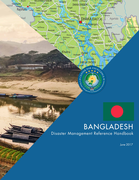
Climate change is a growing concern for Bangladesh because 90 percent of the country is approximately 10 feet above sea level. An evaluation was completed which discovered that high tides in Bangladesh were increasing 10 times more rapidly than the global average. This predicted rapid increase in se
...
a levels places Bangladesh four times higher than the global average. By 2050, approximately 20 percent of the inhabited land in Bangladesh will be inundated by the sea resulting in displacement for nearly 20 million people. The Government of Bangladesh has implemented policies and plans to focus on climate change concerns, but there is still much work to be completed.
Bangladesh is a nation which will continue to experience the devastating effects of climate change. These concerns for the nation are recognized and the Government of Bangladesh is working progressively to implement mitigation and preparedness measures along with making national economic and transportation improvements to better sever and protect the people of Bangladesh. more
Bangladesh is a nation which will continue to experience the devastating effects of climate change. These concerns for the nation are recognized and the Government of Bangladesh is working progressively to implement mitigation and preparedness measures along with making national economic and transportation improvements to better sever and protect the people of Bangladesh. more

Lao People’s Democratic Republic (Lao PDR), also referred to as Laos, or Lao, is exposed to natural disasters such as flooding, typhoons, cyclones, drought, and earthquakes. The country is vulnerable to recurrent, sudden-onset and slow onset natural disasters with flooding, storms and typhoons hav
...
ing a large effect on the population. The country remains highly vulnerable to agricultural shocks and natural disasters.
Lao has established Community Based Disaster Risk Reduction (CBDRR) practices as a result of the many natural disasters the country faces. CBDRR is implemented at the village level to enhance community preparedness and to decrease village vulnerabilities to disasters.
Lao established the National Disaster Management Committee (NDMC) as its national disaster management platform and the National Disaster Management Office (NDMO) to be responsible for DRM (Disaster Risk Management) and DRR activities in the country. more
Lao has established Community Based Disaster Risk Reduction (CBDRR) practices as a result of the many natural disasters the country faces. CBDRR is implemented at the village level to enhance community preparedness and to decrease village vulnerabilities to disasters.
Lao established the National Disaster Management Committee (NDMC) as its national disaster management platform and the National Disaster Management Office (NDMO) to be responsible for DRM (Disaster Risk Management) and DRR activities in the country. more
