
Filter
2607
Text search:
social
resistance
Featured
259
738
Language
2455
83
71
42
25
20
11
9
3
3
3
3
3
2
2
2
2
2
2
2
2
2
1
1
1
1
1
1
1
1
1
1
1
1
1
1
1
1
1
1
1
1
1
Document type
1538
409
327
130
104
34
30
16
5
5
5
3
Countries
120
99
70
69
67
62
61
50
48
44
43
43
41
40
40
36
32
31
31
29
27
26
25
24
22
21
21
21
20
18
17
15
14
14
13
12
12
12
11
11
10
10
10
9
9
8
8
8
8
7
7
7
7
6
6
6
6
6
6
5
5
5
5
5
5
5
5
5
4
4
4
3
3
3
3
3
3
3
3
3
2
2
2
2
2
2
2
2
2
2
2
2
2
2
2
1
1
1
1
1
1
1
1
1
1
1
1
1
1
1
1
1
1
1
1
1
1
1
1
1
1
1
1
1
1
Authors & Publishers
345
159
104
75
72
44
39
37
33
31
21
18
18
18
16
14
14
14
12
12
12
12
12
11
11
11
11
10
10
10
10
10
9
9
9
9
9
8
8
8
8
8
8
7
7
7
7
7
7
7
7
7
6
6
6
6
6
6
6
6
6
6
5
5
5
5
5
5
5
5
5
5
5
5
5
5
5
5
5
5
5
5
5
5
5
5
4
4
4
4
4
4
4
4
4
4
4
4
4
4
4
4
4
4
4
4
4
4
4
4
4
4
4
3
3
3
3
3
3
3
3
3
3
3
3
3
3
3
3
3
3
3
3
3
3
3
3
3
3
3
3
3
3
3
3
3
3
3
3
3
3
3
3
3
3
3
3
3
3
3
3
3
3
3
3
3
3
3
3
3
3
3
3
3
3
3
2
2
2
2
2
2
2
2
2
2
2
2
2
2
2
2
2
2
2
2
2
2
2
2
2
2
2
2
2
2
2
2
2
2
2
2
2
2
2
2
2
2
2
2
2
2
2
2
2
2
2
2
2
2
2
2
2
2
2
2
2
2
2
2
2
2
2
2
2
2
2
2
2
2
2
2
2
2
2
2
2
2
2
2
2
2
2
2
2
2
2
2
2
2
2
2
2
2
2
2
2
2
2
2
2
2
2
2
2
2
2
2
2
2
2
2
2
2
2
2
2
2
2
2
2
2
2
2
2
2
2
2
2
2
2
2
2
2
2
2
2
2
2
2
2
2
2
2
2
2
2
2
2
2
2
2
2
2
2
2
2
2
2
2
2
2
2
2
2
2
2
2
2
2
2
2
2
2
2
2
2
2
2
2
1
1
1
1
1
1
1
1
1
1
1
1
1
1
1
1
1
1
1
1
1
1
1
1
1
1
1
1
1
1
1
1
1
1
1
1
1
1
1
1
1
1
1
1
1
1
1
1
1
1
1
1
1
1
1
1
1
1
1
1
1
1
1
1
1
1
1
1
1
1
1
1
1
1
1
1
1
1
1
1
1
1
1
1
1
1
1
1
1
1
1
1
1
1
1
1
1
1
1
1
1
1
1
1
1
1
1
1
1
1
1
1
1
1
1
1
1
1
1
1
1
1
1
1
1
1
1
1
1
1
1
1
1
1
1
1
1
1
1
1
1
1
1
1
1
1
1
1
1
1
1
1
1
1
1
1
1
1
1
1
1
1
1
1
1
1
1
1
1
1
1
1
1
1
1
1
1
1
1
1
1
1
1
1
1
1
1
1
1
1
1
1
1
1
1
1
1
1
1
1
1
1
1
1
1
1
1
1
1
1
1
1
1
1
1
1
1
1
1
1
1
1
1
1
1
1
1
1
1
1
1
1
1
1
1
1
1
1
1
1
1
1
1
1
1
1
1
1
1
1
1
1
1
1
1
1
1
1
1
1
1
1
1
1
1
1
1
1
1
1
1
1
1
1
1
1
1
1
1
1
1
1
1
1
1
1
1
1
1
1
1
1
1
1
1
1
1
1
1
1
1
1
1
1
1
1
1
1
1
1
1
1
1
1
1
1
1
1
1
1
1
1
1
1
1
1
1
1
1
1
1
1
1
1
1
1
1
1
1
1
1
1
1
1
1
1
1
1
1
1
1
1
1
1
1
1
1
1
1
1
1
1
1
1
1
1
1
1
1
1
1
1
1
1
1
1
1
1
1
1
1
1
1
1
1
1
1
1
1
1
1
1
1
1
1
1
1
1
1
1
1
1
1
1
1
1
1
1
1
1
1
1
1
1
1
1
1
1
1
1
1
1
1
1
1
1
1
1
1
1
1
1
1
1
1
1
1
1
1
1
1
1
1
1
1
1
1
1
1
1
1
1
1
1
1
1
1
1
1
1
1
1
1
1
1
1
1
1
1
1
1
1
1
1
1
1
1
1
1
1
1
1
1
1
1
1
1
1
1
1
1
1
1
1
1
1
1
1
1
1
1
1
1
1
1
1
1
1
1
1
1
1
1
1
1
1
1
1
1
1
1
1
1
1
1
1
1
1
1
1
1
1
1
1
1
1
1
1
1
1
1
1
1
1
1
1
1
1
1
1
1
1
1
1
1
1
1
1
1
1
1
1
1
1
1
1
1
1
1
1
1
1
1
1
1
1
1
1
1
1
1
1
1
1
1
1
1
1
1
1
1
1
1
1
1
1
1
1
1
1
1
1
1
1
1
1
1
1
1
1
1
1
1
1
1
1
1
1
1
1
1
1
1
1
1
1
1
1
1
1
1
1
1
1
1
1
1
1
1
1
1
1
1
1
1
1
1
1
1
1
1
1
1
1
1
1
1
1
1
1
1
1
1
1
1
1
1
1
1
1
1
1
1
1
1
1
1
1
1
1
1
1
1
1
1
1
1
1
1
1
1
1
1
1
1
1
1
1
1
1
1
1
1
1
1
1
1
1
1
1
1
1
1
1
1
1
1
1
1
1
1
1
1
1
1
1
1
1
1
1
1
1
1
1
1
1
1
1
1
1
1
1
1
1
1
1
1
1
1
1
1
1
1
1
1
1
1
1
1
1
1
1
1
1
1
1
1
1
1
1
1
1
1
1
1
1
1
1
1
1
1
1
1
1
1
1
1
1
1
1
1
1
1
1
1
1
1
1
1
1
1
1
1
1
1
1
1
1
1
1
1
1
1
1
1
1
1
1
1
1
1
1
1
1
1
1
1
1
1
1
1
1
1
1
1
1
1
1
1
1
1
1
1
1
1
1
1
1
1
1
1
1
1
1
1
1
1
1
1
1
1
1
1
1
1
1
1
1
1
1
1
1
1
1
1
1
1
1
1
1
1
1
1
1
1
1
1
1
1
1
1
1
1
1
1
1
1
1
1
1
1
1
1
1
1
1
1
1
1
1
1
1
1
1
1
1
1
1
1
1
1
1
1
1
1
1
1
1
1
1
1
1
1
1
1
1
1
1
1
1
1
1
1
1
1
1
1
1
1
1
1
1
1
1
1
1
1
1
1
1
1
1
1
1
1
1
1
1
1
1
1
1
1
1
1
1
1
1
1
1
1
1
1
1
1
1
1
1
1
1
1
1
1
1
1
1
1
1
1
1
1
1
1
1
1
1
1
1
1
1
1
1
1
1
1
1
1
1
1
1
1
1
1
1
1
1
1
1
1
1
1
1
1
1
1
1
1
1
1
1
1
1
1
1
1
1
1
1
1
1
1
1
1
1
1
1
1
1
1
1
1
1
1
1
1
1
1
1
1
1
1
1
1
1
1
1
1
1
1
1
1
1
1
1
1
1
1
1
1
1
1
1
1
1
1
1
1
1
1
1
1
1
1
1
1
1
1
1
1
1
1
1
1
1
1
1
1
1
1
1
1
1
1
1
1
1
1
1
1
1
1
1
1
1
1
1
1
1
1
1
1
1
1
1
1
1
1
1
1
1
1
1
1
1
1
1
1
1
1
1
1
1
1
1
1
1
1
1
1
1
1
1
1
1
1
1
1
1
1
1
1
1
1
1
1
1
1
1
1
1
1
1
1
1
1
1
1
1
1
1
1
1
1
1
1
1
1
1
1
1
1
1
1
1
1
1
1
1
1
1
1
1
1
1
1
1
1
1
1
1
1
1
1
1
1
1
1
1
1
1
1
1
1
1
1
1
1
1
1
1
1
1
1
1
1
1
1
1
1
1
1
1
1
1
1
1
1
1
1
1
1
1
1
1
1
1
1
1
1
1
1
1
1
1
1
1
1
1
1
1
1
1
1
1
1
1
1
1
1
1
1
1
1
1
1
1
1
1
1
1
1
1
1
1
1
1
1
1
1
1
1
1
1
1
1
1
1
1
1
1
1
1
1
1
1
1
1
1
1
1
1
1
1
1
1
1
1
1
1
1
1
1
1
1
1
1
1
1
1
1
1
1
1
1
1
1
1
1
1
1
1
1
1
1
1
1
1
1
1
1
1
1
1
1
1
1
1
1
1
1
1
1
1
1
1
1
1
1
1
1
1
1
1
1
1
1
1
1
1
1
1
1
1
1
1
1
1
1
1
1
1
1
1
1
1
1
1
1
1
1
1
1
1
1
1
1
1
1
1
1
1
1
1
1
1
1
1
1
1
1
1
1
1
1
1
1
1
1
1
1
1
1
1
1
1
1
1
1
1
1
1
1
1
1
1
1
1
1
1
1
1
1
1
1
1
1
1
1
1
1
1
1
1
1
1
1
1
1
1
1
1
1
1
1
1
1
1
1
1
1
1
1
1
1
1
1
1
1
1
1
1
1
1
1
1
1
1
1
1
1
1
1
1
1
1
1
1
1
1
1
1
1
1
1
1
1
1
1
1
1
1
1
1
1
1
1
1
1
1
1
1
1
1
1
1
1
1
1
1
1
1
1
1
1
1
1
1
1
1
1
1
1
1
1
1
1
1
1
1
1
1
1
1
1
1
1
1
1
1
1
1
1
1
1
1
1
1
1
1
1
1
1
1
1
1
1
1
1
1
1
1
1
1
1
1
1
1
1
1
1
1
1
1
1
1
1
1
1
1
1
1
1
1
1
1
1
1
1
1
1
1
1
1
1
1
1
1
1
1
1
1
1
1
1
1
1
1
1
1
1
1
1
1
1
1
1
1
1
1
1
1
1
1
1
1
1
1
1
1
1
1
1
1
1
1
1
1
1
1
1
1
1
1
1
1
1
1
1
1
1
1
1
1
1
1
1
1
1
1
1
1
1
1
1
1
1
1
1
1
1
1
1
1
1
1
1
1
1
1
1
1
1
1
1
1
1
1
1
1
1
1
1
1
1
1
1
1
1
1
1
1
1
1
1
1
1
1
1
1
1
1
1
1
1
1
1
1
1
1
1
1
1
1
1
1
1
1
1
1
1
1
1
1
1
1
1
1
1
1
1
1
1
1
1
1
1
1
1
1
1
1
1
1
1
1
1
1
1
1
1
1
1
1
1
1
1
1
1
1
1
1
1
1
1
1
1
1
1
1
1
1
1
1
1
1
1
1
1
1
1
1
1
1
1
1
1
1
1
1
1
1
1
1
1
1
1
1
1
1
1
1
1
1
1
1
1
1
1
1
1
1
1
1
1
1
1
1
1
1
1
1
1
1
1
1
1
1
1
1
1
1
1
1
1
1
1
1
1
1
1
1
1
1
1
1
1
1
1
1
1
1
1
1
1
1
1
1
1
1
1
1
1
1
1
1
1
1
1
1
1
1
1
1
1
1
1
1
1
1
1
1
1
1
1
1
1
1
1
1
1
1
1
1
1
1
1
1
1
1
1
1
1
1
1
1
1
1
1
1
1
1
1
1
1
1
1
1
1
1
1
1
1
1
1
1
1
1
1
1
1
1
1
1
1
1
1
1
1
1
1
1
1
1
1
1
1
1
1
1
1
1
1
1
1
1
1
1
1
1
1
1
1
1
1
1
1
1
1
1
1
1
1
1
1
1
1
1
1
1
1
1
1
1
1
1
1
1
1
1
1
1
1
1
1
1
1
1
1
1
1
1
1
1
1
1
1
1
1
1
1
1
1
1
1
1
1
1
1
1
1
1
1
1
1
1
1
1
1
1
1
1
1
1
1
Publication Years
570
1763
263
9
1
1
Category
915
198
161
89
88
40
16
3
2
1
Toolboxes
308
242
178
142
128
108
84
81
79
57
56
43
43
41
39
34
33
25
18
15
14
11
7
1
1
INDEX-TB Guidelines - Guidelines on extra-pulmonary tuberculosis for India
Indian Council of Medical Research (ICMR), Global Health Advocates, Cochrane Infectious Diseases Group
World Health Organisation (WHO)
(2016)
C1
The main objective of these guidelines is to provide guidance on up-to-date, uniform, evidence-informed practices for suspecting, diagnosing and managing various forms of extra-pulmonary tuberculosis (EPTB) at all levels of healthcare delivery. They can then contribute to the National Programme to i
...
mprove detection, care and outcomes in EPTB; to help the programme with initiation of treatment, adherence and completion whilst minimizing drug toxicity and overtreatment; and contribute to practices that minimize the development of drug resistance.
more
Introduction to ART
i-base
(2018)
C2
May 2018
HIV i-Base
ISSN 1475-2077 www.i-Base.info
Watch for out-of-date information
First questions
You and your doctor Resistance and adherence Treatment choices
COVID-19 has heavily emphasized how contact tracing is crucial for managing outbreaks, and as part of the strategy for adjusting, and eventually lifting, lockdowns and other stringent public health and social measures. As the pandemic develops furth
...
er, it will be a core measure to manage further waves of infection. In early June 2020, the World Health Organization (WHO) convened an online global consultation on contact tracing in the context of COVID-19, looking at the lessons of the pandemic to date; known and emerging best practices; and the measures necessary for urgent implementation, scale-up, maintenance and enhancement of contact tracing activities.
more
In its report from 2014, the Working Group outlines the various factors influencing vaccine acceptance or refusal, and what can be done to create social norms around vaccine acceptance and to encourage the general public regarding the necessity of v
...
accination.
more

The report highlights key trends and developments in laws affecting people living with HIV and key populations in Asia and the Pacific over the five-year period 2014–2019. It updates the legal and policy review conducted in 2016 for UNAIDS, UNDP and the United Nations Economic and
...
Social Commission for Asia and the Pacific (ESCAP). A database of laws of the 38 Member States of ESCAP was created as part of this review. The database identifies laws that are either punitive or enabling for people living with HIV and key populations in Asia and the Pacific.
more
Bioethics - Medical, Ethical and Legal Perspectives
There’s evidence that implementing the four medical ethics principles may be challenging especially in low income country contexts with extreme resource scarcity and limited capacity to facilitate deliberations on the different ethical dilemmas.
...
These challenges can partly be explained by the social, economic, and political contexts in which the decisions are made, as well as the limited time, training and guidance to facilitate ethical decision making. Based on current literature, and using the example of bedside rationing; this chapter synthesizes the challenges clinicians face when operationalizing the four principle; identifying the opportunities to address them. We suggest that clinicians’ ability to implement the four principles are constrained by meso‐ and macro‐level decision making as well as their lack of training, explicit guidelines, and peer support. To ameliorate this situation, current efforts to strengthen the clinicians’ capacity to make ethical decisions should be complimented with developing of context relevant guidelines for ethical clinical decision making. The renewed global commitment to the sustainable development goals and universal healthcare coverage should be recognized as an opportunity to leverage resources and champion the integration of equity and justice as a core value in resource allocation at the bedside, meso-, macro- and global levels.
more
Development of one or more vaccines for Neisseria gonorrhoeae is an important objective for sexual and reproductive health worldwide, and for the fight against antimicrobial resistance.
WHO preferred product characteristics (PPCs) provide strateg
...
ic guidance as to WHO’s preferences for new vaccines in priority disease areas. PPCs are intended to encourage innovation and development of vaccines for use in settings most relevant to the global unmet public health need.
Gonococcal vaccine PPCs describe global public health goals for gonococcal vaccines and preferred parameters pertaining to vaccine indications and target populations, safety and efficacy considerations, and immunization strategies.
more
Community health workers (CHWs) enable marginalised communities, often experiencing structural poverty, to access healthcare. Trust, important in all patient–provider relationships, is difficult to build in such
communities, particularly when stigma associated with HIV/AIDS, tuberculosis and now
...
COVID-19, is widespread.
CHWs, responsible for bringing people back into care, must repair trust. In South Africa, where a national CHW programme is being rolled out, marginalised communities have high levels of unemployment, domestic violence and injury. In this complex social environment, we explored CHW workplace trust, interpersonal trust between the patient and CHW, and the institutional trust patients place in the health system
more
The strategic framework gives guidance to public and private health facilities and health workers on compliance with standards relating to IPC practices. To further assist health facilities to implement the IPC strategic framework, this practical implementation manual has been developed in parallel
...
to accompany the document.
These implementation strategies should be read in conjunction with the National Infection Prevention and Control (IPC) Strategic Framework (2020) to support an IPC programme at health facility level towards reducing healthcare-associated infections (HAI) and antimicrobial resistance (AMR). This manual is aligned with the World Health Organization (WHO) Core Component IPC programme recommendations and highlights the essentials for developing and improving IPC at health facility level in a systematic, stepwise manner for South Africa. It supports the Framework for the Prevention and Containment of AMR in South African Hospitals (2018).
more
French and European food systems need to be trans- formed in order to address health, environmental and social challenges.
Le présent document rassemble une série de recommandations émises par l’Organisation mondiale de la Santé (OMS) et l’Organisation panaméricaine de la Santé (OPS) pour aider les professionnels chargés des programmes de lutte antivectorielle en Amérique latine et dans les Caraïbes aux niv
...
eaux national, infranational et local à mettre à jour et prendre des decisions à base factuelle qui touchent les mesures de lutte antivectorielle les mieux adaptées à chaque situation particulière. La GIV peut être utilisée lorsque la cible est la surveillance et la lutte ou l’élimination (en function de chaque situation) des MTV et peut contribuer à réduire le développement de la résistance aux insecticides au moyen de l’utilisation rationnelle de ces produits. Le présent document contient les instructions nécessaires pour mener à bien le mandat établi par l’OPS en 2008 (résolution CD48.R8, document CD48/13), en particulier, il complémente une série de guides de l’OMS publiés en 2012
more
The WHO standard: Universal access to rapid tuberculosis diagnostics sets benchmarks to achieve universal access to WHO-recommended rapid diagnostics (WRDs), increase bacteriologically confirmed tuberculosis and drug resistance detection, and reduce
...
the time to diagnosis. WHO-recommended rapid diagnostics are highly accurate, cost-effective, reduce the time to treatment initiation, and impact patient-important outcomes.
more

FACTI Panel Interim Report
The High-Level Panel on International Financial Accountability, Transparency and Integrity for Achieving the 2030 Agenda (FACTI Panel)
The High-Level Panel on International Financial Accountability, Transparency and Integrity for Achieving the 2030 Agenda (FACTI Panel)
(2020)
CC
The High-Level Panel on International Financial Accountability, Transparency and Integrity for Achieving the 2030 Agenda (FACTI Panel) was convened by the 74th President of United Nations General Assembly and the 75th President of the Economic and Social
...
Council on 2 March 2020. The objective of the FACTI Panel is to contribute to the overall efforts undertaken by Member States to implement the ambitious and transformational vision of the 2030 Agenda for Sustainable Development. It is mandated to review current challenges and trends related to financial accountability, transparency and integrity, and to make evidence-based recommendations to close remaining gaps in the international system.
more

The development of this draft Proposed programme budget 2022–2023 comes at a unique moment for WHO. The world is in the grip of the coronavirus disease (COVID-19) pandemic and faces health, social and economic consequences on an unprecedented scal
...
e. Although it is not known when the COVID-19 pandemic will end, recent encouraging vaccine results, in addition to the examples of countries that have achieved good results through public health measures, hold out the prospect of better days ahead. The full impact of the pandemic cannot yet be determined. But whatever its implications, the Secretariat will rise to the challenge and is ready to adapt so that it is fully equipped to support Member States for any eventuality in the future – to make sure that the world will never again have to face this kind of crisis.
more
Many features of the environment have been found to exert an important influence on cardiovascular disease (CVD) risk, progression, and severity. Changes in the environment due to migration to different geographic locations, modifications in lifestyle choices, and shifts in
...
social policies and cultural practices alter CVD risk, even in the absence of genetic changes. Nevertheless, the cumulative impact of the environment on CVD risk has been difficult to assess
and the mechanisms by which some environment factors influence CVD remain obscure. Human environments are complex; and their natural, social and personal domains are highly variable due to diversity in human ecosystems, evolutionary histories, social structures, and individual choices. Accumulating evidence supports the notion that ecological features such as the diurnal cycles of
light and day, sunlight exposure, seasons, and geographic characteristics of the natural environment such altitude, latitude and greenspaces are important determinants of cardiovascular health and CVD risk. In highly developed societies, the influence of the natural environment is moderated by the physical characteristics of the social environments such as the built environment
and pollution, as well as by socioeconomic status and social networks. These attributes of the
social environment shape lifestyle choices that significantly modify CVD risk. An understanding
of how different domains of the environment, individually and collectively, affect CVD risk could
lead to a better appraisal of CVD, and aid in the development of new preventive and therapeutic
strategies to limit the increasingly high global burden of heart disease and stroke.
more
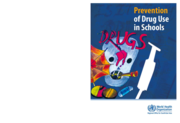
Prevention of drug use in schools
Ranaweera, S.; and D. Samarashinghe
World Health Organization (WHO), Regional Office for South-East Asia
(2022)
C_WHO
Schools are generally the most popular setting for drug-use-
prevention programmes, and are used both by governmental and
non-governmental agencies. This may be for many reasons: ease of
obtaining funding for school drug-use-prevention programmes, the
captive audience, and the popular perception
...
that drug prevention
should start from schools, or the need to show that action is being
taken to control a serious social problem.
more
Clinical guideline, Methods, Evidence and Recommendations
In this guideline the following is covered: information needs of people with chronic hep
titis B and their carers; where children, young people and adults with chronic hepatitis B a-
should be assessed; assessment of liver disease, includi
...
ng the use of non-invasive tests and genotype testing; criteria for offering antiviral treatment; the efficacy, safety and cost effectiveness of currently available treatments; selection of first-line therapy; management of treatment failure or drug resistance; prophylactic treatment during im-
munosuppressive therapy; and monitoring for treatment response
more
Package and approaches in areas of intense transmission of Ebola virus
World Health Organization
(2014)
Ebola interventions: The intervention to combat Ebola aims to stop human-to-human transmission. The package is composed of five elements necessary to control the spread of the disease: care to patients, contact monitoring, safe burials, laboratory support and
...
social mobilisation.
The document also describes key information on Ebola virus disease, patient care, contact tracing and monitoring, safe and dignified burial, laboratory diagnosis.
more
Mental, Neurological, and Substance Use Disorders
Vikram Patel, Dan Chisholm, Tarun Dua et al.
International Bank for Reconstruction and Development The World Bank
(2016)
CC
Disease Control Priorities, 3rdEdition: Volume 4.
Mental, neurological, and substance use disorders are common, highly disabling, and associated with significant premature mortality. The impact of these disorders on the social and economic well-be
...
ingof individuals, families, and societies is large, growing, and underestimated
more
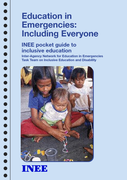
INEE pocket gu ide to inclusive education.
This guide is aimed at anyone working to provide, manage or support education services in emergencies and complements the INEE Minimum Standards.
The Pocket Guide to Inclusive Education outlines useful principles for an inclusive education approach in
...
emergencies and provides advice for planning, implementing and monitoring. The guide also looks at the issue of resistance to inclusion, and highlights ways in which organisations can support their emergency staff to develop more inclusive education responses. Available in Arabic, English, Indonesia, French, Spanish
more
