
Filter
1255
Text search:
participation
restrictions
Featured
97
283
Language
Document type
681
256
141
77
60
15
14
9
1
1
Countries
55
45
37
32
32
29
26
26
24
24
22
19
19
19
18
17
14
14
13
12
12
12
12
11
10
10
10
10
9
9
9
9
9
8
8
8
8
7
7
7
7
7
7
6
6
5
5
5
5
5
5
5
5
5
5
5
4
4
4
4
4
4
4
4
4
4
3
3
3
3
2
2
2
2
2
2
2
2
2
2
2
2
2
1
1
1
1
1
1
1
1
1
1
1
1
1
1
1
1
1
1
1
1
1
1
1
1
1
1
1
1
Authors & Publishers
Publication Years
Category
407
74
74
61
48
20
1
1
Toolboxes
181
123
102
77
76
53
38
36
33
32
25
24
24
23
23
15
10
9
9
9
4
3
1
1
Accessed: 17.11.2019
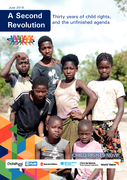
The report showed commitments made three decades ago to protect the rights of children remain unfulfilled for millions. Violence still affects countless children. Discrimination based on age, gender, disability, sexual orientation and religion harms children worldwide.
Key factors include a lack
...
Washington, D.C., ÉUA, du 26 au 30 septembre 2016
Point 4.10 de l’ordre du jour provisoire
CD55/14 8 juillet 2016
Original : anglais
Menstrual Hygiene Management
recommended
Operational Guidelines.
Guidelines for the development of educational programmes for MHM, including tips on the topics to address and methods to assess girls’ practices in a respectful way with practical tools
A guide for civil society
Accessed: 30.01.2020

Strengthening the capacities of SUN Countries by sharing and disseminating good practices in the fight against malnutrition.
This report is a summary of the results of the preparation and implementation of the Learning Route (LR) organized jointly by the SUN (Scaling Up Nutrition) Movement’s S
...
Ce plan d’action qui est arrivée à son terme en décembre 2015, a permis de mettre en œuvre plusieurs stratégies combinées ayant abouti à des avancées significatives. Parmi les résultats obtenus, il est noté un TPC de 21,2 % avec des besoins non satisfaits (BNS) estimés à 25,2% (EDS con
...

Recent increases in family planning (FP) use have been reported among women of reproductive age in union (WRAU) in Senegal. However, trends have not been monitored among harder-to-reach groups (including adolescents, unmarried and rural poor women), key to understanding whether FP progress is equita
...
Improving the quality of hospital antibiotic use is a major goal of WHO’s global action plan to combat antimicrobial resistance. The WHO Essential Medicines List Access, Watch, and Reserve (AWaRe) classification could facilitate simple stewardship interventions that are widely applicable globally.
...
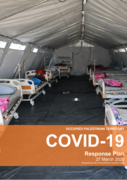
The primary focus of the plan continues to be prevention, preparedness and treatment of the the Novel Coronavirus (COVID-19) outbreak. Central to the plan are the following overall objectives:
To prevent further transmission of COVID-19 in the oPt;
To provide adequate care for patients aff
...
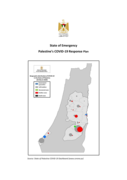
The purpose of this plan is to:
Present the GoP’s strategy and actions;
Propose an aid coordination approach;
Identify the critical support needs, including for: public health response to COVID-19; budget support to maintain government services; and diplomatic engagement with region
...

Infectious diseases like COVID-19 can disrupt the environments in which children grow and develop. Disruptions to families, friendships, daily routines and the wider community can have negative consequences for children’s well-being, development and protection. In addition, measures used to preven
...

Accessed: 02.04.2020
March – June 2020
This update: 3 April 2020

FAO’s component of the Global COVID-19 Humanitarian Response Plan
18.5.2020

This strategy, produced by IFRC, UNICEF and WHO, provides an overview of RCCE coordination approach and priorities across the different phases of the COVID-19 preparedness and response

This document provides guidance on the implementation of the shielding approach in urban areas in LICs and crisis-affected regions. It is intended for the community itself, national and local governance institutions, and humanitarian and development actors operating in the country.

While the COVID-19 pandemic threatens all members of society, persons with disabilities are disproportionately impacted due to attitudinal, environmental and institutional barriers that are reproduced in the COVID-19 response.
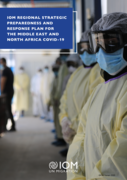
While the full effects of COVID-19 remain unknown, the pandemic continues to profoundly impact regional migration and mobility dynamics, with deep health, social and economic consequences for the most vulnerable, including migrants, displaced populations and their host communities, and returnees.
