
Filter
606
Text search:
Ministry
of
Public
Health
and
Sanitation,
Kenya
Featured
Recommendations
47
New Publications
163
Language
Document type
No document type
335
Studies & Reports
137
Guidelines
44
Strategic & Response Plan
38
Manuals
24
Situation Updates
12
Training Material
9
Fact sheets
6
Online Courses
1
Countries / Regions
Kenya
150
Global
32
Ethiopia
27
Uganda
26
Africa
21
Malawi
16
Sierra Leone
15
Congo, Democratic Republic of
15
Rwanda
15
Tanzania
13
Liberia
12
Nigeria
11
South Sudan
11
Zambia
10
South Africa
10
Mozambique
8
Guinea
7
Madagascar
6
East and Southern Africa
6
Ghana
5
Zimbabwe
5
Somalia
5
Bangladesh
5
Senegal
4
Nepal
4
Pakistan
4
Cambodia
4
Central African Republic
4
Namibia
4
Botswana
4
West and Central Africa
4
Togo
3
Jordan
3
Syria
3
Indonesia
3
Benin
3
Eswatini/ Swaziland
3
Lesotho
3
Myanmar / Burma
3
Burkina Faso
2
Mali
2
Côte d’Ivoire / Ivory Coast
2
India
2
Lebanon
2
Gambia
2
Sudan
2
Burundi
2
Yemen
2
Middle East and North Africa
2
South–East Asia Region
2
Western and Central Europe
2
Asia
2
Guinea-Bissau
1
Morocco
1
Saudi Arabia
1
Cameroon
1
Niger
1
Haiti
1
Iraq
1
Afghanistan
1
Germany
1
Chad
1
Thailand
1
China
1
North Macedonia
1
Colombia
1
Greece
1
Angola
1
Mexico
1
Western Pacific Region
1
Latin America and the Carribbean
1
Eastern Europe and Central Asia
1
Palestine
1
Albania
1
Laos
1
Iran
1
Georgia
1
Vietnam
1
Japan
1
Mauritius
1
Tunisia
1
Authors & Publishers
Publication Years
Category
Countries
285
Key Resources
45
Public Health
38
Women & Child Health
28
Clinical Guidelines
27
Capacity Building
12
Pharmacy & Technologies
1
Toolboxes
COVID-19
39
Disability
35
Planetary Health
35
AMR
29
HIV
28
Ebola
25
Caregiver
24
Rapid Response
23
Conflict
17
TB
17
Mental Health
15
Global Health Education
15
NTDs
15
Refugee
13
Natural Hazards
11
Cholera
9
Health Financing Toolbox
6
NCDs
3
Specific Hazards
2
Social Ethics
2
Pharmacy
2
Polio
1
Health Financing
1

An estimated 1.3 billion people – or 16% of global population worldwide – experience a significant disability today. Persons with disabilities have the right to the highest attainable standard of
...

WHO needs US$2.54 billion to provide life-saving assistance to millions of people around the world facing health emergencies. WHO’s Health Emerge
...
The International Rescue Committee (IRC) is a leading humanitarian agency dedicated to helping people whose lives have been shattered by conflict and disaster to survive, recover, and gain control
...
Hand hygiene is vital for safe health care delivery, yet practices at the point of care remain suboptimal worldwide. A comprehensive research agenda is therefore necessary to improve our understandi
...
This evaluation is the first systematic effort by UNICEF to generate evidence on how well its global as well as country level Community Management of Acute Malnutrition (CMAM) strategies have worked, including their acceptance
...
The Global Antibiotic Resistance Partnership (GARP)-Mozambique team, in partnership with the Center for Disease Dynamics, Economics & Policy (CDDEP), has produced this report as part of a solid com-mitment to develop actionable policy proposals to t
...
South Africa has faced many challenges over the past two decades, accomplishing profound positive changes in the social structure and government of the nation. This has not yet fully trans
...
The HHFA Comprehensive guide serves as the main reference document for planning and implementing a country HHFA. This guide will promote understanding of:
What the HHFA is
...
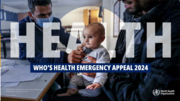
In 2024, we need US$1.5 billion to provide live-saving health care to millions of people in emergencies. An alarming combination of conflict, clima
...
this Service Delivery brief provides evidence-based strategies that can help support drug shops and pharmacies in providing a wider variety of family planning methods
...
Antibiotic resistant bacteria are spreading at an alarming rate and some bacterial infections may once again be untreatable. Antibiotic resistance (ABR), conservatively calculated, causes more than 500 000 deaths every year. This number is projected
...

A review of proactive risk assessment and risk management practices to ensure the safety of drinking-water
Based on information gathered from ...
Based on information gathered from ...

The World Health Organization (WHO) and the global community of countries, partners, donors, technical experts, scientists
...
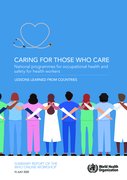
national programmes for occupational health and safety for health workers: lessons learned from countries: summary report
...

Promoting health and preventing disease is a critical component of the effort required to achieve Universal
...

Trachoma causes more vision loss and blindness than any other infection in the world. This disease is caused by Chlamydia trachomatis bacteria. Other variants or strains of these bacteria can cause
...

A guide to increasing coverage and equity in all communities in the African Region
Expanded Programs on Immunization (EPI) is responsible for vaccines and vaccination to control, eliminate ...
Expanded Programs on Immunization (EPI) is responsible for vaccines and vaccination to control, eliminate ...
During the first two years of the project (2019–2020), through a ‘One Health’ approach, comprehensive engagement was established with AMR coordinating committees, WHO regional
...
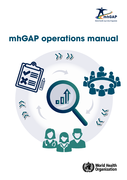
mhGAP is based on evidence-based technical guidelines (4) and provides a set of tools and
training packages to extend service provision. The mhGAP
...

This toolkit for integrated vector management (IVM) is designed to help national and regional programme managers coordinate across sectors to design and run large IVM programmes.
The toolkit pr ...
The toolkit pr ...
