
Filter
3337
Text search:
sustainable
food
Featured
261
997
Language
3251
78
61
45
40
28
26
21
7
6
6
5
5
5
5
4
4
4
3
3
3
3
3
3
3
3
3
3
2
2
2
2
2
2
2
2
2
2
2
2
2
2
2
2
2
1
1
1
1
1
1
1
1
1
1
1
1
1
1
1
1
Document type
1731
809
304
204
147
47
43
22
12
7
5
2
2
Countries
181
106
101
88
80
74
72
72
68
64
63
57
51
51
49
48
48
47
46
45
43
42
37
32
29
27
26
25
25
25
24
22
21
21
20
19
19
19
17
16
15
15
14
14
14
13
13
13
13
13
12
11
11
10
10
9
9
9
8
8
7
7
6
6
6
6
5
5
5
5
4
4
4
4
4
4
4
4
4
3
3
3
3
3
3
3
3
3
3
3
3
2
2
2
2
2
2
2
2
2
2
2
2
2
2
2
2
2
1
1
1
1
1
1
1
1
1
1
1
1
1
1
1
1
1
1
1
1
1
1
1
1
1
Authors & Publishers
346
123
116
107
100
84
61
49
44
37
26
22
22
20
19
19
18
17
16
16
15
14
13
13
13
13
13
12
12
12
12
12
11
11
11
10
10
9
9
9
9
9
9
9
9
9
8
8
8
8
8
8
8
8
7
7
7
7
7
7
7
7
7
7
7
6
6
6
6
6
6
6
6
6
6
6
6
6
6
5
5
5
5
5
5
5
5
5
5
5
5
5
5
5
5
5
5
5
5
5
5
5
5
5
5
5
5
4
4
4
4
4
4
4
4
4
4
4
4
4
4
4
4
4
4
4
4
4
4
4
4
4
4
4
4
4
4
4
4
4
4
4
4
4
4
4
4
4
4
4
4
3
3
3
3
3
3
3
3
3
3
3
3
3
3
3
3
3
3
3
3
3
3
3
3
3
3
3
3
3
3
3
3
3
3
3
3
3
3
3
3
3
3
3
3
3
3
3
3
3
3
3
3
3
3
3
3
3
3
3
3
3
3
2
2
2
2
2
2
2
2
2
2
2
2
2
2
2
2
2
2
2
2
2
2
2
2
2
2
2
2
2
2
2
2
2
2
2
2
2
2
2
2
2
2
2
2
2
2
2
2
2
2
2
2
2
2
2
2
2
2
2
2
2
2
2
2
2
2
2
2
2
2
2
2
2
2
2
2
2
2
2
2
2
2
2
2
2
2
2
2
2
2
2
2
2
2
2
2
2
2
2
2
2
2
2
2
2
2
2
2
2
2
2
2
2
2
2
2
2
2
2
2
2
2
2
2
2
2
2
2
2
2
2
2
2
2
2
2
2
2
2
2
2
2
2
2
2
2
2
2
2
2
2
2
2
2
2
2
2
2
2
2
2
2
2
2
2
2
2
2
2
2
2
2
2
2
2
2
2
2
2
2
2
2
2
2
2
2
2
2
2
2
2
1
1
1
1
1
1
1
1
1
1
1
1
1
1
1
1
1
1
1
1
1
1
1
1
1
1
1
1
1
1
1
1
1
1
1
1
1
1
1
1
1
1
1
1
1
1
1
1
1
1
1
1
1
1
1
1
1
1
1
1
1
1
1
1
1
1
1
1
1
1
1
1
1
1
1
1
1
1
1
1
1
1
1
1
1
1
1
1
1
1
1
1
1
1
1
1
1
1
1
1
1
1
1
1
1
1
1
1
1
1
1
1
1
1
1
1
1
1
1
1
1
1
1
1
1
1
1
1
1
1
1
1
1
1
1
1
1
1
1
1
1
1
1
1
1
1
1
1
1
1
1
1
1
1
1
1
1
1
1
1
1
1
1
1
1
1
1
1
1
1
1
1
1
1
1
1
1
1
1
1
1
1
1
1
1
1
1
1
1
1
1
1
1
1
1
1
1
1
1
1
1
1
1
1
1
1
1
1
1
1
1
1
1
1
1
1
1
1
1
1
1
1
1
1
1
1
1
1
1
1
1
1
1
1
1
1
1
1
1
1
1
1
1
1
1
1
1
1
1
1
1
1
1
1
1
1
1
1
1
1
1
1
1
1
1
1
1
1
1
1
1
1
1
1
1
1
1
1
1
1
1
1
1
1
1
1
1
1
1
1
1
1
1
1
1
1
1
1
1
1
1
1
1
1
1
1
1
1
1
1
1
1
1
1
1
1
1
1
1
1
1
1
1
1
1
1
1
1
1
1
1
1
1
1
1
1
1
1
1
1
1
1
1
1
1
1
1
1
1
1
1
1
1
1
1
1
1
1
1
1
1
1
1
1
1
1
1
1
1
1
1
1
1
1
1
1
1
1
1
1
1
1
1
1
1
1
1
1
1
1
1
1
1
1
1
1
1
1
1
1
1
1
1
1
1
1
1
1
1
1
1
1
1
1
1
1
1
1
1
1
1
1
1
1
1
1
1
1
1
1
1
1
1
1
1
1
1
1
1
1
1
1
1
1
1
1
1
1
1
1
1
1
1
1
1
1
1
1
1
1
1
1
1
1
1
1
1
1
1
1
1
1
1
1
1
1
1
1
1
1
1
1
1
1
1
1
1
1
1
1
1
1
1
1
1
1
1
1
1
1
1
1
1
1
1
1
1
1
1
1
1
1
1
1
1
1
1
1
1
1
1
1
1
1
1
1
1
1
1
1
1
1
1
1
1
1
1
1
1
1
1
1
1
1
1
1
1
1
1
1
1
1
1
1
1
1
1
1
1
1
1
1
1
1
1
1
1
1
1
1
1
1
1
1
1
1
1
1
1
1
1
1
1
1
1
1
1
1
1
1
1
1
1
1
1
1
1
1
1
1
1
1
1
1
1
1
1
1
1
1
1
1
1
1
1
1
1
1
1
1
1
1
1
1
1
1
1
1
1
1
1
1
1
1
1
1
1
1
1
1
1
1
1
1
1
1
1
1
1
1
1
1
1
1
1
1
1
1
1
1
1
1
1
1
1
1
1
1
1
1
1
1
1
1
1
1
1
1
1
1
1
1
1
1
1
1
1
1
1
1
1
1
1
1
1
1
1
1
1
1
1
1
1
1
1
1
1
1
1
1
1
1
1
1
1
1
1
1
1
1
1
1
1
1
1
1
1
1
1
1
1
1
1
1
1
1
1
1
1
1
1
1
1
1
1
1
1
1
1
1
1
1
1
1
1
1
1
1
1
1
1
1
1
1
1
1
1
1
1
1
1
1
1
1
1
1
1
1
1
1
1
1
1
1
1
1
1
1
1
1
1
1
1
1
1
1
1
1
1
1
1
1
1
1
1
1
1
1
1
1
1
1
1
1
1
1
1
1
1
1
1
1
1
1
1
1
1
1
1
1
1
1
1
1
1
1
1
1
1
1
1
1
1
1
1
1
1
1
1
1
1
1
1
1
1
1
1
1
1
1
1
1
1
1
1
1
1
1
1
1
1
1
1
1
1
1
1
1
1
1
1
1
1
1
1
1
1
1
1
1
1
1
1
1
1
1
1
1
1
1
1
1
1
1
1
1
1
1
1
1
1
1
1
1
1
1
1
1
1
1
1
1
1
1
1
1
1
1
1
1
1
1
1
1
1
1
1
1
1
1
1
1
1
1
1
1
1
1
1
1
1
1
1
1
1
1
1
1
1
1
1
1
1
1
1
1
1
1
1
1
1
1
1
1
1
1
1
1
1
1
1
1
1
1
1
1
1
1
1
1
1
1
1
1
1
1
1
1
1
1
1
1
1
1
1
1
1
1
1
1
1
1
1
1
1
1
1
1
1
1
1
1
1
1
1
1
1
1
1
1
1
1
1
1
1
1
1
1
1
1
1
1
1
1
1
1
1
1
1
1
1
1
1
1
1
1
1
1
1
1
1
1
1
1
1
1
1
1
1
1
1
1
1
1
1
1
1
1
1
1
1
1
1
1
1
1
1
1
1
1
1
1
1
1
1
1
1
1
1
1
1
1
1
1
1
1
1
1
1
1
1
1
1
1
1
1
1
1
1
1
1
1
1
1
1
1
1
1
1
1
1
1
1
1
1
1
1
1
1
1
1
1
1
1
1
1
1
1
1
1
1
1
1
1
1
1
1
1
1
1
1
1
1
1
1
1
1
1
1
1
1
1
1
1
1
1
1
1
1
1
1
1
1
1
1
1
1
1
1
1
1
1
1
1
1
1
1
1
1
1
1
1
1
1
1
1
1
1
1
1
1
1
1
1
1
1
1
1
1
1
1
1
1
1
1
1
1
1
1
1
1
1
1
1
1
1
1
1
1
1
1
1
1
1
1
1
1
1
1
1
1
1
1
1
1
1
1
1
1
1
1
1
1
1
1
1
1
1
1
1
1
1
1
1
1
1
1
1
1
1
1
1
1
1
1
1
1
1
1
1
1
1
1
1
1
1
1
1
1
1
1
1
1
1
1
1
1
1
1
1
1
1
1
1
1
1
1
1
1
1
1
1
1
1
1
1
1
1
1
1
1
1
1
1
1
1
1
1
1
1
1
1
1
1
1
1
1
1
1
1
1
1
1
1
1
1
1
1
1
1
1
1
1
1
1
1
1
1
1
1
1
1
1
1
1
1
1
1
1
1
1
1
1
1
1
1
1
1
1
1
1
1
1
1
1
1
1
1
1
1
1
1
1
1
1
1
1
1
1
1
1
1
1
1
1
1
1
1
1
1
1
1
1
1
1
1
1
1
1
1
1
1
1
1
1
1
1
1
1
1
1
1
1
1
1
1
1
1
1
1
1
1
1
1
1
1
1
1
1
1
1
1
1
1
1
1
1
1
1
1
1
1
1
1
1
1
1
1
1
1
1
1
1
1
1
1
1
1
1
1
1
1
1
1
1
1
1
1
1
1
1
1
1
1
1
1
1
1
1
1
1
1
1
1
1
1
1
1
1
1
1
1
1
1
1
1
1
1
1
1
1
1
1
1
1
1
1
1
1
1
1
1
1
1
1
1
1
1
1
1
1
1
1
1
1
1
1
1
1
1
1
1
1
1
1
1
1
1
1
1
1
1
1
1
1
1
1
1
1
1
1
1
1
1
1
1
1
1
1
1
1
1
1
1
1
1
1
1
1
1
1
1
1
1
1
1
1
1
1
1
1
1
1
1
1
1
1
1
1
1
1
1
1
1
1
1
1
1
1
1
1
1
1
1
1
1
1
1
1
1
1
1
1
1
1
1
1
1
1
1
1
1
1
1
1
1
1
1
1
1
1
1
1
1
1
1
1
1
1
1
1
1
1
1
1
1
1
1
1
1
1
1
1
1
1
1
1
1
1
1
1
1
1
1
1
1
1
1
1
1
1
1
1
1
1
1
1
1
1
1
1
1
1
1
1
1
1
1
1
1
1
1
1
1
1
1
1
1
1
1
1
1
1
1
1
1
1
1
1
1
1
1
1
1
1
1
1
1
1
1
1
1
1
1
1
1
1
1
1
1
1
1
1
1
1
1
1
1
1
1
1
1
1
1
1
1
1
1
1
1
1
1
1
1
1
1
1
1
1
1
1
1
1
1
1
1
1
1
1
1
1
1
1
1
1
1
1
1
1
1
1
1
1
1
1
1
1
1
1
1
1
1
1
1
1
1
1
1
1
1
1
1
1
1
1
1
1
1
1
1
1
1
1
1
1
1
1
1
1
1
1
1
1
1
1
1
1
1
1
1
1
1
1
1
1
1
1
1
1
1
1
1
1
1
1
1
1
1
1
1
1
1
1
1
1
1
1
1
1
1
1
1
1
1
1
1
1
1
1
1
1
1
1
1
1
1
1
1
1
1
1
1
1
1
1
1
1
1
1
1
1
1
1
1
1
1
1
1
1
1
1
1
1
1
1
1
1
1
1
1
1
1
1
1
1
1
1
1
1
1
1
1
1
1
1
1
1
1
1
1
1
1
1
1
1
1
1
1
1
1
1
1
1
1
1
1
1
1
1
1
1
1
1
1
1
1
1
1
1
1
1
1
1
1
1
1
1
1
1
1
1
1
1
1
1
1
1
1
1
1
1
1
1
1
1
1
1
1
1
1
1
1
1
1
1
1
1
1
1
1
1
1
1
1
1
1
1
1
1
1
1
1
1
1
1
1
1
1
1
1
1
1
1
1
1
1
1
1
1
1
1
1
1
1
1
1
1
1
1
1
1
1
1
1
1
1
1
1
1
1
1
1
1
1
1
1
1
1
1
1
1
1
1
1
1
1
1
1
1
1
1
1
1
1
1
1
1
1
1
1
1
1
1
1
1
1
1
1
1
1
1
1
1
1
1
1
1
1
1
1
1
1
1
1
1
1
1
1
1
1
1
1
1
1
1
1
1
1
1
1
1
1
1
1
1
1
1
1
1
1
1
1
1
1
1
1
1
1
1
1
1
1
1
1
1
1
1
1
1
1
1
1
1
1
1
1
1
1
1
1
1
1
1
1
1
1
1
1
1
1
1
1
1
1
1
1
1
1
1
1
1
1
1
1
1
1
1
1
1
1
1
1
1
1
1
1
1
1
1
1
1
1
1
1
1
1
1
1
1
1
1
1
1
1
1
1
1
1
1
1
1
1
1
1
1
1
1
1
1
1
1
1
1
1
1
1
1
1
1
1
1
1
1
1
1
1
1
1
1
1
1
1
1
1
1
1
1
1
1
1
1
1
1
1
1
1
1
1
1
1
1
1
1
1
1
1
1
1
1
1
1
1
1
1
1
1
1
Publication Years
1
1029
2019
275
12
1
Category
1322
215
202
160
129
57
14
7
1
Toolboxes
371
211
163
158
151
139
130
129
88
82
70
68
67
65
56
52
47
38
22
12
8
7
7
3
1
1

This document presents a strategic framework, aimed towards the development of sustainable global, regional and national plans relating to laboratory biorisk management.

The aim of these Guidelines is to provide a framework for the conservation and sustainable use of plants in medicine. To do this, the Guidelines describe the various tasks that should be carried out to ensure that where medicinal plants are taken fr
...
om the wild, they are taken on a basis that is sustainable.
The Guidelines conform to the principles of Caring for the Earth, prepared in partnership by IUCN, UNEP and WWF. Caring for the Earth extends the message and scope of the World Conservation Strategy to an ethic of sustainable living, and explains how to integrate conservation with development. Its message is particularly relevant to the issue of medicinal plants, which in many parts of the world are being seriously depleted due to over-exploitation and loss of habitats, resulting in a lack of essential medicines and so reducing options for the future. more
The Guidelines conform to the principles of Caring for the Earth, prepared in partnership by IUCN, UNEP and WWF. Caring for the Earth extends the message and scope of the World Conservation Strategy to an ethic of sustainable living, and explains how to integrate conservation with development. Its message is particularly relevant to the issue of medicinal plants, which in many parts of the world are being seriously depleted due to over-exploitation and loss of habitats, resulting in a lack of essential medicines and so reducing options for the future. more
Chinese Medicine, (2016) 11:37
Medicinal plants are globally valuable sources of herbal products, and they are disappearing at a high speed. This article reviews global trends, developments and prospects for the strategies and methodologies concerning the conservation and ... sustainable use of medicinal plant resources to provide a reliable reference for the conservation and sustainable use of medicinal plants. We emphasized that both conservation strategies (e.g. in situ and ex situ conservation and cultivation practices) and resource management (e.g. good agricultural practices and sustainable use solutions) should be adequately taken into account for the sustainable use of medicinal plant resources. We recommend that biotechnical approaches (e.g. tissue culture, micropropagation, synthetic seed technology, and molecular marker-based approaches) should be applied to improve yield and modify the potency of medicinal plants.
https://doi.org/10.1186/s13020-016-0108-7 more
Medicinal plants are globally valuable sources of herbal products, and they are disappearing at a high speed. This article reviews global trends, developments and prospects for the strategies and methodologies concerning the conservation and ... sustainable use of medicinal plant resources to provide a reliable reference for the conservation and sustainable use of medicinal plants. We emphasized that both conservation strategies (e.g. in situ and ex situ conservation and cultivation practices) and resource management (e.g. good agricultural practices and sustainable use solutions) should be adequately taken into account for the sustainable use of medicinal plant resources. We recommend that biotechnical approaches (e.g. tissue culture, micropropagation, synthetic seed technology, and molecular marker-based approaches) should be applied to improve yield and modify the potency of medicinal plants.
https://doi.org/10.1186/s13020-016-0108-7 more

IOM Ethiopia plans to provide timely and tailored humanitarian assistance and resilience programming for crisis-affected populations in Ethiopia and vulnerable migrant returnees, aiming towards durable and sustainable solutions.
Climate change is resulting in poorer health outcomes, increasing mortality and is a driver of health inequities. However, health is well placed to be a significant part of the solution; the positive health impacts from stronger climate change action can motivate stronger global ambition; health sys
...
tems which are resilient to climate change can help protect their populations from the negative impacts (in the short and longer terms); and sustainable low carbon health systems can make a substantial contribution to reducing national and global emissions.
This fact sheet on climate change and health is part of the Climate Fast Facts series of the United Nations Climate Action team.
more
Assessment in English on South Sudan about Education, Food and Nutrition, Drought, Epidemic and more; published on 22 Jul 2022 by IOM
Small island developing states (SIDS) are a set of islands and coastal states that share similar sustainable development challenges, as a result of their size, geography and vulnerability to climate change. Thirty-nine WHO member states in four regi
...
ons – the African Region, the Region of the Americas, the South-East Asian Region, and the Western Pacific region – are classified as SIDS. Whilst the individual countries differ in many respects, collectively they face unique social, economic and environmental challenges.
more
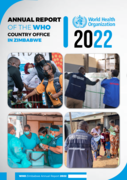
This report highlights the work of the World Health Organization (WHO) in Zimbabwe towards contributing to the triple billion targets in the context of the Sustainable Development Goals (SDGs
In an ambitious new era for health development under the 2030 Agenda for Sustainable Development, WHO and
its partners have a solid foundation of success on which to build. Health plays a fundamental role in development
and is the central focus of
...
Sustainable Development Goal 3, “Ensure healthy lives and promote well-being for all
at all ages”. It is also relevant to all the Sustainable Development Goals. Understanding the significance of the
role of health is a prerequisite for successful collective action on the social, economic and environmental
determinants of health
more

In 2006, the Special Session of African Union Health Ministers adopted the Maputo Plan of Action for implementing the Continental Policy Framework on sexual and reproductive health and rights (SRHR), which expired at the end of 2015. The goal was for all stakeholders and partners to join forces and
...
re-double efforts, so that together, the effective implementation of the Continental Policy framework including universal access to sexual and reproductive health by 2015 in all countries in Africa can be achieved. The Revised Maputo Plan of Action (MPoA) 2016 – 2030 was subsequently endorsed by the African Union Heads of State at the 27th AU Summit in July 2016 in Kigali, Rwanda. The plan reinforces the call for universal access to comprehensive sexual and reproductive health services in Africa and lays foundation to the Sustainable Development Goals, particularly Goal 3 and 5, as well as the African Union Agenda 2063.
more
The materials focus on promoting healthy eating habits and reducing risk factors for non-communicable diseases such as obesity, diabetes, and heart disease. They emphasize actions to limit sugar, salt, and fat intake, including policy recommendations for eliminating trans-fats, reducing saturated fa
...
ts, and improving public awareness through education and labelling. These strategies aim to create healthier food environments and improve dietary behaviors globally.
more

The Planetary Health Report Card is a student-driven, metric-based initiative to inspire planetary health and sustainable healthcare education engagement in medical schools. In addition to inspiring expansion of medical school curricula, we hope to
...
inspire medical schools to expand research efforts, engage with communities most affected by climate change and environmental injustice, support passionate medical students who are trying to organize around planetary health at the institutional level, and implement sustainable practices. A set of metrics in these five category areas allows students and faculty to conduct a needs assessment at their medical school.
more

Current evidence that the climate is changing is overwhelming. Impacts of climate change and variability are being observed: more intense heat-waves, fires and floods; and increased prevalence of food- water- and vector-borne diseases. Climate chang
...
e will put pressure on environmental and health determinants, such as food safety, air pollution and water quantity and quality. A climate-resilient future depends fundamentally on reducing greenhouse gas emissions. Limiting warming to below 2 °C requires transformational technological, institutional, political and behavioural changes: the foundations for this are laid out in the Paris Agreement of December 2015. The health sector can lead by example, shifting to environmentally friendly practices and minimizing its carbon emissions. A climate-resilient future will increasingly depend on managing and reducing climate change risks to protect health. In the near term, this can be enhanced by including climate change in national health programming and creating climate-resilient health systems.
more
Environment International Volume 146, January 2021, 106245.
We use soils to provide 98.8% of our food, but we must ensure that the pressure we place on soils to provide this food in the short-term
...
does not inadvertently push the Earth into a less hospitable state in the long-term. Using the planetary boundaries framework, we show that soils are a master variable for regulating critical Earth-system processes. Indeed, of the seven Earth-systems that have been quantified, soils play a critical and substantial role in changing the Earth-systems in at least two, either directly or indirectly, as well as smaller contributions for a further three.
more
Humanitarian Accountability Report
James Darcy, Jessica Alexander, Maria Kiani et al.
Humanitarian Accountability Partnership (HAP)
(2013)
The report offers an overview of the progress the humanitarian sector has made and the obstacles it has faced over the past 10 years. Accountability is no longer just a fashionable term, there is now a shared understanding of what it takes to be accountable. From changes at policy level, to concrete
...
actions taken in the field, this report documents this sector-wide shift. It also shows that being accountable to the people we aim to serve is not just the right thing to do, it is also the best way to ensure programmes are relevant, effective, efficient and sustainable
more
El Niño conditions persisting during the 2015/16 planting season have caused the worst drought in 35 years in Southern Africa, resulting in a second consecutive failed harvest. This has created severe food shortages and compounded existing vulnerab
...
ilities. Since July 2016, Namibia and Botswana have declared national drought emergencies, in addition to the declarations made earlier by Lesotho, Malawi, Swaziland and Zimbabwe. Madagascar issued a letter of solidarity with the SADC Appeal, and Mozambique has maintained a red alert in affected areas.
more

The main objectives of these guidelines are to:
1. contribute to the quality assurance of medicinal plant materials used as the source for herbal medicines to improve the quality, safety and efficacy of finished herbal products; 2. guide the formulation of national and/or regional GACP guideli ... nes and GACP monographs for medicinal plants and related standard operating procedures; and 3. encourage and support the sustainable cultivation and collection of medicinal plants of good quality in ways that respect and support the conservation of medicinal plants and the environment in general. These guidelines concern the cultivation and collection of medicinal plants and include certain post-harvest operations. more
1. contribute to the quality assurance of medicinal plant materials used as the source for herbal medicines to improve the quality, safety and efficacy of finished herbal products; 2. guide the formulation of national and/or regional GACP guideli ... nes and GACP monographs for medicinal plants and related standard operating procedures; and 3. encourage and support the sustainable cultivation and collection of medicinal plants of good quality in ways that respect and support the conservation of medicinal plants and the environment in general. These guidelines concern the cultivation and collection of medicinal plants and include certain post-harvest operations. more

The Socio-Economic Impact of People Living with HIV at the Household Level in Myanmar
Cercone, James; Pinder, Étoile; Pothuis, Michal et al.
The Republic of the Union of Myanmar, Ministry of Health and Sports; UNDP
(2016)
C1
The study collected data on the impact of HIV-related diseases on income, revenues, economic dependency, consumption, education, health, food security, stigma, discrimination, quality of life, and migration. The study also assessed people living wit
...
h chronic diseases in order to compare the impact of living with HIV/AIDS with the impact of living with a chronic disease.
Stigma, discrimination, and socio-economic exclusion continue to affect the rights and socio-economic opportunities of people living with HIV in Myanmar. Households with a family member who has HIV, have lower incomes, fewer assets and lower home-ownership, compared to households that are not affected by HIV. They also have more household debt, and their families pay a higher rate of interest compared to families not affected by HIV. more
Stigma, discrimination, and socio-economic exclusion continue to affect the rights and socio-economic opportunities of people living with HIV in Myanmar. Households with a family member who has HIV, have lower incomes, fewer assets and lower home-ownership, compared to households that are not affected by HIV. They also have more household debt, and their families pay a higher rate of interest compared to families not affected by HIV. more
Policy Guidance Brief 2
• The potential health risks from climate change include: increase of waterborne and vector-borne diseases, heat-related illnesses, injuries and deaths, food insecurity and increased malnutrition. The poor, women, chil ... dren and the elderly, as well as communities living in remote high-risk areas are most vulnerable.
• The expected results to achieve this outcome are: (i) climate risk management system is well-established, robust and nationally integrated to respond efectively to increased intensity and impact of risks and hazards on people’s health and wellbeing; (ii) improved social protection, gender consideration and risk finance capacity to prepare for and recover from potential loss and damage resulting from climate change; (iii) Myanmar’s health system is improved and can deal with climate-induced health hazards and support climate-vulnerable communities to respond effectively to disaster and health hazards from climate change. more
• The potential health risks from climate change include: increase of waterborne and vector-borne diseases, heat-related illnesses, injuries and deaths, food insecurity and increased malnutrition. The poor, women, chil ... dren and the elderly, as well as communities living in remote high-risk areas are most vulnerable.
• The expected results to achieve this outcome are: (i) climate risk management system is well-established, robust and nationally integrated to respond efectively to increased intensity and impact of risks and hazards on people’s health and wellbeing; (ii) improved social protection, gender consideration and risk finance capacity to prepare for and recover from potential loss and damage resulting from climate change; (iii) Myanmar’s health system is improved and can deal with climate-induced health hazards and support climate-vulnerable communities to respond effectively to disaster and health hazards from climate change. more
The report depicts the reality of forced displacement as a developing world crisis with implications for sustainable growth: 95 percent of the displaced live in developing countries and over half are in displacement for more than four years. To help
...
the displaced, the report suggests ways to rebuild their lives with dignity through development support, focusing on their vulnerabilities such as loss of assets and lack of legal rights and opportunities. It also examines how to help host communities that need to manage the sudden arrival of large numbers of displaced people, under pressure to expand services, create jobs and address long-standing development issues.
more
