
Filter
3657
Text search:
resource
and
training
centre
Featured
368
1147
Language
3536
76
46
43
38
18
17
9
5
5
4
4
4
3
3
3
3
3
2
2
2
2
2
2
2
2
2
2
1
1
1
1
1
1
1
1
1
1
1
1
Document type
2312
435
415
216
152
62
24
21
14
3
2
1
Countries
216
124
117
105
103
92
85
83
80
71
69
69
68
67
66
60
56
52
50
40
37
35
35
30
30
29
29
27
24
23
21
20
19
19
19
17
17
16
16
16
15
15
13
12
12
11
11
10
10
10
10
9
9
9
9
9
9
8
8
6
6
6
5
5
5
5
5
4
4
4
4
4
4
4
4
4
3
3
3
3
3
3
3
3
3
3
2
2
2
2
2
2
2
2
2
2
2
2
1
1
1
1
1
1
1
1
1
1
1
1
1
1
1
1
1
1
1
1
1
1
1
1
1
1
1
1
1
1
1
1
1
1
Authors & Publishers
487
218
142
116
105
71
69
68
47
33
26
23
22
19
17
17
16
16
15
15
14
14
14
14
13
12
11
11
11
11
11
10
10
10
10
10
9
9
9
9
9
9
9
9
9
9
8
8
8
8
8
8
8
8
8
8
8
8
7
7
7
7
7
7
7
7
7
7
7
7
7
7
7
6
6
6
6
6
6
6
6
6
6
6
6
6
6
6
6
6
6
6
6
6
6
5
5
5
5
5
5
5
5
5
5
5
5
5
5
5
5
5
5
5
5
5
5
5
4
4
4
4
4
4
4
4
4
4
4
4
4
4
4
4
4
4
4
4
4
4
4
4
4
4
4
4
4
4
4
4
4
4
4
4
4
4
4
4
4
4
4
4
4
4
3
3
3
3
3
3
3
3
3
3
3
3
3
3
3
3
3
3
3
3
3
3
3
3
3
3
3
3
3
3
3
3
3
3
3
3
3
3
3
3
3
3
3
3
3
3
3
3
3
3
3
3
3
3
3
3
3
3
3
3
3
3
3
3
3
3
3
3
3
3
2
2
2
2
2
2
2
2
2
2
2
2
2
2
2
2
2
2
2
2
2
2
2
2
2
2
2
2
2
2
2
2
2
2
2
2
2
2
2
2
2
2
2
2
2
2
2
2
2
2
2
2
2
2
2
2
2
2
2
2
2
2
2
2
2
2
2
2
2
2
2
2
2
2
2
2
2
2
2
2
2
2
2
2
2
2
2
2
2
2
2
2
2
2
2
2
2
2
2
2
2
2
2
2
2
2
2
2
2
2
2
2
2
2
2
2
2
2
2
2
2
2
2
2
2
2
2
2
2
2
2
2
2
2
2
2
2
2
2
2
2
2
2
2
2
2
2
2
2
2
2
2
2
2
2
2
2
2
2
2
2
2
2
2
2
2
2
2
2
2
2
2
2
2
2
2
2
2
2
2
2
2
2
2
2
2
2
2
2
2
2
2
2
2
2
2
2
2
2
2
2
1
1
1
1
1
1
1
1
1
1
1
1
1
1
1
1
1
1
1
1
1
1
1
1
1
1
1
1
1
1
1
1
1
1
1
1
1
1
1
1
1
1
1
1
1
1
1
1
1
1
1
1
1
1
1
1
1
1
1
1
1
1
1
1
1
1
1
1
1
1
1
1
1
1
1
1
1
1
1
1
1
1
1
1
1
1
1
1
1
1
1
1
1
1
1
1
1
1
1
1
1
1
1
1
1
1
1
1
1
1
1
1
1
1
1
1
1
1
1
1
1
1
1
1
1
1
1
1
1
1
1
1
1
1
1
1
1
1
1
1
1
1
1
1
1
1
1
1
1
1
1
1
1
1
1
1
1
1
1
1
1
1
1
1
1
1
1
1
1
1
1
1
1
1
1
1
1
1
1
1
1
1
1
1
1
1
1
1
1
1
1
1
1
1
1
1
1
1
1
1
1
1
1
1
1
1
1
1
1
1
1
1
1
1
1
1
1
1
1
1
1
1
1
1
1
1
1
1
1
1
1
1
1
1
1
1
1
1
1
1
1
1
1
1
1
1
1
1
1
1
1
1
1
1
1
1
1
1
1
1
1
1
1
1
1
1
1
1
1
1
1
1
1
1
1
1
1
1
1
1
1
1
1
1
1
1
1
1
1
1
1
1
1
1
1
1
1
1
1
1
1
1
1
1
1
1
1
1
1
1
1
1
1
1
1
1
1
1
1
1
1
1
1
1
1
1
1
1
1
1
1
1
1
1
1
1
1
1
1
1
1
1
1
1
1
1
1
1
1
1
1
1
1
1
1
1
1
1
1
1
1
1
1
1
1
1
1
1
1
1
1
1
1
1
1
1
1
1
1
1
1
1
1
1
1
1
1
1
1
1
1
1
1
1
1
1
1
1
1
1
1
1
1
1
1
1
1
1
1
1
1
1
1
1
1
1
1
1
1
1
1
1
1
1
1
1
1
1
1
1
1
1
1
1
1
1
1
1
1
1
1
1
1
1
1
1
1
1
1
1
1
1
1
1
1
1
1
1
1
1
1
1
1
1
1
1
1
1
1
1
1
1
1
1
1
1
1
1
1
1
1
1
1
1
1
1
1
1
1
1
1
1
1
1
1
1
1
1
1
1
1
1
1
1
1
1
1
1
1
1
1
1
1
1
1
1
1
1
1
1
1
1
1
1
1
1
1
1
1
1
1
1
1
1
1
1
1
1
1
1
1
1
1
1
1
1
1
1
1
1
1
1
1
1
1
1
1
1
1
1
1
1
1
1
1
1
1
1
1
1
1
1
1
1
1
1
1
1
1
1
1
1
1
1
1
1
1
1
1
1
1
1
1
1
1
1
1
1
1
1
1
1
1
1
1
1
1
1
1
1
1
1
1
1
1
1
1
1
1
1
1
1
1
1
1
1
1
1
1
1
1
1
1
1
1
1
1
1
1
1
1
1
1
1
1
1
1
1
1
1
1
1
1
1
1
1
1
1
1
1
1
1
1
1
1
1
1
1
1
1
1
1
1
1
1
1
1
1
1
1
1
1
1
1
1
1
1
1
1
1
1
1
1
1
1
1
1
1
1
1
1
1
1
1
1
1
1
1
1
1
1
1
1
1
1
1
1
1
1
1
1
1
1
1
1
1
1
1
1
1
1
1
1
1
1
1
1
1
1
1
1
1
1
1
1
1
1
1
1
1
1
1
1
1
1
1
1
1
1
1
1
1
1
1
1
1
1
1
1
1
1
1
1
1
1
1
1
1
1
1
1
1
1
1
1
1
1
1
1
1
1
1
1
1
1
1
1
1
1
1
1
1
1
1
1
1
1
1
1
1
1
1
1
1
1
1
1
1
1
1
1
1
1
1
1
1
1
1
1
1
1
1
1
1
1
1
1
1
1
1
1
1
1
1
1
1
1
1
1
1
1
1
1
1
1
1
1
1
1
1
1
1
1
1
1
1
1
1
1
1
1
1
1
1
1
1
1
1
1
1
1
1
1
1
1
1
1
1
1
1
1
1
1
1
1
1
1
1
1
1
1
1
1
1
1
1
1
1
1
1
1
1
1
1
1
1
1
1
1
1
1
1
1
1
1
1
1
1
1
1
1
1
1
1
1
1
1
1
1
1
1
1
1
1
1
1
1
1
1
1
1
1
1
1
1
1
1
1
1
1
1
1
1
1
1
1
1
1
1
1
1
1
1
1
1
1
1
1
1
1
1
1
1
1
1
1
1
1
1
1
1
1
1
1
1
1
1
1
1
1
1
1
1
1
1
1
1
1
1
1
1
1
1
1
1
1
1
1
1
1
1
1
1
1
1
1
1
1
1
1
1
1
1
1
1
1
1
1
1
1
1
1
1
1
1
1
1
1
1
1
1
1
1
1
1
1
1
1
1
1
1
1
1
1
1
1
1
1
1
1
1
1
1
1
1
1
1
1
1
1
1
1
1
1
1
1
1
1
1
1
1
1
1
1
1
1
1
1
1
1
1
1
1
1
1
1
1
1
1
1
1
1
1
1
1
1
1
1
1
1
1
1
1
1
1
1
1
1
1
1
1
1
1
1
1
1
1
1
1
1
1
1
1
1
1
1
1
1
1
1
1
1
1
1
1
1
1
1
1
1
1
1
1
1
1
1
1
1
1
1
1
1
1
1
1
1
1
1
1
1
1
1
1
1
1
1
1
1
1
1
1
1
1
1
1
1
1
1
1
1
1
1
1
1
1
1
1
1
1
1
1
1
1
1
1
1
1
1
1
1
1
1
1
1
1
1
1
1
1
1
1
1
1
1
1
1
1
1
1
1
1
1
1
1
1
1
1
1
1
1
1
1
1
1
1
1
1
1
1
1
1
1
1
1
1
1
1
1
1
1
1
1
1
1
1
1
1
1
1
1
1
1
1
1
1
1
1
1
1
1
1
1
1
1
1
1
1
1
1
1
1
1
1
1
1
1
1
1
1
1
1
1
1
1
1
1
1
1
1
1
1
1
1
1
1
1
1
1
1
1
1
1
1
1
1
1
1
1
1
1
1
1
1
1
1
1
1
1
1
1
1
1
1
1
1
1
1
1
1
1
1
1
1
1
1
1
1
1
1
1
1
1
1
1
1
1
1
1
1
1
1
1
1
1
1
1
1
1
1
1
1
1
1
1
1
1
1
1
1
1
1
1
1
1
1
1
1
1
1
1
1
1
1
1
1
1
1
1
1
1
1
1
1
1
1
1
1
1
1
1
1
1
1
1
1
1
1
1
1
1
1
1
1
1
1
1
1
1
1
1
1
1
1
1
1
1
1
1
1
1
1
1
1
1
1
1
1
1
1
1
1
1
1
1
1
1
1
1
1
1
1
1
1
1
1
1
1
1
1
1
1
1
1
1
1
1
1
1
1
1
1
1
1
1
1
1
1
1
1
1
1
1
1
1
1
1
1
1
1
1
1
1
1
1
1
1
1
1
1
1
1
1
1
1
1
1
1
1
1
1
1
1
1
1
1
1
1
1
1
1
1
1
1
1
1
1
1
1
1
1
1
1
1
1
1
1
1
1
1
1
1
1
1
1
1
1
1
1
1
1
1
1
1
1
1
1
1
1
1
1
1
1
1
1
1
1
1
1
1
1
1
1
1
1
1
1
1
1
1
1
1
1
1
1
1
1
1
1
1
1
1
1
1
1
1
1
1
1
1
1
1
1
1
1
1
1
1
1
1
1
1
1
1
1
1
1
1
1
1
1
1
1
1
1
1
1
1
1
1
1
1
1
1
1
1
1
1
1
1
1
1
1
1
1
1
1
1
1
1
1
1
1
1
1
1
1
1
1
1
1
1
1
1
1
1
1
1
1
1
1
1
1
1
1
1
1
1
1
1
1
1
1
1
1
1
1
1
1
1
1
1
1
1
1
1
1
1
1
1
1
1
1
1
1
1
1
1
1
1
1
1
1
1
1
1
1
1
1
1
1
1
1
1
1
1
1
1
1
1
1
1
1
1
1
1
1
1
1
1
1
1
1
1
1
1
1
1
1
1
1
1
1
1
1
1
1
1
1
1
1
1
1
1
1
1
1
1
1
1
1
1
1
1
1
1
1
1
1
1
1
1
1
1
1
1
1
1
1
1
1
1
1
1
1
1
1
1
1
1
1
1
1
1
1
1
1
1
1
1
1
1
1
1
1
1
1
1
1
1
1
1
1
1
1
1
1
1
1
1
1
1
1
1
1
1
1
1
1
1
1
1
1
1
1
1
1
1
1
1
1
1
1
1
1
1
1
1
1
1
1
1
1
1
1
1
1
1
1
1
1
1
1
1
1
1
1
1
1
1
1
1
1
1
1
1
1
1
1
1
1
1
1
1
1
1
1
1
1
1
1
1
1
1
1
1
1
1
1
1
1
1
1
1
1
1
1
1
1
1
1
1
1
1
1
1
1
1
1
1
1
1
1
1
1
1
1
1
1
1
1
1
1
1
1
1
1
1
1
1
1
1
1
1
1
1
1
1
1
1
1
1
1
1
1
1
1
1
1
1
1
1
1
1
1
1
1
1
1
1
1
1
1
1
1
1
1
1
1
1
1
1
1
1
1
1
1
1
1
1
1
1
1
1
1
1
1
1
1
1
1
1
1
1
1
1
1
1
1
1
1
1
1
1
1
1
1
1
1
1
1
1
1
1
1
1
1
1
1
1
1
1
1
1
1
1
1
1
1
1
1
1
1
1
1
1
1
1
1
1
1
1
1
1
1
1
1
1
1
1
1
1
1
1
1
1
1
1
1
1
1
1
1
1
1
1
1
1
1
1
1
1
1
1
1
1
1
1
1
1
1
1
1
1
1
1
1
1
1
1
1
1
1
1
1
1
1
1
1
1
1
1
1
1
1
1
1
1
1
1
1
1
1
1
1
1
1
1
1
1
1
1
1
1
1
1
1
1
1
1
1
1
1
1
1
1
1
1
1
1
1
1
1
1
1
1
1
1
1
1
1
1
1
1
1
1
1
1
1
1
1
1
1
1
1
1
1
1
1
1
1
1
1
1
1
1
1
1
1
1
1
1
1
1
1
1
1
1
1
1
1
1
1
1
1
1
1
1
1
1
1
1
1
1
1
1
1
1
1
1
1
1
1
1
1
1
1
1
1
1
1
1
1
1
1
1
1
1
1
1
1
1
1
1
1
1
1
1
1
1
1
1
1
1
1
1
1
1
1
1
1
1
1
1
1
1
1
1
1
1
1
1
1
1
1
1
1
1
1
1
1
1
1
1
1
1
1
1
1
1
1
1
1
1
1
1
1
1
1
1
1
1
1
1
1
1
1
1
1
1
1
1
1
1
1
1
1
1
1
1
1
1
1
1
1
1
1
1
1
1
1
1
1
1
1
1
1
1
1
1
1
1
1
1
1
1
1
1
1
1
1
1
1
1
1
1
1
1
1
1
1
1
1
1
1
1
1
1
1
1
1
1
1
1
1
1
1
1
1
1
1
1
1
1
1
1
1
1
1
1
1
1
1
1
1
1
1
1
1
1
1
1
1
1
1
1
1
1
1
1
1
1
1
1
1
1
1
1
1
1
1
1
1
1
1
1
1
1
1
1
1
1
1
1
1
1
1
1
1
1
1
1
1
1
1
1
1
1
1
1
1
1
1
1
1
1
1
1
1
1
1
1
1
1
1
1
1
1
1
1
1
1
1
1
1
1
1
1
1
1
1
1
1
1
1
1
1
1
1
1
1
1
1
1
1
1
1
1
1
1
1
1
1
1
1
1
1
1
1
1
1
1
1
1
1
1
1
1
1
1
1
1
1
1
1
1
1
1
1
1
1
1
1
1
1
1
1
1
1
Publication Years
790
2468
384
13
2
Category
1469
284
221
212
140
81
31
7
2
Toolboxes
273
240
234
195
193
129
124
120
116
101
94
74
65
59
55
51
44
21
19
16
14
13
8
2
1
This implementation brief addresses integration of HIV testing services into family planning (FP) services. It is intended as a practical resource for national health programmes seeking to introduce or scale up HIV testing
...
and linkage to HIV prevention, sexually transmitted infection, and antiretroviral therapy services in FP.
This document highlights emerging good practices and country experiences of integrated HIV prevention and testing services within FP and advocates for increased linkage for FP clients to HIV services according to their needs. It also brings together information on models of integration of HIV testing into FP services, programme examples from east and southern Africa and guidance on the implementation monitoring process.
more
Identifying characteristics associated with performing recommended practices in maternal and newborn care among health facilities in Rwanda: a cross-sectional study
Sipsma, H.L., Curry, L.A., Kakoma, J.P., Linnander, E.L., & Bradley, E.H.
Human Resources for Health
(2012)
CC
This study examined the quality of facility-based maternal and newborn health care by describing the implementation of recommended practices for maternal and newborn care among health care facilitie
...
s to determine whether increased training, supervision, and incentives for health workers were associated with implementing these recommended practices.
more
A nationwide survey of a representative sample of health facilities across public health services in all states and regions of Myanmar has been undertaken since 2014 to track Reproductive Health Commodity Security (RHCS) indicators, such as the avai
...
lability of reproductive health (RH) commodities; the supply chain (including cold chain systems); staff training and supervision; availability of guidelines and protocols; information and communication technologies; methods of waste disposal; and user fees. The surveys have also obtained the views of clients about the quality and cost of services through exit interviews. This is the third report for Myanmar, which is an assessment of the situation in 2016.
more
Key questions
What is already known?
Critical illness is common throughout the world and COVID-19 has caused a global surge of critically ill patients.
There are large gaps in the quality of care for critically ill patients, especially in
...
low-staffed and low-resourced settings, and mortality rates are high.
Essential Emergency and Critical Care (EECC) is the effective lifesaving care of low-cost and low-complexity that all critically ill patients should receive in all wards in all hospitals in the world.
What are the new findings?
The clinical processes that comprise EECC and the essential care of critically ill patients with COVID-19 have been specified in a large consensus among clinical experts worldwide.
The resource requirements for hospitals to be ready to provide this care has been described.
What do the new findings imply?
The findings can be used across medical specialties in hospitals worldwide to prioritise and implement essential care for reducing preventable deaths.
Inclusion of the EEEC processes could increase the impact of pandemic preparedness and response programmes and policies for health systems strengthening.
more
WHO recommendations on maternal and newborn care for a positive postnatal experience. Presentation
recommended
This guideline aims to improve the quality of essential, routine postnatal care for women and newborns with the ultimate goal of improving maternal and newborn health
...
and well-being. It recognizes a “positive postnatal experience” as a significant end point for all women giving birth and their newborns, laying the platform for improved short- and long-term health and well-being. A positive postnatal experience is defined as one in which women, newborns, partners, parents, caregivers and families receive information, reassurance and support in a consistent manner from motivated health workers; where a resourced and flexible health system recognizes the needs of women and babies, and respects their cultural context.
This is a consolidated guideline of new and existing recommendations on routine postnatal care for women and newborns receiving facility- or community-based postnatal care in any resource setting.
more
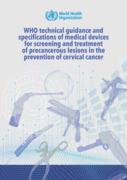
Globally, 311,000 women die of cervical cancer every year, 85 percent of them
in resource limited regions of the world. To address this grave threat to women,
the WHO made a call to action in 2018, resulting in accelerated plans to improve
cervic
...
al cancer control under the elimination threshold with respect to cervical
cancer incidence. As part of WHO’s approach to cervical cancer control, availability of high quality,
affordable medical devices for HPV screening, and treatment of precancerous
lesions in low resource settings is indispensable.
more
The WHO document "Integrating the prevention and control of noncommunicable diseases in HIV/AIDS, tuberculosis, and sexual and reproductive health
...
programmes: implementation guidance" provides a framework for integrating noncommunicable diseases (NCDs) into existing health programs for HIV/AIDS, tuberculosis (TB), and sexual and reproductive health (SRH). It emphasizes the importance of a people-centered approach to enhance healthcare accessibility and efficiency, especially in low-resource settings. The document outlines strategies for strengthening policy, financing, capacity building, and health system infrastructure. It offers actionable steps, tools, and case studies to support countries in reducing the burden of NCDs through integrated, holistic care within primary health services.
more
The aim of the WHO QualityRights tool kit is to support countries in assessing and
improving the quality and human rights of their mental health and
...
social care facilities.
The tool kit is based on an extensive international review by people with mental disabilities
and their organizations. It has been pilot-tested in low-, middle- and high-income
countries and is designed to be applied in all of these resource settings.
In this tool kit, the term ‘people with mental disabilities’ can include those with mental,
neurological or intellectual impairments and those with substance use disorders.
more

Although the COVID-19 crisis is, in the first instance, a physical health crisis, it has the seeds of a major mental health crisis as well, if action is not taken. Good mental health is critical to the functioning of society at the best of times. It must be front
...
and centre of every country’s response to and recovery from the COVID-19 pandemic. The mental health and wellbeing of whole societies have been severely impacted by this crisis and are a priority to be addressed urgently.
more

Due to high routine vaccination coverage, overall counts of diphtheria case have significantly declined in the Western Pacific Region recently. However, diphtheria is still prevalent in several countries and areas of the Region
...
and remains a public health issue due to its high case fatality rate.
This Field Guide for Preparedness and Response to Diphtheria Outbreaks in the Western Pacific Region is a reference resource for Member States to develop national guidelines adapted to their local context. Countries may also use this Guide to facilitate outbreak preparedness and public health responses to reduce morbidity and mortality due to diphtheria.
more
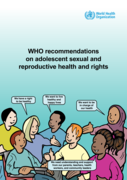
This document provides an overview of sexual and reproductive health and rights issues that may be important for the human rights, health and well-
...
being of adolescents (aged 10–19 years) and the relevant World Health Organization (WHO) guidelines on how to address them in an easilyaccessible, user-friendly format. The document serves as a gateway to the rich body of WHO guidelines, and as a handy resource to inform advocacy, policy and programme/project design and research. It aims to support the implementation of the Global Strategy for Women’s, Children’s and Adolescents’ Health 2016–2030 (1), and is aligned with the WHO Global Accelerated Action for the Health of Adolescents (AA-HA!) as well as the WHO Operational Framework on Sexual Health and Its Linkages to Reproductive Health (2,3).
more

As countries commit to achieving universal health coverage, it is imperative to ensure that the design and delivery of palliative care services place attention on quality of care, with action needed across all domains of quality health services: eff
...
ectiveness, safety, people-centredness, timeliness, equity, integration and efficiency. Providing compassionate, dignified and people-centred palliative care is an ethical responsibility of health systems.
This document provides a practical resource to support implementation of sustainable improvements in the quality of palliative care. It describes approaches to quality policy, strategy and planning for palliative care programmes and services, presents learning on quality of care arising from palliative care programmes, and offers considerations on measurement of quality palliative care services at all levels of the health system. The document also highlights relevant WHO resources available that further support the development of quality palliative care services.
The audience for this document is a general one that includes policy-makers, palliative care service planners, managers, practitioners and health care providers at all levels.
more
Policy Guidance Brief 1
• Climate change has already challenged the agriculture sector in Myanmar by afecting rice yields and livestock production, while disasters such as foods and cyclones ... have caused massive destruction in rural areas.
• Without adaptation, the long-term consequences of climate change will likely include reduced productivity and huge economic losses, food insecurity, poverty and migration.
• According to the Climate Change Action Plan for the Agriculture, Fisheries and Livestock sector, by 2030 Myanmar should achieve climate-resilient productivity and promote climate-smart responses to support food security and livelihood strategies while also introducing resource-efficient and lowcarbon practices. more
• Climate change has already challenged the agriculture sector in Myanmar by afecting rice yields and livestock production, while disasters such as foods and cyclones ... have caused massive destruction in rural areas.
• Without adaptation, the long-term consequences of climate change will likely include reduced productivity and huge economic losses, food insecurity, poverty and migration.
• According to the Climate Change Action Plan for the Agriculture, Fisheries and Livestock sector, by 2030 Myanmar should achieve climate-resilient productivity and promote climate-smart responses to support food security and livelihood strategies while also introducing resource-efficient and lowcarbon practices. more
MSF provides treatment for HIV and tuberculosis (TB) in more than 20 countries around the world. The report Burden sharing or burden shifting? How the HIV/TB response is being derailed examines the situation in nine countries where MSF runs program
...
mes: Central African Republic, Democratic Republic of Congo, Eswatini, Guinea, Kenya, Malawi, Mozambique, Myanmar and Zimbabwe. With a focus on the financial resources available, this report highlights the current risks and gaps in HIV and TB service delivery in these countries.
Given the findings of gaps in diagnosis, prevention and care services and dwindling resources, MSF calls for a robust assessment of the needs and the resource capacity of each affected country, and calls on international donors to ensure that the financial burden is shared, rather than shifted onto those countries worst affected by the diseases.
more

This document presents the World Health Organization Operational framework for building climate resilient and low carbon health systems*. ***The framework's goal is to increase the climate resilience of health systems to protect
...
and improve the health of communities in an unstable and changing climate, while optimizing the use of resources and implementing strategies to reduce GHG emissions. It aims to contribute to the design of transformative health systems that can provide safe and quality care in a changing climate.
Implementation of the framework's ten components would help health organizations, authorities, and programmes to be better able to anticipate, prevent, prepare for, and manage climate-related health risks and therefore decrease the burden of associated climate-sensitive health outcomes. Implementing low carbon health practices would contribute to climate change mitigation while also improving health outcomes. Achieving these aims is an important contribution to universal health coverage (UHC), global health security, and specific targets within the Sustainable Development Goals (SDGs). The document is a useful resource for decision-makers in health systems, including public health agencies, and other specialized institutions, and for decision-makers in health-determining sectors.
more
Contextual factors around the sexual abuse of people with disabilities in East Africa
Mary-Ann Waddell & Rob Aley
Advantage Africa, FIRAH, Resource Center Applied Research and Disability
(2015)
C2
Knowledge based upon a descriptive literature review of applied research

2nd edition.
T The Compendium has been developed as a clear and concise instrument to facilitate the understanding and planning of delivery of high-quality care for everybody affected by TB. It inc
...
orporates all recent policy guidance from WHO; follows the care pathway of persons with signs or symptoms of TB in seeking diagnosis, treatment and care; and includes key algorithms and cross-cutting elements that are essential to a patient-centered approach in the cascade of TB care.
The Compendium is structured into 33 WHO standards and consolidates all current WHO TB policy recommendations into a single resource, with electronic links to the individual, comprehensive WHO policy guidelines
more

WHO guideline on health policy and system support to optimize community health worker programmes
recommended
The guideline uses state-of-the-art evidence to identify effective policy options to strengthen community health worker (CHW) programme performance through their proper integration in health systems and communities.
Successful delivery of services
...
through CHWs requires evidence-based models for education, deployment and management of these health workers. The guideline is intended as a tool for national policy makers and planners and their international partners to use in the design, implementation, performance and evaluation of effective community health worker programmes. It contains pragmatic recommendations on selection, training and certification; management and supervision: and integration into health systems and community engagement.
more
States have committed and assumed obligations to address multiple and intersecting forms of discrimination against refugees, internally displaced persons, asylum seekers, returnees
...
and stateless persons. The Global Compact on Refugees places ending discrimination of any kind based on the grounds of race, colour, sex, language, religion, political or other opinion, national or social origin, property, birth, disability, age, or other status at the centre of action to prevent displacement and to ensure peaceful coexistence between refugee and host communities. Narratives about cultural diversity and inclusion are important, but there is also a pressing need in many societies for conversations and action to address racism, racial discrimination, xenophobia and related intolerance.
more
