
Filter
3812
Text search:
quality
of
medicines
Featured
398
1126
Language
3713
81
68
55
41
23
20
18
10
6
6
5
5
4
3
3
3
3
3
2
2
2
2
2
2
2
2
2
2
1
1
1
1
1
1
1
1
1
1
1
1
1
1
1
1
1
1
1
1
1
1
1
1
1
1
Document type
2058
661
518
204
179
63
55
34
12
10
9
6
1
Countries
194
155
128
100
98
93
81
77
77
74
70
70
68
66
66
64
63
58
51
46
46
45
41
30
30
29
29
28
22
21
20
20
20
17
17
16
16
16
16
15
15
15
14
14
13
13
12
11
11
11
10
10
9
9
8
8
7
7
7
6
6
6
6
6
6
6
5
5
5
5
4
4
4
4
4
4
4
4
4
4
3
3
3
3
3
3
3
3
3
3
3
3
2
2
2
2
2
2
2
2
2
2
2
2
2
2
2
2
1
1
1
1
1
1
1
1
1
1
1
1
1
1
1
1
1
1
1
1
1
1
1
1
Authors & Publishers
573
219
140
135
124
77
75
67
61
27
26
24
23
21
20
19
18
18
18
17
17
17
16
16
16
15
15
15
14
14
14
14
13
13
13
12
12
12
11
11
11
11
11
11
11
10
10
10
10
10
10
10
10
9
9
9
9
8
8
8
8
8
8
8
8
8
8
8
8
8
7
7
7
7
7
7
7
7
7
7
7
7
6
6
6
6
6
6
6
6
6
6
6
6
6
6
6
6
6
5
5
5
5
5
5
5
5
5
5
5
5
5
5
5
5
5
5
5
4
4
4
4
4
4
4
4
4
4
4
4
4
4
4
4
4
4
4
4
4
4
4
4
4
4
4
4
4
4
4
4
4
4
4
4
4
4
4
4
4
4
3
3
3
3
3
3
3
3
3
3
3
3
3
3
3
3
3
3
3
3
3
3
3
3
3
3
3
3
3
3
3
3
3
3
3
3
3
3
3
3
3
3
3
3
3
3
3
3
3
3
3
3
3
3
3
3
3
3
3
3
3
3
3
3
3
3
3
3
3
3
3
3
3
3
3
3
3
3
3
3
3
3
3
3
3
3
3
3
3
2
2
2
2
2
2
2
2
2
2
2
2
2
2
2
2
2
2
2
2
2
2
2
2
2
2
2
2
2
2
2
2
2
2
2
2
2
2
2
2
2
2
2
2
2
2
2
2
2
2
2
2
2
2
2
2
2
2
2
2
2
2
2
2
2
2
2
2
2
2
2
2
2
2
2
2
2
2
2
2
2
2
2
2
2
2
2
2
2
2
2
2
2
2
2
2
2
2
2
2
2
2
2
2
2
2
2
2
2
2
2
2
2
2
2
2
2
2
2
2
2
2
2
2
2
2
2
2
2
2
2
2
2
2
2
2
2
2
2
2
2
2
2
2
2
2
2
2
2
2
2
2
2
2
2
2
2
2
2
2
2
2
2
2
2
2
2
2
2
2
2
2
2
2
2
2
2
2
2
2
2
2
2
2
2
2
2
2
2
2
2
2
2
2
2
2
2
2
2
2
2
2
2
2
2
2
2
2
2
1
1
1
1
1
1
1
1
1
1
1
1
1
1
1
1
1
1
1
1
1
1
1
1
1
1
1
1
1
1
1
1
1
1
1
1
1
1
1
1
1
1
1
1
1
1
1
1
1
1
1
1
1
1
1
1
1
1
1
1
1
1
1
1
1
1
1
1
1
1
1
1
1
1
1
1
1
1
1
1
1
1
1
1
1
1
1
1
1
1
1
1
1
1
1
1
1
1
1
1
1
1
1
1
1
1
1
1
1
1
1
1
1
1
1
1
1
1
1
1
1
1
1
1
1
1
1
1
1
1
1
1
1
1
1
1
1
1
1
1
1
1
1
1
1
1
1
1
1
1
1
1
1
1
1
1
1
1
1
1
1
1
1
1
1
1
1
1
1
1
1
1
1
1
1
1
1
1
1
1
1
1
1
1
1
1
1
1
1
1
1
1
1
1
1
1
1
1
1
1
1
1
1
1
1
1
1
1
1
1
1
1
1
1
1
1
1
1
1
1
1
1
1
1
1
1
1
1
1
1
1
1
1
1
1
1
1
1
1
1
1
1
1
1
1
1
1
1
1
1
1
1
1
1
1
1
1
1
1
1
1
1
1
1
1
1
1
1
1
1
1
1
1
1
1
1
1
1
1
1
1
1
1
1
1
1
1
1
1
1
1
1
1
1
1
1
1
1
1
1
1
1
1
1
1
1
1
1
1
1
1
1
1
1
1
1
1
1
1
1
1
1
1
1
1
1
1
1
1
1
1
1
1
1
1
1
1
1
1
1
1
1
1
1
1
1
1
1
1
1
1
1
1
1
1
1
1
1
1
1
1
1
1
1
1
1
1
1
1
1
1
1
1
1
1
1
1
1
1
1
1
1
1
1
1
1
1
1
1
1
1
1
1
1
1
1
1
1
1
1
1
1
1
1
1
1
1
1
1
1
1
1
1
1
1
1
1
1
1
1
1
1
1
1
1
1
1
1
1
1
1
1
1
1
1
1
1
1
1
1
1
1
1
1
1
1
1
1
1
1
1
1
1
1
1
1
1
1
1
1
1
1
1
1
1
1
1
1
1
1
1
1
1
1
1
1
1
1
1
1
1
1
1
1
1
1
1
1
1
1
1
1
1
1
1
1
1
1
1
1
1
1
1
1
1
1
1
1
1
1
1
1
1
1
1
1
1
1
1
1
1
1
1
1
1
1
1
1
1
1
1
1
1
1
1
1
1
1
1
1
1
1
1
1
1
1
1
1
1
1
1
1
1
1
1
1
1
1
1
1
1
1
1
1
1
1
1
1
1
1
1
1
1
1
1
1
1
1
1
1
1
1
1
1
1
1
1
1
1
1
1
1
1
1
1
1
1
1
1
1
1
1
1
1
1
1
1
1
1
1
1
1
1
1
1
1
1
1
1
1
1
1
1
1
1
1
1
1
1
1
1
1
1
1
1
1
1
1
1
1
1
1
1
1
1
1
1
1
1
1
1
1
1
1
1
1
1
1
1
1
1
1
1
1
1
1
1
1
1
1
1
1
1
1
1
1
1
1
1
1
1
1
1
1
1
1
1
1
1
1
1
1
1
1
1
1
1
1
1
1
1
1
1
1
1
1
1
1
1
1
1
1
1
1
1
1
1
1
1
1
1
1
1
1
1
1
1
1
1
1
1
1
1
1
1
1
1
1
1
1
1
1
1
1
1
1
1
1
1
1
1
1
1
1
1
1
1
1
1
1
1
1
1
1
1
1
1
1
1
1
1
1
1
1
1
1
1
1
1
1
1
1
1
1
1
1
1
1
1
1
1
1
1
1
1
1
1
1
1
1
1
1
1
1
1
1
1
1
1
1
1
1
1
1
1
1
1
1
1
1
1
1
1
1
1
1
1
1
1
1
1
1
1
1
1
1
1
1
1
1
1
1
1
1
1
1
1
1
1
1
1
1
1
1
1
1
1
1
1
1
1
1
1
1
1
1
1
1
1
1
1
1
1
1
1
1
1
1
1
1
1
1
1
1
1
1
1
1
1
1
1
1
1
1
1
1
1
1
1
1
1
1
1
1
1
1
1
1
1
1
1
1
1
1
1
1
1
1
1
1
1
1
1
1
1
1
1
1
1
1
1
1
1
1
1
1
1
1
1
1
1
1
1
1
1
1
1
1
1
1
1
1
1
1
1
1
1
1
1
1
1
1
1
1
1
1
1
1
1
1
1
1
1
1
1
1
1
1
1
1
1
1
1
1
1
1
1
1
1
1
1
1
1
1
1
1
1
1
1
1
1
1
1
1
1
1
1
1
1
1
1
1
1
1
1
1
1
1
1
1
1
1
1
1
1
1
1
1
1
1
1
1
1
1
1
1
1
1
1
1
1
1
1
1
1
1
1
1
1
1
1
1
1
1
1
1
1
1
1
1
1
1
1
1
1
1
1
1
1
1
1
1
1
1
1
1
1
1
1
1
1
1
1
1
1
1
1
1
1
1
1
1
1
1
1
1
1
1
1
1
1
1
1
1
1
1
1
1
1
1
1
1
1
1
1
1
1
1
1
1
1
1
1
1
1
1
1
1
1
1
1
1
1
1
1
1
1
1
1
1
1
1
1
1
1
1
1
1
1
1
1
1
1
1
1
1
1
1
1
1
1
1
1
1
1
1
1
1
1
1
1
1
1
1
1
1
1
1
1
1
1
1
1
1
1
1
1
1
1
1
1
1
1
1
1
1
1
1
1
1
1
1
1
1
1
1
1
1
1
1
1
1
1
1
1
1
1
1
1
1
1
1
1
1
1
1
1
1
1
1
1
1
1
1
1
1
1
1
1
1
1
1
1
1
1
1
1
1
1
1
1
1
1
1
1
1
1
1
1
1
1
1
1
1
1
1
1
1
1
1
1
1
1
1
1
1
1
1
1
1
1
1
1
1
1
1
1
1
1
1
1
1
1
1
1
1
1
1
1
1
1
1
1
1
1
1
1
1
1
1
1
1
1
1
1
1
1
1
1
1
1
1
1
1
1
1
1
1
1
1
1
1
1
1
1
1
1
1
1
1
1
1
1
1
1
1
1
1
1
1
1
1
1
1
1
1
1
1
1
1
1
1
1
1
1
1
1
1
1
1
1
1
1
1
1
1
1
1
1
1
1
1
1
1
1
1
1
1
1
1
1
1
1
1
1
1
1
1
1
1
1
1
1
1
1
1
1
1
1
1
1
1
1
1
1
1
1
1
1
1
1
1
1
1
1
1
1
1
1
1
1
1
1
1
1
1
1
1
1
1
1
1
1
1
1
1
1
1
1
1
1
1
1
1
1
1
1
1
1
1
1
1
1
1
1
1
1
1
1
1
1
1
1
1
1
1
1
1
1
1
1
1
1
1
1
1
1
1
1
1
1
1
1
1
1
1
1
1
1
1
1
1
1
1
1
1
1
1
1
1
1
1
1
1
1
1
1
1
1
1
1
1
1
1
1
1
1
1
1
1
1
1
1
1
1
1
1
1
1
1
1
1
1
1
1
1
1
1
1
1
1
1
1
1
1
1
1
1
1
1
1
1
1
1
1
1
1
1
1
1
1
1
1
1
1
1
1
1
1
1
1
1
1
1
1
1
1
1
1
1
1
1
1
1
1
1
1
1
1
1
1
1
1
1
1
1
1
1
1
1
1
1
1
1
1
1
1
1
1
1
1
1
1
1
1
1
1
1
1
1
1
1
1
1
1
1
1
1
1
1
1
1
1
1
1
1
1
1
1
1
1
1
1
1
1
1
1
1
1
1
1
1
1
1
1
1
1
1
1
1
1
1
1
1
1
1
1
1
1
1
1
1
1
1
1
1
1
1
1
1
1
1
1
1
1
1
1
1
1
1
1
1
1
1
1
1
1
1
1
1
1
1
1
1
1
1
1
1
1
1
1
1
1
1
1
1
1
1
1
1
1
1
1
1
1
1
1
1
1
1
1
1
1
1
1
1
1
1
1
1
1
1
1
1
1
1
1
1
1
1
1
1
1
1
1
1
1
1
1
1
1
1
1
1
1
1
1
1
1
1
1
1
1
1
1
1
1
1
1
1
1
1
1
1
1
1
1
1
1
1
1
1
1
1
1
1
1
1
1
1
1
1
1
1
1
1
1
1
1
1
1
1
1
1
1
1
1
1
1
1
1
1
1
1
1
1
1
1
1
1
1
1
1
1
1
1
1
1
1
1
1
1
1
1
1
1
1
1
1
1
1
1
1
1
1
1
1
1
1
1
1
1
1
1
1
1
1
1
1
1
1
1
1
1
1
1
1
1
1
1
1
1
1
1
1
1
1
1
1
1
1
1
1
1
1
1
1
1
1
1
1
1
1
1
1
1
1
1
1
1
1
1
1
1
1
1
1
1
1
1
1
1
1
1
1
1
1
1
1
1
1
1
1
1
1
1
1
1
1
1
1
1
1
1
1
1
1
1
1
1
1
1
1
1
1
1
1
1
1
1
1
1
1
1
1
1
1
1
1
1
1
1
1
1
1
1
1
1
1
1
1
1
1
1
1
1
1
1
1
1
1
1
1
1
1
1
1
1
1
1
1
1
1
1
1
1
1
1
1
1
1
1
1
1
1
1
1
1
1
1
1
1
1
1
1
1
1
1
1
1
1
1
1
1
1
1
1
1
1
1
1
1
1
1
1
1
1
1
1
1
1
1
1
1
1
1
1
1
1
1
1
1
1
1
1
1
1
1
1
1
1
1
1
1
1
1
1
1
1
1
1
1
1
1
1
1
1
1
1
1
1
1
1
1
1
1
1
1
1
1
1
1
1
1
1
1
1
1
1
1
1
1
1
1
1
1
1
1
1
1
1
1
1
1
1
1
1
1
1
1
1
1
1
1
1
1
1
1
1
1
1
1
1
1
1
1
1
1
1
1
1
1
1
1
1
1
1
1
1
1
1
1
1
1
1
1
1
1
1
1
1
1
1
1
1
1
1
1
1
1
1
1
1
1
1
1
1
1
1
1
1
1
1
1
1
1
1
1
1
1
1
1
1
1
1
1
1
1
1
1
1
1
1
1
1
1
1
1
1
1
1
1
1
1
1
1
1
1
1
1
1
1
1
1
1
1
1
1
1
1
1
1
1
1
1
1
1
1
1
1
1
1
1
1
1
1
1
1
1
1
1
1
1
1
1
1
1
1
1
1
1
1
1
1
1
1
1
1
1
1
1
1
1
1
1
1
1
1
1
1
1
1
1
1
1
1
1
1
1
1
1
1
1
1
1
1
1
1
1
1
1
1
1
1
1
1
1
1
1
1
1
1
1
1
1
1
1
1
1
1
1
1
1
1
1
1
1
1
1
1
1
1
1
1
1
1
1
1
1
1
1
1
1
1
1
1
1
1
1
1
1
1
1
1
1
1
1
1
1
1
1
1
1
1
1
Publication Years
1004
2471
314
20
2
1
Category
1605
344
252
180
76
64
50
2
2
1
Toolboxes
308
244
231
224
211
193
119
104
86
85
77
71
65
64
63
53
34
34
13
12
11
7
4
2
1

The Ministry of Health has developed the first version of the Service Standards and Service Delivery Standards for the health sector in Uganda. The main objective is to provide a common understandin
...
g of what is expected by the public, service users and service providers in ensuring provision of consistently high quality service delivery. These standards also provide a roadmap for improving the quality, safety and reliability of healthcare in Uganda.
The application of these standards is expected to improve transparency and accountability in service delivery; fairness and equity in service provision; building a culture of quality management; regulation, management and control of public and private providers; and management of expectations of service recipients. more
The application of these standards is expected to improve transparency and accountability in service delivery; fairness and equity in service provision; building a culture of quality management; regulation, management and control of public and private providers; and management of expectations of service recipients. more
Government of Nepal has an obligation to ensure availability of affordable and high quality basic health care services to its population
The Infection Prevention and Control (IPC) Guidelines aim to support healthcare workers improve quality and safety health care. The Guidelines further aim to promote and facilitate the overall goal of
...
IPC by providing evidence-based recommendations on the critical aspects of IPC, focusing on the fundamental principles and priority action areas. All health service organizations should consider the risk of healthcare-associated infection(s) (HAI) and antimicrobial resistance (AMR) transmission to implement these recommendations. The IPC Guidelines also set national standards for the prevention and control of HAIs and to ensure compliance to the National Quality Standards.
more

The Health Sector Policy gives general orientations for the sector which are further developed in the various sub-sector policies guiding key health programs and departments. All health sub-sector policies will be updated in line with this new policy. The Health Sector Policy is the basis
...
of national health planning and the first point of reference for all actors working in the health sector. The overall aim of this policy is to ensure universal accessibility (in geographical and financial terms) of equitable and affordable quality health services (preventative, curative, rehabilitative and promotional services) for all Rwandans. It sets the health sector’s objectives, identifies the priority health interventions for meeting these objectives, outlines the role of each level in the health system, and provides guidelines for improved planning and evaluation of activities in the health sector. A companion Health Sector Strategic Plan (HSSP) elaborates the strategic directions defined in the Health Sector Policy in order to support and achieve the implementation of the policy, and more detailed annual operational plans describe the activities under each strategy.
more

For the Fiscal Year 2014-2015, the Health Sector continued to implement interventions and strategies meant to improve the availability, accessibility and utilization of quality healthcare services a
...
cross public and private health facilities; and to ensure the reduction of the burden of communicable and non-communicable diseases in Rwanda. This annual report highlights key achievements registered by the health sector during the Fiscal Year 2014-2015. Achievements are highlighted under three big components: Health Programs, Health Systems Support and Budget Execution.
more
A nationwide survey of a representative sample of health facilities across public health services in all states and regions of Myanmar has been und
...
ertaken since 2014 to track Reproductive Health Commodity Security (RHCS) indicators, such as the availability of reproductive health (RH) commodities; the supply chain (including cold chain systems); staff training and supervision; availability of guidelines and protocols; information and communication technologies; methods of waste disposal; and user fees. The surveys have also obtained the views of clients about the quality and cost of services through exit interviews. This is the third report for Myanmar, which is an assessment of the situation in 2016.
more
One health Response to AMR Containment.
In a significant move for the public health sector, Kerala has become the first state in India to launch an action plan to combat the growing cases of antimicrobial immunity, arising primarily from irrational
...
use of medicines and excessive antibiotics used in livestock and poultry.
more
National Comprehensive HIV Prevention, Care, and Treatment Training for Pharmacy Professionals. Participant Manual
Ministry of Health, Federal Democratic Republic of Ethiopia
Ministry of Health, Federal Democratic Republic of Ethiopia
(2018)
CC
In line with its decentralization principle, the Ethiopian Health Policy has achieved great progress in improving access to comprehensive HIV/AIDS services to the majority of the population. Both
...
quality and coverage of services have improved significantlysince the initiation of the free ART program in 2005. The role of health workforce in general and that of pharmacy professionals assumes a central position in these achievements. To further enhance accessibility and quality of services, capacity buildingof health cadres is critical. Therefore, this comprehensive HIV prevention, care and treatment training material is prepared with the primarily intention to build the capacity of pharmacy professionals at all levels so that they can contribute to the provision of HIV services.
more
Bonchial asthma is the most common chronic respiratory disease in the world. In Kenya, it has been estimated that about 7.5% of the Kenyan population, nearly 4 million people, are currently living with asthma. Many cases tend to be underdiagnosed an
...
d undertreated which leads to high levels of morbidity and avoidable deaths. The consequences of poorly controlled asthma, including physical, mental, social, and economic impacts, are magnified in the poor on account of poor access to asthma services and sub-optimal quality of those services. With these guidelines, Kenya's Ministry of Health aims to work towards embedding asthma care in Universal Health Care (UHC) to ensure that quality asthma services are available in primary care settings with
referral networks strengthened for those who may require secondary and tertiary care. These national asthma guidelines will also ensure that treatment for asthma is standardized in both the public and the non-state health care sector.
more

For the Fiscal Year 2015-2016, the Health Sector continued to implement actions meant to improve the availability, and access to quality healthcare. The following report highlights achievements registered by the health sector for the fiscal 2015-201
...
6 in different health programs, as well as in the area of health system strengthening.
more
The issue of Antimicrobial resistance has become one of the most substantial health issues, prompting the World Health Assembly (WHA) to urge Member States to finalise tailor made national action pl
...
ans by May 2017, aligning them with objectives of the Global Action Plan (GAP). These cover awareness, surveillance and research, hygiene infection prevention & control, optimal use of antimicrobial medicines and economic case for sustainable investment. Indonesia, by virtue of its geographical terrain and complex interactions with diverse stakeholders, indicates a higher burden of AMR. Most of the country’s data currently relies on local studies conducted by labs and universities. To get a more accurate estimate of the situation, one has to rely on results from the Regional Resistance Surveillance Programme. By undertaking such measure, Indonesia would acquire data to detect AMR trends at a national level.
more
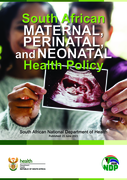
As a lower-middle-income country (LMIC), South Africa (SA) bears
the burden of maternal and neonatal mortality similar to other sub-
Saharan African countries. According to the Saving Mothers Report
2017/19, there has been a progressive and susta
...
ined reduction
in institutional maternal mortality (iMMR) in the past three triennia
(2010-2019), from 320 per 100,000 live births to 120 per 100,000 live
births.
According to the Rapid Mortality Survey, the country’s infant mortality
rate has declined from 29 deaths per 1000 live births in 2014 to 25
deaths per 1,000 live births in 2018. The institutional neonatal death
rate showed a slight decrease from 12,7 deaths per 1,000 live births in
2016 to the current level of 12 per 1,000 live births and has remained
static at this level for the past three years (saDHIS).
Working towards the Sustainable Development Goal (SDG) of reducing maternal mortality to below 70 per 100 000 live births and neonatal mortality to 12 deaths per 1000 live births, South Africa aims to reduce institutional maternal mortality, neonatal mortality and stillbirths by 50% by 2030.
This Maternal, Perinatal and Neonatal Health Policy provides a
framework for the delivery of quality, comprehensive, and integrated
MNH services and will guide the development and review of guidelines
and related MNH interventions, including strengthening of the service
delivery platform, governance, leadership and accountability for
the provision of quality MNH services, development of advocacy
messages, and guiding civil society priorities and community
initiatives. The policy will also guide the development and review of
academic curricula and the setting of research priorities.
more

An Act to provide for the efficient and comprehensive regulation and control of food, drugs, medical devices, cosmetics, herbal drugs and poisons and to repeal the Food
(Control of
...
Quality) Act, 1978, the Pharmaceuticals and Poisons Act, 1978 and to provide for related matters.
more
Globally, over two million women live with obstetric fistula with the majority of the cases
being from Africa. In low-resource settings such as Zambia, obstetric fistula (OF) is a visible indicato
...
r of
gaps in maternal health care resulting in failure to provide adequate, accessible and quality maternal health
care, including family planning, skilled birth attendance, basic and emergency obstetric and neonatal care,
and affordable treatment of fistula. OF is preventable and treatable, and no woman in Zambia should continue to endure the condition. It is therefore necessary that Zambia intensifies national scale up of OF management centers including
community based interventions, train more surgeons and other health workers to provide quality and
affordable care closer to the women who are silently suffering from obstetric fistula.
more
Antimicrobial resistance (AMR) is a threat to human and animal health and refers to the ability of microorganisms to defy the medicines prescribed. For instance when antibiotics are used improperly,
...
such as an incorrect dose, insufficient duration or wrong frequency, resistance is heightened. The misuse of antimicrobials affects their efficacy, and increasingly more infections and diseases become untreatable. Many gains made in modern medicine throughout the 20th century will be lost, making AMR a global public and animal health issue that requires concerted action. AMR and the use of antimicrobials (AMU) affect food safety and security, people’s livelihoods, as well as economic and agricultural development.
more
The 2007 Rwanda Service Provision Assessment (RSPA) was a national representative survey conducted in 538 health facilities throughout Rwanda. The survey covered hospitals, health centers, dispensaries and
health posts, including all public facilities such as government and government-assisted heal
...
th facilities. The 2007 RSPA used interviews with health service providers and clients and observations of provider client consultations to obtain information on the capacity of facilities to provide quality services and the existence of functioning systems to support quality services. The areas addressed were the overall facility
infrastructure, maternal and child health, reproductive health, tuberculosis, malaria services; and services for sexually transmitted infections and HIV/AIDS. The objective was to assess the strengths and
weaknesses of the infrastructure and systems supporting these services, and to assess the adherence to standards in the delivery of services.
more
A cross-sectional descriptive study design covering all states and regions was undertaken to:
1) To assess availability, utilization and supply chain management system for RH commodities at different levels of health facilities,
2) To ass ... ess quality of RH services with emphasis on family planning in terms of training, supervision, use of guidelines and ICT, and
3) To determine clients’ accessibility to RH services provided at different level of facilities. more
1) To assess availability, utilization and supply chain management system for RH commodities at different levels of health facilities,
2) To ass ... ess quality of RH services with emphasis on family planning in terms of training, supervision, use of guidelines and ICT, and
3) To determine clients’ accessibility to RH services provided at different level of facilities. more
The Ethiopian Hospital Services Transformation Guidelines (EHSTG) build on and expand the Ethiopian Hospital Reform Implementation Guidelines (EHRIG) and are consistent with the Health Sector Transformation Plan (HSTP). The EHSTG, which is consistent with the national focu
...
s on quality improvement in health care, contains a common set of guidelines to help hospital Chief Executive Officers(CEOs), managers, and clinicians (care providers) in steering the consistent implementation of these transformational systems and processes in hospitals throughout the country. The EHSTG focused on selected management and clinical functions, including new individual service specific chapters for Emergency Medical, Outpatient and Inpatient Services, Nursing and Midwifery, Maternal, Neonatal and Child Health and Teaching Hospitals’ Management. These guidelines also incorporate recent lessons from the operationalization of the EHRIG, as well as, new national initiatives such as the Guidelines for the Management of Federal Hospitals in Ethiopia, Hospital Development Army (HDA), Clean and Safe Hospital (CASH), and Auditable Pharmaceutical Transaction and Service (APTS).
II10 Pharmacy ChapterIt is expected that the guidelines will continuously evolve as new evidence emerges regarding improved hospital care and practices that are better tailored to needs and circumstances of different tiers of public hospitals. We are grateful to all partners that have participated in the production of these guidelines. Special thanks go to our colleagues at the Clinton Health Access Initiative for their substantial contributions and support throughout the development of these guidelines as well as their dedicated efforts in support of our health reform efforts in so many other capacities
more
The Government of Malawi is committed to improving health and livelihoods in Malawi through community health – the
provision of basic health services in rural and urban communities with the parti
...
cipation of people who live there.
Historically, Community Health has significantly contributed to improvements in Malawi’s health outcomes in particular
attainment of MDG4. However, the community health system faces resource constraints and inconsistencies around quality
of service – which negatively affect health outcomes.
more

The purpose of the PAS III is to guide Pakistan’s overall national response for HIV and AIDS through 2020, through focused interventions with set targets, costs, roles and responsibilities. The successful implementation
...
of PAS III involves multiple stakeholders to achieve priority outcomes outlined in the Strategy. The Strategy focuses on allocating limited resources to scale up high-impact, high-value interventions such as HTC and treatment to reduce AIDS related deaths and new HIV infections. Priorities in the PAS III have been identified to ensure maximum impact in reducing new infections, especially among key populations, improving treatment uptake and retention, and improving the quality of life of people living with HIV and AIDS in the context of limited financial and human resources.
more
