Filter
659
Text search:
leprosy
control
Featured
89
259
Language
Document type
472
58
55
33
23
7
5
3
2
1
Countries
56
38
33
28
27
23
23
19
19
19
16
16
14
13
12
9
7
7
6
5
4
4
4
4
3
3
3
3
3
2
2
2
2
2
2
2
2
2
2
2
2
2
2
1
1
1
1
1
1
1
1
1
1
1
1
1
1
1
1
1
1
1
1
1
1
1
1
1
1
1
1
1
1
Authors & Publishers
Publication Years
Category
372
70
36
10
10
9
8
2
Toolboxes
113
92
35
20
15
10
8
8
5
5
4
4
4
4
3
2
2
2
2
1
1
1
1

Antibiotics have been a critical public health tool since the discovery of Penicillin in 1928, saving the lives of millions of people around the world. In developing country like ours, where the burden of treatable disease is very high and access to health facilities and laboratories is difficult, a
...
Accessed: 10.03.2020
6 July 2021. Three new nucleic acid amplification test (NAAT) classes are endorsed by WHO and included.
The latest operational handbook includes the new classes recommended by WHO. It aims at facilitating the implementation of the WHO recommendations by the Member States, technical partners, and ot
...
The Compendium of data and evidence-related tools for use in TB planning and programming was developed as a companion document to the People-centred framework for tuberculosis programme planning and prioritization – user guide, published by the World Health Organization (WHO)
...
The World Health Organization (WHO) convened a meeting of the Technical Advisory Group on Buruli ulcer at its headquarters in Geneva, Switzerland on 25 to 27 March 2019
WHO consolidated guidelines on tuberculosis: module 1: prevention: tuberculosis preventive treatment
The 2020 recommendations for the programmatic management of TB preventive treatment are the first to be released under the rubric of WHO consolidated TB guidelines (Module 1 – Prevention). The WHO consolidated TB guidelines will gradually group all TB recommendations and will be complemented by ma
...
It focuses on nine major priority areas, namely: Leadership and Governance for Health; Health Service Delivery; Human Resources for Health; Health Financing; Health Information Systems; Health Technologies; Community Ownership and Participation; Partnerships for Health Development; and Researc
...
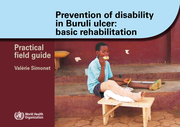
The guide contains valuable tools for wound care and the rehabilitation of people affected by Buruli ulcer. It is also helpful for peripheral health centres in areas where Buruli ulcer is endemic and to people and their families affected by the disease
Guidelines for national programmes and other stakeholders, for annexes see http://www.who.int/tb/publications/2012/tb_hiv_policy_9789241503006/en/
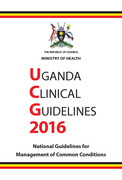
This new edition and fully updated publication replaces the 2012 UCG and is being circulated free of charge to all public and private sector prescribers, pharmacists, and regulatory authorities in the country