
Filter
991
Text search:
antibiotic
resistance
Featured
124
230
Language
Document type
357
221
201
55
44
43
15
13
10
9
9
7
6
1
Countries
59
37
33
26
24
22
17
17
13
13
12
11
11
10
9
9
9
8
6
6
6
6
6
5
5
5
4
4
4
4
4
4
3
3
3
3
3
3
3
2
2
2
2
2
2
2
2
2
2
2
2
2
2
2
2
2
2
2
2
2
2
2
2
2
2
2
1
1
1
1
1
1
1
1
1
1
1
1
1
1
1
1
1
1
1
1
1
1
1
1
1
1
1
1
1
1
1
1
1
1
1
1
1
1
1
Authors & Publishers
Publication Years
Category
297
118
44
35
25
16
11
Toolboxes
394
74
44
42
42
31
31
27
19
15
13
11
10
9
7
5
4
3
2
2
1
Antibiotics only fight infections caused by bacteria. Like all drugs, they can be harmful and should only be used when necessary. Taking antibiotics when you have a virus can do more harm than good: you will still feel sick and the antibiotic could
...
Antimicrobial resistance (AMR) as a serious public health threat was globally acknowledged by WHO in 2015, through the launch of the Global Action Plan (GAP). With a limited number of new antibiotics in the developmental pipeline, many countries are
...
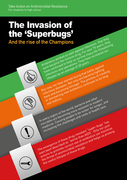
Take Action on Antimicrobial Resistance. For students in high school.
This AMR booklet is designed to inform high school students on AMR and how they can prevent it on a personal level. It is a brief document that has the potential to capture their
...

Antimicrobial Resistance (AMR) occurs when organisms that cause disease are no longer susceptible/responsive to antimicrobial agents that previously were effective in combating them. AMR is a global problem with particularly dire consequences for
...
The authors conduct an integrated survey of Antimicrobial Resistant Organisms (AMR) in drinking water, wastewater and surface water in three settings in Bangladesh: rural households, rural poultry farms, and urban food markets. Results show that untreated water discharged from rural households, poul
...

Antimicrobial resistance (AMR) is a complex issue of global concern. AMR is not simply a problem of medical science being beaten by nature; human action and perverse incentives play a major role in its development. The misuse of antibiotics in the m
...
The microbiology laboratory database software.
WHONET is a desktop Windows application for the management and analysis of microbiology laboratory data with a particular focus on antimicrobial resistance surveillance. WHONET, available in 28 languag
...
ResitanceMap
recommended
ResistanceMap is an interactive collection of charts and maps that summarize national and subnational data on antimicrobial use and resistance worldwide.
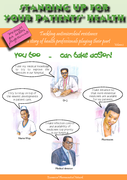
This volume is specifically meant for health professionals. It is titled "tackling microbial resistance: a story of health professionals playing their part".
Antimicrobial Resistance Surveillance and Research Network | This document contains detail procedures on sample collection, transport, isolation, identification of fungi for the diagnosis of invasive fungal infections and antifungal susceptibility t
...

Antimicrobial Resistance Surveillance and Research Network | This manual describes well accepted methods to carry out drug susceptibility testing on important gram positive and gram negative clinically relevant bacteria. Methods of specimen collecti
...
Using antimicrobials responsibly is an essential component ofefforts to contain antimicrobial resistance (AMR), and to ensurethat patients receive appropriate treatment. The WHO global action plan on AMR emphasizes the importance of training healthc
...
Antimicrobial resistance (AMR) has emerged as a leading cause of death in the African region, surpassing fatalities from malaria, HIV, and TB. In response to this critical threat, the region has adopted the AMR Global Action Plan and the African Uni
...
The purpose of this manual is to define a limited number of indicators that will objectively describe the management and use of antimicrobials in hospitals and to provide tools and step-by-step instructions for designing and carrying out an assessment of a
...

The increasing global trend of Antimicrobial resistance (AMR) has gradually emerged as a major public health challenge for the entire world. AMR has spread to almost all countries and regions, including Pakistan owing to the “misuse and overuse”
...
Antibiotics have been useful in fighting infectious diseases in our country for decades, but because of the overuse and misuse of these agents, an increasing number of organisms are now resistant to them. The Philippines, like other Southeast Asian countries, has already been encountering the many c
...
GARDP Antimicrobial
recommended
Emergence of antimicrobial resistance is a result of the use, overuse and misuse of antibiotics both in humans and animals. In Ethiopia, there are indications on the misuse of antibiotics by health care providers’, unskilled practitioners, and dru
...
An essential participant in antimicrobial stewardship who has been unrecognized and underutilized is the“staff nurse.”Although the role of staff nurses has not formally been recognized in guidelines for implementing and operating antimicrobial stewardship programs (ASPs) or defined in the medica
...
This action plan for the Kingdom Saudi Arabia to combat antimicrobial resistance has been formulated in the line of the WHO five objectives. It addresses the need for effective “one health” approach involving coordination among numerous national
...
