
Filter
447
Text search:
Ministry
of
National
Development
Planning,
Republic
of
Zambia
Featured
Recommendations
35
New Publications
133
Language
Document type
No document type
295
Studies & Reports
77
Guidelines
36
Strategic & Response Plan
20
Manuals
12
Situation Updates
3
Training Material
1
App
1
Infographics
1
Fact sheets
1
Countries / Regions
Zambia
82
Global
22
Africa
20
Malawi
17
Kenya
12
Congo, Democratic Republic of
11
Uganda
11
Tanzania
11
Namibia
11
South Africa
10
Botswana
10
Rwanda
9
East and Southern Africa
9
Zimbabwe
8
Ethiopia
7
Liberia
6
Nigeria
6
Sierra Leone
5
Mozambique
5
Lesotho
5
West and Central Africa
5
Guinea
4
Ghana
4
Eswatini/ Swaziland
3
Burundi
3
Angola
3
Western and Central Europe
3
Côte d’Ivoire / Ivory Coast
2
Cameroon
2
India
2
Nepal
2
Chad
2
Cambodia
2
Bangladesh
2
Benin
2
South–East Asia Region
2
Latin America and the Carribbean
2
Southern Africa
2
Senegal
1
Niger
1
Togo
1
Haiti
1
Philippines
1
South Sudan
1
Thailand
1
Indonesia
1
Central African Republic
1
Myanmar / Burma
1
Yemen
1
Middle East and North Africa
1
Eastern Europe and Central Asia
1
Asia
1
Venezuela
1
Eastern Europe
1
Laos
1
Russia
1
Mauritius
1
Authors & Publishers
Publication Years
Category
Countries
189
Public Health
36
Clinical Guidelines
29
Women & Child Health
28
Key Resources
26
Capacity Building
10
Pharmacy & Technologies
2
Toolboxes
HIV
73
Disability
26
TB
26
Mental Health
20
COVID-19
19
Planetary Health
13
Rapid Response
12
Caregiver
12
Global Health Education
11
Ebola
7
Cholera
6
Refugee
5
NTDs
5
Conflict
4
AMR
4
Health Financing Toolbox
4
Natural Hazards
3
NCDs
3
Polio
2
Specific Hazards
2
Social Ethics
2
Pharmacy
2
Cholera is a major health risk in many parts of the world, affecting millions of people every year. Since mid-2021, the world has been facing an acute upsurge
...

Promoting health and preventing disease is a critical component of the effort required to achieve Universal Health Coverage (UHC). to date, efforts to achieve UHC have focused mostly on strengthening health systems and their capacities to provide cu
...
While there has been real progress in addressing the burden of disease in the WHO African region, the COVID-19 pandemic has highlighted the link between health, economics and security, as the region saw decades
...
A Reference Guide for Program Managers and Policy Makers. Recently, a renewed interest in large-scale community health worker (CHW) programs has been seen globally. This renewal provides an opportune moment to take stock of issues and challenges suc
...
Policy Brief | April 2015 | This brief accompanies the data sheet, Addressing Risk Factors for Noncommunicable Diseases Among Young People in Africa: Key to Prevention and Sustainable Development, and its data appendix, which provide all available c
...
Hepatitis B (HBV) infection is a major public health problem and cause of chronic liver disease.
The 2024 HBV guidelines provide updated evidence-informed recommendations on key priority topics. These include expanded and simplified treatment cri
...

The 2021 WHO health and climate change global survey report provides a valuable snapshot of the overall progress governments have made in addressing the health risks of climate change. The findings
...

2018 monitoring report: current status and strategic priorities
The report sets out the status of women’s, children’s and adolescents’ health, and on health systems and social and environmental determinants. Regional dashboards on 16 key ...
The report sets out the status of women’s, children’s and adolescents’ health, and on health systems and social and environmental determinants. Regional dashboards on 16 key ...
mhGAP is based on evidence-based technical guidelines (4) and provides a set of tools and
training packages to extend service provision. The mhGAP Intervention Guide (mhGAP-IG)
for MNS disorders in non-specialized health settings (8) is a clinical
...
This brief update on tuberculosis (TB) in the African region covers the state of TB in the WHO African region, strategic priorities and targets and the impact of COVID-19 on essential services. This
...
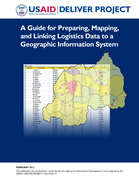
This guide is an introduction on how to integrate logistics management information systems (LMIS) with geographic information systems (GIS). It covers the value of integrating these two systems, the steps in assessing if it is currently viable to li
...
Access to NCD medicines: emergent issues during the COVID-19 pandemic and key structural factors
recommended
The coronavirus disease (COVID-19) pandemic exacerbated pre-existing inequalities in the treatment and care of noncommunicable diseases (NCDs). This report examines the effect of the COVID-19 pandem
...
The World Health Organization Regional Office for Africa (WHO AFRO), in accordance with recommendations from various WHO committees, has developed three flagship initiatives to support Member States in the African region to prepare for, detect and respond to public health emergencies. They are the r
...

A companion to the Child Friendly Schools Manual
WASH in Schools aims to improve the health and learning performance of school-aged children – and, by extension, that of their families ...
WASH in Schools aims to improve the health and learning performance of school-aged children – and, by extension, that of their families ...
This ten year global plan for measles and rubella outlines the strategy that needs to be fully implemented to achieve the measles and rubella goals endorsed by the World Health Assembly. The plan sets out the: vision, goals and targets for the 2011-2020 period, recommended strategies, guiding princi
...
Using data from two surveys and 164 countries, this research brief describes the educational strategies countries are putting into place, or plan to, in order to mitigate learning impacts of extended school closures, particularly for the most vulner
...
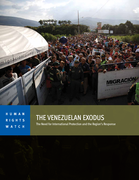
The Need for a Regional Response to an Unprecedented Migration Crisis.
This report provides an overview of where the more than 2 million Venezuelans who have left the country since 2014, at least half of
...
This report presents, for the first time, a global assessment of the extent to which health care facilities provide essential water, sanitation and hygiene (WASH) services. Drawing on data from 54 low- and middle-income countries, the report conclud
...
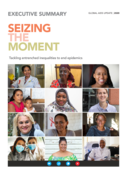
The UNAIDS 2020 global report is a call to action. It highlights the scale of the HIV epidemic and how it runs along the fault lines of inequalities.
UNAIDS report on the global AIDS epidemic shows that 2020 targets will not be met because of deeply unequal success; COVID-19 risks blowing HIV progress way off course. Missed targets have resulted in 3.5 million more HIV infections and 820 000 more
...
