
Filter
814
Text search:
HUMAN
RIGHTS
WATCH
Featured
Recommendations
77
New Publications
229
Language
Document type
No document type
498
Studies & Reports
146
Manuals
60
Guidelines
54
Training Material
19
Strategic & Response Plan
18
Fact sheets
8
Situation Updates
4
Resource Platforms
3
Brochures
1
Infographics
1
Online Courses
1
Videos
1
Countries / Regions
Syria
34
India
26
Kenya
22
Global
22
Sierra Leone
20
Liberia
19
Bangladesh
19
Myanmar / Burma
19
Nigeria
17
Nepal
17
Venezuela
15
Congo, Democratic Republic of
14
Yemen
14
South Sudan
13
Zambia
13
Ethiopia
12
Western and Central Europe
12
South Africa
11
Ukraine
11
Central African Republic
10
Asia
10
Africa
10
Uganda
9
Malawi
9
Latin America and the Carribbean
9
Senegal
7
Ghana
7
Afghanistan
7
Indonesia
7
South–East Asia Region
7
Eastern Europe
7
Philippines
6
Lebanon
6
Tanzania
6
Brazil
6
Guinea
5
Cambodia
5
Rwanda
5
Eastern Europe and Central Asia
5
Haiti
4
Somalia
4
Jordan
4
Mozambique
4
Colombia
4
West and Central Africa
4
Russia
4
Vietnam
4
Burkina Faso
3
Iraq
3
Thailand
3
Greece
3
Libya
3
Mexico
3
Iran
3
Mali
2
Cameroon
2
Zimbabwe
2
Germany
2
China
2
Malaysia
2
Namibia
2
Eswatini/ Swaziland
2
East and Southern Africa
2
Middle East and North Africa
2
Western Pacific Region
2
Southern Africa
2
Tajikistan
2
Lithuania
2
Kazakhstan
2
Georgia
2
Guinea-Bissau
1
USA
1
Niger
1
Turkey
1
Chad
1
Gambia
1
Mauritania
1
Singapore
1
Sudan
1
Argentina
1
North Macedonia
1
Serbia
1
Botswana
1
El Salvador
1
Angola
1
Guatemala
1
Madagascar
1
Lesotho
1
Sri Lanka
1
Palestine
1
Italy
1
Albania
1
Armenia
1
Laos
1
Canada
1
Uzbekistan
1
Kyrgyzstan
1
Australia
1
North America
1
Japan
1
Mauritius
1
United Kingdom
1
Spain
1
Authors & Publishers
Publication Years
Category
Countries
264
Women & Child Health
56
Clinical Guidelines
45
Capacity Building
34
Public Health
27
Key Resources
16
Pharmacy & Technologies
2
Toolboxes
Mental Health
103
Disability
80
HIV
61
COVID-19
58
Conflict
55
AMR
41
Refugee
36
TB
32
Caregiver
21
Ebola
19
Global Health Education
17
Planetary Health
15
Pharmacy
12
Rapid Response
10
Specific Hazards
8
Social Ethics
7
NTDs
6
Natural Hazards
5
Zika
5
Cholera
4
Health Financing Toolbox
3
NCDs
3
Polio
2
South Sudan
1
This document provides a summary of infection control recommendations when providing direct and non-direct care to patients with suspected or confirmed Filovirus haemorrhagic fever (HF), including Ebola or Marburg haemorrhagic fevers. These recommendations are interim and will be updated when additi
...
This interim guidance to national health authorities and blood transfusion services outlines the steps required to collect convalescent whole blood (CWB) or plasma (CP) from Ebola virus disease (EVD) recovered patients for transfusion to patients with early EVD, as an empirical treatment modality.
...
The Thinking Health manual outlines an evidence-based approach describing how community health workers can reduce prenatal depression through evidence-based cognitive-behavioural techniques recommended by the mhGAP programme.
This manual is the first volume of WHO’s new series on low-intensity p
...
For the control of vectors and pests of public health importance. Sixth edition
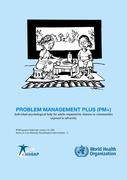
Problem Management Plus (PM+)
recommended
Individual psychological help for adults impaired by distress in communities exposed to adversity.
The manual describes a scalable psychological intervention called Problem Management Plus (PM+) for adults impaired by distress in communities who are exposed to adversity. Aspects of Cognitive Behavi
...
Selection and Use of Essential Medicines 2021
recommended
The 23rd meeting of the WHO Expert Committee on Selection and Use of Essential Medicines was coordinated from Geneva, Switzerland, and held virtually from 21 June to 2 July 2021. The Committee considered 88 applications proposing additions, changes and deletions of medicines, medicine classes and fo
...
Third edition.
The main changes within the third edition of the JEE tool include the split of the technical area National legislation, policy, and financing into two technical areas (Legal instruments and Financing); the drop of the technical area previously titled Reporting and the move of indicat
...

The framework is to be used as a reference guide, applied according to local priorities and needs, and targeted at academic institutions, educators, accreditation bodies, regulatory agencies and other users. The ultimate aim is to ensure that all health workers are equipped with the requisite compet
...
2016-2018 Early implementation,
This report presents 2015 data on the consumption of systemic antibiotics from 65 countries and areas, contributing to our understanding of how antibiotics are used in these countries. In addition, the report documents early efforts of the World Health Organization (
...
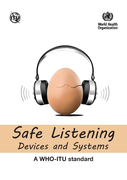
A WHO-ITU Standard.
Nearly 50% of people aged 12-35 years – or 1.1 billion young people – are at risk of hearing loss due to prolonged and excessive exposure to loud sounds, including music they listen to through personal audio devices. Ahead of World Hearing Day (3 March), the World Health Org
...
National Child Traumatic Stress Network National Center for PTSD | The field of school safety and emergency management has evolved significantly over the past decade. Tragically, acts of violence, natural disasters, and terrorist attacks have taught us many lessons. We also know that other types of
...
The National Action Plan (NAP) has been developed based on the model recommended in the global Action Plan. Local data on on-going interventions were collected from technical informants in the various areas of work. These were analysed using the policy framework provided by the AMR policy document.
...
Report of the 23rd WHO Expert Committee on the selection and use of essential medicines
This executive summary reports the recommendations made by the Expert Committee for the 2021 update of the WHO Model List of Essential Medicines (EML) and the Model List of Essential Medicine for Children (EMLc)
...
Countdown to zero
2011- 2015
Procurement and supply management activities are fundamental to consistent and reliable access to essential medicines and health products. To reduce the impact of CVD, action needs to be taken to improve prevention, diagnosis, care and management of CVD diseases. Affordable essential medicines and t
...
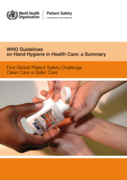
Confronted with the important issue of patient safety, in 2002 the Fifty-fifth World Health Assembly adopted a resolution urging countries to pay the closest possible attention to the problem and to strengthen safety and monitoring systems. In May 2004, the Fifty-seventh World Health Assembly approv
...
As a public good, antimicrobial medicines require rational use if their effectiveness is to be preserved. However, up to 50% of antibiotic use is inappropriate, adding considerable costs to patient care, and increasing morbidity and mortality. In addition, there is compelling evidence that antimicro
...
