
Filter
453
Text search:
CRS
Featured
Recommendations
48
New Publications
119
Language
Document type
No document type
262
Studies & Reports
88
Guidelines
34
Manuals
17
Training Material
17
Strategic & Response Plan
17
Fact sheets
12
Situation Updates
3
Brochures
1
Dashboards/Maps
1
Videos
1
Countries / Regions
Global
26
Congo, Democratic Republic of
22
Senegal
19
Benin
18
Sierra Leone
15
Haiti
14
Burkina Faso
13
Guinea
12
Kenya
10
Liberia
9
India
9
Africa
9
Nigeria
8
Malawi
7
Central African Republic
7
Madagascar
7
Myanmar / Burma
7
Ethiopia
6
Cameroon
6
Nepal
6
Lesotho
6
Zambia
5
Cambodia
5
Bangladesh
5
Côte d’Ivoire / Ivory Coast
4
Uganda
4
China
4
Mali
3
Philippines
3
South Sudan
3
Syria
3
Latin America and the Carribbean
3
Ghana
2
Niger
2
Germany
2
Chad
2
Tanzania
2
Rwanda
2
Ukraine
2
Colombia
2
Chile
2
West and Central Africa
2
Venezuela
2
USA
1
Togo
1
Zimbabwe
1
Indonesia
1
South Africa
1
Mozambique
1
Namibia
1
Brazil
1
Switzerland
1
Burundi
1
Ecuador
1
Greece
1
Yemen
1
South–East Asia Region
1
Western and Central Europe
1
Paraguay
1
Luxembourg
1
Djibouti
1
Armenia
1
Congo-Brazzaville
1
Canada
1
Timor Leste/ East Timor
1
Vietnam
1
Japan
1
Belgium
1
France
1
Authors & Publishers
Publication Years
Category
Countries
171
Key Resources
34
Women & Child Health
26
Public Health
19
Clinical Guidelines
10
Capacity Building
5
Pharmacy & Technologies
2
Toolboxes
Mental Health
42
Health Financing Toolbox
40
COVID-19
30
Ebola
24
Natural Hazards
21
HIV
18
Disability
15
Social Ethics
15
Caregiver
13
TB
12
Conflict
9
Refugee
9
Specific Hazards
4
Rapid Response
3
Planetary Health
3
NTDs
3
Cholera
2
AMR
2
Polio
1
South Sudan
1
Typhoon
1
Zika
1
Global Health Education
1
Health Financing
1
NCDs
1
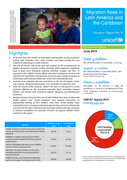
As of June 2019, the number of Venezuelans leaving their country reached 4 million, with Colombia, Peru, Chile, Ecuador and Brazil hosting the vast majority of Venezuelans in Latin America. The end of the first half of the year was marked by the announcement of tighter immigration measures in Peru
...
Joint United Nations Programme on HIV/AIDS
Accessed: 29.09.2019
Accessed: 04.10.2019
The data collection process was organized by UCDC Director, Natalia Nizova, and M&E Department Head, Igor Kuzin, and implemented by M&E specialists from oblast AIDS Centers: Zhanna Antonenko, Oksana Gorbachuk, Volodymyr Zahorovskyi (Kiev City); Anna Lopatenko, Irina Kozina, I
...
Downloaded from https://aidsinfo.nih.gov/guidelines on 10/19/2019
Recommendations from the National Institutes of Health, Centers for Disease Control and Prevention, the HIV Medicine Association of the Infectious Diseases Society of America and the Pediatric Infectious Diseases Society
(This g
...
Supplement Article
www.jaids.com J Acquir Immune Defic Syndr Volume 78, Supplement 1, August 15, 2018
For children orphaned or made vulnerable by HIV (OVC)
Case Study on Improving HIV Testing and Services for Children Orphaned or made Vulnerable by HIV (OVC)
Expanded IMPACT Program in Zimbabwe
Lea Toto and APHIAplus Nuru ya Bonde programs in Kenya Yekokeb Berhan Program for Highly Vulnerable Children in Ethiopia
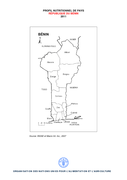
Profil Nutritionnel de pays République du Bénin 2011
Approaches pratiques pour des interventions collaboratives
Les personnes handicapées sont confrontées à des besoins spécifiques auxquels la communauté n’accorde pas toute l’attention requise. Un nombre important de cette couche vulnérable vit dans des conditions déplorables, à la limite déshumanisantes.
Par ses propriétés thérapeutiques, le médicament permet aux professionnels de santé
ainsi quaux pouvoirs publics dassurer la santé des populations. De ce fait, sa disponibilité et
son efficacité sont essentielles et sont le résultat dun circuit complexe (de sa fabrication
...
coïncide avec le premier cycle de cinq ans de la mise en oeuvre du programme relatif aux objectifs de
développement durable (ODD), qui vise à garantir l’accès universel aux services de santé de qualité
d’ici 2030. Les principaux responsables du ministère de la Santé du Bénin et des ex
...
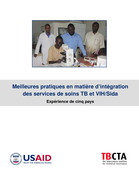
Dans la plupart des pays, les services de lutte contre la tuberculose (TB) sont décentralisés jusqu’aux dispensaires
les plus périphériques et souvent au sein même des villages et des quartiers. Par contre, les services
de lutte contre le VIH/Sida sont généralement beaucoup plus centralis
...
