
Filter
4282
Text search:
community
engagement
Featured
359
1170
Language
4021
179
81
66
56
46
44
27
6
4
4
4
3
3
3
3
3
2
2
2
2
2
2
2
2
2
2
2
2
2
2
1
1
1
1
1
1
1
1
1
1
1
1
1
1
1
1
1
1
1
Document type
2184
809
533
267
240
73
69
59
15
10
10
5
1
Countries
209
131
103
98
97
96
95
89
82
81
79
76
72
68
60
59
54
54
50
49
49
47
45
42
40
39
38
36
34
34
32
32
31
30
28
26
25
25
25
25
24
24
23
22
21
19
19
18
18
15
14
14
14
13
13
13
12
12
12
11
11
10
10
9
9
9
9
9
8
8
8
7
7
7
6
6
6
6
6
6
5
5
5
4
4
4
4
4
4
4
3
3
3
3
3
3
3
3
3
3
3
2
2
2
2
2
2
2
2
2
2
2
2
1
1
1
1
1
1
1
1
1
1
1
1
1
1
1
1
1
1
1
1
1
1
1
1
1
1
1
1
1
1
1
1
Authors & Publishers
612
180
153
143
125
123
115
60
56
43
37
33
29
29
28
27
27
26
26
24
23
21
20
20
20
19
17
17
17
16
15
15
15
15
14
14
14
13
13
13
12
12
11
11
11
11
11
10
10
10
10
9
9
9
9
9
9
9
8
8
8
8
8
8
8
8
8
8
8
7
7
7
7
7
7
7
7
7
7
7
6
6
6
6
6
6
6
6
6
6
6
6
6
6
6
6
6
6
5
5
5
5
5
5
5
5
5
5
5
5
5
5
5
5
5
5
5
5
5
5
5
5
4
4
4
4
4
4
4
4
4
4
4
4
4
4
4
4
4
4
4
4
4
4
4
4
4
4
4
4
4
4
4
4
4
4
4
4
4
4
4
4
4
4
4
4
4
4
4
4
4
4
4
4
4
4
4
4
4
4
4
3
3
3
3
3
3
3
3
3
3
3
3
3
3
3
3
3
3
3
3
3
3
3
3
3
3
3
3
3
3
3
3
3
3
3
3
3
3
3
3
3
3
3
3
3
3
3
3
3
3
3
3
3
3
3
3
3
3
3
3
3
3
3
3
3
3
3
3
3
3
3
3
3
3
3
3
3
3
3
3
3
3
3
3
3
3
3
3
2
2
2
2
2
2
2
2
2
2
2
2
2
2
2
2
2
2
2
2
2
2
2
2
2
2
2
2
2
2
2
2
2
2
2
2
2
2
2
2
2
2
2
2
2
2
2
2
2
2
2
2
2
2
2
2
2
2
2
2
2
2
2
2
2
2
2
2
2
2
2
2
2
2
2
2
2
2
2
2
2
2
2
2
2
2
2
2
2
2
2
2
2
2
2
2
2
2
2
2
2
2
2
2
2
2
2
2
2
2
2
2
2
2
2
2
2
2
2
2
2
2
2
2
2
2
2
2
2
2
2
2
2
2
2
2
2
2
2
2
2
2
2
2
2
2
2
2
2
2
2
2
2
2
2
2
2
2
2
2
2
2
2
2
2
2
2
2
2
2
2
2
2
2
2
2
2
2
2
2
2
2
2
2
2
2
2
2
2
2
2
2
2
2
2
2
2
2
2
2
2
2
2
2
2
2
2
2
2
2
2
2
2
2
2
2
2
2
2
2
2
2
2
2
2
2
2
2
2
2
2
2
2
2
2
2
2
2
2
2
2
2
2
2
2
2
2
2
2
2
2
2
2
2
2
2
2
2
2
2
2
2
2
2
2
2
2
2
1
1
1
1
1
1
1
1
1
1
1
1
1
1
1
1
1
1
1
1
1
1
1
1
1
1
1
1
1
1
1
1
1
1
1
1
1
1
1
1
1
1
1
1
1
1
1
1
1
1
1
1
1
1
1
1
1
1
1
1
1
1
1
1
1
1
1
1
1
1
1
1
1
1
1
1
1
1
1
1
1
1
1
1
1
1
1
1
1
1
1
1
1
1
1
1
1
1
1
1
1
1
1
1
1
1
1
1
1
1
1
1
1
1
1
1
1
1
1
1
1
1
1
1
1
1
1
1
1
1
1
1
1
1
1
1
1
1
1
1
1
1
1
1
1
1
1
1
1
1
1
1
1
1
1
1
1
1
1
1
1
1
1
1
1
1
1
1
1
1
1
1
1
1
1
1
1
1
1
1
1
1
1
1
1
1
1
1
1
1
1
1
1
1
1
1
1
1
1
1
1
1
1
1
1
1
1
1
1
1
1
1
1
1
1
1
1
1
1
1
1
1
1
1
1
1
1
1
1
1
1
1
1
1
1
1
1
1
1
1
1
1
1
1
1
1
1
1
1
1
1
1
1
1
1
1
1
1
1
1
1
1
1
1
1
1
1
1
1
1
1
1
1
1
1
1
1
1
1
1
1
1
1
1
1
1
1
1
1
1
1
1
1
1
1
1
1
1
1
1
1
1
1
1
1
1
1
1
1
1
1
1
1
1
1
1
1
1
1
1
1
1
1
1
1
1
1
1
1
1
1
1
1
1
1
1
1
1
1
1
1
1
1
1
1
1
1
1
1
1
1
1
1
1
1
1
1
1
1
1
1
1
1
1
1
1
1
1
1
1
1
1
1
1
1
1
1
1
1
1
1
1
1
1
1
1
1
1
1
1
1
1
1
1
1
1
1
1
1
1
1
1
1
1
1
1
1
1
1
1
1
1
1
1
1
1
1
1
1
1
1
1
1
1
1
1
1
1
1
1
1
1
1
1
1
1
1
1
1
1
1
1
1
1
1
1
1
1
1
1
1
1
1
1
1
1
1
1
1
1
1
1
1
1
1
1
1
1
1
1
1
1
1
1
1
1
1
1
1
1
1
1
1
1
1
1
1
1
1
1
1
1
1
1
1
1
1
1
1
1
1
1
1
1
1
1
1
1
1
1
1
1
1
1
1
1
1
1
1
1
1
1
1
1
1
1
1
1
1
1
1
1
1
1
1
1
1
1
1
1
1
1
1
1
1
1
1
1
1
1
1
1
1
1
1
1
1
1
1
1
1
1
1
1
1
1
1
1
1
1
1
1
1
1
1
1
1
1
1
1
1
1
1
1
1
1
1
1
1
1
1
1
1
1
1
1
1
1
1
1
1
1
1
1
1
1
1
1
1
1
1
1
1
1
1
1
1
1
1
1
1
1
1
1
1
1
1
1
1
1
1
1
1
1
1
1
1
1
1
1
1
1
1
1
1
1
1
1
1
1
1
1
1
1
1
1
1
1
1
1
1
1
1
1
1
1
1
1
1
1
1
1
1
1
1
1
1
1
1
1
1
1
1
1
1
1
1
1
1
1
1
1
1
1
1
1
1
1
1
1
1
1
1
1
1
1
1
1
1
1
1
1
1
1
1
1
1
1
1
1
1
1
1
1
1
1
1
1
1
1
1
1
1
1
1
1
1
1
1
1
1
1
1
1
1
1
1
1
1
1
1
1
1
1
1
1
1
1
1
1
1
1
1
1
1
1
1
1
1
1
1
1
1
1
1
1
1
1
1
1
1
1
1
1
1
1
1
1
1
1
1
1
1
1
1
1
1
1
1
1
1
1
1
1
1
1
1
1
1
1
1
1
1
1
1
1
1
1
1
1
1
1
1
1
1
1
1
1
1
1
1
1
1
1
1
1
1
1
1
1
1
1
1
1
1
1
1
1
1
1
1
1
1
1
1
1
1
1
1
1
1
1
1
1
1
1
1
1
1
1
1
1
1
1
1
1
1
1
1
1
1
1
1
1
1
1
1
1
1
1
1
1
1
1
1
1
1
1
1
1
1
1
1
1
1
1
1
1
1
1
1
1
1
1
1
1
1
1
1
1
1
1
1
1
1
1
1
1
1
1
1
1
1
1
1
1
1
1
1
1
1
1
1
1
1
1
1
1
1
1
1
1
1
1
1
1
1
1
1
1
1
1
1
1
1
1
1
1
1
1
1
1
1
1
1
1
1
1
1
1
1
1
1
1
1
1
1
1
1
1
1
1
1
1
1
1
1
1
1
1
1
1
1
1
1
1
1
1
1
1
1
1
1
1
1
1
1
1
1
1
1
1
1
1
1
1
1
1
1
1
1
1
1
1
1
1
1
1
1
1
1
1
1
1
1
1
1
1
1
1
1
1
1
1
1
1
1
1
1
1
1
1
1
1
1
1
1
1
1
1
1
1
1
1
1
1
1
1
1
1
1
1
1
1
1
1
1
1
1
1
1
1
1
1
1
1
1
1
1
1
1
1
1
1
1
1
1
1
1
1
1
1
1
1
1
1
1
1
1
1
1
1
1
1
1
1
1
1
1
1
1
1
1
1
1
1
1
1
1
1
1
1
1
1
1
1
1
1
1
1
1
1
1
1
1
1
1
1
1
1
1
1
1
1
1
1
1
1
1
1
1
1
1
1
1
1
1
1
1
1
1
1
1
1
1
1
1
1
1
1
1
1
1
1
1
1
1
1
1
1
1
1
1
1
1
1
1
1
1
1
1
1
1
1
1
1
1
1
1
1
1
1
1
1
1
1
1
1
1
1
1
1
1
1
1
1
1
1
1
1
1
1
1
1
1
1
1
1
1
1
1
1
1
1
1
1
1
1
1
1
1
1
1
1
1
1
1
1
1
1
1
1
1
1
1
1
1
1
1
1
1
1
1
1
1
1
1
1
1
1
1
1
1
1
1
1
1
1
1
1
1
1
1
1
1
1
1
1
1
1
1
1
1
1
1
1
1
1
1
1
1
1
1
1
1
1
1
1
1
1
1
1
1
1
1
1
1
1
1
1
1
1
1
1
1
1
1
1
1
1
1
1
1
1
1
1
1
1
1
1
1
1
1
1
1
1
1
1
1
1
1
1
1
1
1
1
1
1
1
1
1
1
1
1
1
1
1
1
1
1
1
1
1
1
1
1
1
1
1
1
1
1
1
1
1
1
1
1
1
1
1
1
1
1
1
1
1
1
1
1
1
1
1
1
1
1
1
1
1
1
1
1
1
1
1
1
1
1
1
1
1
1
1
1
1
1
1
1
1
1
1
1
1
1
1
1
1
1
1
1
1
1
1
1
1
1
1
1
1
1
1
1
1
1
1
1
1
1
1
1
1
1
1
1
1
1
1
1
1
1
1
1
1
1
1
1
1
1
1
1
1
1
1
1
1
1
1
1
1
1
1
1
1
1
1
1
1
1
1
1
1
1
1
1
1
1
1
1
1
1
1
1
1
1
1
1
1
1
1
1
1
1
1
1
1
1
1
1
1
1
1
1
1
1
1
1
1
1
1
1
1
1
1
1
1
1
1
1
1
1
1
1
1
1
1
1
1
1
1
1
1
1
1
1
1
1
1
1
1
1
1
1
1
1
1
1
1
1
1
1
1
1
1
1
1
1
1
1
1
1
1
1
1
1
1
1
1
1
1
1
1
1
1
1
1
1
1
1
1
1
1
1
1
1
1
1
1
1
1
1
1
1
1
1
1
1
1
1
1
1
1
1
1
1
1
1
1
1
1
1
1
1
1
1
1
1
1
1
1
1
1
1
1
1
1
1
1
1
1
1
1
1
1
1
1
1
1
1
1
1
1
1
1
1
1
1
1
1
1
1
1
1
1
1
1
1
1
1
1
1
1
1
1
1
1
1
1
1
1
1
1
1
1
1
1
1
1
1
1
1
1
1
1
1
1
1
1
1
1
1
1
1
1
1
1
1
1
1
1
1
1
1
1
1
1
1
1
1
1
1
1
1
1
1
1
1
1
1
1
1
1
1
1
1
1
1
1
1
1
1
1
1
1
1
1
1
1
1
1
1
1
1
1
1
1
1
1
1
1
1
1
1
1
1
1
1
1
1
1
1
1
1
1
1
1
1
1
1
1
1
1
1
1
1
1
1
1
1
1
1
1
1
1
1
1
1
1
1
1
1
1
1
1
1
1
1
1
1
1
1
1
1
1
1
1
1
1
1
1
1
1
1
1
1
1
1
1
1
1
1
1
1
1
1
1
1
1
1
1
1
1
1
1
1
1
1
1
1
1
1
1
1
1
1
1
1
1
1
1
1
1
1
1
1
1
1
1
1
1
1
1
1
1
1
1
1
1
1
1
1
1
1
1
1
1
1
1
1
1
1
1
1
1
1
1
1
1
1
1
1
1
1
1
1
1
1
1
1
1
1
1
1
1
1
1
1
1
1
1
1
1
1
1
1
1
1
1
1
1
1
1
1
1
1
1
1
1
1
1
1
1
1
1
1
1
1
1
1
1
1
1
1
1
1
1
1
1
1
1
1
1
1
1
1
1
1
1
1
1
1
1
1
1
1
1
1
1
1
1
1
1
1
1
1
1
1
1
1
1
1
1
1
1
1
1
1
1
1
1
1
1
1
1
1
1
1
1
1
1
1
1
1
1
1
1
1
1
1
1
1
1
1
1
1
1
1
1
1
1
1
1
1
1
1
1
1
1
1
1
1
1
1
1
1
1
1
1
1
1
1
1
1
1
1
1
1
1
1
1
1
1
1
1
1
1
1
1
1
1
1
1
1
1
1
1
1
1
1
1
1
1
1
1
1
1
1
1
1
1
1
1
1
1
1
1
1
1
1
1
1
1
1
1
1
1
1
1
1
1
1
1
1
1
1
1
1
1
1
1
1
1
1
1
1
1
1
1
1
1
1
1
1
1
1
1
1
1
1
1
1
1
1
1
1
1
1
1
1
1
1
1
1
1
1
1
1
1
1
1
1
1
1
1
1
1
1
1
1
1
1
1
1
1
1
1
1
1
1
1
1
1
1
1
1
1
1
1
1
1
1
1
1
1
1
1
1
1
1
1
1
1
1
1
1
1
1
1
1
1
1
1
1
1
1
1
1
1
1
1
1
1
1
1
1
1
1
1
1
1
1
1
1
1
1
1
1
1
1
1
1
1
1
1
1
1
1
1
1
1
1
1
1
1
1
1
1
1
1
1
1
1
1
1
1
1
1
1
1
1
1
1
1
1
1
1
1
1
1
1
1
1
1
1
1
1
1
1
1
1
1
1
1
1
1
1
1
1
1
1
1
1
1
1
1
1
1
1
1
1
1
1
1
1
1
1
1
1
1
1
1
1
1
1
1
1
1
1
1
1
1
1
1
1
1
1
1
1
1
1
1
1
1
1
1
1
1
1
1
1
1
1
1
1
1
1
1
1
1
1
1
1
1
1
1
1
1
1
1
1
1
1
1
1
1
1
1
1
1
1
1
1
1
1
1
1
1
1
1
1
1
1
1
1
1
1
1
1
1
1
1
1
1
1
1
1
1
1
1
1
1
1
1
1
1
1
1
1
1
1
1
1
1
1
1
1
1
1
1
1
1
1
1
1
1
1
1
1
1
1
1
1
1
1
1
1
1
1
1
1
1
1
1
1
1
1
1
1
1
1
1
1
1
1
1
1
1
1
1
1
1
1
1
1
1
1
1
1
1
1
1
1
1
1
1
1
1
1
1
1
1
1
1
1
1
1
1
1
1
1
1
1
1
1
1
1
1
1
1
1
1
1
1
1
1
1
1
1
1
1
1
1
1
1
1
1
1
1
1
1
1
1
1
1
1
1
1
1
1
1
1
1
1
1
1
1
1
1
1
1
1
1
1
1
1
1
1
1
1
1
1
1
1
1
1
1
1
1
1
1
1
1
1
1
1
1
1
1
1
1
1
1
1
1
1
1
1
1
1
1
1
1
1
1
1
1
1
1
1
1
1
1
1
1
1
1
1
1
1
1
1
1
1
1
1
1
1
1
1
1
1
1
1
1
1
1
1
1
1
1
1
1
1
1
1
1
1
1
1
1
1
1
1
1
1
1
1
1
1
1
1
1
1
1
1
1
1
1
1
1
1
1
1
1
1
1
1
1
1
1
1
1
1
1
1
1
1
1
1
1
1
1
1
1
1
1
1
1
1
1
1
1
1
1
1
1
1
1
1
1
1
1
1
1
1
1
1
1
1
1
1
1
1
1
1
1
1
1
1
1
1
1
1
1
1
1
1
1
1
1
1
1
1
1
1
1
1
1
1
1
1
1
1
1
1
1
1
1
1
1
1
1
1
1
1
1
1
1
1
1
1
1
1
1
1
1
1
1
1
1
1
1
1
1
1
1
1
1
1
1
1
1
1
1
1
1
1
1
1
1
1
1
1
1
1
1
1
1
1
1
1
1
1
1
1
1
1
1
1
1
1
1
1
1
1
1
1
1
1
1
1
1
1
1
1
1
1
1
1
1
1
1
1
1
1
1
1
1
1
1
1
1
1
1
1
1
1
1
1
1
1
1
1
1
1
1
1
1
1
1
1
1
1
1
1
1
1
1
1
1
1
1
1
1
1
1
1
1
1
1
1
1
1
1
1
1
1
1
1
1
1
1
1
1
1
Publication Years
1
1543
2584
151
1
1
1
Category
1471
258
207
176
173
66
18
6
1
1
Toolboxes
528
382
335
205
184
170
164
148
143
123
116
111
102
74
58
53
41
38
34
33
27
23
9
3
1
WHO’s Country Cooperation Strategy (CCS) defines the Organization’s medium-term vision for working in and with a particular country. The CCS, developed in the context of global and national health priorities, examines the overall health situation in a country, including the state of the health s
...
ector, socioeconomic status and the major health determinants.
This CCS sets out WHO’s strategic framework for collaboration with the Syrian Arab Republic, from June 2022 until June 2025, in light of the 12 years of crisis that have had a devastating impact on the health sector and infrastructure of basic services. It carefully considers the current and projected issues during its transition from continued humanitarian assistance to recovery, resilience and development. The consolidation of health policies and strategies and health system strengthening, based on the strengthening of primary health care (PHC), aims to contribute to the achievement of national and global development and health goals and the targets of the SDGs.
more
Global Trends: Forced Displacement in 2023
recommended
At the end of 2023, an estimated 117.3 million people worldwide were forcibly displaced due to persecution, conflict, violence, human rights violations and events seriously disturbing the public order. The latest Global Trends report, published in June 2024, provides key statistical trends on forc
...
ed displacement. It includes the latest official statistics on refugees, asylum-seekers, internally displaced and stateless people, as well as the number of refugees who have returned home
more
Mpox is a zoonotic disease caused by a double-stranded DNA virus that belongs to the Orthopoxvirus genus of the Poxviridae family. The disease presents with symptoms similar to smallpox but with a lesser severity. It was first discovered in 1958 when two outbreaks of a poxlike disease occurred in co
...
lonies of monkeys kept for research, hence the name ‘mpox. The first human case of mpox was recorded in 1970 in the Democratic Republic of the Congo (DRC), which has subsequently spread to other central and western African countries. There are two known clades of the virus: clade I and clade II. Clade I, which is most frequently reported from countries in Central Africa, tends to be more severe than clade II. Cameroon is the only country known to harbour both clades.
more
Antimicrobial resistance (AMR) has emerged as a leading cause of death in the African region, surpassing fatalities from malaria, HIV, and TB. In response to this critical threat, the region has adopted the AMR Global Action Plan and the African Union Framework for Antimicrobial Resistance Control 2
...
020 – 2025, which is tailored to meet the specific needs of African nations through a coordinated approach. While most countries in the region have developed and prioritized National Action Plans (NAPs) to tackle AMR, the overall response remains inadequate given the magnitude of the threat, which endangers human, animal, environmental, aquatic, and plant health.
Africa bears a significant burden of infectious diseases, accounting for approximately 95% of malaria deaths, 70% of people living with HIV, and 25% of TB deaths globally. In 2019, AMR was linked to approximately 55,000 deaths from HIV, 30,000 from malaria, and 255,000 overall. Major drivers of AMR in the region include the overuse and misuse of antimicrobials in human and food systems, migration, suboptimal vaccination rates, and environmental contamination from hospital and pharmaceutical effluents. Additionally, there is a lack of access to quality-assured antimicrobials and diagnostics, compounded by inadequate knowledge about AMR. Unlike high-income countries, where indiscriminate antimicrobial use is the primary factor driving AMR, African countries face additional challenges, including a lack of access to clean and safe water, poor Water, Sanitation, and Hygiene (WASH) programs, inadequate infection prevention measures, and suboptimal vaccinations for preventable diseases. One in three hospitals in the region lacks clean, safe running water, and one in eight people defecate openly due to inadequate sanitation. Investments in WASH, infection prevention, and biosecurity could save approximately 700,000 lives annually.
Addressing AMR in Africa requires a comprehensive, multi-sectoral approach involving the entire society. Sustainable access to antimicrobials, including antibiotics, vaccines, and therapeutics, is crucial, as lack of access leads to more morbidity and mortality than AMR itself. Support for the region should focus on preventing infections, strengthening health and food systems, developing human resources, ensuring sustainable access to diagnostics and therapeutics, and investing in laboratory infrastructure to support surveillance and data generation.
more
Uganda is Africa's largest refugee-hosting country and ranks fifth globally. Over the decades, Uganda has hosted refugees from nations including South Sudan, the Democratic Republic of Congo, Eritrea, Somalia, Sudan, Burundi, and Rwanda. As of early 2024, it hosts 1 600 000 refugees, primarily in re
...
fugee settlements in northern and southwestern Uganda, and in Kampala City. Thirteen districts accommodate 94% of these refugees.
The World Health Organization (WHO) and Uganda’s Ministry of Health conducted a joint review mission to provide a comprehensive overview of the health system's response. The aim was to understand service delivery challenges and identify opportunities to further support Uganda in strengthening health system capacity and ensuring continued access to health services for refugees, migrants and host communities.
more
On 14 August 2024, the Director-General of the World Health Organization determined that the upsurge of mpox in a growing number of countries in Africa constitutes a new public health emergency of international concern (PHEIC) under the International Health Regulations (IHR) (2005)
This integrated operational framework provides an overview of the connections between mental health, neurological and substance use (MNS) conditions, and their links to health, well-being and the broader public health and sustainable development agenda. The need for integrated approaches is increasi
...
ngly recognized as critical to address the complex interactions between mental health, brain health, substance use, and physical health, particularly in light of global threats such as the COVID-19 pandemic. The framework also provides a series of actions for governments and health service planners and advisors to achieve integration across four domains: leadership and governance; care services; promotion and prevention; and health information systems, evidence generation and research.
more
To identify and to assess factors enhancing or hindering the delivery of breast and cervical cancer screening services in Malawi with regard to accessibility, uptake, acceptability and effectiveness.
Systematic review of published scientific evidence. A search of six bibliographic databases and gre
...
y literature was executed to identify relevant studies conducted in Malawi in the English language, with no time or study design restrictions. Data extraction was conducted in Excel and evidence synthesis followed a thematic analysis approach to identify and compare emerging themes.
more
This is the 42nd situation report for the multi-country outbreak of mpox, which provides an update on the epidemiological situation of mpox in Africa (including countries in the WHO African Region and some countries in the WHO Eastern Mediterranean Region), with data as of 3 November 2024.
Effective malaria case management requires quick access to diagnostics and antimalarial treatments to reduce illness and death. Artemisinin-based combination therapy (ACT) has been essential to malaria treatment since 2001, as it combines artemisinin for rapid parasite reduction with a partner drug
...
to ensure complete cure. However, resistance to antimalarial drugs, where parasites survive standard doses, threatens malaria control.
more
The World Health Organization provides regional and national strategies and operational plans that aim to support countries in work to achieve measles control and elimination. These are guided by high level frameworks including the Immunization Agenda 2030 and the Measles and Rubella Strategic Frame
...
work 2021–2030. These frameworks promote improvements in routine immunization programmes to reach all children, reduce immunity gaps and prevent outbreaks within the context of universal health care.
This interim guidance on Targeted and selective strategies in measles and rubella vaccination campaigns adds to the suite of guidance documents. It provides expanded description of methods to determine age groups for inclusion in preventive and outbreak response measles and rubella vaccination campaigns; and operational considerations that are specific to targeted and selective strategies in measles and rubella vaccination campaigns. This guidance also updates definitions for tailored, targeted and selective campaigns.The World Health Organization provides regional and national strategies and operational plans that aim to support countries in work to achieve measles control and elimination. These are guided by high level frameworks including the Immunization Agenda 2030 and the Measles and Rubella Strategic Framework 2021–2030. These frameworks promote improvements in routine immunization programmes to reach all children, reduce immunity gaps and prevent outbreaks within the context of universal health care.
This interim guidance on Targeted and selective strategies in measles and rubella vaccination campaigns adds to the suite of guidance documents. It provides expanded description of methods to determine age groups for inclusion in preventive and outbreak response measles and rubella vaccination campaigns; and operational considerations that are specific to targeted and selective strategies in measles and rubella vaccination campaigns. This guidance also updates definitions for tailored, targeted and selective campaigns.
more

In 2016, the risk of premature mortality1 from noncommunicable diseases (NCDs) in Ethiopia was 18.3%. The economic costs of NCDs are significant and are due principally to their impact on the non-health sector (reduced workforce and productivity). In this study, it is estimated that NCDs cost Ethiop
...
ia at least 31.3 billion birr (US$ 1.1 billion) per year, equivalent to 1.8% of the gross domestic product (GDP). Less than 15% of the costs are for health care.
more

The 2021 WHO health and climate change global survey report provides a valuable snapshot of the overall progress governments have made in addressing the health risks of climate change. The findings on key health and climate change indicators aim to empower policy makers to: make informed decisions o
...
n the implementation of policies and plans; identify evidence gaps; and better understand the barriers to achieving adaptation and resilience priorities in the health sector while maximizing the health benefits of sector-wide climate mitigation efforts.
more

This fourth WHO report on neglected tropical diseases (NTDs) reviews the progress made towards achieving the Roadmap targets for 2020, noting the remaining challenges, then looks beyond 2020 to evaluate the changing global health and development landscape, considering the implications of integrating
...
these diseases into the broader 2030 Agenda for Sustainable Development.
more
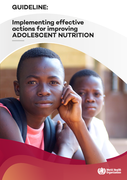
The purpose of this publication is to facilitate the implementation of existing WHO guidelines on nutrition-specific and nutrition-sensitive actions required for improving health and well-being of adolescents. Implementing these actions should explicitly take into account the heterogeneity of adoles
...
cents in general (for instance, in their state of physical growth and social development), as well as the diversity within their country (for instance, in terms of the expected responsibilities in the family, the number out of school or out of work and existing social norms).
more
Recent efforts to fight malaria in the Greater Mekong Subregion (GMS) have yielded impressive results. According to the latest WHO estimates, the six GMS countries cut their malaria case incidence by an estimated 54% between 2012 and 2015. Malaria death rates fell by 84% over the same period.
I ... n May 2015, GMS Ministers of Health adopted the WHO Strategy for malaria elimination in the Greater Mekong Subregion 2015-2030. Urging immediate action, the plan aims to eliminate P. falciparum malaria from the subregion by 2025 and all species of human malaria by 2030. more
I ... n May 2015, GMS Ministers of Health adopted the WHO Strategy for malaria elimination in the Greater Mekong Subregion 2015-2030. Urging immediate action, the plan aims to eliminate P. falciparum malaria from the subregion by 2025 and all species of human malaria by 2030. more
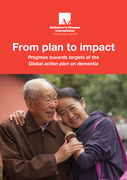
Progress towards targets of the Global action plan on dementia
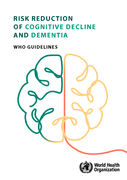
The WHO Guidelines on risk reduction of cognitive decline and dementia provide evidence-based recommendations on lifestyle behaviours and interventions to delay or prevent cognitive decline and dementia. These WHO Guidelines are an important tool for health care providers as well as governments, pol
...
icy-makers and other stakeholders to strengthen their response to the dementia challenge.
Executive Summary available in Arabic, Chinese, French, Russian and Spanish at: https://www.who.int/mental_health/neurology/dementia/guidelines_risk_reduction/en/
more
