
Filter
3854
Text search:
strategic
plans
Featured
291
1234
Language
3733
131
65
43
40
23
20
8
5
4
4
4
4
3
3
3
3
3
2
2
2
2
2
2
2
2
2
1
1
1
1
1
1
1
1
1
1
1
1
1
1
Document type
2269
603
376
275
187
43
41
36
6
4
4
2
1
Countries
172
156
101
99
98
94
92
91
88
88
75
74
73
64
64
64
61
59
55
49
48
41
39
37
34
33
33
32
31
30
30
26
26
25
24
24
24
23
23
19
18
18
18
17
15
14
14
14
12
11
10
10
10
10
10
9
9
9
8
8
8
7
7
6
6
6
6
6
6
6
5
5
5
5
5
4
4
4
4
4
4
4
4
3
3
3
3
3
3
3
2
2
2
2
2
2
2
2
2
2
2
2
2
2
2
2
2
1
1
1
1
1
1
1
1
1
1
1
1
1
1
1
1
1
1
1
1
1
1
1
1
1
1
1
1
Authors & Publishers
511
184
148
139
134
91
87
68
38
33
24
23
23
21
21
21
20
20
19
19
19
18
18
17
16
16
16
16
15
15
14
14
14
14
13
13
13
13
13
13
13
12
12
12
12
12
12
12
12
11
11
10
10
10
10
9
9
9
9
9
9
9
9
9
8
8
8
8
7
7
7
7
7
7
7
7
7
7
7
6
6
6
6
6
6
6
6
6
6
6
6
6
6
6
6
5
5
5
5
5
5
5
5
5
5
5
5
5
5
5
5
5
5
5
5
5
5
5
5
5
5
4
4
4
4
4
4
4
4
4
4
4
4
4
4
4
4
4
4
4
4
4
4
4
4
4
4
4
4
4
4
4
4
4
4
4
4
4
4
4
4
4
4
3
3
3
3
3
3
3
3
3
3
3
3
3
3
3
3
3
3
3
3
3
3
3
3
3
3
3
3
3
3
3
3
3
3
3
3
3
3
3
3
3
3
3
3
3
3
3
3
3
3
3
3
3
3
3
3
3
3
3
3
3
3
3
3
3
3
3
3
3
3
3
3
3
3
3
3
3
3
3
3
3
3
3
3
3
3
3
2
2
2
2
2
2
2
2
2
2
2
2
2
2
2
2
2
2
2
2
2
2
2
2
2
2
2
2
2
2
2
2
2
2
2
2
2
2
2
2
2
2
2
2
2
2
2
2
2
2
2
2
2
2
2
2
2
2
2
2
2
2
2
2
2
2
2
2
2
2
2
2
2
2
2
2
2
2
2
2
2
2
2
2
2
2
2
2
2
2
2
2
2
2
2
2
2
2
2
2
2
2
2
2
2
2
2
2
2
2
2
2
2
2
2
2
2
2
2
2
2
2
2
2
2
2
2
2
2
2
2
2
2
2
2
2
2
2
2
2
2
2
2
2
2
2
2
2
2
2
2
2
2
2
2
2
2
2
2
2
2
2
2
2
2
2
2
2
2
2
2
2
2
2
2
2
2
2
2
2
2
2
2
2
2
2
2
2
2
2
2
2
2
2
2
2
2
2
2
2
2
2
2
2
2
2
2
2
2
2
2
2
2
2
2
2
2
2
2
1
1
1
1
1
1
1
1
1
1
1
1
1
1
1
1
1
1
1
1
1
1
1
1
1
1
1
1
1
1
1
1
1
1
1
1
1
1
1
1
1
1
1
1
1
1
1
1
1
1
1
1
1
1
1
1
1
1
1
1
1
1
1
1
1
1
1
1
1
1
1
1
1
1
1
1
1
1
1
1
1
1
1
1
1
1
1
1
1
1
1
1
1
1
1
1
1
1
1
1
1
1
1
1
1
1
1
1
1
1
1
1
1
1
1
1
1
1
1
1
1
1
1
1
1
1
1
1
1
1
1
1
1
1
1
1
1
1
1
1
1
1
1
1
1
1
1
1
1
1
1
1
1
1
1
1
1
1
1
1
1
1
1
1
1
1
1
1
1
1
1
1
1
1
1
1
1
1
1
1
1
1
1
1
1
1
1
1
1
1
1
1
1
1
1
1
1
1
1
1
1
1
1
1
1
1
1
1
1
1
1
1
1
1
1
1
1
1
1
1
1
1
1
1
1
1
1
1
1
1
1
1
1
1
1
1
1
1
1
1
1
1
1
1
1
1
1
1
1
1
1
1
1
1
1
1
1
1
1
1
1
1
1
1
1
1
1
1
1
1
1
1
1
1
1
1
1
1
1
1
1
1
1
1
1
1
1
1
1
1
1
1
1
1
1
1
1
1
1
1
1
1
1
1
1
1
1
1
1
1
1
1
1
1
1
1
1
1
1
1
1
1
1
1
1
1
1
1
1
1
1
1
1
1
1
1
1
1
1
1
1
1
1
1
1
1
1
1
1
1
1
1
1
1
1
1
1
1
1
1
1
1
1
1
1
1
1
1
1
1
1
1
1
1
1
1
1
1
1
1
1
1
1
1
1
1
1
1
1
1
1
1
1
1
1
1
1
1
1
1
1
1
1
1
1
1
1
1
1
1
1
1
1
1
1
1
1
1
1
1
1
1
1
1
1
1
1
1
1
1
1
1
1
1
1
1
1
1
1
1
1
1
1
1
1
1
1
1
1
1
1
1
1
1
1
1
1
1
1
1
1
1
1
1
1
1
1
1
1
1
1
1
1
1
1
1
1
1
1
1
1
1
1
1
1
1
1
1
1
1
1
1
1
1
1
1
1
1
1
1
1
1
1
1
1
1
1
1
1
1
1
1
1
1
1
1
1
1
1
1
1
1
1
1
1
1
1
1
1
1
1
1
1
1
1
1
1
1
1
1
1
1
1
1
1
1
1
1
1
1
1
1
1
1
1
1
1
1
1
1
1
1
1
1
1
1
1
1
1
1
1
1
1
1
1
1
1
1
1
1
1
1
1
1
1
1
1
1
1
1
1
1
1
1
1
1
1
1
1
1
1
1
1
1
1
1
1
1
1
1
1
1
1
1
1
1
1
1
1
1
1
1
1
1
1
1
1
1
1
1
1
1
1
1
1
1
1
1
1
1
1
1
1
1
1
1
1
1
1
1
1
1
1
1
1
1
1
1
1
1
1
1
1
1
1
1
1
1
1
1
1
1
1
1
1
1
1
1
1
1
1
1
1
1
1
1
1
1
1
1
1
1
1
1
1
1
1
1
1
1
1
1
1
1
1
1
1
1
1
1
1
1
1
1
1
1
1
1
1
1
1
1
1
1
1
1
1
1
1
1
1
1
1
1
1
1
1
1
1
1
1
1
1
1
1
1
1
1
1
1
1
1
1
1
1
1
1
1
1
1
1
1
1
1
1
1
1
1
1
1
1
1
1
1
1
1
1
1
1
1
1
1
1
1
1
1
1
1
1
1
1
1
1
1
1
1
1
1
1
1
1
1
1
1
1
1
1
1
1
1
1
1
1
1
1
1
1
1
1
1
1
1
1
1
1
1
1
1
1
1
1
1
1
1
1
1
1
1
1
1
1
1
1
1
1
1
1
1
1
1
1
1
1
1
1
1
1
1
1
1
1
1
1
1
1
1
1
1
1
1
1
1
1
1
1
1
1
1
1
1
1
1
1
1
1
1
1
1
1
1
1
1
1
1
1
1
1
1
1
1
1
1
1
1
1
1
1
1
1
1
1
1
1
1
1
1
1
1
1
1
1
1
1
1
1
1
1
1
1
1
1
1
1
1
1
1
1
1
1
1
1
1
1
1
1
1
1
1
1
1
1
1
1
1
1
1
1
1
1
1
1
1
1
1
1
1
1
1
1
1
1
1
1
1
1
1
1
1
1
1
1
1
1
1
1
1
1
1
1
1
1
1
1
1
1
1
1
1
1
1
1
1
1
1
1
1
1
1
1
1
1
1
1
1
1
1
1
1
1
1
1
1
1
1
1
1
1
1
1
1
1
1
1
1
1
1
1
1
1
1
1
1
1
1
1
1
1
1
1
1
1
1
1
1
1
1
1
1
1
1
1
1
1
1
1
1
1
1
1
1
1
1
1
1
1
1
1
1
1
1
1
1
1
1
1
1
1
1
1
1
1
1
1
1
1
1
1
1
1
1
1
1
1
1
1
1
1
1
1
1
1
1
1
1
1
1
1
1
1
1
1
1
1
1
1
1
1
1
1
1
1
1
1
1
1
1
1
1
1
1
1
1
1
1
1
1
1
1
1
1
1
1
1
1
1
1
1
1
1
1
1
1
1
1
1
1
1
1
1
1
1
1
1
1
1
1
1
1
1
1
1
1
1
1
1
1
1
1
1
1
1
1
1
1
1
1
1
1
1
1
1
1
1
1
1
1
1
1
1
1
1
1
1
1
1
1
1
1
1
1
1
1
1
1
1
1
1
1
1
1
1
1
1
1
1
1
1
1
1
1
1
1
1
1
1
1
1
1
1
1
1
1
1
1
1
1
1
1
1
1
1
1
1
1
1
1
1
1
1
1
1
1
1
1
1
1
1
1
1
1
1
1
1
1
1
1
1
1
1
1
1
1
1
1
1
1
1
1
1
1
1
1
1
1
1
1
1
1
1
1
1
1
1
1
1
1
1
1
1
1
1
1
1
1
1
1
1
1
1
1
1
1
1
1
1
1
1
1
1
1
1
1
1
1
1
1
1
1
1
1
1
1
1
1
1
1
1
1
1
1
1
1
1
1
1
1
1
1
1
1
1
1
1
1
1
1
1
1
1
1
1
1
1
1
1
1
1
1
1
1
1
1
1
1
1
1
1
1
1
1
1
1
1
1
1
1
1
1
1
1
1
1
1
1
1
1
1
1
1
1
1
1
1
1
1
1
1
1
1
1
1
1
1
1
1
1
1
1
1
1
1
1
1
1
1
1
1
1
1
1
1
1
1
1
1
1
1
1
1
1
1
1
1
1
1
1
1
1
1
1
1
1
1
1
1
1
1
1
1
1
1
1
1
1
1
1
1
1
1
1
1
1
1
1
1
1
1
1
1
1
1
1
1
1
1
1
1
1
1
1
1
1
1
1
1
1
1
1
1
1
1
1
1
1
1
1
1
1
1
1
1
1
1
1
1
1
1
1
1
1
1
1
1
1
1
1
1
1
1
1
1
1
1
1
1
1
1
1
1
1
1
1
1
1
1
1
1
1
1
1
1
1
1
1
1
1
1
1
1
1
1
1
1
1
1
1
1
1
1
1
1
1
1
1
1
1
1
1
1
1
1
1
1
1
1
1
1
1
1
1
1
1
1
1
1
1
1
1
1
1
1
1
1
1
1
1
1
1
1
1
1
1
1
1
1
1
1
1
1
1
1
1
1
1
1
1
1
1
1
1
1
1
1
1
1
1
1
1
1
1
1
1
1
1
1
1
1
1
1
1
1
1
1
1
1
1
1
1
1
1
1
1
1
1
1
1
1
1
1
1
1
1
1
1
1
1
1
1
1
1
1
1
1
1
1
1
1
1
1
1
1
1
1
1
1
1
1
1
1
1
1
1
1
1
1
1
1
1
1
1
1
1
1
1
1
1
1
1
1
1
1
1
1
1
1
1
1
1
1
1
1
1
1
1
1
1
1
1
1
1
1
1
1
1
1
1
1
1
1
1
1
1
1
1
1
1
1
1
1
1
1
1
1
1
1
1
1
1
1
1
1
1
1
1
1
1
1
1
1
1
1
1
1
1
1
1
1
1
1
1
1
1
1
1
1
1
1
1
1
1
1
1
1
1
1
1
1
1
1
1
1
1
1
1
1
1
1
1
1
1
1
1
1
1
1
1
1
1
1
1
1
1
1
1
1
1
1
1
1
1
1
1
1
1
1
1
1
1
1
1
1
1
1
1
1
1
1
1
1
1
1
1
1
1
1
1
1
1
1
1
1
1
1
1
1
1
1
1
1
1
1
1
1
1
1
1
1
1
1
1
1
1
1
1
1
1
1
1
1
1
1
1
1
1
1
1
1
1
1
1
1
1
1
1
1
1
1
1
1
1
1
1
1
1
1
1
1
1
1
1
1
1
1
1
1
1
1
1
1
1
1
1
1
1
1
1
1
1
1
1
1
1
1
1
1
1
1
1
1
1
1
1
1
1
1
1
1
1
1
1
1
1
1
1
1
1
1
1
1
1
1
1
1
1
1
1
1
1
1
1
1
1
1
1
1
1
1
1
1
1
1
1
1
1
1
1
1
1
1
1
1
1
1
1
1
1
1
1
1
1
1
1
1
1
1
1
1
1
1
1
1
1
1
1
1
1
1
1
1
1
1
1
1
1
1
1
1
1
1
1
1
1
1
1
1
1
1
1
1
1
1
1
1
1
1
1
1
1
1
1
1
1
1
1
1
1
1
1
1
1
1
1
1
1
1
1
1
1
1
1
1
1
1
1
1
1
1
1
1
1
1
1
1
1
1
1
1
1
1
1
1
1
1
1
1
1
1
1
1
1
1
1
1
1
1
1
1
1
1
1
1
1
1
1
1
1
1
1
1
1
1
1
1
1
1
1
1
1
1
1
1
1
1
1
1
1
1
1
1
1
1
1
1
1
1
1
1
1
1
1
1
1
1
1
1
1
1
1
1
1
1
1
1
1
1
1
1
1
1
1
1
1
1
1
1
1
1
1
1
1
1
1
1
1
1
1
1
1
1
1
1
1
1
1
1
1
1
1
1
1
1
1
1
1
1
1
1
1
1
1
1
1
1
1
1
1
1
1
1
1
1
1
1
1
1
1
1
1
1
1
1
1
1
1
1
1
1
1
1
1
1
1
1
1
1
1
1
1
1
1
1
1
1
1
1
1
1
1
1
1
1
1
1
1
1
1
1
1
1
1
1
1
1
1
1
1
1
1
1
1
1
1
1
1
1
1
1
1
1
1
1
1
1
1
1
1
1
1
1
1
1
1
1
1
1
1
1
1
1
1
1
1
1
1
1
1
1
1
1
1
1
1
1
1
1
1
1
1
1
1
1
1
1
1
Publication Years
1
1
1049
2510
286
6
1
Category
1641
236
182
173
164
52
11
9
1
Toolboxes
278
276
182
181
171
151
133
127
126
106
80
72
69
63
59
53
40
36
36
26
24
22
6
3
3

In where under-five mortality is high and vitamin A deficiency is a public health problem, two high-dose supplements of vitamin A per year, spaced four to six months apart, can strengthen children’s immune systems and improve their chances of survival.
During much of early childhood – from ... 6 months to 5years of age – two high doses of vitamin A every year can prevent blindness and hearing loss, boost children’s immunity against diseases like measles and diarrhoea and provide critical protection against death. Like all forms of malnutrition, vitamin A deficiency is a marker of inequality. In countries where diets are lacking in vitamin A and infections and deaths are prevalent, supplementation programmes give vulnerable children a better chance to survive, develop and thrive. more
During much of early childhood – from ... 6 months to 5years of age – two high doses of vitamin A every year can prevent blindness and hearing loss, boost children’s immunity against diseases like measles and diarrhoea and provide critical protection against death. Like all forms of malnutrition, vitamin A deficiency is a marker of inequality. In countries where diets are lacking in vitamin A and infections and deaths are prevalent, supplementation programmes give vulnerable children a better chance to survive, develop and thrive. more

Indicators for monitoring the 2016 United Nations Political Declaration on Ending AIDS
UNAIDS supports countries to collect information on their national HIV responses through the Global AIDS Monitoring (GAM) framework—an annual collection of 72 indicators on the response to HIV in a country. ... These data form part of the data set used to report back to the General Assembly.
Different from the HIV epidemiological estimates that countries produce for data on the state of the epidemic in a country—that is, data for making estimates on the number of people living with HIV, AIDS-related deaths, etc.—GAM collects information on HIV programmes, including the number of people living with HIV who know their HIV status and people on HIV treatment, and on stigma and discrimination. A full list of the indicators is given in the GAM guidelines. more
UNAIDS supports countries to collect information on their national HIV responses through the Global AIDS Monitoring (GAM) framework—an annual collection of 72 indicators on the response to HIV in a country. ... These data form part of the data set used to report back to the General Assembly.
Different from the HIV epidemiological estimates that countries produce for data on the state of the epidemic in a country—that is, data for making estimates on the number of people living with HIV, AIDS-related deaths, etc.—GAM collects information on HIV programmes, including the number of people living with HIV who know their HIV status and people on HIV treatment, and on stigma and discrimination. A full list of the indicators is given in the GAM guidelines. more

India contributes to 16% of the global maternal deaths and around 27% of global newborn deaths. Reducing the burden of maternal and newborn mortality and morbidity in urban poor settings today requires an expansion of effective Maternal and Newborn Health (MNH) care services and lowering the barrier
...
s to the use of such services, especially availability and accessibility.
For designing sensitive, responsive and relevant urban health policy and action, it is important for planners and programme managers to understand the context with regard to current systems and mechanisms, potential organisations and best practices.
In order to adres this need, Save the Children’s Saving Newborn Lives programme commissioned a study that reviewed the literature and looked at available secondary data on MNH in urban poor settings.
more

The Road Map outlines various strategies which will guide policy makers, development partners, training institutions and service providers in supporting Government efforts towards the attainment of MDGs related to maternal and neonatal health.
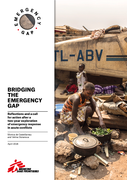
Reflections and a call for action after a two-year exploration of emergency response in acute conflicts
There is general consensus that the humanitarian sector is failing to mount timely and adequate responses in the acute phase of conflict-related emergencies, according to the two-year Emergen ... cy Gap Project by Médecins Sans Frontières (MSF).
The Project has explored what works for or against effective emergency responses. Its final report, Bridging the emergency gap, draws on the Project’s thematic papers and case studies, and consultations with more than 150 senior-level representatives from 60 key organisations across the humanitarian sector. more
There is general consensus that the humanitarian sector is failing to mount timely and adequate responses in the acute phase of conflict-related emergencies, according to the two-year Emergen ... cy Gap Project by Médecins Sans Frontières (MSF).
The Project has explored what works for or against effective emergency responses. Its final report, Bridging the emergency gap, draws on the Project’s thematic papers and case studies, and consultations with more than 150 senior-level representatives from 60 key organisations across the humanitarian sector. more

In 2014, the Ministry of Health (MOH) in Malawi conducted a nationwide assessment of emergency obstetric and newborn care (EmONC) services. This cross-sectional facility-based survey used 10 data collection modules. Data collection began on 23rd September 2014 and concluded on 17th October 2014, in
...
all 28 districts. Facilities in both the public and private sector (for-profit and not-for-profit) were included. Since the focus of the assessment was obstetric and newborn care, health facilities that did not offer maternal and newborn health (MNH) services were not selected. In all districts, a census of all hospitals and a 60 percent random sample of health centres that ought to have performed deliveries in the previous year yielded a total of 365 facilities: 87 hospitals and 278 health centres. All these facilities were visited during the assessment. During analysis, weighting procedures were applied to extrapolate results to the district and national level, representing all 87 hospitals and 464 health centres. Such weighting was necessary as a stratified random sample of health centres was taken and weighting applied to all indicators and presentations that have health facility as a unit of measurement. Case reviews and provider’s interviews, on the other hand, are not weighted as their sampling strategy is based on convenience.
more

This case study examines the humanitarian response to the conflict-related crisis in the North-East of Nigeria, focusing primarily on the period from 2015 to the end of 2016. The aim is test the central hypotheses of the Emergency Gap project: that the current structure, conceptual underpinning and
...
prevalent mindset of the international humanitarian system limits its capacity to be effective in response to conflict-related emergencies.
As with many conflict-related crises, the emergency in north-east Nigeria has deep and complex roots in the history of the region. The conflict began in 2009 and quickly developed beyond the control of the authorities. It unfolded in the midst of pre-existing political, social and economic tensions, making an effective humanitarian response exceedingly difficult. Despite this complexity, what is clear is that the crisis has resulted in a sprawling humanitarian disaster that has killed over 25,000 people as a direct result of the violence, and continues to devastate many more lives through hunger, psychological trauma and lack of access to healthcare. more
As with many conflict-related crises, the emergency in north-east Nigeria has deep and complex roots in the history of the region. The conflict began in 2009 and quickly developed beyond the control of the authorities. It unfolded in the midst of pre-existing political, social and economic tensions, making an effective humanitarian response exceedingly difficult. Despite this complexity, what is clear is that the crisis has resulted in a sprawling humanitarian disaster that has killed over 25,000 people as a direct result of the violence, and continues to devastate many more lives through hunger, psychological trauma and lack of access to healthcare. more
Nepal has made substantial progress in reducing under-five mortality and is on track to achieve Millennium Development Goal 4, but advances in neonatal health are less encouraging. The objectives of this study were to assess relative and absolute inequalities in neonatal mortality over time, and to
...
review experience with major programs to promote neonatal health.
more

Emergency response framework, 2nd ed.
recommended
The purpose of this Emergency Response Framework (ERF) is to clarify WHO’s roles and responsibilities in this regard and to provide a common approach for its work in emergencies. Ultimately, the ERF requires WHO to act with urgency and predictability to best serve and be accountable to populations
...
affected by emergencies.
more
The report aims to help policy-makers and programme managers identify the areas that need attention and to work towards effective implementation and enforcement of policies and legislations. The need for alcohol policy-specific infrastructures to support the alcohol policy process, including designa
...
ted responsible agency, policy and strategy, and law and regulation, is also required at the country level.
The report is presented in three sections. Section 1 gives an insight to the alcohol consumption situation in the WHO South-East Asia Region and cites the alcohol-related problems that the Region is facing. Section 2 illustrates the policy situation in the 10 areas of national action identified in the Global Strategy to Reduce the Harmful Use of Alcohol and gives specific recommendations pertaining to these areas. Section 3 provides overall recommendations. more
The report is presented in three sections. Section 1 gives an insight to the alcohol consumption situation in the WHO South-East Asia Region and cites the alcohol-related problems that the Region is facing. Section 2 illustrates the policy situation in the 10 areas of national action identified in the Global Strategy to Reduce the Harmful Use of Alcohol and gives specific recommendations pertaining to these areas. Section 3 provides overall recommendations. more

The emergence of multifrug-resistant malaria in the Greater Mekong Subregion (GMS) has been identified as an emergency issue that may have catastrophic consequences on the future of malaria elimination in the GMS as well as globally. In recognition of the need for a cohesive regional response,
...
GMS countries have committed to a shared goal of eliminating malaria from the GMS by 2030 working within the framework of the Strategy for Malaria Elimination in the Greater Mekong Subregion 2015-2030. Population mobility has been identified as a key concern in the context of multidrug-resistant malaria; and in a region of highly porous borders where the majority of intra-Mekong migration occurs through informal channels, addressing the health needs of migrant populations has never been more critical.
more

Review of International, Regional and National Policies and Legal Frameworks that Promote Migrants and Mobile Populations' Access to Health and Malaria Services in the Greater Mekong Subregion (Cambodia, Lao People's Democratic Republic, Myanmar, Thailand and Viet Nam)
Migrants and mobile popul ... ations face many obstacles in accessing equitable essential health care services due to factors such as living and working conditions, education level, gender, irregular migration status, language and cultural barriers, anti-migrant sentiments, and lack of migrant-inclusive health policies among others. Despite significant progress having been made in the context of malaria control in the Greater Mekong Subregion (GMS), human movements can impact malaria transmission patterns and potentially introduce drug-resistant parasites. This legal framework review therefore serves as a guidance document on approaches to address malaria and malaria elimination for migrant and mobile populations (MMPs) in five countries of the GMS. more
Migrants and mobile popul ... ations face many obstacles in accessing equitable essential health care services due to factors such as living and working conditions, education level, gender, irregular migration status, language and cultural barriers, anti-migrant sentiments, and lack of migrant-inclusive health policies among others. Despite significant progress having been made in the context of malaria control in the Greater Mekong Subregion (GMS), human movements can impact malaria transmission patterns and potentially introduce drug-resistant parasites. This legal framework review therefore serves as a guidance document on approaches to address malaria and malaria elimination for migrant and mobile populations (MMPs) in five countries of the GMS. more

At the threshold of Sustainable Development Goals (SDG) era, this document captures the remarkable achievements by Member States towards achieving MDGs 4 and 5. It acknowledges new opportunities in the post-2015 phase shaped by the SDGs and the Global Strategy for women’s, children’s and adoles
...
cents’ health and presents an advanced state of preparedness in the Region. This also highlights the region’s renewed commitment for a more inclusive and more dynamic flagship action for ending preventable maternal, newborn and child mortality as well as to improve women’s, children’s and adolescents’ health and wellbeing in the South-East Asia Region.
more


This publication provides directions for a logical, evidence informed approach to selecting, developing, implementing and monitoring population-based interventions within the context of the double-burden of malnutrition in South-East Asia. The focus of this guide is on processed or ultra-processed p
...
re-packaged foods.
more


The purpose of this handbook is to provide guidance to Member States on the practical aspects of maintaining sanitary standards at international borders at ports, airports, and ground crossings (points of entry) as set out in the International Health Regulations (2005). It provides technical advice
...
for developing a comprehensive programme for systematic monitoring of disease vectors and integrated vector control at points of entry. This includes standardizing procedures at points of entry and ensuring a sufficient monitoring and response capacity with the necessary infrastructure for surveillance and control of vectors. In addition, this handbook to serves as reference material for port health officers, regulators, port operators, and other competent authorities in charge of implementing the IHR (2005) at points of entry and on conveyances.
more

This guidance document sets out a methodology to identify and track financing to the WASH sector in a coherent and consistent manner across several countries. It is designed to help countries track financing to the WASH sector on a regular and comparable basis and analyse this information to support
...
evidence-based policy-making based on useful indicators.
more

