
Filter
3409
Text search:
governmental
support
Featured
263
1100
Language
3324
70
51
33
32
21
18
9
5
4
4
4
4
3
3
3
3
3
3
2
2
2
2
2
2
2
2
2
2
2
2
1
1
1
1
1
1
1
1
1
1
1
1
1
1
1
1
1
Document type
2257
509
261
144
131
33
29
29
6
5
3
1
1
Countries
117
115
113
109
103
95
94
92
90
83
74
70
69
66
62
59
57
57
54
52
48
42
37
35
35
31
29
26
25
25
24
21
20
19
19
19
19
18
16
15
15
15
14
14
13
13
13
12
12
12
11
11
11
11
11
10
10
9
9
9
8
8
8
8
8
7
7
6
6
6
6
5
5
5
4
4
4
4
4
4
4
4
3
3
3
3
3
3
3
3
3
3
2
2
2
2
2
2
2
2
2
2
2
2
2
2
2
2
2
2
1
1
1
1
1
1
1
1
1
1
1
1
1
1
1
1
1
1
1
1
1
1
1
1
1
Authors & Publishers
208
136
128
89
74
60
56
52
45
42
38
27
23
21
20
20
20
19
19
17
17
17
16
15
15
14
14
14
14
13
13
13
12
12
12
11
11
11
11
11
10
10
10
10
10
10
10
10
10
9
9
9
9
9
9
9
8
8
8
8
8
8
8
8
8
8
8
8
7
7
7
7
7
7
7
7
6
6
6
6
6
6
6
6
6
6
6
6
6
6
6
6
6
6
6
6
6
5
5
5
5
5
5
5
5
5
5
5
5
5
5
5
5
5
5
5
5
5
4
4
4
4
4
4
4
4
4
4
4
4
4
4
4
4
4
4
4
4
4
4
4
4
4
4
4
4
4
4
4
4
4
3
3
3
3
3
3
3
3
3
3
3
3
3
3
3
3
3
3
3
3
3
3
3
3
3
3
3
3
3
3
3
3
3
3
3
3
3
3
3
3
3
3
3
3
3
3
3
3
3
3
3
3
3
3
3
3
3
3
3
3
3
3
3
3
3
3
3
3
3
3
3
3
3
3
3
3
3
2
2
2
2
2
2
2
2
2
2
2
2
2
2
2
2
2
2
2
2
2
2
2
2
2
2
2
2
2
2
2
2
2
2
2
2
2
2
2
2
2
2
2
2
2
2
2
2
2
2
2
2
2
2
2
2
2
2
2
2
2
2
2
2
2
2
2
2
2
2
2
2
2
2
2
2
2
2
2
2
2
2
2
2
2
2
2
2
2
2
2
2
2
2
2
2
2
2
2
2
2
2
2
2
2
2
2
2
2
2
2
2
2
2
2
2
2
2
2
2
2
2
2
2
2
2
2
2
2
2
2
2
2
2
2
2
2
2
2
2
2
2
2
2
2
2
2
2
2
2
2
2
2
2
2
2
2
2
2
2
2
2
2
2
2
2
2
2
2
2
2
2
2
2
2
2
2
2
2
2
2
2
2
2
2
2
2
2
2
2
2
2
2
2
2
2
2
2
2
2
2
2
2
2
2
2
2
2
2
2
1
1
1
1
1
1
1
1
1
1
1
1
1
1
1
1
1
1
1
1
1
1
1
1
1
1
1
1
1
1
1
1
1
1
1
1
1
1
1
1
1
1
1
1
1
1
1
1
1
1
1
1
1
1
1
1
1
1
1
1
1
1
1
1
1
1
1
1
1
1
1
1
1
1
1
1
1
1
1
1
1
1
1
1
1
1
1
1
1
1
1
1
1
1
1
1
1
1
1
1
1
1
1
1
1
1
1
1
1
1
1
1
1
1
1
1
1
1
1
1
1
1
1
1
1
1
1
1
1
1
1
1
1
1
1
1
1
1
1
1
1
1
1
1
1
1
1
1
1
1
1
1
1
1
1
1
1
1
1
1
1
1
1
1
1
1
1
1
1
1
1
1
1
1
1
1
1
1
1
1
1
1
1
1
1
1
1
1
1
1
1
1
1
1
1
1
1
1
1
1
1
1
1
1
1
1
1
1
1
1
1
1
1
1
1
1
1
1
1
1
1
1
1
1
1
1
1
1
1
1
1
1
1
1
1
1
1
1
1
1
1
1
1
1
1
1
1
1
1
1
1
1
1
1
1
1
1
1
1
1
1
1
1
1
1
1
1
1
1
1
1
1
1
1
1
1
1
1
1
1
1
1
1
1
1
1
1
1
1
1
1
1
1
1
1
1
1
1
1
1
1
1
1
1
1
1
1
1
1
1
1
1
1
1
1
1
1
1
1
1
1
1
1
1
1
1
1
1
1
1
1
1
1
1
1
1
1
1
1
1
1
1
1
1
1
1
1
1
1
1
1
1
1
1
1
1
1
1
1
1
1
1
1
1
1
1
1
1
1
1
1
1
1
1
1
1
1
1
1
1
1
1
1
1
1
1
1
1
1
1
1
1
1
1
1
1
1
1
1
1
1
1
1
1
1
1
1
1
1
1
1
1
1
1
1
1
1
1
1
1
1
1
1
1
1
1
1
1
1
1
1
1
1
1
1
1
1
1
1
1
1
1
1
1
1
1
1
1
1
1
1
1
1
1
1
1
1
1
1
1
1
1
1
1
1
1
1
1
1
1
1
1
1
1
1
1
1
1
1
1
1
1
1
1
1
1
1
1
1
1
1
1
1
1
1
1
1
1
1
1
1
1
1
1
1
1
1
1
1
1
1
1
1
1
1
1
1
1
1
1
1
1
1
1
1
1
1
1
1
1
1
1
1
1
1
1
1
1
1
1
1
1
1
1
1
1
1
1
1
1
1
1
1
1
1
1
1
1
1
1
1
1
1
1
1
1
1
1
1
1
1
1
1
1
1
1
1
1
1
1
1
1
1
1
1
1
1
1
1
1
1
1
1
1
1
1
1
1
1
1
1
1
1
1
1
1
1
1
1
1
1
1
1
1
1
1
1
1
1
1
1
1
1
1
1
1
1
1
1
1
1
1
1
1
1
1
1
1
1
1
1
1
1
1
1
1
1
1
1
1
1
1
1
1
1
1
1
1
1
1
1
1
1
1
1
1
1
1
1
1
1
1
1
1
1
1
1
1
1
1
1
1
1
1
1
1
1
1
1
1
1
1
1
1
1
1
1
1
1
1
1
1
1
1
1
1
1
1
1
1
1
1
1
1
1
1
1
1
1
1
1
1
1
1
1
1
1
1
1
1
1
1
1
1
1
1
1
1
1
1
1
1
1
1
1
1
1
1
1
1
1
1
1
1
1
1
1
1
1
1
1
1
1
1
1
1
1
1
1
1
1
1
1
1
1
1
1
1
1
1
1
1
1
1
1
1
1
1
1
1
1
1
1
1
1
1
1
1
1
1
1
1
1
1
1
1
1
1
1
1
1
1
1
1
1
1
1
1
1
1
1
1
1
1
1
1
1
1
1
1
1
1
1
1
1
1
1
1
1
1
1
1
1
1
1
1
1
1
1
1
1
1
1
1
1
1
1
1
1
1
1
1
1
1
1
1
1
1
1
1
1
1
1
1
1
1
1
1
1
1
1
1
1
1
1
1
1
1
1
1
1
1
1
1
1
1
1
1
1
1
1
1
1
1
1
1
1
1
1
1
1
1
1
1
1
1
1
1
1
1
1
1
1
1
1
1
1
1
1
1
1
1
1
1
1
1
1
1
1
1
1
1
1
1
1
1
1
1
1
1
1
1
1
1
1
1
1
1
1
1
1
1
1
1
1
1
1
1
1
1
1
1
1
1
1
1
1
1
1
1
1
1
1
1
1
1
1
1
1
1
1
1
1
1
1
1
1
1
1
1
1
1
1
1
1
1
1
1
1
1
1
1
1
1
1
1
1
1
1
1
1
1
1
1
1
1
1
1
1
1
1
1
1
1
1
1
1
1
1
1
1
1
1
1
1
1
1
1
1
1
1
1
1
1
1
1
1
1
1
1
1
1
1
1
1
1
1
1
1
1
1
1
1
1
1
1
1
1
1
1
1
1
1
1
1
1
1
1
1
1
1
1
1
1
1
1
1
1
1
1
1
1
1
1
1
1
1
1
1
1
1
1
1
1
1
1
1
1
1
1
1
1
1
1
1
1
1
1
1
1
1
1
1
1
1
1
1
1
1
1
1
1
1
1
1
1
1
1
1
1
1
1
1
1
1
1
1
1
1
1
1
1
1
1
1
1
1
1
1
1
1
1
1
1
1
1
1
1
1
1
1
1
1
1
1
1
1
1
1
1
1
1
1
1
1
1
1
1
1
1
1
1
1
1
1
1
1
1
1
1
1
1
1
1
1
1
1
1
1
1
1
1
1
1
1
1
1
1
1
1
1
1
1
1
1
1
1
1
1
1
1
1
1
1
1
1
1
1
1
1
1
1
1
1
1
1
1
1
1
1
1
1
1
1
1
1
1
1
1
1
1
1
1
1
1
1
1
1
1
1
1
1
1
1
1
1
1
1
1
1
1
1
1
1
1
1
1
1
1
1
1
1
1
1
1
1
1
1
1
1
1
1
1
1
1
1
1
1
1
1
1
1
1
1
1
1
1
1
1
1
1
1
1
1
1
1
1
1
1
1
1
1
1
1
1
1
1
1
1
1
1
1
1
1
1
1
1
1
1
1
1
1
1
1
1
1
1
1
1
1
1
1
1
1
1
1
1
1
1
1
1
1
1
1
1
1
1
1
1
1
1
1
1
1
1
1
1
1
1
1
1
1
1
1
1
1
1
1
1
1
1
1
1
1
1
1
1
1
1
1
1
1
1
1
1
1
1
1
1
1
1
1
1
1
1
1
1
1
1
1
1
1
1
1
1
1
1
1
1
1
1
1
1
1
1
1
1
1
1
1
1
1
1
1
1
1
1
1
1
1
1
1
1
1
1
1
1
1
1
1
1
1
1
1
1
1
1
1
1
1
1
1
1
1
1
1
1
1
1
1
1
1
1
1
1
1
1
1
1
1
1
1
1
1
1
1
1
1
1
1
1
1
1
1
1
1
1
1
1
1
1
1
1
1
1
1
1
1
1
1
1
1
1
1
1
1
1
1
1
1
1
1
1
1
1
1
1
1
1
1
1
1
1
1
1
1
1
1
1
1
1
1
1
1
1
1
1
1
1
1
1
1
1
1
1
1
1
1
1
1
1
1
1
1
1
1
1
1
1
1
1
1
1
1
1
1
1
1
1
1
1
1
1
1
1
1
1
1
1
1
1
1
1
1
1
1
1
1
1
1
1
1
1
1
1
1
1
1
1
1
1
1
1
1
1
1
1
1
1
1
1
1
1
1
1
1
1
1
1
1
1
1
1
1
1
1
1
1
1
1
1
1
1
1
1
1
1
1
1
1
1
1
1
1
1
1
1
1
1
1
1
1
1
1
1
1
1
1
1
1
1
1
1
1
1
1
1
1
1
1
1
1
1
1
1
1
1
1
1
1
1
1
1
1
1
1
1
1
1
1
1
1
1
1
1
1
1
1
1
1
1
1
1
1
1
1
1
1
1
1
1
1
1
1
1
1
1
1
1
1
1
1
1
1
1
1
1
1
1
1
1
1
1
1
1
1
1
1
1
1
1
1
1
1
1
1
1
1
1
1
1
1
1
1
1
1
1
1
1
1
1
1
1
1
1
1
1
1
1
1
1
1
1
1
1
1
1
1
1
1
1
1
1
1
1
1
1
1
1
1
1
1
1
1
1
1
1
1
1
1
1
1
1
1
1
1
1
1
1
1
1
1
1
1
1
1
1
1
1
1
1
1
1
1
1
1
1
1
1
1
1
1
1
1
1
1
1
1
1
1
1
1
1
1
1
1
1
1
1
1
1
1
1
1
1
1
1
1
1
1
1
1
1
1
1
1
1
1
1
1
1
1
1
1
1
1
1
1
1
1
1
1
1
1
1
1
1
1
1
1
1
1
1
1
1
1
1
1
1
1
1
1
1
1
1
1
1
1
1
1
1
1
1
1
1
1
1
1
1
1
1
1
1
1
1
1
1
1
1
1
1
1
1
1
1
1
1
1
1
1
1
1
1
1
1
1
1
1
1
1
1
1
1
1
1
1
1
1
1
1
1
1
1
1
1
1
1
1
1
1
1
1
1
1
1
1
1
1
1
1
1
1
1
1
1
1
1
1
1
1
1
1
1
1
1
1
1
1
1
1
1
1
1
1
1
1
1
1
1
1
1
1
1
1
1
1
1
1
1
1
1
1
1
1
1
1
1
1
1
1
1
1
1
1
1
1
1
1
1
1
1
1
1
1
1
1
1
1
1
1
1
1
1
1
1
1
1
1
1
1
1
1
1
1
1
1
1
1
1
1
1
1
1
1
1
1
1
1
1
1
1
1
1
1
1
1
1
1
1
1
1
1
1
1
1
1
1
1
1
1
1
1
1
1
1
1
1
1
1
1
1
1
1
1
1
1
1
1
1
1
1
1
1
1
1
1
1
1
1
1
1
1
1
1
1
1
1
1
1
1
1
1
1
1
1
1
1
1
1
1
1
1
1
1
1
1
1
1
1
1
1
1
1
1
1
1
1
1
1
1
1
1
1
1
1
1
1
1
1
1
1
1
1
1
1
1
1
1
1
1
1
1
1
1
1
1
1
1
1
1
1
1
1
1
1
1
1
1
1
1
1
1
1
1
1
1
1
1
1
1
1
1
1
1
1
1
1
1
1
1
1
1
1
1
1
1
1
1
1
1
1
1
1
1
1
1
1
1
1
1
1
1
1
1
1
1
1
1
1
1
1
1
1
1
1
1
1
1
1
1
1
1
1
1
1
1
1
1
1
1
1
1
1
1
1
1
1
1
1
1
1
1
1
1
1
1
1
1
1
1
1
1
1
1
1
1
1
1
1
1
1
1
1
1
1
1
1
1
1
1
1
1
1
1
1
1
1
1
1
1
1
1
1
1
1
1
1
1
1
1
1
1
1
1
1
1
1
1
1
1
1
1
1
1
1
1
1
1
1
1
1
1
1
1
1
1
1
1
1
1
1
1
1
1
1
1
1
1
1
1
1
1
1
1
1
1
1
1
1
1
1
1
1
1
1
1
1
1
1
1
1
1
1
1
1
1
1
1
1
1
1
1
1
1
1
1
1
1
1
1
1
1
1
1
1
1
1
1
1
1
1
1
1
1
1
1
1
1
1
1
1
1
1
1
1
1
1
1
1
1
1
1
1
1
1
1
1
1
1
1
1
1
1
1
1
1
1
1
1
1
1
1
1
1
1
1
1
1
1
1
1
1
1
1
1
1
1
1
1
1
1
1
1
1
1
1
1
1
1
1
1
1
1
1
1
1
1
1
1
1
1
1
1
1
1
1
1
1
1
1
1
1
1
1
1
1
1
1
1
1
1
1
1
1
1
1
1
1
1
1
1
1
1
1
1
1
1
1
1
1
1
1
1
1
1
1
1
1
1
1
1
1
1
1
1
1
1
1
1
1
1
1
1
1
1
1
1
1
1
1
1
1
1
1
1
1
1
1
1
1
1
1
1
1
1
1
1
1
1
1
1
1
1
1
1
1
1
1
1
1
1
1
1
1
1
1
1
1
1
1
1
1
1
1
1
1
1
1
1
1
1
1
1
1
1
1
1
1
1
1
1
1
1
1
1
1
1
1
1
1
1
1
1
1
1
1
1
1
1
1
1
1
1
1
1
1
1
1
1
1
1
1
1
1
1
1
1
1
1
1
1
1
1
1
1
1
1
1
1
1
1
1
1
1
1
1
1
1
1
1
1
1
1
1
1
1
1
1
Publication Years
651
2345
392
20
1
Category
1500
163
148
147
113
55
13
7
1
Toolboxes
232
225
221
177
166
120
116
104
97
92
73
68
61
51
49
47
41
35
32
22
19
15
14
3
2
1
"The Emergency Response Guidelines for Anhydrous Hydrogen Fluoride (Guidelines) were prepared
by the American Chemistry Council’s (ACC) Hydrogen Fluoride Panel (Panel). This document is
intended to provide general information to persons addressing an emergency response in the course
of handling
...
and transporting anhydrous hydrogen fluoride (AHF)."
more
Refugees1 with disabilities have specific needs and face particular forms of discrimination. As highlighted in the Executive Committee Conclusion No. 110 (LXI)–2010, it is important for UNHCR to ensure that the rights of persons with disabilities who are of concern to the Office are met without di
...
scrimination. This places an onus on offices to develop a thorough
understanding of the circumstances of persons with disabilities under their care. This note provides staff with guidance on a range of issues to consider in meeting these responsibilities.
more
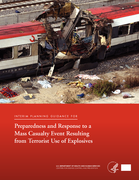
The purpose of this interim guidance is to provide information and insight to assist public policy and
health system leaders in preparing for and responding to an MCE caused by terrorist use of explosives
(TUE). This document provides practical information to promote comprehensive mass casualty ca
...
re
in the event of a TUE event and focuses on two areas:
1. leadership in preparing for and responding to a TUE event, and
2. effective care of patients in the prehospital and hospital environments during a TUE event.
more
The roundtable provided a forum that allowed communicators across a number of Federal agencies to share information, strategies, and challenges in developing and providing communication messages and materials to the public in preparation for, and in response to, a radiation
...
emergency. Throughout the discussion , several “big picture” qestions were brought up that may be addressed in future interagency efforts.
more

ICF is WHO's framework for health and disability. It is the conceptual basis for the definition, measurement and policy formulations for health and disability. It is a universal classification of disability and health for use in health and health related sectors. ICF therefore looks like a simple he
...
alth classifiation, but it can be used for a number of purposes. The most important is as a planning and policy tool for decision-makers.
more
The use of explosive weapons, such as bombs, rockets, and mortar and
artillery shells, in cities, towns and villages and in other populated areas
has devastating humanitarian consequences. Explosive weapons act mainly
through the projection of blast and fragmentation wi
...
thin an area. Their use,
in populated areas, causes severe suffering to civilians, both in terms of
death and serious injury resulting directly from the explosion, and in terms
of damage to property and public infrastructure, which can indirectly affect
civilian well-being and survival, sometimes for many years after a conflict
has ended. Explosive weapons also leave behind explosive remnants that
pose a threat to populations until those remnants are removed. [...] The study finds that the regulation of explosive weapons under international
law and policy is fragmentary and incoherent.
more
The purpose of the WHO Manual for the Public Health Management of Chemical Incidents is to provide a comprehensive overview of the principles and roles of public health in the management of chemical incidents and emergencies. While this information is provided for each phase of the emergency cycle,
...
including prevention, planning and preparedness, detection and alert, response and recovery, it is recognized that the management of chemical incidents and emergencies requires a multi-disciplinary and multi-sectoral approach and that the health sector may play an influencing, complementary or a leadership role at various stages of the management process. The target audience includes public health and environmental professionals, as well as any other person involved in the management of chemical incidents.
WHO and all those involved in the development of the publication hope that the publication will have wide application, especially in developing countries and countries with economies in transition, and that in the future the health sector will be better prepared to acknowledge and fulfill its roles and responsibilities in the management of chemical incidents and emergencies, thereby contributing to the prevention and mitigation of their health consequences.
The publication is also available in French: http://apps.who.int/iris/bitstream/handle/10665/246117/9789242598148-fre.pdf?sequence=1 and in Spanish: http://apps.who.int/iris/bitstream/handle/10665/246118/9789243598147-spa.pdf?sequence=1
more
In 2005, the World Health Organization (WHO) Member States adopted the revised International
Health Regulations (IHR) (2005). The Regulations provide a unique public health framework in the
form of obligations and recommendations that enable countries to better p
...
revent, prepare for and
respond to public health events and emergencies of potential international concern, including chemical events.
more

salud pública de méxico / vol. 50, suplemento 2 de 2008, pp.167-177.
In response to the emerging global concern regarding health and people with intellectual disabilities (ID), several developed countries have established national initiatives to address the unique health needs of this population
...
segment. However, most people with ID reside in countries with developing economies, such as many Latin American countries, yet there is virtually no information on the health of people with ID in these regions. Countries with developing economies face distinct challenges in promoting health among this population segment that may preclude adoption or adaptation of policies and practices developed in regions with established economies. This paper will address the issue of health promotion among people with ID in Latin America, an area that is undergoing significant reforms in both health care and disability rights
more
The new WHO recommendations for the treatment of isoniazid-resistant, rifampicin-susceptible TB are based upon a review of evidence from patients treated with such regimens by a Guideline Development Group in conformity with WHO requirements for evidence-based policies.
This Policy for community-based health insurance answers the will of the Rwandan government to popularize the fundamental aces of the current policy. This document serves as an update to the first policy that was elaborated and published in 2004, and integrates all the changes that have occurred in
...
the process since then. This new version of the policy for community based health insurance contributes to the fulfillment of the same objectives as the EDPRS and the Millennium Development Goals (MDG). It integrates system experiences but more especially the devices adapted to the challenges with which community base health insurance are confronted at present.
more

The Covid-19 pandemic has so far infected more than 30 million people in the world, having major impact on global health with collateral damage. In Mozambique, a public state of emergency was declared at the end of March 2020. This has limited people's movements and reduced public services, leading
...
to a decrease in the number of people accessing health care facilities. An implementation research project, The Alert Community for a Prepared Hospital, has been promoting access to maternal and child health care, in Natikiri, Nampula, for the last four years. Nampula has the second highest incidence of Covid-19. The purpose of this study is to assess the impact of Covid-19 pandemic Government restrictions on access to maternal and child healthcare services. We compared health centres in Nampula city with healthcare centres in our research catchment area. We wanted to see if our previous research interventions have led to a more resilient response from the community.
METHODS: Mixed-methods research, descriptive, cross-sectional, retrospective, using a review of patient visit documentation. We compared maternal and child health care unit statistical indicators from March-May 2019 to the same time-period in 2020. We tested for significant changes in access to maternal and child health services, using KrushKall Wallis, One-way Anova and mean and standard deviation tests. We compared interviews with health professionals, traditional birth attendants and patients in the two areas. We gathered data from a comparable city health centre and the main city referral hospital. The Marrere health centre and Marrere General Hospital were the two Alert Community for a Prepared Hospital intervention sites.
RESULTS: Comparing 2019 quantitative maternal health services access indicators with those from 2020, showed decreases in most important indicators: family planning visits and elective C-sections dropped 28%; first antenatal visit occurring in the first trimester dropped 26%; hospital deliveries dropped a statistically significant 4% (p = 0.046), while home deliveries rose 74%; children vaccinated down 20%.
CONCLUSION: Our results demonstrated the negative collateral effects of Covid-19 pandemic Government restrictions, on access to maternal and child healthcare services, and highlighted the need to improve the health information system in Mozambique.
more

[Preface]. For more than forty years Primary Health Care (PHC) has been recognized as the cornerstone of an effective and responsive health system. The Alma-Ata Declaration of 1978 reaffirmed the right to the highest attainable level of health, with equity, solidarity and the right to health as its
...
core values. It stressed the need for comprehensive health services, not only curative but services that addressed needs in terms of health promotion, prevention, rehabilitation and treatment of common conditions. A strong resolutive first level of care is the basis for health system development [...] The Pan American Health Organization/World Health Organization (PAHO/WHO) has supported the countries in the establishment of interprofessional PHC teams, in the transformation of health education and in building capacity in the strategic planning, and management of human resources for health. Nursing can play a critical role in advancing PHC. New profiles such as the advanced practice nurses, as discussed in this document, can be fundamental in this effort, and in particular, in health promotion, disease prevention and care, especially in rural and underserved areas.
more
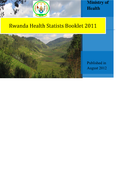
This booklet provides policymakers, planners, and other interested parties with insight into the current state of the Rwandan health sector. These statistics provide a basis for policies, strategies, and planned interventions to ensure they are responsive to the needs of the health sector and, cruci
...
ally, are focused on addressing current priorities that aim to improve the health of the Rwandan population.
more
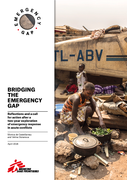
Reflections and a call for action after a two-year exploration of emergency response in acute conflicts
There is general consensus that the humanitarian sector is failing to mount timely and adequate responses in the acute phase of conflict-related emergencies, according to the two-year Emergen ... cy Gap Project by Médecins Sans Frontières (MSF).
The Project has explored what works for or against effective emergency responses. Its final report, Bridging the emergency gap, draws on the Project’s thematic papers and case studies, and consultations with more than 150 senior-level representatives from 60 key organisations across the humanitarian sector. more
There is general consensus that the humanitarian sector is failing to mount timely and adequate responses in the acute phase of conflict-related emergencies, according to the two-year Emergen ... cy Gap Project by Médecins Sans Frontières (MSF).
The Project has explored what works for or against effective emergency responses. Its final report, Bridging the emergency gap, draws on the Project’s thematic papers and case studies, and consultations with more than 150 senior-level representatives from 60 key organisations across the humanitarian sector. more

In 2014, the Ministry of Health (MOH) in Malawi conducted a nationwide assessment of emergency obstetric and newborn care (EmONC) services. This cross-sectional facility-based survey used 10 data collection modules. Data collection began on 23rd September 2014 and concluded on 17th October 2014, in
...
all 28 districts. Facilities in both the public and private sector (for-profit and not-for-profit) were included. Since the focus of the assessment was obstetric and newborn care, health facilities that did not offer maternal and newborn health (MNH) services were not selected. In all districts, a census of all hospitals and a 60 percent random sample of health centres that ought to have performed deliveries in the previous year yielded a total of 365 facilities: 87 hospitals and 278 health centres. All these facilities were visited during the assessment. During analysis, weighting procedures were applied to extrapolate results to the district and national level, representing all 87 hospitals and 464 health centres. Such weighting was necessary as a stratified random sample of health centres was taken and weighting applied to all indicators and presentations that have health facility as a unit of measurement. Case reviews and provider’s interviews, on the other hand, are not weighted as their sampling strategy is based on convenience.
more
