Filter
369
Text search:
Government
of
Nepal
National
Planning
Commission
Featured
Recommendations
25
New Publications
137
Language
Document type
No document type
268
Studies & Reports
61
Guidelines
16
Manuals
11
Situation Updates
5
Strategic & Response Plan
3
Training Material
2
Resource Platforms
1
Infographics
1
Fact sheets
1
Countries / Regions
Nepal
98
Global
19
India
16
Asia
15
South–East Asia Region
14
Bangladesh
8
Myanmar / Burma
6
Ethiopia
5
Uganda
5
Pakistan
5
Thailand
5
Nigeria
4
Philippines
4
Cambodia
4
Indonesia
4
Malawi
3
Africa
3
Congo, Democratic Republic of
2
Ghana
2
Afghanistan
2
Lebanon
2
Syria
2
Tanzania
2
Mozambique
2
Western Pacific Region
2
Latin America and the Carribbean
2
Bhutan
2
Laos
2
Sierra Leone
1
Liberia
1
Zimbabwe
1
Haiti
1
Somalia
1
Jordan
1
Zambia
1
Rwanda
1
South Africa
1
Papua New Guinea
1
Namibia
1
Brazil
1
Colombia
1
Sri Lanka
1
Yemen
1
East and Southern Africa
1
West and Central Africa
1
Middle East and North Africa
1
Eastern Europe and Central Asia
1
Western and Central Europe
1
Other region
1
Vietnam
1
Authors & Publishers
Publication Years
Category
Countries
140
Key Resources
32
Public Health
21
Women & Child Health
16
Clinical Guidelines
6
Capacity Building
5
Pharmacy & Technologies
1
Toolboxes
Disability
46
HIV
40
Mental Health
26
Global Health Education
12
COVID-19
12
Planetary Health
12
Natural Hazards
11
Caregiver
8
Health Financing Toolbox
8
TB
7
Conflict
6
Pharmacy
5
Refugee
4
AMR
4
Rapid Response
3
NCDs
3
Typhoon
2
NTDs
2
Ebola
1
Polio
1
Specific Hazards
1

The 2020 Report analyzes global health spending for 190 countries from 2000 to 2018 and provides insights as to the health spending trajectory from the MDG era to the SDG era prior to the crisis of 2020. The report shows that global spending on heal
...
In the region, it is estimated that there are over 650 million persons with disabilities. However, without accurate, timely and disaggregated data, countries are unable to develop effective policies and programmes, monitor the wellbeing of persons w
...
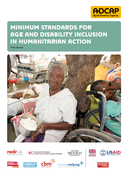
The Minimum Standards for Age and Disability Inclusion in Humanitarian Action inform the design, implementation, monitoring and evaluation of humanitarian programmes across all sectors and phases of
...

This Technical Brief focuses on appraising and prioritising options for climate resilience with a view to informing water, sanitation and hygiene (WASH) programme and project design.
This Technical Brief:
- provides a simple scorecard/checklist approach to use as a starting point for appr ...
This Technical Brief:
- provides a simple scorecard/checklist approach to use as a starting point for appr ...
The United Nations (UN) adopted a new international legal instrument in November 2000, the UN Protocol to Prevent, Suppress and Punish Trafficking in Persons, especially Women and Children, supplementing the UN Convention against Transnational Organized Crime. This contained a new definition
...
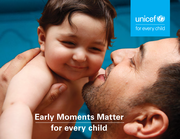
This report presents data and outlines best practices and policies that can put governments on the path to providing every child with the best start in life. It outlines the neuroscience of early childhood development (ECD), including the importance
...

The publication aims to establish the rationale for inclusion and provides technical advice and tools for putting theory into practice. It is intended to be used as a reference during organizational and program/project development with a focus on gender responsiveness and disability inclusion as wel
...

Communities can play a critical role in suicide prevention. Facilitating community engagement in suicide prevention is an important task. The toolkit is a step-by-step guide for communities to engage in suicide prevention activities and have ownership of
...
Suicides take a high toll. Over 800 000 people die by suicide every year and it is the second leading cause of
death in 15-29-year-olds. Most suicides occur in low- and middle-income countries where resources
and services, if they do exist, are of
...
This publication makes the case for working with men and women, boys and girls, together in an intentional and mutually reinforcing way that challenges gender norms in the pursuit of improved health and gender equality. In addition to providing a de
...
In 2024, we need US$1.5 billion to provide live-saving health care to millions of people in emergencies. An alarming combination of conflict, climate-related threats and increasing economic hardship
...
Experience from Save the Children and partners globally
demonstrates that improvements in education quality go hand-in-hand
with inclusion and access, Flexible, quality, responsive learning
environments will benefit all children and are fundamental to including
marginalised groups like disabled
...
Every year, nearly 250 million people move across borders temporarily or permanently for a job opportunity, studying, to flee a crisis back home, or for other reasons. Another 750 million move for similar reasons within the borders of their countrie
...
The manual has been designed in a comprehensive manner, the aim being to provide a holistic approach to the short-term development of human resources, with a focus on primary care physicians. This is a reference manual meant for primary care physici
...
In an ambitious new era for health development under the 2030 Agenda for Sustainable Development, WHO and
its partners have a solid foundation of success on which to build. Health plays a fundamental role in development
and is the central focus
...

Around the world, approximately 1 in 45 children are on the move – nearly 50 million boys and girls that have migrated across borders or been forcibly displaced within their own countries.1 Climate-related events
and their impacts are already contributing significantly to these staggering numbers
...

Climate change is damaging human health now and is projected to have a greater impact in the future. Low- and middle-income countries are seeing the worst effects as they are most vulnerable to climate shifts and least able to adapt given weak health systems and poor infrastructure. Low-carbon appro
...
Disaster Recovery Toolkit
The ‘Toolkit’ is targeted at practitioners responsible for implementing recovery programmes, their objective to provide a ‘how to’ guide on development, implementing and managing complex post-disaster recovery programmes.
Disaster Recovery Toolkit