Filter
3861
Text search:
integrated
school
Featured
311
1140
Language
3742
99
65
51
42
26
17
13
7
6
5
5
5
4
4
4
4
4
3
3
3
3
3
3
2
2
2
2
2
2
2
2
2
2
2
2
2
2
1
1
1
1
1
1
1
1
1
1
1
1
1
1
1
1
1
1
1
1
1
1
1
1
Document type
2392
643
369
176
158
41
33
26
8
6
2
1
1
Countries
147
139
138
102
96
96
95
89
85
79
76
72
69
60
58
57
55
53
52
52
43
36
35
34
34
33
32
30
28
27
27
26
23
22
22
22
21
17
16
15
15
15
14
13
13
12
11
11
11
11
11
11
10
10
9
8
8
8
8
8
7
7
6
6
6
5
5
5
5
5
5
5
4
4
4
4
4
3
3
3
3
3
3
3
3
3
2
2
2
2
2
2
2
2
2
2
2
2
2
2
2
1
1
1
1
1
1
1
1
1
1
1
1
1
1
1
1
1
1
1
1
1
1
1
1
1
1
1
1
Authors & Publishers
405
180
162
117
107
99
98
67
64
62
29
25
22
21
20
20
19
18
18
16
16
15
14
14
14
14
14
13
13
12
12
12
12
12
11
11
11
11
10
10
10
9
9
9
9
9
9
9
9
9
8
8
8
8
8
8
8
8
8
8
7
7
7
7
7
7
7
7
7
7
7
7
6
6
6
6
6
6
6
6
6
6
6
6
6
6
6
6
6
6
6
6
6
5
5
5
5
5
5
5
5
5
5
5
5
5
5
5
5
5
5
5
5
5
5
5
5
5
5
5
5
5
4
4
4
4
4
4
4
4
4
4
4
4
4
4
4
4
4
4
4
4
4
4
4
4
4
4
4
4
4
4
4
4
4
4
4
4
4
4
4
4
4
4
4
4
4
4
4
4
4
3
3
3
3
3
3
3
3
3
3
3
3
3
3
3
3
3
3
3
3
3
3
3
3
3
3
3
3
3
3
3
3
3
3
3
3
3
3
3
3
3
3
3
3
3
3
3
3
3
3
3
3
3
3
3
3
3
3
3
3
3
3
3
3
3
3
3
3
3
3
3
3
3
3
3
3
3
3
3
2
2
2
2
2
2
2
2
2
2
2
2
2
2
2
2
2
2
2
2
2
2
2
2
2
2
2
2
2
2
2
2
2
2
2
2
2
2
2
2
2
2
2
2
2
2
2
2
2
2
2
2
2
2
2
2
2
2
2
2
2
2
2
2
2
2
2
2
2
2
2
2
2
2
2
2
2
2
2
2
2
2
2
2
2
2
2
2
2
2
2
2
2
2
2
2
2
2
2
2
2
2
2
2
2
2
2
2
2
2
2
2
2
2
2
2
2
2
2
2
2
2
2
2
2
2
2
2
2
2
2
2
2
2
2
2
2
2
2
2
2
2
2
2
2
2
2
2
2
2
2
2
2
2
2
2
2
2
2
2
2
2
2
2
2
2
2
2
2
2
2
2
2
2
2
2
2
2
2
2
2
2
2
2
2
2
2
2
2
2
2
2
2
2
2
2
2
2
2
2
2
2
2
2
2
2
2
2
2
2
2
2
2
2
2
2
2
2
2
2
2
2
2
2
2
2
2
2
2
2
2
2
2
2
2
2
2
2
2
2
2
2
2
2
2
2
2
2
2
2
2
2
2
2
2
2
2
2
2
2
1
1
1
1
1
1
1
1
1
1
1
1
1
1
1
1
1
1
1
1
1
1
1
1
1
1
1
1
1
1
1
1
1
1
1
1
1
1
1
1
1
1
1
1
1
1
1
1
1
1
1
1
1
1
1
1
1
1
1
1
1
1
1
1
1
1
1
1
1
1
1
1
1
1
1
1
1
1
1
1
1
1
1
1
1
1
1
1
1
1
1
1
1
1
1
1
1
1
1
1
1
1
1
1
1
1
1
1
1
1
1
1
1
1
1
1
1
1
1
1
1
1
1
1
1
1
1
1
1
1
1
1
1
1
1
1
1
1
1
1
1
1
1
1
1
1
1
1
1
1
1
1
1
1
1
1
1
1
1
1
1
1
1
1
1
1
1
1
1
1
1
1
1
1
1
1
1
1
1
1
1
1
1
1
1
1
1
1
1
1
1
1
1
1
1
1
1
1
1
1
1
1
1
1
1
1
1
1
1
1
1
1
1
1
1
1
1
1
1
1
1
1
1
1
1
1
1
1
1
1
1
1
1
1
1
1
1
1
1
1
1
1
1
1
1
1
1
1
1
1
1
1
1
1
1
1
1
1
1
1
1
1
1
1
1
1
1
1
1
1
1
1
1
1
1
1
1
1
1
1
1
1
1
1
1
1
1
1
1
1
1
1
1
1
1
1
1
1
1
1
1
1
1
1
1
1
1
1
1
1
1
1
1
1
1
1
1
1
1
1
1
1
1
1
1
1
1
1
1
1
1
1
1
1
1
1
1
1
1
1
1
1
1
1
1
1
1
1
1
1
1
1
1
1
1
1
1
1
1
1
1
1
1
1
1
1
1
1
1
1
1
1
1
1
1
1
1
1
1
1
1
1
1
1
1
1
1
1
1
1
1
1
1
1
1
1
1
1
1
1
1
1
1
1
1
1
1
1
1
1
1
1
1
1
1
1
1
1
1
1
1
1
1
1
1
1
1
1
1
1
1
1
1
1
1
1
1
1
1
1
1
1
1
1
1
1
1
1
1
1
1
1
1
1
1
1
1
1
1
1
1
1
1
1
1
1
1
1
1
1
1
1
1
1
1
1
1
1
1
1
1
1
1
1
1
1
1
1
1
1
1
1
1
1
1
1
1
1
1
1
1
1
1
1
1
1
1
1
1
1
1
1
1
1
1
1
1
1
1
1
1
1
1
1
1
1
1
1
1
1
1
1
1
1
1
1
1
1
1
1
1
1
1
1
1
1
1
1
1
1
1
1
1
1
1
1
1
1
1
1
1
1
1
1
1
1
1
1
1
1
1
1
1
1
1
1
1
1
1
1
1
1
1
1
1
1
1
1
1
1
1
1
1
1
1
1
1
1
1
1
1
1
1
1
1
1
1
1
1
1
1
1
1
1
1
1
1
1
1
1
1
1
1
1
1
1
1
1
1
1
1
1
1
1
1
1
1
1
1
1
1
1
1
1
1
1
1
1
1
1
1
1
1
1
1
1
1
1
1
1
1
1
1
1
1
1
1
1
1
1
1
1
1
1
1
1
1
1
1
1
1
1
1
1
1
1
1
1
1
1
1
1
1
1
1
1
1
1
1
1
1
1
1
1
1
1
1
1
1
1
1
1
1
1
1
1
1
1
1
1
1
1
1
1
1
1
1
1
1
1
1
1
1
1
1
1
1
1
1
1
1
1
1
1
1
1
1
1
1
1
1
1
1
1
1
1
1
1
1
1
1
1
1
1
1
1
1
1
1
1
1
1
1
1
1
1
1
1
1
1
1
1
1
1
1
1
1
1
1
1
1
1
1
1
1
1
1
1
1
1
1
1
1
1
1
1
1
1
1
1
1
1
1
1
1
1
1
1
1
1
1
1
1
1
1
1
1
1
1
1
1
1
1
1
1
1
1
1
1
1
1
1
1
1
1
1
1
1
1
1
1
1
1
1
1
1
1
1
1
1
1
1
1
1
1
1
1
1
1
1
1
1
1
1
1
1
1
1
1
1
1
1
1
1
1
1
1
1
1
1
1
1
1
1
1
1
1
1
1
1
1
1
1
1
1
1
1
1
1
1
1
1
1
1
1
1
1
1
1
1
1
1
1
1
1
1
1
1
1
1
1
1
1
1
1
1
1
1
1
1
1
1
1
1
1
1
1
1
1
1
1
1
1
1
1
1
1
1
1
1
1
1
1
1
1
1
1
1
1
1
1
1
1
1
1
1
1
1
1
1
1
1
1
1
1
1
1
1
1
1
1
1
1
1
1
1
1
1
1
1
1
1
1
1
1
1
1
1
1
1
1
1
1
1
1
1
1
1
1
1
1
1
1
1
1
1
1
1
1
1
1
1
1
1
1
1
1
1
1
1
1
1
1
1
1
1
1
1
1
1
1
1
1
1
1
1
1
1
1
1
1
1
1
1
1
1
1
1
1
1
1
1
1
1
1
1
1
1
1
1
1
1
1
1
1
1
1
1
1
1
1
1
1
1
1
1
1
1
1
1
1
1
1
1
1
1
1
1
1
1
1
1
1
1
1
1
1
1
1
1
1
1
1
1
1
1
1
1
1
1
1
1
1
1
1
1
1
1
1
1
1
1
1
1
1
1
1
1
1
1
1
1
1
1
1
1
1
1
1
1
1
1
1
1
1
1
1
1
1
1
1
1
1
1
1
1
1
1
1
1
1
1
1
1
1
1
1
1
1
1
1
1
1
1
1
1
1
1
1
1
1
1
1
1
1
1
1
1
1
1
1
1
1
1
1
1
1
1
1
1
1
1
1
1
1
1
1
1
1
1
1
1
1
1
1
1
1
1
1
1
1
1
1
1
1
1
1
1
1
1
1
1
1
1
1
1
1
1
1
1
1
1
1
1
1
1
1
1
1
1
1
1
1
1
1
1
1
1
1
1
1
1
1
1
1
1
1
1
1
1
1
1
1
1
1
1
1
1
1
1
1
1
1
1
1
1
1
1
1
1
1
1
1
1
1
1
1
1
1
1
1
1
1
1
1
1
1
1
1
1
1
1
1
1
1
1
1
1
1
1
1
1
1
1
1
1
1
1
1
1
1
1
1
1
1
1
1
1
1
1
1
1
1
1
1
1
1
1
1
1
1
1
1
1
1
1
1
1
1
1
1
1
1
1
1
1
1
1
1
1
1
1
1
1
1
1
1
1
1
1
1
1
1
1
1
1
1
1
1
1
1
1
1
1
1
1
1
1
1
1
1
1
1
1
1
1
1
1
1
1
1
1
1
1
1
1
1
1
1
1
1
1
1
1
1
1
1
1
1
1
1
1
1
1
1
1
1
1
1
1
1
1
1
1
1
1
1
1
1
1
1
1
1
1
1
1
1
1
1
1
1
1
1
1
1
1
1
1
1
1
1
1
1
1
1
1
1
1
1
1
1
1
1
1
1
1
1
1
1
1
1
1
1
1
1
1
1
1
1
1
1
1
1
1
1
1
1
1
1
1
1
1
1
1
1
1
1
1
1
1
1
1
1
1
1
1
1
1
1
1
1
1
1
1
1
1
1
1
1
1
1
1
1
1
1
1
1
1
1
1
1
1
1
1
1
1
1
1
1
1
1
1
1
1
1
1
1
1
1
1
1
1
1
1
1
1
1
1
1
1
1
1
1
1
1
1
1
1
1
1
1
1
1
1
1
1
1
1
1
1
1
1
1
1
1
1
1
1
1
1
1
1
1
1
1
1
1
1
1
1
1
1
1
1
1
1
1
1
1
1
1
1
1
1
1
1
1
1
1
1
1
1
1
1
1
1
1
1
1
1
1
1
1
1
1
1
1
1
1
1
1
1
1
1
1
1
1
1
1
1
1
1
1
1
1
1
1
1
1
1
1
1
1
1
1
1
1
1
1
1
1
1
1
1
1
1
1
1
1
1
1
1
1
1
1
1
1
1
1
1
1
1
1
1
1
1
1
1
1
1
1
1
1
1
1
1
1
1
1
1
1
1
1
1
1
1
1
1
1
1
1
1
1
1
1
1
1
1
1
1
1
1
1
1
1
1
1
1
1
1
1
1
1
1
1
1
1
1
1
1
1
1
1
1
1
1
1
1
1
1
1
1
1
1
1
1
1
1
1
1
1
1
1
1
1
1
1
1
1
1
1
1
1
1
1
1
1
1
1
1
1
1
1
1
1
1
1
1
1
1
1
1
1
1
1
1
1
1
1
1
1
1
1
1
1
1
1
1
1
1
1
1
1
1
1
1
1
1
1
1
1
1
1
1
1
1
1
1
1
1
1
1
1
1
1
1
1
1
1
1
1
1
1
1
1
1
1
1
1
1
1
1
1
1
1
1
1
1
1
1
1
1
1
1
1
1
1
1
1
1
1
1
1
1
1
1
1
1
1
1
1
1
1
1
1
1
1
1
1
1
1
1
1
1
1
1
1
1
1
1
1
1
1
1
1
1
1
1
1
1
1
1
1
1
1
1
1
1
1
1
1
1
1
1
1
1
1
1
1
1
1
1
1
1
1
1
1
1
1
1
1
1
1
1
1
1
1
1
1
1
1
1
1
1
1
1
1
1
1
1
1
1
1
1
1
1
1
1
1
1
1
1
1
1
1
1
1
1
1
1
1
1
1
1
1
1
1
1
1
1
1
1
1
1
1
1
1
1
1
1
1
1
1
1
1
1
1
1
1
1
1
1
1
1
1
1
1
1
1
1
1
1
1
1
1
1
1
1
1
1
1
1
1
1
1
1
1
1
1
1
1
1
1
1
1
1
1
1
1
1
1
1
1
1
1
1
1
1
1
1
1
1
1
1
1
1
1
1
1
1
1
1
1
1
1
1
1
1
1
1
1
1
1
1
1
1
1
1
1
1
1
1
1
1
1
1
1
1
1
1
1
1
1
1
1
1
1
1
1
1
1
1
1
1
1
1
1
1
1
1
1
1
1
1
1
1
1
1
1
1
1
1
1
1
1
1
1
1
1
1
1
1
1
1
1
1
1
1
1
1
1
1
1
1
1
1
1
1
1
1
1
1
1
1
1
1
1
1
1
1
1
1
1
1
1
1
1
1
1
1
1
1
1
1
1
1
1
1
1
1
1
1
1
1
1
1
1
1
1
1
1
1
1
1
1
1
1
1
1
1
1
1
1
1
1
1
1
1
1
1
1
1
1
1
1
1
1
1
1
1
1
1
1
1
1
1
1
1
1
1
1
1
1
1
1
1
1
1
1
1
1
1
1
1
1
1
1
1
1
1
1
1
1
1
1
1
1
1
1
1
1
1
1
1
1
1
1
1
1
1
1
1
1
1
1
1
1
1
1
1
1
1
1
1
1
1
1
1
1
1
1
1
1
1
1
1
1
1
1
1
1
1
1
1
1
1
1
1
1
1
1
1
1
1
1
1
1
1
1
1
1
1
1
1
1
1
1
1
1
1
1
1
1
1
1
1
1
1
1
1
1
1
1
1
1
1
1
1
1
1
1
1
1
1
1
1
1
1
1
1
1
1
1
1
1
1
1
1
1
1
1
1
1
1
1
1
1
1
1
1
1
1
1
1
1
1
1
1
1
1
1
1
1
1
1
1
1
1
1
1
1
1
1
1
1
1
1
1
1
1
1
1
1
1
1
1
1
1
1
1
1
1
1
1
1
1
1
1
1
1
1
1
1
1
1
1
1
1
1
1
1
1
1
1
1
1
1
1
1
1
1
1
1
1
1
1
1
1
1
1
1
1
1
1
1
1
1
1
1
1
1
1
1
1
1
1
1
1
1
1
1
1
1
1
1
1
1
1
1
1
1
1
1
1
1
1
1
1
1
1
1
1
1
1
1
1
1
1
1
1
1
1
1
1
1
1
1
1
1
1
1
1
1
1
1
1
1
1
1
1
1
1
1
1
1
1
1
1
1
1
1
1
1
1
1
1
1
1
1
1
1
1
1
1
1
1
1
1
1
1
1
1
1
1
1
1
1
1
1
1
1
1
1
1
1
1
1
1
1
1
1
1
1
1
1
1
1
1
1
1
1
1
1
1
1
1
1
1
1
1
1
1
1
1
1
1
1
1
1
1
1
1
1
1
1
1
1
1
1
1
1
1
1
1
1
1
1
1
1
1
1
1
1
1
1
1
1
1
1
1
1
1
1
1
1
1
1
1
1
1
1
1
1
1
1
1
1
1
1
1
1
1
1
1
1
1
1
1
1
1
1
1
1
1
1
1
1
1
1
1
1
1
1
1
1
1
1
1
1
1
1
1
1
1
1
1
1
1
1
1
1
1
1
1
1
1
1
1
1
1
1
1
1
1
1
1
1
1
1
1
1
1
1
1
1
1
1
1
1
1
1
1
1
1
1
1
1
1
1
1
1
1
1
1
1
1
1
1
1
1
1
1
1
1
1
1
1
1
1
1
1
1
1
1
1
1
1
1
1
1
1
1
1
1
1
1
1
1
1
1
1
1
1
1
1
1
1
1
1
1
1
1
1
1
1
1
1
1
1
1
1
1
1
1
1
1
1
1
1
1
1
1
1
1
1
1
1
1
1
1
1
1
1
1
1
1
1
1
1
1
1
1
1
1
1
1
Publication Years
881
2584
384
9
2
1
Category
1595
256
246
225
147
78
7
4
Toolboxes
351
299
223
217
163
139
129
106
92
80
78
71
69
67
64
59
28
20
19
16
15
14
11
3
2

WHO recommendations on adolescent health: guidelines approved by the WHO Guidelines Review Committee
This document is meant to respond to the questions:
■ What health interventions should the adolescent receive and when should s/he receive it?
■ What health behaviours should the adolescent practise (or not practise)?
■ What health interventions should the adolescent receive and when should s/he receive it?
■ What health behaviours should the adolescent practise (or not practise)?
This predominantly qualitative research on disability and development in Myanmar was conducted between August 2011 and February 2012, in three commercial centres of Yangon, Mandalay and Taunggyi. Stakeholders of service providers, persons with disabilities (PWDs) and families of disabled people were
...
interviewed in order to discover the needs and challenges that they face. Discoveries were made concerning independent living and adaptive education, vocational training and livelihoods challenges, community-based rehabilitation, organisational and human resource capacity, and information channels, networking and cooperation between organisations.
The study found that PWDS, especially those with intellectually disabilities, need training for independent living, adaptive special education, motor development programs and behaviour modification programs in special institutions. Effective services and programs are necessary in all of these areas of need. more
The study found that PWDS, especially those with intellectually disabilities, need training for independent living, adaptive special education, motor development programs and behaviour modification programs in special institutions. Effective services and programs are necessary in all of these areas of need. more

This landscape analysis aims to:
1. Identify and document supportive policies and best practices in family planning program implementation
2. Assess the quality of family planning service provision
3. Propose recommendations for scaling up best family planning practices and new interv ... entions to improve program effectiveness and increase utilization of contraception more
1. Identify and document supportive policies and best practices in family planning program implementation
2. Assess the quality of family planning service provision
3. Propose recommendations for scaling up best family planning practices and new interv ... entions to improve program effectiveness and increase utilization of contraception more
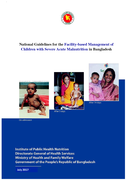
Level of stunting among Bangladeshi children <5years declined from 51% in 2004 to 36% and underweight from 41% in 2007 to 33% (BDHS 2014). But the decrease in wasting rate is not as expected, which is only from 17% to 14.3 % over last decade. Approximately 3.1 % (BDHS 2014) of under-5 children suffering from SAM only b
...
y weight-for-length or height z-score (WHZ) <-3 criterion and estimated to be a total of ~ 450,000. Because, there are no national information on prevalence of SAM using mid upper arm circumference (MUAC) and presence of bipedal oedema in under-5 children, thus the actual number of children suffering from SAM could be much higher than the current estimate.
more
The objectives of this guidance document are to:
1. Strengthen the capacity of country teams to effectively scale up and manage programmes to address severe acute malnutrition
2. Extend the geographic reach of quality treatment for SAM to all vulnerable communities in need
3. Maximize ... access to appropriate and quality treatment for SAM among all eligible children in the community at all times
4. Aid the formulation and implementation of national policies and strategies that support objectives 1 to 3
5. Aid the creation of an enabling environment that supports objectives 1 to 3 through advocacy, documentation of successful practices, support for operational research, mobilization of resources and collaboration with partners more
1. Strengthen the capacity of country teams to effectively scale up and manage programmes to address severe acute malnutrition
2. Extend the geographic reach of quality treatment for SAM to all vulnerable communities in need
3. Maximize ... access to appropriate and quality treatment for SAM among all eligible children in the community at all times
4. Aid the formulation and implementation of national policies and strategies that support objectives 1 to 3
5. Aid the creation of an enabling environment that supports objectives 1 to 3 through advocacy, documentation of successful practices, support for operational research, mobilization of resources and collaboration with partners more

The Indonesian government has reformed its laws, policies, and institutions to better manage disaster risk since the significant 2004 Indian Ocean Tsunami. The Government of Indonesia now has contingency plans for every disaster-prone city which identifies its vulnerabilities, outlines the relief re
...
sponse, and builds overall preparedness. In 2007, the government introduced a disaster management bill that incorporated disaster management prevention into disaster management response. In 2008, Indonesia created the National Disaster Management Agency (Badan Nasional Penanggulangan Bencana, BNPB). The new shift led to the strengthening of the country’s disaster management agency, and the addition of district branches and representatives. Despite the progress made, more work is needed at the local level as well as integration of disaster risk reduction in government departments.11 Under Indonesia’s 2007 Disaster Management law, provincial and district administrations are mandated to head disaster management during a crisis.
more

The Philippine Government, International Non-government Organizations (INGOs) and local NGOs are all making attempts to address the impact of disasters and climate change at various levels. The Philippine Government has made significant strides in the implementation of disaster risk reduction (DRR)
...
planning and activities through the development of the National Disaster Risk Reduction and Management Council (NDRRMC) which acts as the lead agency for DRR in the Philippines. The disaster focal points are the NDRRMC and the Office of Civil Defence (OCD). The Department of Social Welfare and Development (DSWD) is responsible for leading immediate disaster relief efforts.
The Armed Forces of the Philippines (AFP) is a primary responder in disasters and have been deployed frequently to several disaster relief operations in the country in recent years. The Philippines has endured disasters that involve national and international assistance. more
The Armed Forces of the Philippines (AFP) is a primary responder in disasters and have been deployed frequently to several disaster relief operations in the country in recent years. The Philippines has endured disasters that involve national and international assistance. more

The 2012 NDRMP lays out the Disaster Risk Management (DRM) architecture of the country and provides guidance for DRM intervention at all levels. However, implementation has been slow and resource challenges exist throughout the government.
The PNG government’s policy and institutional framework ... for DRM still faces numerous obstacles. The main challenges in moving towards a more proactive and systematic approach to manage risks and build resilience include 1.) the limited coordination between DRM and Climate Change Adaptation agencies; 2.) the slow migration from emphasis on response to risk reduction and management; 3.) the limited institutional capacity for planning and design of risk informed investments; and 4.) the lack of available historic natural hazard data, which hinders the assessment of risks. more
The PNG government’s policy and institutional framework ... for DRM still faces numerous obstacles. The main challenges in moving towards a more proactive and systematic approach to manage risks and build resilience include 1.) the limited coordination between DRM and Climate Change Adaptation agencies; 2.) the slow migration from emphasis on response to risk reduction and management; 3.) the limited institutional capacity for planning and design of risk informed investments; and 4.) the lack of available historic natural hazard data, which hinders the assessment of risks. more
Thailand is exposed to flooding, landslides, drought, earthquakes, tsunamis, heat waves, forest fires, and epidemics. Thailand is also exposed to technological hazards such as chemical accidents. Flooding is the natural hazard with the most significant impact on human life, livelihoods, and the econ
...
omy for the country. The occurrence of droughts has increased in recent years due to the effects of the El Niño-Southern Oscillation (ENSO) cycle, which brings drier-than-average rainfall conditions. Drought has adversely impacted the country’s agriculture sector, which employs around one third of the country’s workforce.
more

Over the period 2015 to 2019, scaling up a package of selected nutrition-specific and nutrition sensitive interventions to cover 90 per cent of Sudan would:
- Reduce the under-five mortality rate to 49/1,000 live births
- Reduce the prevalence of stunting to 25 per cent
- Reduce the ... prevalence of wasting (global acute malnutrition – GAM) to 6 per cent
- Increase exclusive breastfeeding to 63 per cent
- Reduce iron deficiency anaemia among pregnant women to 26 per cent. more
- Reduce the under-five mortality rate to 49/1,000 live births
- Reduce the prevalence of stunting to 25 per cent
- Reduce the ... prevalence of wasting (global acute malnutrition – GAM) to 6 per cent
- Increase exclusive breastfeeding to 63 per cent
- Reduce iron deficiency anaemia among pregnant women to 26 per cent. more

A National Service Programme for All Children with Special Needs and their Families
In Myanmar, we estimate that at least 40% of children require ECI services for short to longer periods of time. At present, 35.1% of Myanmar children are moderately to severely stunted; all of these children are l ... ikely to have one or more developmental delays. In addition, at least 5% to 12% of the nation’s children will be identified to have disabilities, chronic diseases or atypical behaviours.
Over time, approximately 70% of the children who will be served will improve in their development, attain expected levels of development for their age, and will consolidate their gains within one to two years. Other children, approximately 30%, will have lifelong disabilities or other conditions, and ECI services usually greatly improve their development and help them to achieve their full potential. more
In Myanmar, we estimate that at least 40% of children require ECI services for short to longer periods of time. At present, 35.1% of Myanmar children are moderately to severely stunted; all of these children are l ... ikely to have one or more developmental delays. In addition, at least 5% to 12% of the nation’s children will be identified to have disabilities, chronic diseases or atypical behaviours.
Over time, approximately 70% of the children who will be served will improve in their development, attain expected levels of development for their age, and will consolidate their gains within one to two years. Other children, approximately 30%, will have lifelong disabilities or other conditions, and ECI services usually greatly improve their development and help them to achieve their full potential. more

Maternal and child malnutrition is a significant public health problem in South Sudan. Among children aged 6-59 months, 31% are stunted, 28% are underweight, and nearly 23% are acutely malnourished of which 13% are estimated to suffer from moderate acute malnutrition and 10% from severe acute malnut
...
rition.
Overall, South Sudan’s nutrition situation is worrisome, with GAM persistently above the emergency threshold in the Greater Upper Nile, Northern Bahr el Ghazal and Warrap states. Though data on micronutrient deficiencies is scanty, Vitamin A Supplementation (VAS) among children 6-59 months stood at only 2.6% in 2010, showing low uptake (SHHS, 2010). This is against a backdrop of high morbidity levels and a negligible proportion of children 6 to 23 months receiving at least the recommended minimum acceptable diet. In order to ensure optimal child growth, it is essential to ensure good nutrition and basic health care from pregnancy through two years of age (the first 1000 days). more
Overall, South Sudan’s nutrition situation is worrisome, with GAM persistently above the emergency threshold in the Greater Upper Nile, Northern Bahr el Ghazal and Warrap states. Though data on micronutrient deficiencies is scanty, Vitamin A Supplementation (VAS) among children 6-59 months stood at only 2.6% in 2010, showing low uptake (SHHS, 2010). This is against a backdrop of high morbidity levels and a negligible proportion of children 6 to 23 months receiving at least the recommended minimum acceptable diet. In order to ensure optimal child growth, it is essential to ensure good nutrition and basic health care from pregnancy through two years of age (the first 1000 days). more

The main goal of the National Health Plan (NHP) 2017-2021 is to extend access to a basic Essential Package of Health Services (EPHS) to the entire population while increasing financial protection. In order to extend service delivery to all communities, the NHP calls for all health workers (whether c
...
ommunity-based, outreach-based or facility-based) involved in the delivery of health promotion, prevention and treatment services to be fully recognised and institutionalized within the health system to ensure efficient use of resources, necessary oversight and quality service provision (regardless of whether the health workers are voluntary or salaried). The first year Annual Operational Plan (AOP) of the NHP 2017-2021 calls for a comprehensive literature review of the situation of all Village Based Health Workers (VBHWs) in the country to inform the development of a comprehensive, institutionalized approach to community health for the country.
more

State of Health in the WHO African Region
recommended
This report is not a country scorecard. Rather, its purpose is to act as a compass to guide progress towards health in the SDGs.
There has been a significant improvement in the state of health in the region with healthy life expectancy - time spent in full health - in the region increasing from 50
...
.9 years to 53.8 between 2012 and 2015 - the most marked increase of any region in the world.
What is making Africans sick is changing. The top killers are still lower respiratory infections, HIV and diarrhoeal disease and countries have routinely focused on preventing and treating this trio, often through specialized programmes. The payoff has been significant declines in deaths due to these diseases. There has been a 50% reduction in the burden of disease caused by what have been the top 10 killers since 2000 and death rates have dropped from 87.7 to 51.1 deaths per 100,000 persons between 2000 and 2015...
Chronic diseases like heart disease and cancer are now claiming more lives with a person aged 30 to 70 in the region having a one in five chance of dying from a noncommunicable disease (NCDs).
Countries are specifically failing to provide essential services to two critical age groups – adolescents and the elderly...
more