
Filter
3813
Text search:
quality
of
medicines
Featured
398
1126
Language
3713
81
68
55
41
23
20
18
10
6
6
5
5
4
4
3
3
3
3
2
2
2
2
2
2
2
2
2
2
2
1
1
1
1
1
1
1
1
1
1
1
1
1
1
1
1
1
1
1
1
1
1
1
1
1
1
Document type
2058
661
518
204
179
63
55
34
12
10
9
6
1
Countries
194
155
128
100
98
93
81
77
77
74
70
70
68
66
66
64
63
58
51
46
46
45
41
30
30
29
29
28
22
21
20
20
20
17
17
16
16
16
16
15
15
15
14
14
13
13
12
11
11
11
10
10
9
9
8
8
7
7
7
6
6
6
6
6
6
6
5
5
5
5
4
4
4
4
4
4
4
4
4
4
3
3
3
3
3
3
3
3
3
3
3
3
2
2
2
2
2
2
2
2
2
2
2
2
2
2
2
2
1
1
1
1
1
1
1
1
1
1
1
1
1
1
1
1
1
1
1
1
1
1
1
1
Authors & Publishers
573
219
140
135
124
77
75
67
61
27
26
24
23
21
20
19
18
18
18
17
17
17
16
16
16
15
15
15
14
14
14
14
13
13
13
12
12
12
11
11
11
11
11
11
11
10
10
10
10
10
10
10
10
9
9
9
9
8
8
8
8
8
8
8
8
8
8
8
8
8
7
7
7
7
7
7
7
7
7
7
7
7
6
6
6
6
6
6
6
6
6
6
6
6
6
6
6
6
6
5
5
5
5
5
5
5
5
5
5
5
5
5
5
5
5
5
5
5
4
4
4
4
4
4
4
4
4
4
4
4
4
4
4
4
4
4
4
4
4
4
4
4
4
4
4
4
4
4
4
4
4
4
4
4
4
4
4
4
4
4
3
3
3
3
3
3
3
3
3
3
3
3
3
3
3
3
3
3
3
3
3
3
3
3
3
3
3
3
3
3
3
3
3
3
3
3
3
3
3
3
3
3
3
3
3
3
3
3
3
3
3
3
3
3
3
3
3
3
3
3
3
3
3
3
3
3
3
3
3
3
3
3
3
3
3
3
3
3
3
3
3
3
3
3
3
3
3
3
3
2
2
2
2
2
2
2
2
2
2
2
2
2
2
2
2
2
2
2
2
2
2
2
2
2
2
2
2
2
2
2
2
2
2
2
2
2
2
2
2
2
2
2
2
2
2
2
2
2
2
2
2
2
2
2
2
2
2
2
2
2
2
2
2
2
2
2
2
2
2
2
2
2
2
2
2
2
2
2
2
2
2
2
2
2
2
2
2
2
2
2
2
2
2
2
2
2
2
2
2
2
2
2
2
2
2
2
2
2
2
2
2
2
2
2
2
2
2
2
2
2
2
2
2
2
2
2
2
2
2
2
2
2
2
2
2
2
2
2
2
2
2
2
2
2
2
2
2
2
2
2
2
2
2
2
2
2
2
2
2
2
2
2
2
2
2
2
2
2
2
2
2
2
2
2
2
2
2
2
2
2
2
2
2
2
2
2
2
2
2
2
2
2
2
2
2
2
2
2
2
2
2
2
2
2
2
2
2
2
1
1
1
1
1
1
1
1
1
1
1
1
1
1
1
1
1
1
1
1
1
1
1
1
1
1
1
1
1
1
1
1
1
1
1
1
1
1
1
1
1
1
1
1
1
1
1
1
1
1
1
1
1
1
1
1
1
1
1
1
1
1
1
1
1
1
1
1
1
1
1
1
1
1
1
1
1
1
1
1
1
1
1
1
1
1
1
1
1
1
1
1
1
1
1
1
1
1
1
1
1
1
1
1
1
1
1
1
1
1
1
1
1
1
1
1
1
1
1
1
1
1
1
1
1
1
1
1
1
1
1
1
1
1
1
1
1
1
1
1
1
1
1
1
1
1
1
1
1
1
1
1
1
1
1
1
1
1
1
1
1
1
1
1
1
1
1
1
1
1
1
1
1
1
1
1
1
1
1
1
1
1
1
1
1
1
1
1
1
1
1
1
1
1
1
1
1
1
1
1
1
1
1
1
1
1
1
1
1
1
1
1
1
1
1
1
1
1
1
1
1
1
1
1
1
1
1
1
1
1
1
1
1
1
1
1
1
1
1
1
1
1
1
1
1
1
1
1
1
1
1
1
1
1
1
1
1
1
1
1
1
1
1
1
1
1
1
1
1
1
1
1
1
1
1
1
1
1
1
1
1
1
1
1
1
1
1
1
1
1
1
1
1
1
1
1
1
1
1
1
1
1
1
1
1
1
1
1
1
1
1
1
1
1
1
1
1
1
1
1
1
1
1
1
1
1
1
1
1
1
1
1
1
1
1
1
1
1
1
1
1
1
1
1
1
1
1
1
1
1
1
1
1
1
1
1
1
1
1
1
1
1
1
1
1
1
1
1
1
1
1
1
1
1
1
1
1
1
1
1
1
1
1
1
1
1
1
1
1
1
1
1
1
1
1
1
1
1
1
1
1
1
1
1
1
1
1
1
1
1
1
1
1
1
1
1
1
1
1
1
1
1
1
1
1
1
1
1
1
1
1
1
1
1
1
1
1
1
1
1
1
1
1
1
1
1
1
1
1
1
1
1
1
1
1
1
1
1
1
1
1
1
1
1
1
1
1
1
1
1
1
1
1
1
1
1
1
1
1
1
1
1
1
1
1
1
1
1
1
1
1
1
1
1
1
1
1
1
1
1
1
1
1
1
1
1
1
1
1
1
1
1
1
1
1
1
1
1
1
1
1
1
1
1
1
1
1
1
1
1
1
1
1
1
1
1
1
1
1
1
1
1
1
1
1
1
1
1
1
1
1
1
1
1
1
1
1
1
1
1
1
1
1
1
1
1
1
1
1
1
1
1
1
1
1
1
1
1
1
1
1
1
1
1
1
1
1
1
1
1
1
1
1
1
1
1
1
1
1
1
1
1
1
1
1
1
1
1
1
1
1
1
1
1
1
1
1
1
1
1
1
1
1
1
1
1
1
1
1
1
1
1
1
1
1
1
1
1
1
1
1
1
1
1
1
1
1
1
1
1
1
1
1
1
1
1
1
1
1
1
1
1
1
1
1
1
1
1
1
1
1
1
1
1
1
1
1
1
1
1
1
1
1
1
1
1
1
1
1
1
1
1
1
1
1
1
1
1
1
1
1
1
1
1
1
1
1
1
1
1
1
1
1
1
1
1
1
1
1
1
1
1
1
1
1
1
1
1
1
1
1
1
1
1
1
1
1
1
1
1
1
1
1
1
1
1
1
1
1
1
1
1
1
1
1
1
1
1
1
1
1
1
1
1
1
1
1
1
1
1
1
1
1
1
1
1
1
1
1
1
1
1
1
1
1
1
1
1
1
1
1
1
1
1
1
1
1
1
1
1
1
1
1
1
1
1
1
1
1
1
1
1
1
1
1
1
1
1
1
1
1
1
1
1
1
1
1
1
1
1
1
1
1
1
1
1
1
1
1
1
1
1
1
1
1
1
1
1
1
1
1
1
1
1
1
1
1
1
1
1
1
1
1
1
1
1
1
1
1
1
1
1
1
1
1
1
1
1
1
1
1
1
1
1
1
1
1
1
1
1
1
1
1
1
1
1
1
1
1
1
1
1
1
1
1
1
1
1
1
1
1
1
1
1
1
1
1
1
1
1
1
1
1
1
1
1
1
1
1
1
1
1
1
1
1
1
1
1
1
1
1
1
1
1
1
1
1
1
1
1
1
1
1
1
1
1
1
1
1
1
1
1
1
1
1
1
1
1
1
1
1
1
1
1
1
1
1
1
1
1
1
1
1
1
1
1
1
1
1
1
1
1
1
1
1
1
1
1
1
1
1
1
1
1
1
1
1
1
1
1
1
1
1
1
1
1
1
1
1
1
1
1
1
1
1
1
1
1
1
1
1
1
1
1
1
1
1
1
1
1
1
1
1
1
1
1
1
1
1
1
1
1
1
1
1
1
1
1
1
1
1
1
1
1
1
1
1
1
1
1
1
1
1
1
1
1
1
1
1
1
1
1
1
1
1
1
1
1
1
1
1
1
1
1
1
1
1
1
1
1
1
1
1
1
1
1
1
1
1
1
1
1
1
1
1
1
1
1
1
1
1
1
1
1
1
1
1
1
1
1
1
1
1
1
1
1
1
1
1
1
1
1
1
1
1
1
1
1
1
1
1
1
1
1
1
1
1
1
1
1
1
1
1
1
1
1
1
1
1
1
1
1
1
1
1
1
1
1
1
1
1
1
1
1
1
1
1
1
1
1
1
1
1
1
1
1
1
1
1
1
1
1
1
1
1
1
1
1
1
1
1
1
1
1
1
1
1
1
1
1
1
1
1
1
1
1
1
1
1
1
1
1
1
1
1
1
1
1
1
1
1
1
1
1
1
1
1
1
1
1
1
1
1
1
1
1
1
1
1
1
1
1
1
1
1
1
1
1
1
1
1
1
1
1
1
1
1
1
1
1
1
1
1
1
1
1
1
1
1
1
1
1
1
1
1
1
1
1
1
1
1
1
1
1
1
1
1
1
1
1
1
1
1
1
1
1
1
1
1
1
1
1
1
1
1
1
1
1
1
1
1
1
1
1
1
1
1
1
1
1
1
1
1
1
1
1
1
1
1
1
1
1
1
1
1
1
1
1
1
1
1
1
1
1
1
1
1
1
1
1
1
1
1
1
1
1
1
1
1
1
1
1
1
1
1
1
1
1
1
1
1
1
1
1
1
1
1
1
1
1
1
1
1
1
1
1
1
1
1
1
1
1
1
1
1
1
1
1
1
1
1
1
1
1
1
1
1
1
1
1
1
1
1
1
1
1
1
1
1
1
1
1
1
1
1
1
1
1
1
1
1
1
1
1
1
1
1
1
1
1
1
1
1
1
1
1
1
1
1
1
1
1
1
1
1
1
1
1
1
1
1
1
1
1
1
1
1
1
1
1
1
1
1
1
1
1
1
1
1
1
1
1
1
1
1
1
1
1
1
1
1
1
1
1
1
1
1
1
1
1
1
1
1
1
1
1
1
1
1
1
1
1
1
1
1
1
1
1
1
1
1
1
1
1
1
1
1
1
1
1
1
1
1
1
1
1
1
1
1
1
1
1
1
1
1
1
1
1
1
1
1
1
1
1
1
1
1
1
1
1
1
1
1
1
1
1
1
1
1
1
1
1
1
1
1
1
1
1
1
1
1
1
1
1
1
1
1
1
1
1
1
1
1
1
1
1
1
1
1
1
1
1
1
1
1
1
1
1
1
1
1
1
1
1
1
1
1
1
1
1
1
1
1
1
1
1
1
1
1
1
1
1
1
1
1
1
1
1
1
1
1
1
1
1
1
1
1
1
1
1
1
1
1
1
1
1
1
1
1
1
1
1
1
1
1
1
1
1
1
1
1
1
1
1
1
1
1
1
1
1
1
1
1
1
1
1
1
1
1
1
1
1
1
1
1
1
1
1
1
1
1
1
1
1
1
1
1
1
1
1
1
1
1
1
1
1
1
1
1
1
1
1
1
1
1
1
1
1
1
1
1
1
1
1
1
1
1
1
1
1
1
1
1
1
1
1
1
1
1
1
1
1
1
1
1
1
1
1
1
1
1
1
1
1
1
1
1
1
1
1
1
1
1
1
1
1
1
1
1
1
1
1
1
1
1
1
1
1
1
1
1
1
1
1
1
1
1
1
1
1
1
1
1
1
1
1
1
1
1
1
1
1
1
1
1
1
1
1
1
1
1
1
1
1
1
1
1
1
1
1
1
1
1
1
1
1
1
1
1
1
1
1
1
1
1
1
1
1
1
1
1
1
1
1
1
1
1
1
1
1
1
1
1
1
1
1
1
1
1
1
1
1
1
1
1
1
1
1
1
1
1
1
1
1
1
1
1
1
1
1
1
1
1
1
1
1
1
1
1
1
1
1
1
1
1
1
1
1
1
1
1
1
1
1
1
1
1
1
1
1
1
1
1
1
1
1
1
1
1
1
1
1
1
1
1
1
1
1
1
1
1
1
1
1
1
1
1
1
1
1
1
1
1
1
1
1
1
1
1
1
1
1
1
1
1
1
1
1
1
1
1
1
1
1
1
1
1
1
1
1
1
1
1
1
1
1
1
1
1
1
1
1
1
1
1
1
1
1
1
1
1
1
1
1
1
1
1
1
1
1
1
1
1
1
1
1
1
1
1
1
1
1
1
1
1
1
1
1
1
1
1
1
1
1
1
1
1
1
1
1
1
1
1
1
1
1
1
1
1
1
1
1
1
1
1
1
1
1
1
1
1
1
1
1
1
1
1
1
1
1
1
1
1
1
1
1
1
1
1
1
1
1
1
1
1
1
1
1
1
1
1
1
1
1
1
1
1
1
1
1
1
1
1
1
1
1
1
1
1
1
1
1
1
1
1
1
1
1
1
1
1
1
1
1
1
1
1
1
1
1
1
1
1
1
1
1
1
1
1
1
1
1
1
1
1
1
1
1
1
1
1
1
1
1
1
1
1
1
1
1
1
1
1
1
1
1
1
1
1
1
1
1
1
1
1
1
1
1
1
1
1
1
1
1
1
1
1
1
1
1
1
1
1
1
1
1
1
1
1
1
1
1
1
1
1
1
1
1
1
1
1
1
1
1
1
1
1
1
1
1
1
1
1
1
1
1
1
1
1
1
1
1
1
1
1
1
1
1
1
1
1
1
1
1
1
1
1
1
1
1
1
1
1
1
1
1
1
1
1
1
1
1
1
1
1
1
1
1
1
1
1
1
1
1
1
1
1
1
1
1
1
1
1
1
1
1
1
1
1
1
1
1
1
1
1
1
1
1
1
1
1
1
1
1
1
1
1
1
1
1
1
1
1
1
1
1
1
1
1
1
1
1
1
1
1
1
1
1
1
1
1
1
1
1
1
1
1
1
1
1
1
1
1
1
1
1
1
1
1
1
1
1
1
1
1
1
1
1
1
1
1
1
1
1
1
1
Publication Years
1005
2471
314
20
2
1
Category
1605
344
252
180
76
65
50
2
2
1
Toolboxes
308
244
231
224
211
193
119
104
86
85
77
71
65
64
63
53
34
34
13
12
11
7
4
2
1

A Focus on the Journey to Self-Reliance for Preventing Child and Maternal Deaths . June 2018
The 2018 Acting on the Call report focuses on 25 countries’ journeys to self-reliance for preventing child and maternal deaths. Self-reliance is a country’s ability to finance and implement solution ... s to its own development challenges. Understanding where countries lie on this effort - known as the journey to self-reliance - helps USAID to best partner with countries and support their efforts.
The report looks at the health status of 25 priority countries as well as the current capacity of the health system to meet the needs of women and children. In the report, we recount progress since the 2012 Call to Action as well as identify gaps in order to inform future programming and areas that need strengthening during the journey to self-reliance. For the first time ever, we’ve calculated the return on our investment to eliminate bottlenecks to improving health services. more
The 2018 Acting on the Call report focuses on 25 countries’ journeys to self-reliance for preventing child and maternal deaths. Self-reliance is a country’s ability to finance and implement solution ... s to its own development challenges. Understanding where countries lie on this effort - known as the journey to self-reliance - helps USAID to best partner with countries and support their efforts.
The report looks at the health status of 25 priority countries as well as the current capacity of the health system to meet the needs of women and children. In the report, we recount progress since the 2012 Call to Action as well as identify gaps in order to inform future programming and areas that need strengthening during the journey to self-reliance. For the first time ever, we’ve calculated the return on our investment to eliminate bottlenecks to improving health services. more

Pathways to progress: a multi-level approach to strengthening health systems
Samuels, F., Amaya, A.B., Rodríguez Pose, R. and Balabanova, D.
Overseas Development Institute
(2014)
C1
Findings on maternal and child health in Nepal, Mozambique and
Rwanda, and neglected tropical diseases in Cambodia and Sierra Leone | This report synthesises findings from five country case studies from the health dimension of this project, which f
...
ocus on maternal and child health (MCH) (Mozambique,Nepal, Rwanda) and neglected tropical diseases (NTDs)(Cambodia, Sierra Leone). MCH was selected given its centrality in two of the Millennium Development Goals (MDGs) and its ability to act as a proxy for strengthened health systems. NTDs, while until recently relatively neglected in global policy debates, are now attracting more interest, not least because they are viewed as diseases of the poor whose treatment could positively impact on most of the other MDGs.
more

Managing epidemics
recommended
Key facts about major deadly diseases.This manual provides concise and up-to-date knowledge on 15 infectious diseases that have the potential to become international threats, and tips on how to respond to each of them.
You can download an interacti
...
ve version directly at the website
http://www.who.int/emergencies/diseases/managing-epidemics/en/
more
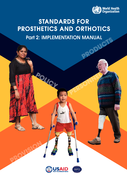
WHO, in partnership with the International Society for Prosthetics and Orthotics (ISPO) and the United States Agency for International Development (USAID), has published global standards for prosthetics and orthotics. Its aim is to ensure that prosthetics and orthotics services are people-centred an
...
d responsive to every individual’s personal and environmental needs. The standards advocate for the integration of prosthetics and orthotics services into health services, under universal health coverage. Implementation of these standards will support countries to fulfil their obligations under the Convention on the Rights of Persons with Disabilities and towards the Sustainable Development Goals, in particular Goal 3: Ensure healthy lives and promote well-being for all at all ages.
The standards provide guidance on the development of national policies, plans and programmes for prosthetics and orthotics services of the highest standard. The standards are divided into two documents: the standards and an implementation manual. Both documents cover four areas of the health system:
policy (governance, financing and information);
products (prostheses and orthoses);
personnel (workforce);
and provision of services.
The Standards have been developed through consultation with experts from around the globe via a steering group, development group and external review group.
more
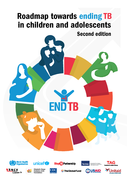
2nd edition. The 2018 Roadmap incorporates an additional critical population: adolescents. Despite making up 1 in 6 of the world’s people, adolescents have been largely overlooked as global momentum to address TB has grown. Spanning the ages
...
of 10–19 years, adolescents are both at risk of TB and represent an important population for TB control. They often present with infectious TB and frequently have multiple contacts in congregate settings, such as schools and other educational institutions. Nevertheless, few countries capture TB data in suitably age-disaggregated ways to allow full understanding of its impact in this group and even fewer provide the adolescent-friendly services our young people need to access diagnosis and care.
more

This paper focuses on the Sustainable Development Goals related to poverty, economic growth, inequality, health, food production and the environment. It presents concrete examples of the underlying and complex aspects
...
of antibiotic resistance and its impacts across different Sustainable Development Goals. The aim of this paper is to inform and stimulate discussions on how to further advance the implementation of 2030 Agenda for Sustainable Development, the Global Action Plan on Antimicrobial Resistance, National Action plans on Antimicrobial Resistance, as well as work within all sectors that affect and are affected by antibiotic resistance
more
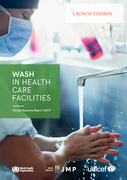
The WHO/UNICEF JMP report, WASH in Health Care Facilities, is the first comprehensive global assessment of water, sanitation and hygiene (WASH) in health care facilities. It also finds that 1 in 5 health care facilities has no sanitation service*, i
...
mpacting 1.5 billion people. The report further reveals that many health centres lack basic facilities for hand hygiene and safe segregation and disposal of health care waste.
more
he WHO Guidelines on Integrated Care for Older People (ICOPE) propose evidence-based recommendations for health care professionals to prevent, slow or reverse declines in the physical and mental capacities of older people. These recommendations requ
...
ire countries to place the needs and preferences of older adults at the centre and to coordinate care. The ICOPE Guidelines will allow countries to improve the health and well-being of their older populations, and to move closer to the achievement of universal health coverage for all at all ages
Brochure available in Russian, Arabic, Chinese, French; Japanese; Spanisch
more
Antibiotic resistant bacteria are spreading at an alarming rate and some bacterial infections may once again be untreatable. Antibiotic resistance (ABR), conservatively calculated, causes more than 500 000 deaths every year. This number is projected to rise dramatically if radical actions are not ta
...
ken. Lack of effective antibiotics, diagnostics and vaccines threatens the health of millions and hampers fulfilment of several of the Sustainable Devel- opment Goals. Access to effective antibiotics should be part of every adult and child’s right to health.
more
WHO published the first COVID-19 Strategic Response and Preparedness Plan (SPRP) on 3 February, 2020. This report highlights the main points of progress that were made up to 30 June 2020 under the three objectives outlined in the SPRP: scaling up in
...
ternational coordination and support; scaling up country preparedness and response by pillar; and accelerating research and innovation. The report also discusses some of the key challenges faced so far, and provides an update on the resource requirements for the next phase of WHO’s response as part of an unprecedented whole-of-UN approach to the pandemic.
more
This document provides guidance on how to implement contact screening and chemoprophylaxis with single-dose rifampicin. The contents are logically ordered: counselling and obtaining consent, identification and listing of index case, listing
...
of contacts, tracing of contacts, screening of contacts, administration of prophylactic drugs. Managerial aspects to undertake contact screeninig and chemoprophylaxis are also elaborated, including planning , training , supervision and drug management.
more
These guidelines group all recommendations on TB care and support in one document and are complemented by an operational handbook. The guidelines are to be used primarily by national TB programmes, or their equivalents in Ministries of Health,
...
stakeholders and technical organizations working on TB care in the public and private sectors and in the community.
more
The COVID-19 Strategic Preparedness and Response Plan (SPRP) 2021 Monitoring and Evaluation Framework tracks global progress against the COVID-19 SPRP 2021 for the ten pillars of the public health response. The operational intelligence complements t
...
he epidemiologic information used to drive a global dynamic system of support and response. Monitoring SPRP 2021 implementation will support countries, partners and WHO in strategic thinking, operational tracking and course correction based on evidence and transparency to strengthen the response to COVID-19.
more
Frontline health workers (FHWs) provide services directly to communities where they are most needed, especially in remote and rural areas. Many are community health workers and midwives, though they can also include local emergency responders/paramedics, pharmacists, nurses, and doctors who serve in
...
community clinics.
The growing burden of non-communicable diseases (NCDs) on low- and middle-income countries threatens many health systems that are already weakened. In many countries, health systems—and health workers—are not prepared to address the complex nature of NCDs. Health systems are often fragmented, and designed to respond to single episodes of care or long-term prevention and control of infectious diseases.1 Many countries also continue to face shortages and distribution challenges of trained and supported health workers. As most NCDs are multifactorial in origin and are detected later in their evolution, health systems face significant challenges to provide early detection as well as affordable, effective, and timely treatment, particularly in underserved communities.
more
In 2015, to advance the global and national response to antimicrobial resistance (AMR), the World Health Assembly issued resolution WHA68.7 calling for all Member States to develop AMR national action plans that address the five objectives of the Wo
...
rld Health Organization Global Action Plan (GAP) by May 2017. The WHO GAP provides a framework to support countries in developing their national action plans on AMR. To operationalize and accelerate implementation of national action plans on AMR, WHO has developed a costing and budgeting tool and accompanying user guide. The purpose is to support countries in costing prioritized activities of an operational plan linked to their AMR national action plan, and identify existing funding and funding gaps to promote resource mobilization and sustainable implementation. The target audience of the publication are national policy makers and designated costing coordinators for national action plans on AMR.
more
An interregional meeting on leishmaniasis among neighbouring endemic
countries in the Eastern Mediterranean, African and European regions was organized by the World Health Organization (WHO) Regional Office for the Eastern
Mediterranean in Amman, Jordan, from 23 to 25 September 2018. The meeting w
...
as attended by representatives from the health ministries of Albania, Georgia, Greece, Iran (Islamic Republic of), Iraq, Jordan, Lebanon, Morocco, Pakistan, Saudi Arabia, Sudan, Syrian Arab Republic and Tunisia. Representatives from Afghanistan, Algeria and Libya were unable to attend. The Secretariat comprised staff from WHO headquarters, WHO regional offices in the Eastern Mediterranean, Africa and Europe, WHO country offices in Iraq, Pakistan, Syrian Arab Republic and Yemen, and WHO temporary advisors from Spain and Tunisia.
more

This document aims to assist countries to take the first step towards better considering gender and equity issues in their efforts to tackle antimicrobial resistance (AMR), to inform the implementation of strategies in national action plans and cont
...
ribute to improved reach and effectiveness of AMR efforts in the longer term. It is part of a series of papers being developed y WHO, FAO and OIE to build a better global evidence base for implementing AMR national action plans. This version is illustrated by examples from the health sector predominantly but
will be updated with advice from the food and animal sectors in due course.
more

The International Rescue Committee (IRC) is a leading humanitarian agency dedicated to helping people whose lives have been shattered by conflict and disaster to survive, recover, and gain control of their future. Health comprises nearly half
...
of IRC’s program portfolio globally and encompasses three sectors: 1) Primary Health (including child health, sexual and reproductive health and rights, and mental health); 2) Nutrition; and 3) Environmental Health. IRC health programming across its portfolio, in terms of the size and breadth, responds to significant needs in crisis affected settings, improving health and wellbeing while reducing causes of ill-health.
This five-year Health Strategy sharpens our focus on where we can have the most impact. It guides our efforts in planning, technical assistance, business development, advocacy, and internal and external collaboration. Through this strategy, we will invest and grow in areas that will help us achieve high impact at scale for our clients. For the next five years these priorities will include: Nutrition; Immunization: Infectious Disease Prevention and Control; Last Mile Delivery of Primary Health Care: Clean Water.
Our strategy aligns with Strategy 100 (S100) and Strategy Action Plans (SAPs). It lays out how IRC, through health, nutrition, and Environmental Health (EH) programming, will advance the IRC’s S100 ambitions, respond to global trends, and capitalize on our value add. The strategy will be complemented by delivery plans that detail investments, actions, and roles and responsibilities to advance our priorities. At the end of FY24, we will take stock of the implementation of the strategy, measure progress towards achieving our goals, and review if it continues to be fit for purpose.
more
To maintain a structured and well-organized implementation plan it is important to have a lead agency or sector. The ministry of health or a similar authority in government will be critical in facilitating development and implementation
...
of the multisectoral action plan.
more
The key updates include: content update in various sections based on new evidence; design changes for enhanced usability; a streamlined and simplified clinical assessment that includes an algorithm for follow-up; inclusion of two new modules
- Ess
...
ential Care and Practice that includes general guidelines and Iminterventions and implementation module to support the proposed interventions by necessary infrastructure and resources; and, revised modules for Psychoses, Child and Adolescent Mental and Behavioural Disorders and Disorders due to Substance Use
more
